Best Everest Short Trekking Routes
Despite having limited time for vacation, if you still want to experience the majestic view of Mt. Everest, you can have some other short trekking trails that offer beautiful vistas, rich Sherpa culture, and manageable elevation. All these routes are well-designed. The best option varies depending on your time, fitness level, and how close you want to view Everest.
Refer to the table below showing a quick comparison that helps you choose the right one for your future journey:
|
Trek Route
|
Duration |
Max. Elevation
|
Difficulty |
Best For
|
|
Everest View Trek
|
5-7 Days
|
3,880 m (12,729 ft)
|
Easy to Moderate
|
Beginners, Families
|
|
Namche Bazaar Trek
|
4-6 Days
|
3,440 m (11,286.09 ft)
|
Easy |
First-Time Hikers
|
|
Short EBC + Helicopter Return
|
7-10 Days
|
5,364 m (17,598.43 ft)
|
Moderate to Challenging
|
Time-Limited Adventure
|
|
Tengboche Monastery Trek
|
5-7 Days
|
3,860 m (12,664.04 ft)
|
Easy to Moderate
|
Culture and Scenery Lovers |
Everest View Trek (5-7 Days)
This is the best balance of time, safety, and stunning Himalayan scenery, taking you up to the famous Everest View Hotel, which is ideal for avoiding serious altitude risks while still enjoying magical views.
Namche Bazaar Trek (4-6 Days)
This lowest-elevation trek in the Everest Region, where you reach only up to Namche Bazaar, makes it perfect for first-timers who desire to have a cultural experience without pushing into higher-risk zones.
Short EBC Trek With Helicopter Return (7-11 Days)
This trail is best for trekkers who want to visit EBC quickly, combining hiking with a helicopter return. Doing so saves time while still allowing you to experience a high-altitude journey with great mountain views.
Tengboche Monastery Trek (5-7 Days)
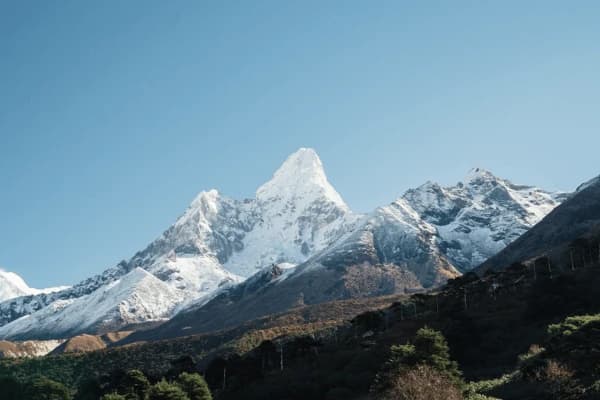
This trek offers a perfect blend of culture and mountain scenery, leading you to the popular Tengboche Monastery with stunning panoramas of Mount Everest and Ama Dablam.
7-Day Itinerary
This 7-day Everest Short Trekking itinerary is carefully designed to balance panoramic Himalayan sceneries, safe acclimatization, and local Sherpa lifestyle within a manageable timeframe. With a total duration of 7 days, a maximum altitude ranging between 3,000 and 4,000 m, and a moderate trek grade, this itinerary is best for first-time trekkers and time-limited travelers who prefer a safe and rewarding experience.
Day 1: Fly to Lukla and Hike to Phakding
- Route: Kathmandu-Lukla-Phakding
- Walking Hours: 3-4 Hours
- Elevation: 2,610 m (8,563 ft)
- Highlight: Scenic mountain flight and first views of the Khumbu Region
Note: Hike gradually and keep yourself hydrated to start proper acclimatization.
Day 2: Hike to Namche Bazaar
- Route: Phakding-Namche Bazaar
- Walking Hours: 5-6 Hours
- Elevation: 3,440 m (11,286.09 ft)
- Highlight: First distant views of Everest and suspension bridges
Note: Ascend gradually to lower the risk of AMS.
Day 3: Acclimatization Day in Namche Bazaar
- Route: Namche Bazaar-Everest View Hotel-Back
- Walking Hours: 3-4 Hours
- Elevation: 3,880 m (12,729 ft), sleep at 3,440 m (11,286.09 ft)
- Highlight: Panoramic views of Mt. Everest, Ama Dablam, and nearby peaks
Note: “Climb high, sleep low” is key for safe acclimatization.
Day 4: Hike to Tengboche
- Route: Namche Bazaar-Tengboche
- Walking Hours: 5-6 Hours
- Elevation: 3,860 m (12,664.04 ft)
- Highlight: Visit the famous Tengboche Monastery with Everest views
Note: Maintain a slow pace to avoid altitude sickness.
Day 5: Hike to Khumjung
- Route: Tengboche-Khumjung
- Walking Hours: 4-5 Hours
- Elevation: 3,790 m (12,434.38 ft)
- Highlight: Stroll around authentic Sherpa villages and the local lifestyle
Note: Keep yourself warm and monitor AMS’s symptoms.
Day 6: Descend to Lukla
- Route: Khumjung-Namche Bazaar-Lukla
- Walking Hours: 6-7 Hours
- Elevation: 2,800 m (9,186 ft)
- Highlight: Descend through forests and retrace scenic routes
Note: Easier breathing at lower altitude, but stay careful on descents.
Day 7: Fly back to Kathmandu
- Route: Lukla-Kathmandu
- Flight Hours: Approximately 30 minutes
- Elevation: 1,400 m (4,593.17 ft)
- Highlight: Final aerial views of the Himalayas
Note: Keep buffer time for potential flight delays
This well-structured itinerary ensures you the best adventure in the Khumbu Region, while prioritizing safety, comfort, and unforgettable mountain views.
Everest Short Trekking Cost Breakdown (5–7 Days)
When you learn about the total costs for the Everest Short Trek, it becomes much easier to plan. For a 5-7 day itinerary, the overall cost can depend on your travel style, services, and season.
Here’s a breakdown of your money to spend in the table below:
|
Cost Category
|
Estimated Costs (USD)
|
What It Covers
|
| Permits |
50 to 70 per person
|
Sagarmatha National Park Entry Permit and Khumbu Pasang Lhamu Rural Municipality permit
|
| Flight |
180 to 400 per person
|
Kathmandu/Ramechhap to Lukla and back
|
|
Licensed Guide (Compulsory)
|
25 to 35 per day
|
Experienced trekking guide (required under the 2026 regulation)
|
|
Porter (Optional)
|
20 to 30 per person per day
|
Porter carrying up to 20 to 25 kg (highly recommended to share between two trekkers)
|
|
Food and Accommodation
|
25 to 40 per person per day
|
All three meals a day at basic teahouses with a twin-sharing room.
|
| Total |
800 to 2,000 per person
|
|
This cost range reflects a typical Everest short trekking experience with necessary services, including permits, flights, guide support, and daily expenses. Contact a local tour operator, like us, Ammonite Adventure. We can provide you with better value, smoother logistics, and safety compared to trekking independently.
Note: Cost may fluctuate with seasons (spring and autumn), especially flight fares, and also, its availability, which changes to Ramechhap.
Check our full Everest Trek cost breakdown in detail.
What Permits Do I Need, and How Does Everest Short Trek Logistics Work
To trek within the Khumbu Region safely, all foreign travelers must have valid permits that comply with local regulations and respect baggage limits, particularly on short itineraries. For the Everest Short Trek required to obtain the Sagarmatha National Park entry and the Khumbu Pasang Lhamu Rural Municipality permits.
You need to show them in checkposts along the route to help support conservation and local communities. Besides, hiring a licensed guide is also mandatory under the new rule to ensure your safety, lead you the correct way, and provide emergency support throughout the trek.
You should also be aware of the logistics. The baggage limits (usual weight 10 to 12 kg in total) for a round-trip flight to Lukla must be followed strictly.
Therefore, pack only items that are essential for your short trek in the Everest Region. You may also hire a porter to manage your load comfortably. By learning about these necessary requirements helps ensure a smooth, responsible, and well-organized short trekking experience in the area, along with avoiding delays.
| Requirements |
Details |
Average Cost
|
Notes |
|
Sagarmatha National Park Entry Permit
|
To enter the protected area legally.
|
USD 30 per person
|
Compulsory for all trekkers; issued at the park entrance or through a local tour operator.
|
|
Khumbu Pasang Lhamu Rural Municipality Permit
|
To explore the Khumbu Region.
|
USD 20 per person
|
Required for all trekkers to support the local community and infrastructure.
|
| Guide |
Licensed and experienced guide
|
25 to 35 per day
|
Compulsory as per the 2026 rules to ensure safety and navigation.
|
|
Baggage Limit
|
Recommended: 10-12 kg
|
N/A
|
Porters can carry an extra load to help with acclimatisation and make trekking easy. |
Who Should Choose A Short Everest Trek
The Everest Short Trek is the best option for busy people searching for a time-efficient trekking experience, families prefer safety below 4,000 m (13,123.36 ft), first-timers looking for a manageable Himalayan journey, and older travellers who value comfort and pacing. By focusing on the stunning route between Lukla and Namche Bazaar, this trail offers dramatic scenery of Everest with a high success rate and significantly lower risks of altitude sickness compared to the traditional EBC Trek.
Busy Professionals: High-Impact Travel in 7 Days
This trek is perfect for those with short time constraints and want a time-efficient trekking experience without having to take long leaves from work. Improved logistics, like reliable internet service in Namche Bazaar and helicopter options, make your adventure rewarding.
First-Time Trekkers: The Ultimate Himalayan Taster
Since the Everest Short Trek is rated as moderate in difficulty, the risk is low, and the reward is high. It offers a much higher success rate than the regular EBC Trek.
Families: Accessible Adventure Below 4,000m
Shorter daily walking hours (4 to 5 hours), child-friendly lodges, and lower elevation can benefit families by reducing the risk of acute mountain sickness (AMS).
Older Travelers: Prioritizing Comfort & Pacing
For senior travellers, this is an altitude-safe trekking option with good infrastructure. Along the trail from Lukla to Namche Bazaar, hotels are comfortable and offer warm rooms and better facilities than in tea houses at higher altitudes.
Essential Tips for Short Everest Treks
Consider the following tips that are essential to help you make your experience safer and unforgettable before you go on the Everest Short Trek:
- Walk slowly, stay hydrated, and pay attention to early signs like headache or nausea, as above 2,500 m (8,202.1 ft), the risk of AMS is high, so descend immidiately if needed.
- Pack light, as a heavy load can make you tired quickly on steep paths. Keep your backpack under 9 to 10 kg.
- Buy travel insurance, covering high-altitude trekking and emergency evacuation, including helicopter rescue and medical fees.
- The Himalayan weather is unpredictable, so pack warm clothes wisely to handle wind, rain, or cold. Also, stay tuned to the weather forecast before and during the journey.