May 07, 2025read more +
Perfect
I had a very good experience in this tracking only to the anapurnna base camp in particular thanks to the
Pelayo M,
Spain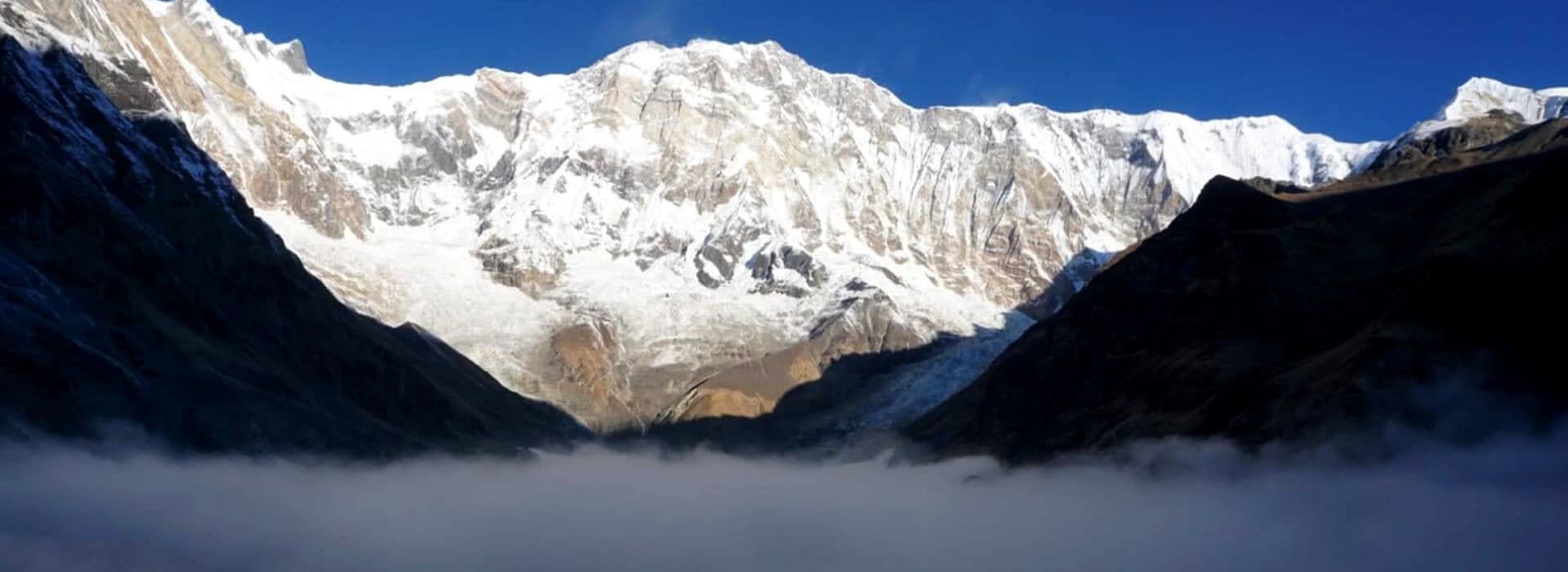
The Annapurna Base Camp Trek is a popular 12-day journey in the Himalayas, offering close views of Annapurna I and Machapuchare. Starting from Pokhara, the trail passes through forests, farms, and villages like Ghandruk and Chhomrong, reaching 4,130m at base camp.
It is a moderate trek costing $550–$700 depending on group size, with highlights like hot springs at Jhinu Danda, great mountain views, and rich local culture.
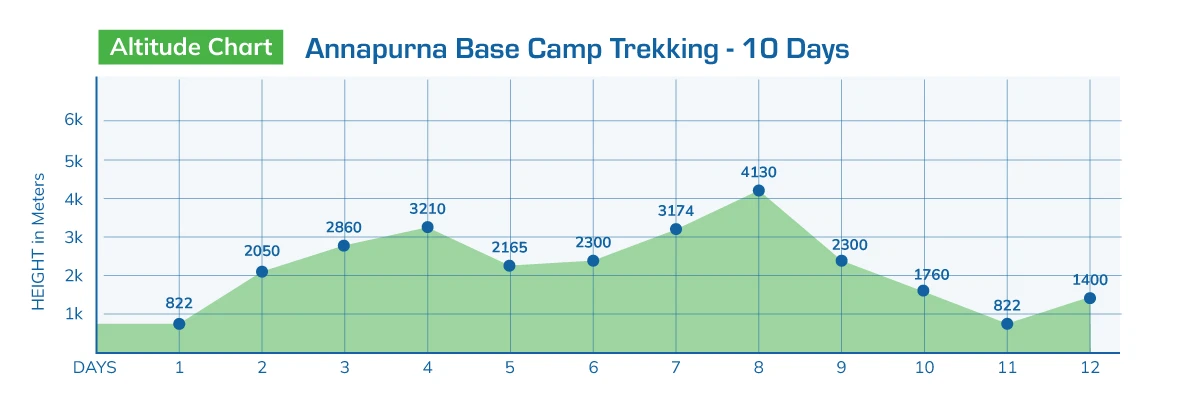
Also known as the Annapurna Sanctuary Trek, the Annapurna Base Camp journey is a 12-day adventure starting and ending in Kathmandu. This trek takes you through the naturally and culturally rich Annapurna Conservation Area, reaching a maximum altitude of 4,130 meters (13,550 ft). Offering a direct route into a stunning high-altitude glacial basin, this classic tea house trek is suitable for fit beginners to experienced trekkers and is best completed during the spring (March–May) and autumn (September–November) seasons.
The trip begins with a scenic drive along the Trishuli and Marshyangdi Rivers, while the actual trekking trail follows the Modi Khola through lush forests of oak, rhododendron, and bamboo. To ensure a seamless journey, trekkers must obtain the mandatory ACAP (Annapurna Conservation Area Project) and TIMS (Trekkers' Information Management Systems) permits before entering the protected region.
Throughout the expedition, you will experience diverse landscapes, shifting climatic zones, and the warm hospitality of the Gurung and Magar communities. The trek rewards you with breathtaking 360-degree panoramas of peaks like Annapurna I and Machhapuchhre (Fishtail), with iconic views from the Poon Hill vantage point and the base camp itself.
A standard 12-day package typically costs between $550 to $700 per person depending on group size, providing a comprehensive Himalayan experience that perfectly balances adventure, culture, and mountain comfort.You can also explore a more compact option like the Short Annapurna Base Camp Trek for a quicker Himalayan adventure.
The 12-day Annapurna Base Camp journey begins as soon as you arrive in Kathmandu, where all your essential trekking permits are arranged for a smooth start. From here, you’ll travel to Pokhara, the gateway to the Annapurna region, and settle into your hotel, preparing for the adventure ahead.
The cost of the 12-day Annapurna Base Camp trek is primarily determined by the number of participants in your group. Since the update on April 1, 2023, all trekkers are required to have a licensed guide, making group trekking the most economical way to experience the sanctuary.
At Ammonite Adventure, we provide a transparent pricing structure to ensure you get the best value for your Himalayan expedition.
12-Day ABC Trekking Price Breakdown
|
Group Size |
Cost per Person |
Service Level |
|
1 Person (Private) |
US$700 |
Licensed Guide + Full Logistics |
|
2 – 3 People |
US$625 |
Shared Guide + Standard Teahouse |
|
4 – 10 People |
US$550 |
Group Discount + Standard Teahouse |
|
11+ People |
Contact Us |
Special Corporate & Large Group Rates |
While the standard 12-day itinerary is our most popular, the package is fully customizable. Costs may adjust based on:
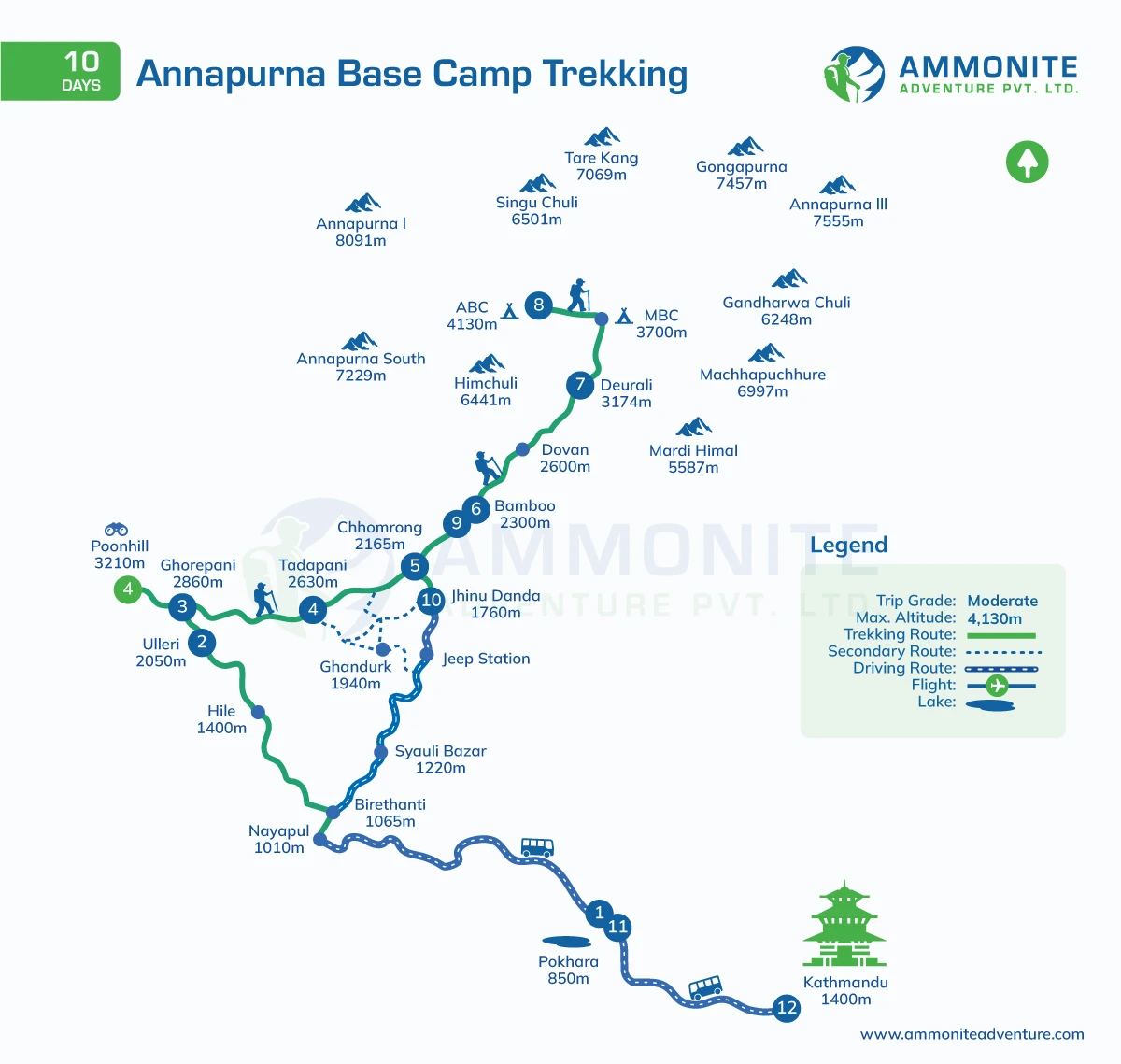
The route of the Annapurna Base Camp Trek follows a beautiful and well-defined trail inside the Annapurna Conservation Area, starting from the lower hills and gradually ascending into the high Himalayan sanctuary. The journey typically begins from Nayapul after a drive from Pokhara and passes through charming villages like Ulleri, Ghorepani, Tadapani, Chhomrong, Bamboo, and Deurali before finally reaching Annapurna Base Camp.
This trek follows the valley of the Modi Khola River, passing through lush rhododendron forests, terraced farmlands, and traditional Gurung and Magar settlements. As you move higher, the landscape changes dramatically from green hills to alpine terrain and finally to the glacial basin surrounded by towering peaks like Annapurna I and Machhapuchhre.
The return route follows the same trail back down to Jhinu Danda, where trekkers often relax in the natural hot springs before driving back to Pokhara. This classic round-trip route offers a perfect combination of nature, culture, and high-altitude mountain experience in a single journey.
For those looking to extend their Himalayan adventure, you can also explore the Annapurna Circuit Trekking – 12 Days, which covers a wider and more diverse trekking route around the Annapurna region.
The 12-day journey to the base camp of Mt. Annapurna begins with a scenic drive to Nayapul, the official gateway to the sanctuary. From here, the trek commences through traditional local settlements dotted with vibrant prayer flags, chhortens, and ancient monasteries that reflect the spiritual essence of the Himalayas.
As you ascend, you can expect a dramatic transition from lush subtropical forests to rugged alpine landscapes. The trail showcases the authentic Himalayan lifestyles of the Thakali, Magar, and Gurung communities, who have preserved unique traditions, costumes, and a harmonious blend of Buddhist and Hindu practices.
During the trek, you can specifically expect:
Your journey to Annapurna Base Camp becomes safer, smoother, and more enjoyable with Ammonite Adventure. We focus on expert guidance, safety, and personalized care throughout the trek.
👉 With us, you don’t just complete the trek you enjoy a safe, well-supported, and meaningful Himalayan experience.
Today, you will take a tourist bus to Pokhara after breakfast so that you can begin the trek to Annapurna Base Camp quickly. The drive away is scenic, taking in the breathtaking scenery followed by lush woods, gushing rivers, and terraced farms and fields below the hills.
The first evening in Pokhara is equally stunning while you have dinner beside the glistening water of Phewa Lake, which presents you with a reflecting backdrop of majestic mountains.

The journey of the day starts with a hearty breakfast on the shores of Phewa Lake, followed by a short drive to Nayapul, from where you will begin to hike to Ulleri, passing by Birethanti along the bank of Bhurungdi Khola.
The path is comparatively off-beaten and goes via Tikhedhunga and finally to Ulleri, proceeding forward via the villages of Sudame and Hile.

The trail of the day is a gradual climb while enjoying the snowy peaks of Annapurna, Hiunchuli, and Machhapuchhre, moving ahead by the forest of rhododendrons across the roaring rivers and chilly springs, taking you to Ghorepani.
Perched on a ridgeline, the town of Ghorepani offers extended views of the Dhaulagiri ranges, Tukuche, Nilgiri, Annapurna South, and many others, including Machhapuchhre.

Who would not enjoy seeing the sunrise, especially when it radiates over the entire Himalayan ranges of the Annapurna region? Therefore, the trek of the day to rest at Tadapani begins early in the morning before sunrise to see the changing array of colors, from shades of pink and orange to golden hues, contrasting largely with the fully white chain of mountain ranges.
Poonhill is a paradise for photography enthusiasts. So, after shooting as many shots as possible, you will traverse through Deurali and Banthanti to arrive at Tadapani to call it a day.
From Tadapani, the route descends steeply into a thicket forest of rhododendrons, which later rises to the next green hill ridge, where a tiny Gurung hamlet is perched on a lovely terraced hillside.
It is comparatively a short hiking day lasting for 4-5 hours amidst the mythical beauty of the Annapurna range and Mt. Fishtail

Following breakfast at the lodge, your trail from Chomrong traverses the Chhomrong Khola and descends stone stairs to go to Sinuwa village. Continuing the gentle climb uphill from here takes you to Bamboo at last through the deep forest of bamboo and rhododendrons to get dinner.
Yet another calm day to head off to Deurali from Bamboo through forests of bamboo, creating a comparatively cooler and refreshing trekking ambiance during hot summer days, which opens up after a couple of hours and climbs through green slopes to witness the glacial lake below.
On a steep ascent to Hinku Cave, crossing a suspension bridge, and passing by a waterfall, you will notice a quite tougher trail with the barren surroundings, and finally to Deurali.

The grandest day of the journey begins with a trek along the Annapurna glaciers. The path follows a scenic, widening route that becomes less steep as you approach the heart of the mountains.
Before reaching the final camp, you will arrive at Machhapuchhre Base Camp (3,700m). Known as the "Gateway to the Sanctuary," this is the perfect spot to rest and acclimatize. It offers the most iconic view of the sacred "Fishtail" peak and marks the point where you leave the trees behind for a dramatic alpine landscape.
Continuing northwest, you will pass through the "Sanctuary Gate" to reach Annapurna Base Camp (4,130m). Your arrival is rewarded with a stunning 360-degree panorama of Annapurna I, Annapurna South, Hiunchuli, and Machhapuchhre, placing you right at the foot of these Himalayan giants.
This morning, you will wake up earlier than other days to witness the exceptional sun rising over the Annapurna ranges. After spending a few hours with the awe-inspiring mountains, you will have breakfast and then hike down the same route, following the Modi Khola (1,700m).
After traversing the Modi Khola around the rhododendron forests for several hours, you will have made it to Bamboo in approximately 7-8 hours in a descending manner. In your spare time, you can take a quick tour and later on, spend the night in Bamboo’s teahouse.

The retracing of the route continues through the steep descent of Bamboo, dropping significantly by Sinuwa, Kuldi Ghar, and Chomrong early so that you can take a relaxing dip at the natural hot springs of Jhinu Danda, which looks more enticing than it did at the beginning of the trek.
From Chomrong, it is around a thousand steps to ascend and then descend to Jhinu Danda to have lunch and savor the warm water, of course!
Throughout the entire trek to the Annapurna Base Camp, it is one of the easier days when you will drive back to Pokhara from Jhinu Danda. Therefore, make the most of the mountains, verdant hills, and rice paddies.
After settling into the cozy city of Pokhara, you will have time to browse the town and unwind by the lake with the majestic backdrops of Annapurna and Dhaulagiri.
Today, you will drive or fly back to Kathmandu via the Pritivi Highway, passing through lush hills, rivers, and several tiny Nepalese communities while you wave goodbye to the massive Himalayan giants, including Fishtail (Machhapuchhre).
From the Tourist bus park, you will be transferred to your hotel. In the afternoon, you can stroll around Thamel and shop for souvenirs to take back home.
Make the most of your Annapurna Base Camp Trek and add on a few extras that will help you save on time and maximize your overall experience.
Instead of a long drive, you can opt for a quick USD 106 flight from Kathmandu to Pokhara per person. This will save you not only time but also the exhaustion one gets on the highway drive; instead, fly refreshed and ready for the trek ahead in Pokhara.
You can also book the same scenic flight back from Pokhara to Kathmandu at USD 106 per person for a comfortable and fast journey back to the capital.
Make your trek easier by hiring a private porter for USD 200 per person. He will be a great help to carry your load and you can concentrate on exploring the beautiful Annapurna region. Suitable for single trekkers as well as group trekkers.
For the Annapurna Base Camp Trek, you will need two permits, which are the Annapurna Conservation Area Permit (ACAP) and the Trekkers Information Management System (TIMS) card.
At Ammonite Adventure, we will make sure to get these permits beforehand for you. The 10-day package cost to the Annapurna Base Camp does cover the permit fee, which separately costs USD 20 for the Annapurna Conservation Area Permit (ACAP) and USD 30 per person for the TIMS card.
Both are payable in Nepalese currency only, where the trekkers who are SAARC nationals can get the permits at a discounted price.
While you are in Kathmandu, lunch and dinner are not included in our package, and you are free to eat anything that you prefer. Thamel is specifically famous for its eateries, while the numerous cafes, pubs, clubs, and restaurants serve national and international cuisines.
Similarly, en route to the classic tea house trek to the Annapurna Base Camp, you can get typical Nepali, Tibetan, and globe menus, which can get limited to the more nutritious Dal-Bhat-Tarkari, an everyday Nepali dish usually with white rice, lentil soup, and leafy or seasonal vegetables. Worth a try!
Varieties of eggs, curries, tea, and coffee are available along with Tibetan bread, pancakes, and pizza, although the taste might differ for breakfast. However, we suggest you stick to vegetarian Dal Bhat and Tarkari, as they tend to nourish you and provide adequate protein and carbohydrates required for the high Himalayan hikes.
Like every other high-altitude trekking trail in Nepal, the Annapurna Base Camp route also features a mountain lodge called tea House, which is modest, open, and maintained by locals, and where you will be provided with bedding and meals.
The spring and autumn seasons are the busiest times of the year when you might have to share the rooms with two to five people alongside the Asian squat-style toilets, which is still a privileged option in such a remote area. Fine enough to ensure your comfortable stay in the local lodges and guest houses.
As per Kathmandu, we will be providing you with the best three-star hotel, including breakfast.
The teahouse and local lodges often provide safe, either boiled or treated, drinking water. Bottled water is also purchasable; however, it is not recommended as we are guided by the policies of ecotourism.
The rising concern due to plastic garbage is much discouraged, and hence it is better to get a thermos flask that is refillable at various stopping places for a minimal fee. Water from natural sources seems drinkable, but one must not do so without treating it properly.
The Annapurna Base Camp Trek is considered a moderately difficult trek, combining both easy walking trails and some challenging uphill sections. It does not require prior trekking experience, making it suitable for beginners with good physical fitness.
This trek is ideal for beginners, adventure lovers, and anyone with basic stamina and a positive mindset for walking long distances in the mountains.
A reasonable level of fitness is recommended. Activities like walking, jogging, swimming, or short hikes before the trek can greatly help in handling the uphill and uneven terrain.
Since the trek reaches above 4,000 metres, altitude sickness (AMS) can be a concern. However, with proper acclimatization, hydration, and a steady pace, most trekkers complete the journey safely.
The best time to trek to Annapurna Base Camp is during spring (March to May) and autumn (September to November) when the weather is stable and the mountain views are at their clearest.
Spring brings blooming rhododendron forests, green landscapes, and clear mountain visibility, making it one of the most beautiful times for trekking.
Autumn offers stable weather, fresh air, and crystal-clear views of the Himalayas after the monsoon, making it the most popular trekking season.
Winter can be very cold with snow at higher altitudes, while the monsoon season (June to August) brings rain and slippery trails. However, with proper gear and preparation, trekking is still possible year-round.
In the Himalayas, nothing can be predicted, be it weather or anything else; it can go pretty easily out of control. Therefore, yes, you must hire a guide for safe navigation of the route to the Annapurna Base Camp, where local guides can add much to the cultural immersion, bridging the gap between you and the Himalayan communities.
In case of an emergency as well, the license guides are very handy to provide you with instant assistance. We are offering government-certified and trained guides with well-versed English communication skills included in the 10-day package cost to the Annapurna Base Camp, including a porter.
Please note that a porter in Nepal is allowed to carry a total of 20–24 kg and can be shared amongst two hikers. Therefore, we advise you to pack only the absolute necessities.
Since the 10-day Annapurna Base Camp Trek is comparatively a short expedition, you might not need to pack much depending on the season you are trekking to. However, make sure you are carrying all the necessary items and check before officially beginning the trek.
Here are some of the must-pack trekking gear, regardless of the time of year you are traveling to the Annapurna Base Camp:
Whether you are trekking alone, with a buddy, or with a larger group, we can arrange the Annapurna Base Camp as a private or a group trip. If you are trekking with a group, there may be "group discounts" (larger groups get larger discounts), but we do not provide group discounts when Ammonite Adventure forms a group.
We can happily manage any size groups and do provide an assistant guide for groups with 12 or more trekkers. We provide 1 porter for each 2 trekkers. Each trekker has a luggage limit of 9 kg per person.
Most of the costs while trekking in Annapurna Base Camp are included in the package you purchased. But there will be a few costs that will not be included, like accommodation and meals in Kathmandu. There are a variety of accommodations in Kathmandu, ranging from cheap lodgings to 5-star hotels, and there are a number of websites to assist you in finding accommodation.
Please bring some cash for personal expenses, like food and lodging in Kathmandu, visa fees, travel insurance, snacks, tea/coffee, cold drinks, tips for staff, and souvenirs. Bring cash in major currencies to exchange for Nepali Rupees in Kathmandu or Pokhara, since villages along the trek accept only money in Nepali currency.
Start your journey to Annapurna Base Camp with confidence by booking through Ammonite Adventure, a fully licensed trekking agency in Nepal and a proud member of TAAN and NMA.
Within 7 days of reservation, please provide:
👉 Once confirmed, we handle all arrangements to ensure a smooth and stress-free trekking experience from start to finish.
It is important to pack your belongings carefully for your 10-day trek. We provide one porter per two trekkers, which means if you are travelling with a trekking buddy, then they should pack both trekkers' personal gear (both trekkers' gear must fit into one duffle bag, which must have a minimum capacity of 60 liters).
There will be a luggage allowance of a total of 9 kg for every trekker.
We can provide you with a duffle bag, down jacket, and sleeping bag if you do not have your own.


Well, if you are thinking of bringing one from your home country, it might not be such a great idea because you can actually shop for most of the good-quality trekking gear and equipment in Kathmandu city at a reasonable price.
First of all, do not panic at all! You can anticipate spotting some of the symptoms for sure. However, if it gets severe do not ascend further at all. Let your body recover well even before descending to the lower altitude level.
No, you would not be able to find ATMs as soon as you leave the Kathmandu and Pokhara city behind. So, we advise you to complete the necessary currency exchange by Kathmandu or Pokhara.
Children above seven years and onwards, healthy individuals with some proper preparation and strong determination, can successfully complete the 10-day Annapurna Base Camp Trek. So, we can say that it really does not have the exact age criteria. All you need is an unswayed adventurous spirit and correct guidance.
Yes, we understand the importance of your safety and comfort, whether you are a male or female trekker. By chance, if you are a female traveler and looking forward to getting a female companion, it is possible, and we provide the best one. Born and brought up in the Himalayas of Nepal,
The answer is yes. However, due to its brutality in comparison to some other similar eight-thousanders, such as K2 (8,611 m), it is often backlisted, while its base camp at 4,130m grants the equivalent sense of achievement and beauty.
It is advised to keep your expectations very realistic. As an isolated countryside, of course, it is quite devoid of the super-fast cellular network and speedy wifi; however, they are provided at several tea houses at an additional cost and do the job of keeping you update with your loved ones.
As an alternative, you can get a 4G NTC or Ncell SIM card in Kathmandu or Pokhara to access mobile data wherever you get a good signal.
Sing with us. Keep up the pace, take enough rest, and eat the best! These are some secrets to preventing acute mountain sickness that might concern even top-tier mountaineers, along with the endeavor of consuming ample fluids to keep your body hydrated. Make sure to avoid alcohol and any intoxicating substances.
Yes, several tea houses and local lodges facilitate the charging of electronic devices such as cell phones and cameras that will charge you extra but totally reasonable.
Nepal Tourism Board (NTB), Trekking Agencies Association of Nepal (TAAN), and various trekking and traveling companies in Kathmandu and Pokhara issue TIMS cards and ACAP. You will not have to worry about it much when choosing one of the services from a reputable organization like Ammonite Adventure Pvt. Ltd.

I had a very good experience in this tracking only to the anapurnna base camp in particular thanks to the
Ammonite Adventure is outstanding! Booking a trek was extremely customizable and catered perfectly to my stay in Nepal. I fell