November 26, 2025read more +
Amazing Short Trek With Stunning Sunrise
The 3-day Ghorepani Poon Hill Trek was absolutely incredible. The views from Poon Hill at sunrise were breathtaking, well worth
Sarah Thompson,
United Kingdom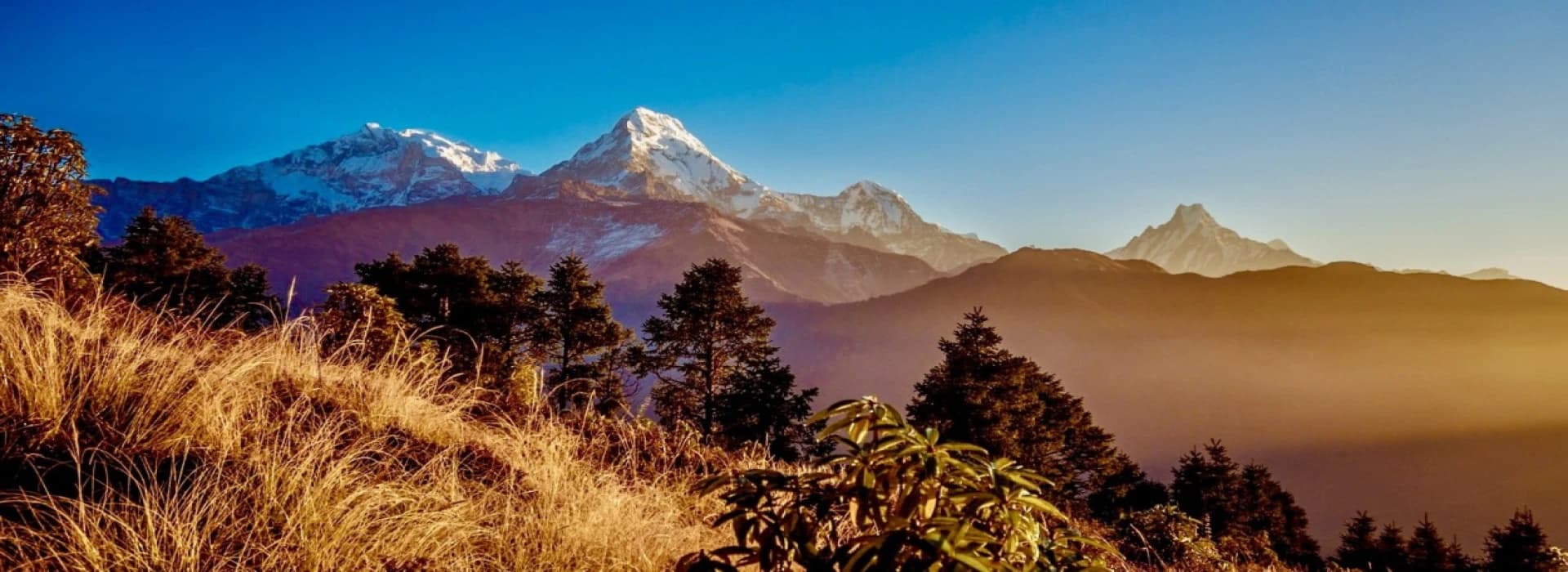
The 3-Day Ghorepani Poon Hill Trek is a short, beginner-friendly trek in the Annapurna region (max 3,210 m), known for sunrise views. It costs $165–$299, requires ACAP and TIMS permits, and a licensed guide is mandatory; best seasons are spring and autumn.
The 3 Days Ghorepani Poon Hill Trek is a short and beautiful journey in the Annapurna region, perfect for travelers with limited time. It offers mountain views, rhododendron forests, and cultural experiences with Gurung and Magar communities.
The trek starts with a drive from Pokhara to Nayapul, followed by a hike through villages like Tikhedhunga and Ulleri, including the famous stone stairs. On Day 2, you reach Ghorepani (2,874 m), and on Day 3, you hike to Poon Hill (3,210 m) for a stunning sunrise view over Annapurna and Dhaulagiri ranges, then return to Pokhara.
The trek is easy to moderate and suitable for beginners with basic fitness. You need ACAP and TIMS permits, and a licensed guide is required. The total cost is usually between $165 and $299 per person depending on group size.
Accommodation is in teahouses with simple but comfortable rooms, and meals like dal bhat, momos, and Tibetan bread are available. Spring and autumn are the best seasons, with clear skies and pleasant weather.
This trek is a perfect mix of nature, culture, and short adventure in Nepal.
The average cost for a 3-day Poon Hill trek ranges from $280 to $365 USD per person. Below is a transparent breakdown of where your money goes.
Estimated Budget Table
|
Service Item |
Estimated Cost (USD) |
Regulation Status |
|
Licensed Guide |
$25 – $35 / day |
Mandatory (New Law) |
|
ACAP Permit |
$25 (NPR 3,000) |
Mandatory |
|
E-TIMS Registration |
$15 (NPR 2,000) |
Mandatory (Agency only) |
|
Tea House Stay |
$10 – $15 / night |
Required |
|
Standard Meals |
$30 – $40 / day |
Varies by altitude |
|
Private Jeep/Taxi |
$90 – $120 (Total) |
Round trip from Pokhara |
As of the trekking season, the Nepal Tourism Board and the Department of Immigration strictly enforce the mandatory guide requirement.
While you might see older blogs suggesting you can buy permits yourself in Pokhara, now the rules mean that individual trekkers cannot apply for E-TIMS cardsalone. By booking with us, we handle the digital registration, insurance verification, and licensed guide assignment, ensuring you aren't turned back at the first checkpoint.
To trek in the Annapurna region, you must obtain the following permit:
Note: To ensure a seamless departure, Ammonite Adventure handles the entire mandatory permit registration process on your behalf before you arrive in the mountains. Because the government requires passport copies and personal details in advance, our team secures all necessary paperwork ahead of your start date whether you choose the classic itinerary, the extended Ghorepani Poon Hill Trek 4 Days, or the deep-wilderness Ghorepani Poon Hill Trek 7 Days.
The 3-Day Poon Hill Trek is one of the best short treks in Nepal. It features the world-famous Poon Hill sunrise viewpoint (3,210 m), where the rising sun casts a golden light on Annapurna, Dhaulagiri, Machhapuchhre, and the surrounding peaks, creating a magical moment.
Along the way, we pass through charming Gurung and Magar villages, experiencing authentic mountain life, traditional houses, terraced farms, and the warm hospitality of local communities.
Its proximity to Pokhara eliminates your long drives and complicated logistics, making it a convenient trekking route for you. With comfortable teahouses, warm meals, friendly guides, and well-marked trails, the trek is both affordable and accessible. You can enjoy a big adventure in a short timeframe, taking in panoramic landscapes and rich cultural encounters.
This trek is easy to moderate. It is not too hard, but it is not very easy for everyone. You need to walk about 4 to 6 hours each day. The trail has stone steps, forest paths, and some uphill climbs.
The hardest part is the Ulleri stairs, where you need to climb many steps. It can make you tired, but you can go slowly and take breaks. Overall, it is a good trek for beginners who want a short adventure.
You do not need special training for this trek, but you should have basic fitness.
If you can:
Then you can do this trek. It is good to prepare before your trek. You can:
The altitude is not very high, but you should still walk slowly and drink enough water. With simple preparation, most people can complete this trek.
This trek is perfect for many types of travellers:
If you want a short, beautiful, and easy Himalayan trek, this is a great choice.
The best time to trek to Poon Hill is during spring (March–May) and autumn (September–December). In spring, you can enjoy rhododendron forests that bloom in vibrant colours, you can experience pleasant temperatures, and skies are usually clear ideal for first-time trekkers.
Autumn offers you dry weather and excellent visibility of the Himalayan peaks, perfect for photography and enjoying the panoramic sunrise at Poon Hill.
Summer (June–August) is the monsoon season, with heavy rainfall, slippery trails, and clouds that can obscure mountain views. You can trek even in summer, but we do not recommend it for beginners. Winter (January–February) brings cold temperatures, especially at night and in the early morning, with occasional snow at higher elevations.
However, you can observe clear skies, which provide stunning views if you’re prepared for the cold.
Daytime temperatures generally range from 15–25°C at lower altitudes, dropping to 5–10°C at night in the villages and near 0°C at Poon Hill. Layered clothing is essential, and rain gear is recommended during the monsoon season.
Our guide and porter will pick you up from your hotel at around 8:00 A.M. With a comfortable taxi ride from Pokhara, you’ll reach Nayapul after a 2-hour ride. From Nayapul, we will trek to Ulleri along a gentle riverside path, passing through Gurung and Magar villages. On the first day, we’ll spend our night in Ulleri at a warm and welcoming teahouse.
After breakfast, we’ll begin our trek from Ulleri to Ghorepani. After approximately 7 hours of trekking, we’ll arrive in Ghorepani, located at an elevation of 2850 meters ( 9350.394 feet ), and stay overnight at a cozy teahouse in Ghorepani.
Poon Hill is about an hour’s walk from Ghorepani. Our final day begins early, around 4:00 AM, with a short trek to Poon Hill. At the top, we are rewarded with one of Nepal’s best sunrise views.
We can also enjoy a morning cup of tea at local stalls near Poon Hill. Afterwards, we’ll return to Ghorepani for breakfast and begin our descent to Tikhedhunga. From Tikhedhunga, we’ll take a local bus or taxi back to Pokhara, concluding your 3-day trekking adventure.
At Ammonite Adventure, we try our best to make your trek as comfortable and personalised as possible. That’s why we offer a range of optional services and upgrades to enhance your experience:
If you prefer to travel light, we can arrange porter services to carry your luggage along the trail for an additional charge of USD 25. Our experienced porters know the terrain, are reliable, and take excellent care of your belongings, letting you enjoy the trek with minimal effort.
We provide comfortable taxi rides or local buses from Pokhara to Nayapul and back, ensuring a smooth start and finish to your adventure. Private transfers can also be arranged on request for added convenience and comfort at an extra charge of USD 25.
During the trek, accommodation is provided in cozy teahouses and lodges along the trail. Travellers can upgrade their rooms for extra comfort at an additional charge of USD 10.
Trekking in the Himalayas is an incredible experience, but your health and safety are essential. Even on a moderate trek like Poon Hill, you may experience mild altitude sickness during the trek, including headaches, nausea, or dizziness. So, you need to walk at a steady pace, stay hydrated, avoid alcohol and smoking, and inform your guide if you notice any symptoms.
Prepare yourself with light cardio, a balanced diet, proper hygiene, and clothing that protects you against the sun and cold. Our guides are trained in first aid and altitude management, and descending remains the best solution for severe symptoms. However, following these precautions ensures that you have a safe and enjoyable trek while taking in the stunning landscapes and sunrise from Poon Hill.
Though the trek is short, it’s always better to be prepared than to face unnecessary difficulties later. For any trekking whether short or long it’s important to keep oneself healthy, both physically and mentally. Here are some practices you can follow to maintain your health:
You’ll stay in cozy tea houses or lodges along the trail during your trek. Rooms are typically twin-sharing, and upgrades are available for extra comfort at an additional cost.
Facilities & Amenities on the Trail:
After returning to Pokhara, you’ll enjoy a one-night stay in a three-star hotel on a bed-and-breakfast basis.
Vegan Options:
Vegetarian Options:
Non-Vegetarian Options:
At Ammonite Adventure, we want to ensure you have a clear understanding of your trekking experience. While most essentials are included in your package, there may be extra personal expenses during the trek. These can include:
These expenses are entirely optional and depend on your personal preferences. We recommend carrying some extra cash in Nepali Rupees to cover these items, as card facilities may be limited along the trail.
Ammonite Adventure is a government-licensed and bonded trekking agency in Nepal and a proud member of both the Trekking Agencies’ Association of Nepal (TAAN) and the Nepal Mountaineering Association (NMA). When you book with us, you can be assured you’re in reliable hands.
To confirm your trek, a 20% deposit is required, payable via bank transfer, Western Union, or online. The remaining balance can be settled in Nepal by cash, credit card, or bank transfer. After booking, please send us a copy of your passport (including any dependent children), along with your photos, travel insurance information, and flight details within one week.
We accept last-minute bookings for the Short Poon Hill Trek. For these reservations, full payment is required at least 24 hours before the trek begins. While we strive to operate treks on short notice, please note that last-minute arrangements may pose challenges, especially with securing transportation and accommodation.
We understand that some travellers may want to extend their Himalayan experience beyond the standard 3-Day Poon Hill Trek. We offer flexible trip extensions to explore more of the Annapurna region or relax in Pokhara after the trek.
For a fully planned experience, we also offer other similar packages (link), designed to give you more time to enjoy the mountains, villages, and panoramic landscapes at a relaxed pace. Visit our other packages to explore these extended itineraries and plan your ideal Himalayan adventure.
Your experience matters to us. We value your thoughts and would love to hear about your trek. Please share your feedback, suggestions, or testimonials about our services, guides, accommodation, and overall trekking experience. Your input helps us improve and ensures future travellers enjoy the same high-quality adventure.
With Ammonite Adventure, the trek can be completed in 3 days or more, as per your preferences, making it ideal for your schedule.
The highest point is Poon Hill at 3,210 m (10,531 ft).
We categorise it as easy to moderate, suitable even for first-time trekkers.
The ideal seasons are spring (March–May) for blooming rhododendrons and autumn (September–December) for clear skies and panoramic mountain views.
Daytime temperatures range from 10°C to 20°C, while early mornings on Poon Hill can drop close to 0°C.
Yes, but be prepared for colder mornings and occasional snow.
It’s possible, but we don’t recommend it as trails may be muddy and the views may be more unpredictable.
You need an Annapurna Conservation Area Permit (ACAP) and a TIMS card. We handle all the permit arrangements for you.
At the Nepal Tourism Board office in Pokhara or Kathmandu.
We handle all permit arrangements on your behalf.
If you trek with Ammonite Adventure, we ensure everything is prepared before your arrival.
A copy of your passport, travel insurance, flight details, and details of any dependent children.
Our 3-day package pricing varies depending on group size and season. Contact us for a tailored quote.
Accommodation, guide, permits, meals (as specified), transportation, and support services.
Personal expenses, beverages, tips, extra snacks, and optional add-ons.
Yes, Wi-Fi, hot showers, charging, and snacks may have small additional costs.
Yes, and it should be covering trekking and emergency evacuation.
Carry around NPR 3,000–5,000 for your personal expenses.
Yes, it's one of the best beginner-friendly treks in Nepal.
Yes, the trek is suitable for children and older travellers, provided they have a reasonable fitness level and take necessary precautions.
No prior trekking experience is required. A basic fitness level and stamina for walking a few hours each day are sufficient.
Basic fitness is enough. You’ll be walking 4–6 hours a day on average.
You can prepare with light cardio, walking, jogging, and stairs for 2–3 weeks, as this helps greatly.
We adjust the pace and provide support—your comfort is our priority.
Layered clothing, trekking shoes, water bottle, sunscreen, headlamp, and essentials.
Not mandatory, but helpful on stone steps.
Yes, most needed items are available for rent or purchase.
Accommodation is in tea houses or lodges along the trail. Rooms are usually twin-sharing with basic facilities. Blankets are provided, but a sleeping bag is optional for extra warmth.
Yes, but it is usually with a small extra charge.
Mobile coverage is limited in remote areas, and Wi-Fi is occasionally available at some lodges (might incur an additional charge).
Yes, 1 night in a 3-star hotel (bed and dinner) after completing the trek.
A mix of Nepali, Tibetan, and continental dishes.
Yes, vegan, vegetarian, and non-veg options are all available.
We recommend using purified or boiled water, which is widely available on the trail.
Yes, though prices increase with altitude.
Rare but possible, as the highest point is a moderate elevation.
Yes, our guides are trained to handle altitude-related situations.
We arrange immediate descent and assist with evacuation if needed.
The trek starts from Nayapul, which is a short drive from Pokhara. Ammonite Adventure provides taxi or local bus transportation from Pokhara to Nayapul, ensuring a smooth start to your trek.
Yes, this can shorten the trek; tell us your preference and we’ll arrange accordingly.
After finishing at Birethanti, you’ll return to Pokhara via a comfortable vehicle arranged by Ammonite Adventure.

The 3-day Ghorepani Poon Hill Trek was absolutely incredible. The views from Poon Hill at sunrise were breathtaking, well worth
I only had a few days in Nepal, and this trek fit perfectly. Beautiful forests, friendly locals, and those panoramic