Upper Mustang Trek - 14 Days

Upper Mustang Trek, Itinerary, Cost, Permit and Guide

484 reviews
113 reviews
Recommended by 99% of travelers

The Upper Mustang trek, known as “Little Tibet,” takes you into a remote Himalayan desert rich in Tibetan Buddhist culture. The journey leads to Lo Manthang, where ancient monasteries, palaces, and sky caves reveal centuries of history. In 2026, it offers a mix of rugged adventure, improved tea-house comfort, and the warm hospitality of the Loba people.

⚠️ 2026 Trail Update 

  • 2026 Permit Update: The old USD 500 fee is replaced with a USD 50 per day Restricted Area Permit from Kagbeni onwards.
  • Solo Trekking Rule: Solo trekkers are now allowed, but a licensed guide is still mandatory.
  • Other Permits: You still need ACAP (NPR 3,000) and a TIMS card (USD 20).
  • Trail Changes: New routes avoid the main road, using the eastern Kali Gandaki side for a better trekking experience.
  • Korala Border Access: Jeep trips from Lo Manthang to the active Tibet border are now included in many itineraries.
  • Side Trips: Routes to Luri Gumba and Yara/Ghara are in good condition and highly recommended.
  • Tea House Upgrade: Lodges in Lo Manthang and Charang now offer better comfort like Wi-Fi, heated beds, and attached bathrooms.
  • Transport Option: 4WD jeep travel from Pokhara to Kagbeni is now a reliable alternative to flights.
At a Glance
Duration14 Days
Trip GradeModerate
CountryNepal
Maximum Altitude4,784m / 15,695 ft at Chooser Cave
Group Size2-10
StartsKathmandu
EndsKathmandu
Travel StyleTrekking
Best TimeSpring & Autumn

Trip Overview 

The Upper Mustang Trek is a premier trans-Himalayan journey into a remote rain-shadow region that feels more classically Tibetan than modern Tibet itself. Situated north of the Annapurna and Dhaulagiri ranges, this "Last Forbidden Kingdom" was opened to foreigners in 1992 and remains a protected enclave of traditional Buddhist culture and dramatic desert landscapes. Because it lies in a rain shadow, it is one of the few legendary Nepalese hikes ideal for the monsoon season (June–August), offering a dry, pristine experience through the world’s deepest gorge, the Kali Gandaki.

For 2026, the trek typically spans a 12–17 day itinerary, reaching a maximum elevation of 3,810 m to 4,210 m. In a major regulatory update as of March 2026, the "minimum two-person" rule has been lifted, officially allowing solo trekkers to visit with a licensed guide.

The permit structure now reflects a daily rate of $50 USD for the Restricted Area Permit (RAP), alongside mandatory ACAP ($30) and TIMS ($20) fees, ensuring well-managed and sustainable tourism within this ecologically and mythologically significant zone. Alternatively, travelers can also explore the region through the Upper Mustang Jeep Overland Tour, which follows a similar itinerary with added convenience.

The journey is predominated by the Gurung, Thakali, and Mustangi people, whose lifestyle remains untouched by modernization among ancient monasteries, stone-roofed mud houses, and spiritual cliff caves. The undisputed highlight is the walled city of Lo Manthang, a cultural paradise offering a rare glimpse into a preserved civilization.

Set against panoramic views of Nilgiri and Dhaulagiri, the trek a once-in-a-lifetime adventure where historical civilization blends seamlessly with the majesty of the Nepalese Himalayas.

Highlights of Upper Mustang Trek 

  • Scenic drive and thrilling flights to/from Jomsom with stunning landscape views.
  • Panoramic Himalayan views of Annapurna, Dhaulagiri, Nilgiri, and surrounding peaks.
  • Explore Lo Manthang, the hidden walled city of Upper Mustang.
  • Experience Tibetan culture, monasteries, cave art, and the Tiji Festival.
  • Discover unique landscapes and wildlife like ibex and Himalayan griffon.

Upper Mustang Trek short itinerary

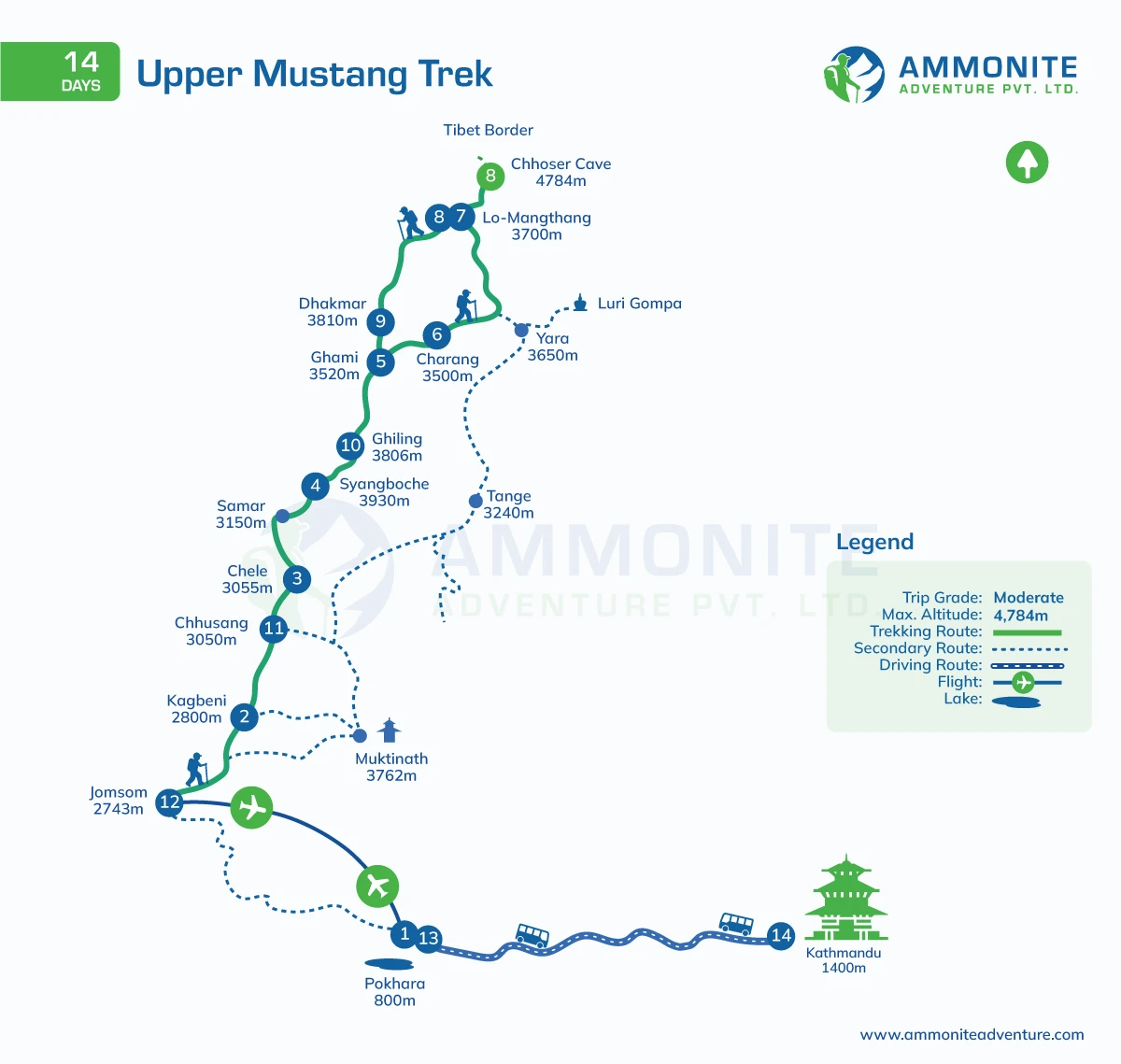
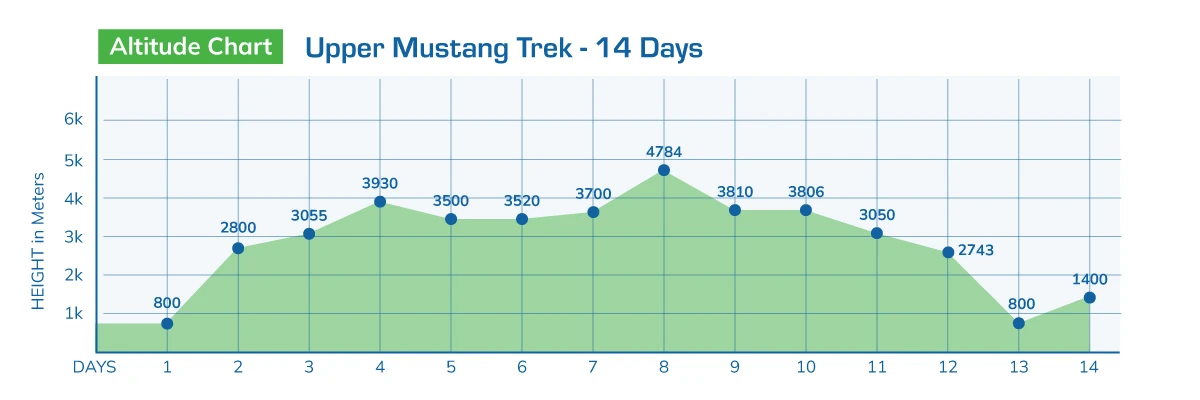
  • Day 01: Drive from Kathmandu (1,400 m) to Pokhara (800 m), enjoying scenic river valleys and Himalayan views along the way.
  • Day 02: Fly from Pokhara (800 m) to Jomsom (2,743 m) and trek to Kagbeni (2,804 m) through a dramatic desert landscape.
  • Day 03: Trek from Kagbeni (2,800 m) to Chele (3,055 m), entering the restricted Upper Mustang region via Kali Gandaki valley.
  • Day 04: Trek from Chele (3,055 m) to Syangboche (3,930 m), crossing high passes with increasing altitude and rugged terrain.
  • Day 05: Trek from Syangboche (3,930 m) to Ghami (3,520 m) through traditional villages and scenic mountain passes.
  • Day 06: Trek from Ghami (3,520 m) to Charang (3,500 m) across the dry Mustang landscape with cultural landmarks.
  • Day 07: Trek from Charang (3,500 m) to Lo Manthang (3,700 m) via Lo La Pass into the ancient walled city.
  • Day 08: Acclimatization day in Lo Manthang (3,700 m) with a side trip to Choser Cave (4,784 m).
  • Day 09: Trek from Lo Manthang (3,700 m) to Dhakmar (3,810 m), passing ancient monasteries and rugged cliffs.
  • Day 10: Trek from Dhakmar (3,810 m) to Ghiling (3,806 m) through gradual terrain and open landscapes.
  • Day 11: Trek from Ghiling (3,806 m) to Chuksang (3,050 m), descending through scenic Himalayan valleys.
  • Day 12: Trek from Chuksang (3,050 m) to Jomsom (2,743 m), completing the main Mustang trail.
  • Day 13: Fly from Jomsom (2,743 m) to Pokhara (800 m), returning to the lakeside city.
  • Day 14: Drive from Pokhara (800 m) to Kathmandu (1,400 m), concluding the Upper Mustang journey.

How much does the Upper Mustang Trek Cost?

The cost of the Upper Mustang Trek can be anywhere between 1700 USD to 3500 USD per person. The cost highly depends on the duration of your trek, the size of the expedition group, the type of services you demand, and your simultaneous side treks. 

Contact us now for special discounts on our 14-day package cost to the Upper Mustang while Ammonite Adventure arranges your trekking logistics, including necessities such as food, accommodation, mandatory permits, and government-licensed guides and porters. 

Here is a cost breakdown including different categories:

Cost Category Cost  Range Includes
Permits $530-$550

Restricted Area Permit - $50 x 10 days + $50 more per day if longer. 

ACAP Permit - $30
Guide & Porter $20–$40/day each

Guide - ~$30-35/day

Porter - ~$20-30/day
Food & Accommodation $20–$40/day Stay + 3x meal/day during trek
Domestic Trips $200-$500

Flights from Pokhara to and from Jomsom

Jeep or Bus trips

Total package cost $1,700 – $3,500 Price can vary depending on the duration of the trek, the types of service, and the number of group members.

Do You Need a Permit for Upper Mustang Trek

Yes, you needspecial permits for the Upper Mustang Trek because it is a protected restricted area near the Tibet border. For 2026, the permit system has been updated to be simpler and more flexible. The main permit is the Restricted Area Permit (RAP), which now costs $50 per day instead of the old $500 flat fee, and you only pay for the number of days you stay in the restricted zone (from Kagbeni onwards).

Solo trekking is now allowed as of March 2026, but hiring a government-licensed guide is still mandatory for safety and regulation. In addition to the RAP, you also need an ACAP permit (around $30) since Upper Mustang lies within the Annapurna Conservation Area, and a TIMS card ($20) for safety tracking and emergency coordination.

You cannot apply for these permits on your own. All permits must be arranged through a registered trekking agency in Nepal, which will handle the paperwork and ensure everything is ready before you begin your trek.

Why Choose the Upper Mustang Trek & What Makes It Special

Choosing Upper Mustang is like stepping into a living museum. This Restricted Area offers a rare look at Tibetan-influenced traditions in a land that time forgot, within the Mustang region, where the Walled City of Lo Manthang reveals royal palaces and 15th-century monasteries.

Instead of green forests, you’ll find a trans-Himalayan desert with bright red cliffs and deep canyons, while the rain-shadow location makes it ideal for monsoon trekking (June–August). New for 2026, updated permit rules allow solo trekkers to visit this remote paradise with a licensed guide, offering a less crowded trail experience.

The journey includes spiritual wonders like Sky Caves and Shaligram fossils in the Kali Gandaki gorge, along with cultural immersion in traditional teahouses and Mustangi hospitality. It is enriched with scenic flights to Jomsom, visits to Choser Cave, and exploration of the Kali Gandaki Valley, all set against panoramic Himalayan views.

From rugged trails and isolated terrain to vibrant festivals like Tiji and ancient monasteries, Upper Mustang delivers a complete cultural and natural experience unlike any other trek in Nepal.

Why we are the best for this trek

  • Experienced Guides: Government-licensed, English-speaking guides with deep knowledge of the Mustang region.
  • Safety First: Trained in wilderness first aid and high-altitude trekking.
  • Strong Support Team: Local Sherpas and porters experienced in Himalayan conditions.
  • Porter System: 1 porter for 2 trekkers (max 18 kg), with option for a personal porter.
  • Fair & Ethical Treatment: Crew are well-paid, insured, and provided food, lodging, and medical support.
  • Cultural Insight: Guides share local history, traditions, and stories throughout the trek.
  • Well-Organized Trip: Smooth logistics, flexible support, and quick problem-solving on the trail.
  • Sustainable Travel: Focus on responsible and eco-friendly trekking practices.

Itinerary

An early morning drive takes you to the tourist hub of Nepal, Pokhara. The ride in a cozy tourist bus begins only after a hearty breakfast, following the bank of the roaring Trishuli River at first and later on the Marsyangdi Khola.

Throughout the drive time, you will ghetto enjoy the jaw-dropping views of Mt. Dhaulagiri to the west, Annapurna and Machhapuchhre to the north, and Lamjung Himal to the east to catch their reflection in the lake of Phewa in the same evening.

Max. Altitude: 1,400mMeals: Breakfast-Lunch-DinnerAccommodation: Three-Star-Hotel

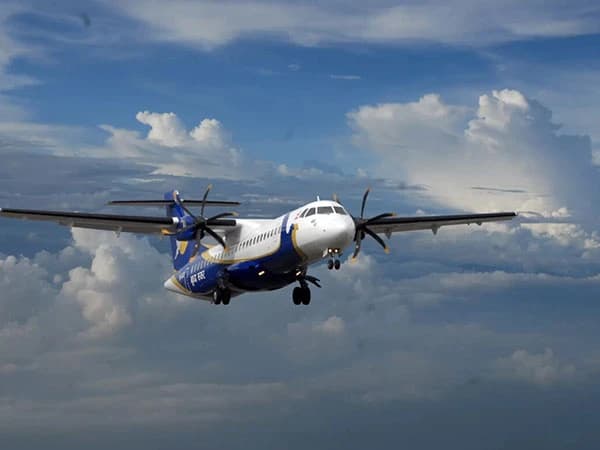
The time has come to board a scenic flight to Jomsom and view the most amazing snow-capped peaks from the aircraft in 25–30 minutes.

On reaching Jomsom, the trek officially begins to reach Kagbeni, an incredible Nepalese deserted land.

Max. Altitude: 2,804mMeals: Breakfast-Lunch-DinnerAccommodation: Local Lodges and Tea Houses

At Kagbeni, you will register your visit to the Upper Mustang with the essential permits and set off early through the Chuksang along the eastern river shore of the Kali Gandaki to avoid the strong wind of the afternoon, which tends to obstruct visibility.

The deserted realm at the foothills of the Himalayas, in contrast to the lush valleys below and snow-clad peaks above, is truly magnificent. To call it a day at Chele, passing by several ridges with expanded views of the surrounding Himalayan peaks, including Mt. Nilgiri.

Max. Altitude: 3,055m / 10,025ftMeals: Breakfast-Lunch-DinnerAccommodation: Local Lodges and Tea Houses

Now, a comparatively strenuous section of the overall hiking to the Upper Mustang begins with an altitude gain of more than 800m that includes several sections of steep ascent and descent, which are especially notable rising to Eklo Bhatti by a canyon and then Taklam La High pass (3,624 meters).

Throughout this trekking day, you will be exposed to the most stunning sights of Yaskawa Kang, Damodar Danda, Tilicho Peak, and Mt. Nilgiri, specifically from Samar, which descends by the giant gorge past Rangchutung Chorten, and finally the destination of the day, Syangboche.

Max. Altitude: 3,930m / 11,400ftMeals: Breakfast-Lunch-DinnerAccommodation: Local Lodges and Tea Houses

Another beautiful trek day begins early to ascent to Yamda La and Nyi La mountain passes, following breakfast to arrive at the traditional mountain village of Ghami, which passes by numerous local tea houses and lodges to refill boiled water to keep yourself hydrated and see the traces of Tibetan culture and traditions.

In between these passes, you will descend to the barley field at Gelling with mud houses that reach Tama Gaun, while the deserted landscapes keep you entertained and finally take you to the village of Ghami.

Max. Altitude: 3,930m / 11,400ftMeals: Breakfast-Lunch-DinnerAccommodation: Local Lodges and Tea Houses

Today's trek is through the driest part of the Mustang Trekking region, which starts with a first cross of Ghami Khola on a suspension bridge and continuous ascending and descending hiking over the plateau and Mani Walls until you arrive at the hamlet of Charang to spend the night.

The level of oxygen here can be significantly low, adding much to the challenge, which is rewarded with the never-ending vistas of the surrounding mountains keeping you refreshed.

Max. Altitude: 3,520m / 11,535ftMeals: Breakfast-Lunch-DinnerAccommodation: Local Lodges and Tea Houses

Following the filling morning breakfast, you will begin a leveled-up terrain and climb up another mountain pass, Lo La, directing you to the hidden kingdom of the Mustang region called Lo Manthang.

The Pass has magnificent views of Bhrikuti Peak, Annapurna I, Nilgiri, and Tilicho, diverging from the main trail to explore the Lo Manthang Valley in the evening.

Max. Altitude: 3,700mMeals: Breakfast-Lunch-DinnerAccommodation: Local Lodges and Tea Houses

The much-awaited full rest day is here when you will spend the entire day touring the most historical and cultural fascination of the Mustang region, called Lo Manthang. You are free to explore the nearby local monasteries, such as Namgyal and Tingkhar.

To reach Chooser Cave, make sure to follow the footsteps of your mountain guide, enjoying the picturesque landscapes, and later on learn about the ancient history and origins of the cave, along with the intricate architecture, murals, and religious artifacts within the cave complex.

Max. Altitude: 4,784mMeals: Breakfast-Lunch-DinnerAccommodation: Local Lodges and Tea Houses

Although the reverse trek begins this day through quite dusty, rugged, and occasional climbs and downhill walks, throughout the journey you will be exposed to the high-altitude terrain passing through Gyakar, which has a more than 1,200-year-old Ghar Gompa where Guru Rinpoche is believed to have meditated.

After 3–4 hours of walking from Lo Manthang, you would have made it to Dhakmar. As both are high-altitude stopovers, it is extremely important to keep up the pace and conclude the day at the teahouse on the outskirts of Dhakmar.

Max. Altitude: 3,810mMeals: Breakfast-Lunch-DinnerAccommodation: Local Lodges and Tea Houses

This day you will hit off the trekking trail right after the organic breakfast in a pleasing manner, as the chances of noticing a significant altitude change this day are very low, even though the route generally consists of rocky paths, open landscapes, and occasional ascents and descents until you reach Ghiling.

Max. Altitude: 3,810mMeals: Breakfast-Lunch-DinnerAccommodation: Local Lodges and Tea Houses

This day also begins with an early morning breakfast to proceed down the main trekking trail, relishing the jaw-dropping scenery with remarkable mountain views, to finally arrive at Chhuksang and take a stroll around, gazing at the starry skies at night, brightened by the snow-capped peaks.

Max. Altitude: 3,806mMeals: Breakfast-Lunch-DinnerAccommodation: Local Lodges and Tea Houses

It is the final trek day as you head toward Jomsom from Chhuksang to catch a flight the very next day to Pokhara, which can be overwhelming. Savor the panoramic peaks to the fullest and spend overnight at the district administration of the Mustang region, Jomsom.

Max. Altitude: 3,050mMeals: Breakfast-Lunch-DinnerAccommodation: Local Lodges and Tea Houses

On the thirteenth day, you will head back to the city of adventure in Nepal, Pokhara, where you can find every sort of thrilling thing to do, from paragliding, boating, rafting, and canyoning to simply strolling around numerous historical and natural heritage sites and others that you are desirous of having accomplished.

It will take you around 25–30 minutes to make it scenically to Pokhara by helicopter or airplane, and it is more advisable to travel by road, which during the summer season can be severely landslide-prone.

Max. Altitude: 2,804mMeals: BreakfastAccommodation: Three- Star-Hotel

The overall journey to the Upper Mustang concludes this day as you take a tourist bus back to the capital city of Nepal, Kathmandu, following approximately 200km of the Kali Gandaki River at first, then the Trishuli River via the Prithivi Highway.

By afternoon, you would have already made it to Kathmandu to enjoy the nightlife of Thamel in the heart of the city, buy some souvenirs to take home, and join your trek mates for a complimentary dinner in the evening.

Max. Altitude: 1,400mMeals: Breakfast-DinnerAccommodation: Three-Star-Hotel
Customize Trip

Route Map

Route map of 14 Days Upper Mustang Trek
Altitude Chart
Altitude charts of 14 Days Upper Mustang Trek

What is Included?

Hotel in City

  • Kathmandu: 1 night Twin-sharing standard hotel accommodation at Kathmandu on a bed-and-breakfast basis.
  • Pokhara: 2 night Twin-sharing standard hotel accommodation at Pokhara on a bed-and-breakfast basis.

Transportation

  • Airport Transfers: For your international and domestic flights, a round-trip transfer and Pick-up.
  • Trek Start: A sharing vehicle transfer is scheduled from Kathmandu to Jagat. One-way flight Ticket from Pokhara to Jomsom.
  • Trek End: One-way flight Ticket from Jomsom to Pokhara.
  • Return to Kathmandu: A sharing vehicle transfer is also scheduled back from Pokhara to Kathmandu.
  • Staff Transport: All ground transport for the guides, assistant guides, porters, and any other support staff.

Accommodations

  • Trek Accommodation: Overnight local tea house accommodation on a twin-sharing basis. Single rooms can be arranged for a small surcharge, subject to availability.
  • Total Accommodation Nights: 11 nights of standard twin-sharing accommodation during the trek.

Food

  • Full Board Meals: Breakfast, lunch and dinner meals and hot drinks are provided during the entire trek.
  • Special Inclusions: Water purification tablets for safe drinking water.
  • Total meals included: There will be a total of 14 Breakfasts, 11 Lunches and 10 Dinners.

Guide

  • One government-licensed English-speaking guide. The assistant guides will join the group, depending on the size of the group.
  • All Guide fees, food, insurance, salaries, accommodation, transport and all equipment will be covered.

Porter

  • Porters: One porter for every two trekkers. Each trekker's personal luggage weight limit is 9 kg.
  • All Porter fees, food, insurance, salaries, accommodation, transport and all equipment will be covered.

Trek Permits and Expenses

  • All necessary permits - including special area permits - are pre-scheduled to make your trek a bit easier and trouble-free. Included permits are:
  • Restricted Area Permit (RAP)
  • Annapurna Conservation Area Permit (ACAP)
  • TIMS Card (Trekkers’ Information Management System)

Medical Assistance

  • Emergency Provision: Guides will be equipped with the emergency oxygen and a first aid medical kit on the trek.
  • Rescue Arrangements: Trained rescuers in case of emergency (included in your Trek Travel Insurance).

Souvenir

  • Goodbye Souvenirs: All participants will receive an Ammonite Adventure cap and T-shirt.
  • Completion Certificate: A completion certificate for all participants.

Gear and Trekking Equipments

  • Sleeping bags and down jackets, duffle bag (one for every two trekkers) if you do not have your own
  • Manaslu Region map.

Additional Services

  • Luggage Storage: Free secure storage for your luggage throughout the trek with us.
  • Full Coordination: Our full coordination team will take care of all logistics, planning, and requirements for you.

Farewell

  • A cultural farewell meal in Kathmandu at the conclusion of your journey.

What is Excluded?

International Flight

  • International flight to and from Nepal is not included.

Accommodations

  • Hotel accommodation in Kathmandu before and after the Trek.
  • Extra nights in Kathmandu on early arrival, late departure, or early return from the trek due to any cause.

Food

  • All meals in Kathmandu/ Pokhara before and after the trek are at your own expense.
  • Extra meals required due to early arrival, late departure, or early return from the trek are not included.

Guide and Porter

  • Guide, porter, and local support staff tipping is excluded and appreciated on a service basis.

Visa

  • Nepal entry visa fees (to be paid in cash upon arrival at Tribhuvan International Airport) are the traveler's responsibility.

Travel Insurance

  • Travel insurance is mandatory and must include high-altitude medical emergencies, helicopter evacuation and treatment costs.

Personal Expenses

  • Personal expenses such as snacks, beverages (alcoholic/hot/cold), hot water/boiled water, hot showers, Internet/ Wi-Fi, mobile/phone calls, charging batteries, laundry, and additional porter fees.
  • Personal clothing and trekking gear.

Other Expenses

  • Charges for excess baggage (a trekker can carry only 9 kg).
  • Unforeseen additional costs due to natural calamities, adverse weather, modifications to the itinerary for safety reasons, political unrest, government policy, illness, or other unforeseen circumstances beyond our control.

Add-ons & Options

Make your Upper Mustang Trekking an even more memorable experience by adding any of the following services offered by Ammonite Adventure:

Kathmandu to Pokhara Flight (USD 106 per person)

Take a quick and scenic one-hour flight from Kathmandu to Pokhara at only USD 106 per person! Start your trek fresh, as well as enjoy the breathtaking aerial view of Nepal’s landscapes.

Pokhara to Kathmandu Flight (USD 106 per person)

End your trek with the same astonishing flight from Pokhara to Kathmandu at USD 106 per person. It is a fast, convenient and beautiful way to conclude your journey.

Personal Porter (USD 280)

Enjoy your trek to the fullest by hiring a personal porter for USD 280. Your porter will carry your luggage, leaving you unencumbered to fully experience the beauty of the journey. If you are traveling with a friend, you can also share the porter and divide this cost between two trekkers.

Dates & Availability

Starts:May 04, 2026Ends:May 17, 2026
PriceUS$1635
AvailabilityGuaranteed
Starts:May 05, 2026Ends:May 18, 2026
PriceUS$1635
AvailabilityGuaranteed
Starts:May 06, 2026Ends:May 19, 2026
PriceUS$1635
AvailabilityGuaranteed
Starts:May 07, 2026Ends:May 20, 2026
PriceUS$1635
AvailabilityGuaranteed
Starts:May 08, 2026Ends:May 21, 2026
PriceUS$1635
AvailabilityGuaranteed
Starts:May 09, 2026Ends:May 22, 2026
PriceUS$1635
AvailabilityGuaranteed
Starts:May 10, 2026Ends:May 23, 2026
PriceUS$1635
AvailabilityGuaranteed
Starts:May 11, 2026Ends:May 24, 2026
PriceUS$1635
AvailabilityGuaranteed
Starts:May 12, 2026Ends:May 25, 2026
PriceUS$1635
AvailabilityGuaranteed
Starts:May 13, 2026Ends:May 26, 2026
PriceUS$1635
AvailabilityGuaranteed
Starts:May 14, 2026Ends:May 27, 2026
PriceUS$1635
AvailabilityGuaranteed
Starts:May 15, 2026Ends:May 28, 2026
PriceUS$1635
AvailabilityGuaranteed
Starts:May 16, 2026Ends:May 29, 2026
PriceUS$1635
AvailabilityGuaranteed
Starts:May 17, 2026Ends:May 30, 2026
PriceUS$1635
AvailabilityGuaranteed
Starts:May 18, 2026Ends:May 31, 2026
PriceUS$1635
AvailabilityGuaranteed
Starts:May 19, 2026Ends:June 01, 2026
PriceUS$1635
AvailabilityGuaranteed
Starts:May 20, 2026Ends:June 02, 2026
PriceUS$1635
AvailabilityGuaranteed
Starts:May 21, 2026Ends:June 03, 2026
PriceUS$1635
AvailabilityGuaranteed
Starts:May 22, 2026Ends:June 04, 2026
PriceUS$1635
AvailabilityGuaranteed
Starts:May 23, 2026Ends:June 05, 2026
PriceUS$1635
AvailabilityGuaranteed
Starts:May 24, 2026Ends:June 06, 2026
PriceUS$1635
AvailabilityGuaranteed
Starts:May 25, 2026Ends:June 07, 2026
PriceUS$1635
AvailabilityGuaranteed
Starts:May 26, 2026Ends:June 08, 2026
PriceUS$1635
AvailabilityGuaranteed
Starts:May 27, 2026Ends:June 09, 2026
PriceUS$1635
AvailabilityGuaranteed
Starts:May 28, 2026Ends:June 10, 2026
PriceUS$1635
AvailabilityGuaranteed
Starts:May 29, 2026Ends:June 11, 2026
PriceUS$1635
AvailabilityGuaranteed
Starts:May 30, 2026Ends:June 12, 2026
PriceUS$1635
AvailabilityGuaranteed
Starts:May 31, 2026Ends:June 13, 2026
PriceUS$1635
AvailabilityGuaranteed

Additional Information

When is the best time to visit the Upper Mustang? 

Spring and Autumn are unquestionably the best seasons to visit the Upper Mustang, particularly during the Dashain festival when locals of Upper Mustang celebrate the beautiful spring festival of Tiji. 

The monsoon season is also the ideal time to visit the Upper Mustang because the entire trip to this area of Nepal is to a hidden trans-Himalayan region that is secluded by the massive Annapurna, Dhaulagiri, and Machhapuchhare peaks in the rain shadow realm. 

Here is what you can expect the temperature to be like during your Upper Mustang trek in different seasons:

Seasons Temperature in the Daytime Temperature at Nighttime
Spring (Mar-May) 12°C to 22°C -2°C to 6°C
Summer/ Monsoon (Jun-Aug) 18°C to 24°C 8°C to 12°C
Autumn (Sep-Nov) 10°C to 18°C -2°C to 5°C
Winter (Dec-Feb) -5°C to 10°C -20°C to -5°C

To get the most out of the 14-day exciting natural and cultural excursion to the Upper Mustang, I suggest you take extra precautions when packing, gearing up, and choosing equipment because winters there can be extremely cold.

Food and Accommodation During the Upper Mustang Trek

In your Upper Mustang trek, you will stay in tea houses or small lodges which are run by locals who welcome you with great hospitality and offer basic yet cozy rooms and services to enhance your journey. 

They usually have one dining hall where you can enjoy your meals and breakfasts. They provide shared bathrooms, Wi-Fi (in some places), hot showers and basic meal facilities. 

Here is what you can expect:

Accommodation options in Upper Mustang:

  • Rooms are usually on a sharing basis. You can make an advance booking for private accommodation. 
  • A bed, a thick blanket, and a pillow with a shared squat toilet.
  • A communal dining room, heated with a wood-burning stove, where you can bond with fellow trekkers and locals. 
  • Electricity for charging your electronic devices in most of the trek routes. 
  • Wi-Fi and internet services might be slow in some areas; however, they are available throughout the trek route.
  • Hot showers for a few extra charges are available. But we do not recommend you shower in higher elevations which might increase your chances of catching a cold. 
  • Camping is also possible; the teahouses have camping space allocated for camping.

If you want to have a luxury accommodation experience during your Upper Mustang trek, then Lo Manthang offers luxury hotels with modern facilities. 

Food & Beverage options in Upper Mustang:

Breakfast Menu
Vegetarian Non-Vegetarian 

1. Porridge (Oats, Millet)

2. Pancakes (Honey, jam, peanut butter)

3. Tibetan bread with jam or eggs

4. Omelette (Plain, cheese, veggie)

5. Boiled Eggs

6. Tea/coffee/milk

7. Hot lemon (Ginger)

8. Ginger tea

1. Omelette with ham or sausage

2. Fried eggs with bacon

3. Pancakes with honey or eggs

Lunch Menu
Vegetarian Non-Vegetarian

1. Dal Bhat (rice, lentil soup, veg curry, pickle)

2. Fried rice or noodles (vegetable)

3. Vegetable soup

4. Potato curry or fried potatoes

5. Chapati or Tibetan bread with curry

1. Dal Bhat with chicken curry

2. Fried rice or noodles with chicken or egg

3. Thukpa (noodle soup with meat)

4. Chicken or buff (yak meat) curry

Dinner Menu
Vegetarian Non-Vegetarian

1. Dal Bhat Tarkari set (unlimited refills)

2. Veg momos (dumplings)

3. Thukpa (veg noodle soup)

4. Pasta or spaghetti (veg sauce)

 5. Veg fried rice or potatoes

1. Chicken or buff momos

2. Non-veg thukpa

3. Pasta with meat sauce

4. Dal Bhat with meat curry

5. Fried meat with rice or noodles

Snacks Menu
Vegetarian Non-Vegetarian

1. Popcorn

2. Biscuits

3. Chocolates

4. Chips

5. Seasonal fruits (limited)

Same as veg options (since snacks are generally vegetarian)


Beverages
Soft Drinks/ Tea Hard Drinks

1. Black tea

2. Milk tea

3. Hot lemon with honey

4. Coffee

5. Ginger or mint tea

6. Soft drinks (Coke, Fanta, Sprite)

7. Bottled or boiled water

1. Occasionally, local beer (Chang, Mustang beer)

2. Limited availability of imported alcohol

Note: Prices for food and accommodation gradually increase with the increase in altitude.

What is the difficulty grade of the Upper Mustang expedition?

The weather is a big factor when determining the difficulty of the Upper Mustang Trek. But in general, the adventurous journey through the most off-the-beaten Himalayan trail to Upper Mustang is considered moderately challenging. Here is a better insight: 

Seasons Difficulty level Main Conditions
Spring (Mar-May) Moderate Stable weather, clear skies, and trails.
Summer/ Monsoon (Jun-Aug) Moderate - Challenging Heavy winds, dusty trails, little rain, and warmer days.
Autumn (Sep-Nov) Moderate/ Best time Best weather with clear skies, dry, and easy trails.
Winter (Dec-Feb) Challenging - Difficult Extremely cold, snowy, and slippery trails, with limited stay available.

How to keep yourself fit for the Upper Mustang Voyage?

As a first-timer in Nepal seeking to trek the higher altitude treks such as the Upper Mustang, involving several days of rambling through some steep uphill and downhill trails in the highly elevated land that can actually cause spotting of acute mountain sickness, it is extremely important to keep yourself physically conditioned and mentally determined while handing over the logistic planning to a reliable local travel and trek operator.

Here's what you can do to prepare mentally and physically:

Physical Preparation

  • Incorporate cardiovascular exercises like running, jogging, swimming, etc.
  • Walk regularly, aim for 4 to 6 hours of comfortable walking. 
  • Focus on strength training, especially your legs and core. Exercises like squats, lunges, and step climbing are highly recommended. 
  • Practice hiking on varied terrain. 

Healthy choices

  • Maintain a balanced diet rich in carbohydrates for energy and consume enough protein for muscle repair. 
  • Avoid drinking alcohol and smoking. 
  • Practice drinking enough water, with at least 3 - 4 liters a day.
  • Keep a positive mental attitude and be prepared for potential challenges.

Why pack lightly for the Upper Mustang Trek?

The rambling to the Upper Mustang involves several days of hiking through rugged terrain at varying altitudes, where carrying a heavy backpack can increase the possibility of physical strain and fatigue, while light backpacking with only essential items provides flexibility with movement, allowing efficient acclimatization and a comfortable pace, mitigating the chances of altitude sickness as well.

Although it is possible to hire porters to decrease the weight on your shoulders, how much they can do is limited, and excessive luggage can cost you additionally. Hence, it is crucial to pack what is necessary in a light manner that ensures the convenient management of your backpack and the hiring of a porter in need without exceeding the weight limits, allowing more freedom with your itinerary and excessive baggage.

Trekking group/single

The Upper Mustang trek is open for private and group adventures, whether you are a solo traveler or a group. So, in case you formed a group of people to go on the trek, then you will be able to avail a lot of special offers that come with the group treks. The best thing is that you get the largest discount with the largest group. However, these group discounts are not applicable when Ammonite Adventure is the organizer of the group.

We are ready to receive groups of any size and pick an assistant guide for any group with 12 or more trekkers. Two trekkers will have a porter and are limited to 9 kg of luggage.

Extra personal expenses on trekking

The Upper Mustang trek package covers most of the expenses related to the whole trek. The major costs are covered, and the only exceptions are that the clients will have to take care of their meals, personal expenses, and accommodation in Kathmandu, Pokhara, and during the trek. Both cities are rich with a variety of hotels/lodges, luxury and budget, and clients can book themselves online.

All of the clients should carry some spending money, which will be used for accommodation and food in Kathmandu or Pokhara. Extra cost is also required for the visa process, the purchase of the travel insurance policy, snacks, hot (tea/coffee) and cold drinks, tips for the crew members, souvenirs, etc. They can carry cash (major currencies) that they can convert the currency only in Kathmandu or Pokhara for Nepali Rupees. The trekking regions will only accept Nepali currency.

Ammonite Adventure Crew

The licensed guides and our local Sherpa lead the 14-day Upper Mustang trek. They will make sure that the trek is hassle-free and unforgettable. Porters will carry your bags, with two trekkers sharing one porter. Each porter can carry a maximum of 18 kg. We can also arrange for a personal porter, if you prefer.

Most members of our team are native to the Himalayan region and are well-adjusted to high altitudes. We pay them fair wages, and they are covered by insurance, provided with food, clothing, lodging, and medical support – all of which ensures their health and safety. By looking after our staff, we are assured that they will be efficient in providing you with the best service during your trek.

Our trek leaders are:

  • Wilderness First Aid trained
  • Government-certified trekking qualifications holders
  • English speakers as well as other languages speakers
  • Trained in conservation and biodiversity
  • Having the skill of storytelling that allows the sharing of local culture and history
  • Having strong communication and facilitation skills
  • Having problem-solving skills under pressure
  • Being skilled in organisational and logistical planning
  • Having a good sense of humor makes for an enjoyable trek
  • Being considerate in terms of client needs
  • Being committed to sustainable and responsible tourism

Booking and Payment Process

You're in safe hands when you book with us at Ammonite Adventure, a registered trekking agency bonded by the Nepal Government, members of the Trekking Agency Association of Nepal (TAAN), and the Nepal Mountaineering Association (NMA). To guarantee the trek, you need to make a 10% down payment through bank transfer, Western Union, or online.

For the balance payment, you can pay in Nepal with cash, a credit card, or a transfer. After the booking, you will need to send us a copy of your passport, which should include dependent children, photos, travel insurance, and flight details within a week.

Last-minute booking

We accept last-minute bookings for the Upper Mustang Trek. You must pay for the trip in full 24 hours before the start of the trek. However, last-minute bookings will be subject to the conditions of flights and weather, although we do our best to run treks at any time.

Trip extension

Truly, if you wish to be around for a couple more days after the trek, we are in a position to manage trips for you. You can take part in a number of activities, such as Kathmandu sightseeing, jungle safaris, or activities like paragliding, rafting, or canoeing.

If you like to relax, we can also arrange Pokhara cultural tours or a wellness retreat for you.

Feedback

Once the Upper Mustang Trek is over, there will be a farewell dinner in Kathmandu arranged by Ammonite Adventure. You will receive a printed certificate and have the opportunity to provide feedback on the trek.

Equipments

For a 14-day trek, it is very critical to pack properly if you want to be comfortable and feel safe. We will organize one porter for every two trekkers for you.

Please coordinate to pack your gear into one bag, preferably a duffel bag with at least 60L volume. Moreover, you need to have a regular backpack with your daily essentials. Here is a packing list to help you out:

Head

  • Sun hat or cap
  • Warm woolen hat
  • UV-protection sunglasses
  • Buff or scarf for dust and wind

Upper Body

  • 2 Warm thermal base layers
  • 3 Quick-dry T-shirts
  • 1 Fleece jacket
  • 1 Down jacket (warm and packable)
  • 1 Waterproof and windproof jacket
  • 1 Light long-sleeve shirt for sun protection

Hands

  • 1 Pair of lightweight inner gloves
  • 1 Pair of insulated warm gloves

Lower Body

  • 2 Pairs of trekking pants
  • 1 Pair of thermal leggings
  • 1 Pair of comfortable pants for evenings
  • 1 Pair of waterproof pants
  • 1 Shorts or light pants for lower altitudes

Feet

  • 4 Pairs of trekking socks
  • 1 Pair of warm woolen socks
  • 1 Pair of sturdy trekking boots (waterproof)
  • 1 Pair of lightweight shoes or sandals for lodge wear

Toiletries

  • Toothbrush and small toothpaste
  • Soap or biodegradable body wash
  • Small quick-dry towel
  • Sunscreen SPF 40+
  • Lip balm with SPF
  • Hand sanitizer
  • Pack of wet wipes
  • Personal medication (as required)

Backpacks

  • Duffle bag (60–70 L, carried by porter)
  • Daypack (20–30 L, for personal use)
  • 2 Rain covers (one for duffle, one for daypack)

Accessories

  • Headlamp with extra batteries
  • Pair of trekking poles
  • Water bottle (1 L) or hydration bladder (2 L)
  • Camera or smartphone for photos
  • Power bank (10,000 mAh or more)
  • Travel adapter

Extra Items

  • Passport copy
  • Travel insurance policy copy
  • Notebook and pen
  • Pair of earplugs
  • Pack of snacks (chocolates, energy bars)
  • Lightweight book or Kindle
  • Trekking permit copies

We can provide you with a (used, nonwaterproof) duffle bag, (used) down jacket, and (used) sleeping bag if you do not have your own.

FAQs

Although travelers and trekking aspirants are not obligated to get travel insurance, it offers financial security and assurance against various unforeseen events, which are everyday circumstances for Himalayan locals traversing in such isolated areas as Upper Mustang.

In more touristic places like Kathmandu and Pokhara, along with the trek starting point of Upper Mustang, Jomsom, you can enjoy continental and western options as well, while on the trekking route, it can get limited to typical Nepali and Tibetan dishes due to the remoteness of the area in the higher altitude trans-Himalayan zone.

Yes, besides the well-developed tourist hub of Nepal in the cities of Kathmandu and Pokhara, the ancient deserted yet larger villages of the Upper Mustang: Kagbeni, Jomsom, and Lo Manthang, you can have access to private rooms for yourself, which might cost you additionally, while staying in shared rooms with twin beds in tea houses and local lodges is a common and effective practice in rural countryside trekking destinations of Nepal in the Himalayas.

In addition to the price, or sometimes complimentary, you can get your electronic devices, such as your cell phone and camera, charged at the teahouse and local lodges en route to the Upper Mustang.

Of course, you can buy bottled mineral water on the trekking trail to Upper Mustang, although it can cost you slightly more than what you have been used to and is not recommended at all so that you can aid in ecotourism and ecotourism as a responsible trekker.

Yes, a professional guide is a must-have trekking companion who makes your journey free of worries while dealing with most of the trek logistics and guides you successfully through some of the sections that seem tough for beginners traversing without a guide, along with solo traveling in Nepal without a guide being banned since April 1st, 2023.

Even though the overall tour to the Trans Himalayan Upper Mustang region of Nepal does not exceed more than 4,000 m, the maximum altitude you will be at is in the Chooser Cave at an elevation of 4,784m (15,695 ft) with Ammonite Adventures and Treks.

Yes, on one of the high-altitude treks in the Upper Himalayan region of Nepal, spotting some of the symptoms of mountain sickness is a normal occurrence; hence, it is important to consume a healthy diet, remain hydrated, acclimate appropriately, maintain the pace, and follow your mountain guide.

One thing trekkers must avoid when seeing the symptoms of altitude sickness, or AMS, is ascending or descending without fully recovering, along with alcohol or any intoxicants.

Yes, a bucketful of lukewarm water with a jug in the highly elevated tea house and lodges on the way to Upper Mustang at an additional cost is not an issue, while in Kathmandu and Pokhara it can come as a compliment.

  • Best Price Guarantee
  • Fully Cutomizable Trip
  • Instatnt Booking
  • Flexible Itinerary
Speak to an Expert