October 23, 2024read more +
Highly Professional Team
Ammonite Adventure gave me a lifetime trekking experience in their 7 Days Trekking in Langtang. They were professional from the
Dona Sellers,
Burundi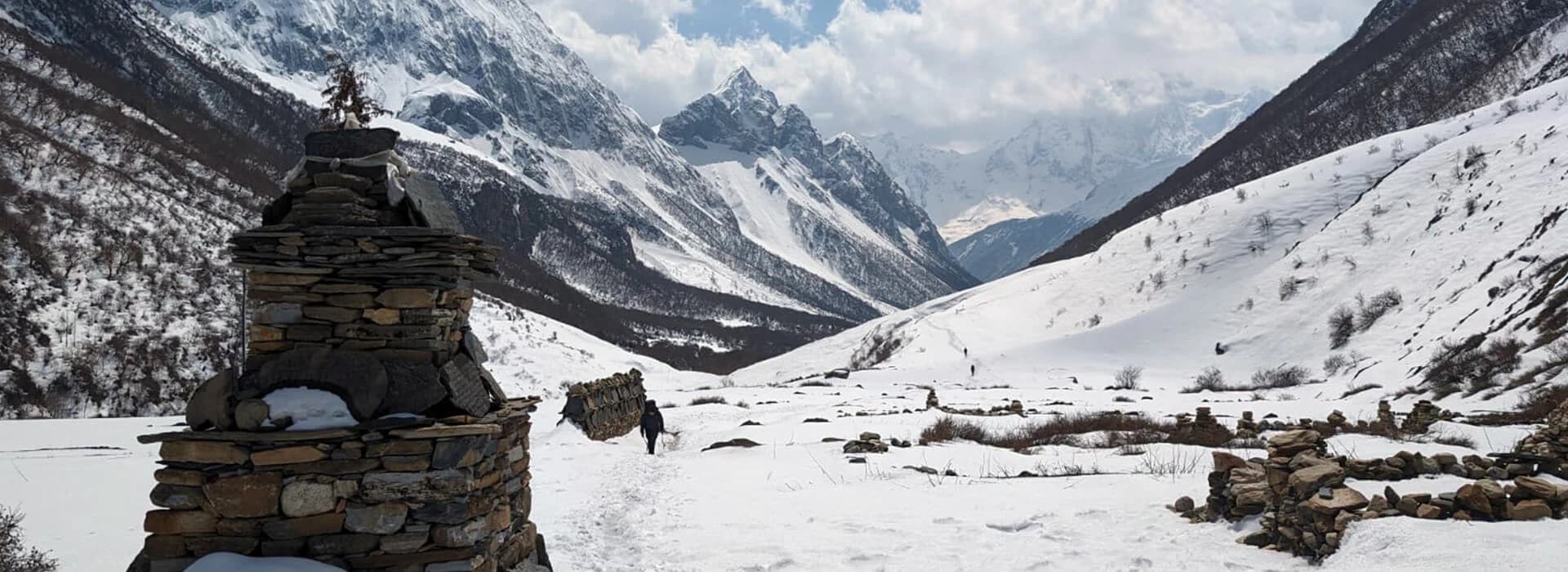
The Langtang Valley Trek is a wonderful 7-day outdoor adventure to Langtang National Park, showcasing nature, stunning scenery, cultural diversity, and adventure, located at the heart of the Himalayan region in Nepal. It is located about 80 kilometers north of Kathmandu (the capital city of Nepal).
It traverses through Langtang National Park, a protected park in Nepal, which contains multiple ecosystems from subtropical to alpine meadows. Lofty mountains, such as Langtang Lirung, surround Langtang Valley.
The Langtang Valley Trek is a perfect 7-day escape just 80 km north of Kathmandu. As you trek through Langtang National Park, Nepal’s first Himalayan protected area spanning 1,710 km², you’ll experience everything from lush subtropical forests to peaceful alpine meadows – all surrounded by the majestic Langtang Lirung (7,227 m).
It’s a journey filled with breathtaking scenery, vibrant local culture, and the true spirit of the Himalayas. There is also an intriguing cultural element to this Langtang Valley Trek. The journey has taken on a new dimension because of the Tibetan-influenced culture and way of life of the Tamang people.
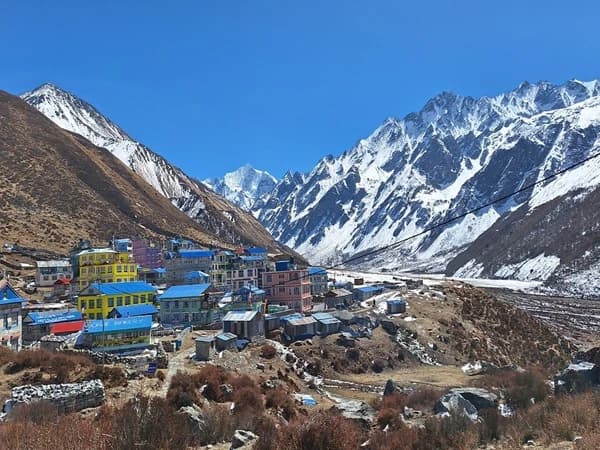
You can witness communities where the ancient and the modern coexist, such as Kyanjin Gompa (3,900 meters) and Langtang Village. which stands as a testament to resilience after its complete rebuilding following the 2015 earthquake. This 7-day, roughly 70 km Short Langtang Trek in Nepal will take you through a range of terrain, including open slopes, rocky trails, and forest trails.
In addition to offering your body challenges with significant altitude gain, the trek will reward you daily with breathtaking views. Under the new safety regulations, all trekkers must be accompanied by a licensed guide, ensuring you navigate the habitat of the rare Red Panda and Himalayan Black Bear safely while gaining deep local insights.
It doesn't matter if you are a novice or an expert hiker; if you are looking to experience Nepal's natural beauty and culture, the moderate Langtang Kyanjin Gompa Trek is perfectly suitable for you. For a standard 7-day guided package, costs typically range from $625 to $799, covering your Langtang National Park entry permit ($23 - $25) and TIMS card ($17 - $20), making it one of the most accessible high-altitude adventures in the world.
For the hectic tourist on the lookout for an experiential Himalaya trekking expedition, the Short Langtang Trek in Nepal is just about the ideal accessory. The real trekking shall typically not be more than a maximum of 7 days of some of the finest mountain landscapes, a range of landscapes, and the Tamang lifestyle.
The Langtang Kyanjin Gompa hike begins with a drive from Kathmandu to Syabrubesi, the trekking beginning point. The trek also passes through dense forest and normal villages to Kyanjin Gompa, 3,870 meters. It is an acclimatization village in reasonable condition, and one can either walk up to Kyanjin Ri (4,773 meters), which is great for Langtang Lirung and Dorje Lakpa peaks.
Short Langtang Trek 7 Days Package is suitable for first-time trekkers at moderate altitudes and with good trails. Kyanjin Ri is the highest point, hence ideal for first-time high-altitude trekkers. No domestic flight is required, and logistics are simpler with less traveling time.
Ammonite Adventure provides an easy-going and lifetime Langtang Valley trekking experience with thorough direction and expert guidance.
Langtang Trek Nepal 7 days is the finest 1-week short trekking in Nepal for such tourists who are ready to observe the Himalayas within a limited time frame. If you want a 7-day trekking vacation around and within Kathmandu, the Langtang Valley Trek would be the finest suitable choice.
It takes you to the core of Langtang National Park, where it provides wonderful mountain landscape sightseeing, rich landscape variety, and the Tamang village culture.
This Langtang Himalaya Trek is perfect for those who want to see the Himalayas in a rewarding but not strenuous way without taking local flights. With well-known routes and tiny teahouses that follow the trail, the trek is perfectly designed for first-time as well as experienced trekkers.
A week in Nepal is what stressed people dream of, and this trek is the perfect mix of nature, culture, and scenery of extremely stunning mountains.
Kyanjin Gompa, 3,870 meters high above Nepal's Langtang Valley, is one of the world's oldest Buddhist gompa and a religious pilgrimage for villagers and trekking pilgrims alike. The six-century-old gompa itself, made of its typical stone and wood and with walls covered in thangkas, carried a distance from China's Tibet.
Aside from religious importance, Kyanjin Gompa is also famous for yak cheese manufacturing. Alpinestyle cheese production methods were brought to the nation during the 1950s by the Swiss government, and along with this, the people witnessed the beginning of a factory that makes cheese. The Organic Yak Cheese Production Centre continues to operate, and people have access to this revolutionary Himalayan yak milk cheese.
The monastery environment is ideal for excursions with isolated natural beauty. The last teahouse stop on the Langtang Trek short circuit, Kyanjin Gompa, is a serene oasis for trekkers to relax and be surrounded by the breathtaking Himalayan landscape.
Langtang Trek Nepal 7 days offers trekkers the finest, unparalleled views of some of the most attractive Himalayan peaks. Some of the most prominent peaks that you will be able to see are listed below:
Langtang National Park, established in 1976, possesses an area of land with an area of 1,710 square kilometers in Nuwakot, Rasuwa, and Sindhupalchok districts of mid-western Nepal. Our whole Langtang Himalaya Trek will take place within the Langtang National Park.
The park is inhabited by 18 vegetative and 26 village habitations, i.e., Langtang Valley. The ecosystem of the park ranges from tropical forest at lower altitudes to alpine meadows and permanent ice at upper levels.
This valley is endowed with a great diversity of flora and fauna and is a paradise for nature lovers. Kyanjin Gompa Langtang Trek 7 Days to the far-off areas of Langtang provides the experience of peace, a balm in life against stress, and a chance to rejuvenate in pristine nature.
On your Langtang Himalaya Trek, the first thing you notice is the people around you, starting from the lower Langtang elevations. The Tamang people mostly dominate the region. Let's say around 80 % of the Tamangs are present here. It is a mostly rich cultural heritage region with well-established traditions, language, attire, script, instruments, and social conventions.
The Tamang language, a part of the Tibeto-Burman language family, the Tamangic branch, is lexically similar to the Gurung language to the degree of about 75%. It indicates that these people were culturally close earlier.
Musically, the Damphu and Cello were instruments of symbolism used by the Tamang. Instrumental music played on instruments like these is created to represent themes such as comedy and satire, happiness, and sorrow that epitomize the liveliness of people's storytelling culture. Tamangs' best festival culture is Sonam Lhochhar in the month of Magh (February–March).
The finest of Tamang culture can be seen in the Tibetan part of the Langtang district, primarily in the monastery building, architectural designs, and Buddhist lifestyle.
Yala Peak, at 5,500 meters, is an adventure for anyone who wishes to have the flavor of adventure during their Langtang Himalaya Trek. While it tacks on a day or two on the usual Langtang Valley Trek, it's a wonderful choice for anyone wishing to ascend a Himalayan peak without subjecting themselves to the technicality of larger climbs.
The climb to Yala Peak provides views of the nearby hills, such as Langtang Lirung, Gangchenpo, and Dorje Lakpa. Even though at 7 days you are not able to summit the peak, the area can be explored in 7 days. Langtang Trek remains pretty and is worth seeing. For time-consuming individuals, however, one can just walk around the surrounding area and appreciate the beauty and serenity of the location without climbing the entire summit.
Gosainkunda Lake is situated at a height of 4,380 meters above sea level and is a place of pilgrimage for Buddhists and Hindus. Langtang National Park encompasses the phenomenon overall across 108 lakes, though Gosainkunda is considered the most sacred of all these lakes.
The lake freezes during winter and is inhabited by travelers who prefer ice skating on the lake. Other important lakes in the area are Saraswati Kunda, Bhairab Kunda, Surya Kunda, and Naga Kunda.
Pilgrimage to these holy places gives a glimpse of the religious and cultural diversity of Langtang Valley. You can add a visit to Gosainkunda Lake as a side trip during the Langtang Trekking 7 Days.
If you want a less demanding trekking experience, the Langtang Trek 7 Days offers the perfect combination of adventure and luxury. Since there are several trails to trek, you can choose the trail that best suits you and your speed. They are low-altitude treks and therefore perfect for first-time trekkers, families, and those who want a short but pleasurable experience.
You can see stunning views, mountains, and a glimpse of nature within seven days. Langtang trekking is one of the most common and rewarding treks in Nepal that takes you through a lifetime experience. It does not require any physical strength it.
Do not miss these beautiful day hikes to Tserko Ri and Kyanjin Ri during the Langtang Trekking 7 Days. These ridges offer panoramic views of the Langtang Himalayas, even the Tibetan Himalayan range. The 14th-highest peak in the world, Mt. Shishapangma (8,027m), is visible from Tserko Ri (5,000m) and forms a divine landscape of snow mountains and glaciers.
The trek to Tserko Ri is steep, a 1,100m climb straight from Kyanjin Gompa, but sunrise over the view makes the Kyanjin Gompa Langtang Trek 7 Days worth it in a beauty unlike any other. Kyanjin Ri (4,773m), a shorter but no less beautiful optional trek, offers spectacular views of Langtang Lirung and other nearby peaks. These trips introduce adventure and nature to the 7-day trek, making the Langtang trek all the more thrilling.
The cost of the Short Langtang Valley Trek can be around USD 700 - USD 800 per person. These costs can vary depending on the size of your expedition group, duration of trek, seasons, standard of demanded service, and your unplanned side treks.
You don't have to worry because all of these factors will be discussed and analyzed before your trek, i.e., during the booking and arrangement of your trip.
We are offering Langtang Village Trekking at a very affordable price of $799 per person for 2026 & 2027. We are offering a package price with the permits, hotel, food, guide, porter, and transport at a very affordable price. We are offering this package with professional leadership, 24/7 support, free trekking gear, and a baggage store facility at your doorstep.
We offer specializations in treks of small groups, private tours, and customized treks in an effort to offer the best of your experience.
Here is a cost breakdown including different categories:
| Group size | Price Per Person |
| 1 | $799 |
| 2-4 | $755 |
| 5-10 | $705 |
| 11-20 | $625 |
Langtang Vallay Trekking costs just USD 625 - USD 799 per person depending on group there is no other secret hidden cost. You are paying for the total trekking experience. You start at Kathmandu and travel to Syabrubesi, the entrance of Langtang, in a scenic drive. In the seven-day trek, you walk through forests of greenery, secluded villages, and breathtaking Himalayan scenery to reach sacred Kyanjin Gompa.
Our package entails accommodation, meals, permits, transfers, professional guide and porter services. We care about your experience as much as your convenience and provide 24/7 support and small group treks. Book your tour with us through WhatsApp (+977 9851230809) or email.
The Kyanjin Gompa Langtang Trek 7 Days begins with a hill drive from Kathmandu to Syabru village, which is 1,400 meters above sea level. On having an early breakfast at Kathmandu, the trek begins on a curved road along with hills, paddy fields, and villages en route. The tourists will be going through Dhunche, which is the administrative center of Rasuwa District, while on the way and observing the lifestyle of people there. Lunch is normally consumed at a roadside cafe along the route, where there is a chance to enjoy the local Nepali cuisine such as dal bhat, healthy rice, lentil soup, and veg.
Still going on, the Trekking to Langtang Village Nepal follows down to Trishuli River with the stunning landscape of the river facing Langtang River. Although lengthy, the path is rewarded by the varied landscape shifting from forests to flat valley grounds. Finally arriving at Syabru, the tourists are greeted by the serene environment of the tiny village itself, which is also a destination to reach Langtang.
Evening lunch will be at the teahouse or village lodge with other trekkers who will stay overnight here. Lunch is simple but healthy, with locally grown fruits and vegetables eaten at the lodge.
After an early breakfast at Syabru, trekking to the Lama Hotel at 2,470 meters above sea level starts. Trekking starts with a suspension bridge crossing of Bhote Koshi River and then to the dense forests of Langtang National Park. The trekkers will move through Domen and Bamboo, by whose name it is literally, with dense bamboo forests giving rare red pandas a chance to lead shy lives. The path is dotted with falling waterfalls and provides the occasional view of snow-covered peaks beneath a tree canopy.
Lunch will normally be at Bamboo, where all the tea houses have a menu of food that they serve, ranging from Nepali staples to international cuisine. The afternoon trek is an easy climb along the Langtang River, with plenty of suspension bridges and some trekking through oak and rhododendron forest. The river is a soothing presence to the trek, its sound a gentle accompaniment to the trek.
Upon arriving at Lama Hotel, teahouses along the forest are utilized to rest awhile in a warm and cozy ambiance. Food, as well as hot food, is served here to recharge the weary trekkers. The evening is spent leisurely, exchanging travel tales with fellow adventurers, and psyching oneself up for the next day's ascent.
The day begins with breakfast at Lama Hotel and thereafter trek to Langtang Village at 3,500m. The trail follows the Langtang River, gradually rising through forest, subsequently transformed into alpine pastures. The trekkers will be passing through Ghodatabela (3,030m), a small village which provides a good view of Langtang Lirung (7,227m). It is marked by yak grazing and scattered Tamang villages, reflecting the very high cultural heterogeneity of the area.
Lunch is usually eaten at Ghodatabela, where there are restaurants offering food with vistas which are scenically stunning with mountains. Post-lunch, the trail widens into the broader Langtang Valley with good views of the surrounding peaks and glaciers. The trail passes through stone villages, Mani walls adorned with Buddhist prayers and chortens, which unveil the religious past of the area.
When they reach Langtang Village, the visitors stay overnight at village tea houses. They have local traditional dinner, which is a flavor of local cuisine.
After breakfast in Langtang Village, trek to Kyanjin Gompa at 3,800m. The trail ascends gradually through yak grazing grass and glacial moraine, and there are stunning views of Langtang Lirung and Dorje Lakpa and other Himalayan great boys. Trekkers pass through villages little short of being old cheese factories and Buddhist monasteries, a reflection of local cultural richness.
Lunch is enjoyed in a teahouse upon arrival at Kyanjin Gompa. There is some relief before an optional trek to Kyanjin Ri (4,773m). The ascent is steep and offers trekkers tremendous views of the Langtang range, glaciers, and valley below. The trek is exhausting but offers the most breathtaking views and, hence, a highlight of the trek.
Back to Kyanjin Gompa for dinner at the teahouse. Free evening to roam around the monastery, socialize with the locals, or just relax and acclimatize.
It's a beautiful morning at the beginning of the day's trek. After a healthy breakfast at Kyanjin Gompa, trekkers head in the direction of the challenging trek to 5,033-meter-high Tsergo Ri. Trek begins with an ascending hike through grazing yak pastures and rocky outcroppings to become steeper and higher up. The trek, nonetheless, offers a panoramic 360-degree spectacle of surrounding peaks like Langtang Lirung and Dorje Lakpa. The final stretch of the trek to the summit is an exhausting one but well worth all the effort with a 360-degree panorama of the Langtang Himalayan range, glaciers, and a deep valley below.
After the breathtaking view and photography for memory, the downhill hike to Kyanjin Gompa starts. Downhill hiking is a time to observe in another way, apart from seeing en route that may include Himalayan thar and wildlife. Lunch at Kyanjin Gompa on arrival replenishes energy and heat before concluding the day's hike on Langtang Kyanjin Gompa Trek.
The same trail is followed in the afternoon, and the return hike to Lama Hotel. The trail descends along the familiar path through Langtang Village, Ghodatabela, and oak-rhododendron forest.
The final day of Short Langtang Trek in Nepal begins with breakfast at the Lama Hotel to acclimatize the trekkers for the trek to Syabru Besi through a descending trek. The descending trek is on the trekking trail along the Langtang River. The trek passes through the Bamboo and Domen villages, where, once again, one can see the dense flora and fauna of the region. The downward trip from the mountain on a mountain bike creates a landscape variety of the country with sufficient time to view the local wildlife present there and immerse in a serene atmosphere.
The lunch will probably be taken at one of the teahouses at Bamboo for relaxation and to replenish ourselves with local Nepali cuisine.
Afternoon hike is by river, suspension bridges, rice fields, and villages. There are well-facilitated local tea houses or lodges at Syabru Besi. The trek concludes with a dinner party, which provides the tourists with an opportunity to experience the local hospitality and exchange experiences.
After breakfast in Syabru Besi, the journey back to Kathmandu is initiated. The drive is on the same turny roads through Langtang National Park and gives one last glimpse of the hills and countryside. On the way back, one of the places stopped is Dhunche, where it is easy to stop and stretch before descending to the capital.
Lunch is taken in a roadside eatery en route, where one may choose between international and local fare. The drive then continues over the hillside terraces, along the rivers, and through busy towns, picking up speed at last from the tranquility of the countryside to the mayhem of Kathmandu. The drive gives one ample time in which to reflect on the events and occurrences of the trek.
Upon arrival in Kathmandu, the trekkers check into their hotels. The day is spent resting, visiting, or shopping at the city bazaar.
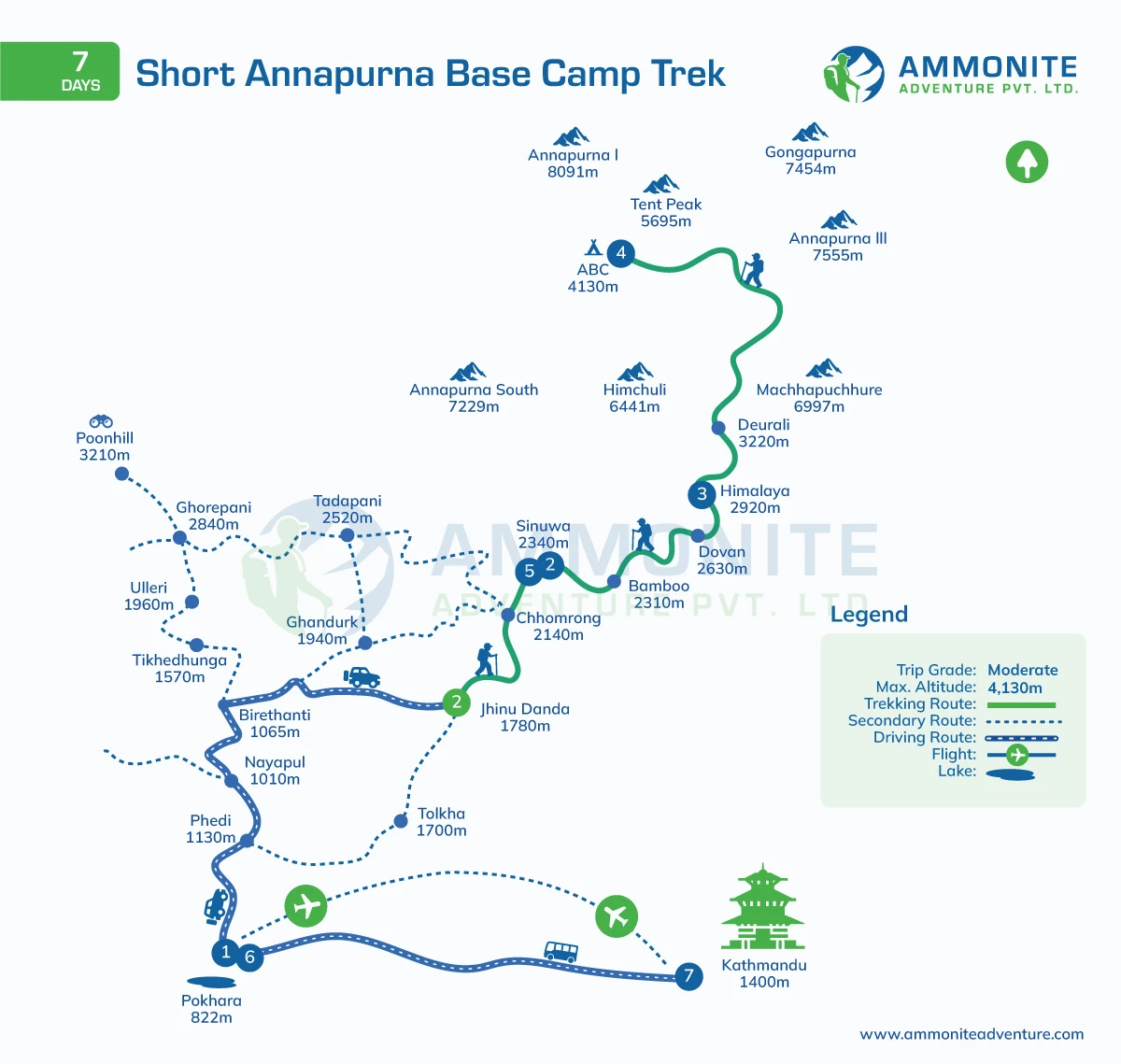
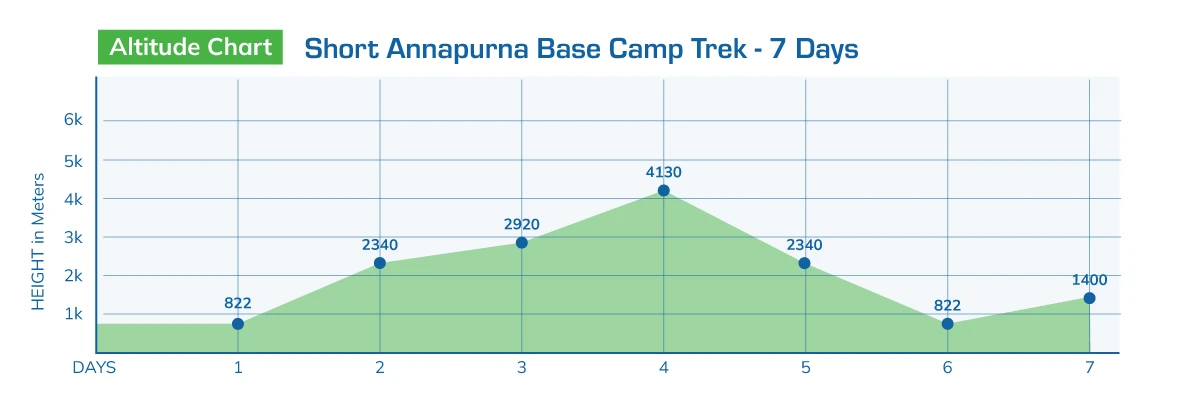
Ammonite Adventure welcomes all trekkers to join the Kyanjin Gompa Langtang Trek 7 Days and offers optional services at your convenience, comfort, and flexibility for the trekking activity, as per your interest, taste, and requirement.
Have a hassle-free trekking experience with our expert-trained porters. A porter can do work for two trekkers so that you carry a little daypack and the porter does the rest. One porter can carry a load of up to 25 kg tha,t is half of 12.5 kg per each of the two trekkers, and both your bags and one sleeping bag. That is a hassle-free trekking tour to enjoy and indulge into the fullest.
The cost is: USD 20 per person per day of trekking
To travel easily and smoothly, we offer excellent transport supplements to and from Langtang Valley.
Private Jeep from Kathmandu to Syabrubesi – USD 200
Private Jeep from Syabrubesi to Kathmandu – USD 200
Spring is the right season for the 7 Days Langtang Himal Trek as well. The weather is pleasant and well-set these days, with temperatures between 10°C to 20°C at lower elevations. Rhododendrons and wild flowers blooming make a painting of the trail, colouring it and giving energy to the trek. Blue blue clear skies and good views of snow-capped peaks such as Langtang Lirung and Ganesh Himal welcome the trekkers. Even though the trails are very busy, the weather and scenery are so beautiful that this season is ideal for a hike.
Autumn is also one of the Langtang trek Best Season. The weather is favorable here during this season, and temperatures during the day will be between 10°C to 15°C with cold nights at higher elevations. Clear weather and a clear view of the Himalayan ranges are present during this time. The route is filled with trekkers as this time is the best trekking season in Nepal, according to its good weather. Autumn is also suitable for viewing the Tamang village's cultural diversity en route.
The Langtang Valley winter trek is perfect for those who would like to be away from it all and trek in white surroundings. Daytime temperatures are acceptable, but sub-zero at nighttime, especially at higher altitudes. Trekkers must be well prepared with proper gear to withstand the cold. Snowy trails have their own beauty, but high passes are still likely to be closed by heavy snowfall. Winter, on the other hand, offers a warm hiking experience with few tourists.
The monsoon turns Langtang Valley into a green paradise with greenery and waterfalls, but the paths are slippery because of continuous rain showers, and visibility is low. Tourists can encounter leeches and other discomforts during this off-season period. Adventurous tourists who do not care to go into the rain can enjoy a quiet life with fewer tourists and an opportunity to witness nature in full bloom.
| Seasons | Daytime Temperature | Nighttime Temperature |
| Spring (Mar–May) | 10 °C to 20 °C | –3 °C to 5 °C |
| Summer/Monsoon (Jun–Aug) | 15 °C to 25 °C | 5 °C to 10 °C |
| Autumn (Sep–Nov) | 10 °C to 18 °C | –2 °C to 4 °C |
| Winter (Dec–Feb) | –2 °C to 10 °C | –10 °C to –2 °C |
Each season has different views and experiences to offer, with your physical and mental preparedness with appropriate trekking gears, this trek is doable throughout the year.
I suggest you take extra precautions when packing, gearing up, and choosing equipment because winters there can be extremely cold. Trekkers must be well prepared with proper gear to withstand the cold.
Accommodation on the Langtang Village Trekking is mostly tea houses and lodges. Tea houses and lodges provide simple to comfortable facilities based on different budgets and inclinations.
Tea Houses are the most common type of accommodation, having the least facilities, such as a bed, a blanket, and shared dining space. Locals largely own them and have the most intimate rooms where tourists are served meals and get to interact with fellow tourists.
Lodges are cozier with individual rooms, bathroom amenities in the room, and hot showers. They offer a greater choice of food and even Wi-Fi and charging amenities at times. Lodges are relatively more expensive than tea houses but more comfortable and secluded.
Major stopovers on the trek, such as Syabrubesi, Lama Hotel, Langtang Village, and Kyanjin Gompa, all have varying accommodation facilities. Syabrubesi has the Yak Hotel and the Ok Hotel.
Lama Hotel has accommodation facilities such as the Friendly Guest House and Sherpa Hotel. Langtang Village has guesthouses such as the Peaceful Guest House and Hotel Red Panda. Kyanjin Gompa has simple accommodation facilities, such as the Nurling Kyanjin and Yeti Guest House.
Here is what you can expect:
| Vegetarian | Non-Vegetarian |
|
1. Tibetan Bread with Honey/Jam 2. Pancakes (Plain, Apple, Banana) 3. Porridge (Oats, Tsampa, Muesli) 4. Boiled or Scrambled Eggs 5. Toast with Peanut Butter 6. Vegetable Omelet |
1. Egg & Cheese Sandwich 2. Pancake with Honey & Fried Egg 3. Omelet with Sausage 4. Fried Rice with Egg Protein-rich |
| Vegetarian | Non-Vegetarian |
|
1. Dal Bhat (Rice, Lentil Soup, Mixed Veg Curry, Pickles) 2. Fried Rice with Vegetables 3. Veg Noodles / Chowmein 4. Veg Mo:Mo (Tibetan Dumplings) 5. Potato Curry with Rice or Chapati 6. Veg Thukpa (Noodle Soup) |
1. Chicken Dal Bhat 2. Chicken or Buff (Yak) Fried Rice 3. Chicken Thukpa 4. Buff Mo: Mo 5. Chicken Curry with Rice 6. Tuna Sandwich |
| Vegetarian | Non-Vegetarian |
|
1. Dal Bhat (Unlimited Refills!) 2. Veg Curry with Rice or Chapati 3. Pasta (Veg, Cheese, or Tomato Sauce) 4. Vegetable Fried Noodles 5. Sherpa Stew (Veg Version) 6. Garlic Soup (for altitude prevention) |
1. Chicken Dal Bhat 2. Chicken Curry or Buff Curry 3. Yak Steak (available in the Kyanjin Gompa area) 4. Chicken Fried Noodles 5. Sherpa Stew with Meat 6. Egg Fried Rice |
| Vegetarian | Non-Vegetarian |
|
1. Chocolate bars (Snickers, Mars) 2. Biscuits / Cookies 3. Popcorn 4. French Fries 5. Pancakes / Apple Pie (Kyanjin Gompa bakeries) 6. Tibetan Donuts |
1. Same as veg options (since snacks are generally vegetarian) |
| Soft/Hot Drinks | Hard Drinks |
|
1. Black Tea / Milk Tea 2. Ginger Lemon Honey Tea 3. Masala Tea 4. Coffee (Instant / Filtered) 5. Hot Chocolate 6. Garlic Soup (Keeps you warm and hydrated at higher altitudes.) 7. Bottled Water 8. Soft Drinks (Coke, Fanta, Sprite) 9. Energy Drinks (Occasionally Available) 10. Fruit Juice (Mango, Pineapple, Apple) |
1. Local Beer (Everest, Gorkha) 2. Apple Brandy (Local Brew) 3. Raksi (Homemade Millet Wine) |
Note: The meals are usually freshly cooked to order, so expect simple but hearty portions.
Lower Elevations
Because the path passes through lower elevations like Syabrubesi and Lama Hotel, the trekkers have greater food choices. Nepali local cuisine, like Dal Bhat, momos, and thukpa, is offered by tea houses and lodges, along with Western cuisine like pasta, pizza, sandwiches, and burgers. Food ingredients are never scarce, and meals, therefore, are fresh and varied. Pancakes, omelets, Tibetan bread, and porridge are consumed for breakfast. Weak tea, ginger, honey, lemon, and coffee are available at inexpensive prices.
Higher Elevations
As it is a step up to destinations like Langtang Village and Kyanjin Gompa to reduce the range of food due to the logistics issue of mule or helicopter transport, then food relies on whatever is in season, like potatoes, lentils, carrots, and seasonal vegetables.
Some international foods like soups, stews, curries, and Dal Bhat help to finish a trek. Biscuits, chocolate, and energy bars are the norm for quick food. The availability of Western food is generally available. However, they are eaten less often than when you are at lower elevations.
Langtang Valley Trekking Altitude Reaches over 5000 m, so altitude sickness is an issue on the Short Langtang Valley Trek 7 Days, including high altitude at Kyanjin Gompa at 3,870 meters and optional climbs up to 4,984 meters at Tserko Ri. As altitude increases, atmospheric pressure decreases, resulting in lower oxygen levels, which can cause Acute Mountain Sickness (AMS). Symptoms of AMS include headache, nausea, dizziness, fatigue, and insomnia.
Comfort and safety largely rely on effective acclimatization while doing a 7-day trek in Langtang. The trek involves gradual gains in elevation with acclimatization rest days well scheduled to be done at higher points of altitude. "Climb high, sleep low" strategies also complete acclimatization, where climbers climb to high-altitude areas during the day and come down to sleep at low altitude.
The weather and climate on the trekking trails vary with the season. Additionally, the trek route's difficulty is impacted by this change in the weather.
In general, the Langtang Valley short trek is considered moderately difficult, suitable for various age groups and experienced trekkers. Here is a better insight:
| Seasons | Difficulty Level | Main Conditions |
| Spring (Mar-May) | Moderate | Stable weather conditions, dry trails, and Red Rhododendron blossoms. |
| Summer/ Monsoon (Jun-Aug) | Moderate to challenging | Muddy and slippery trail, threat of leeches and landslide, clear view after rain. |
| Autumn (Sep-Nov) | Moderate (Best time) | Crystal clear skies, mild temperature, stable weather, and easy navigation. (Ideal for first-time high altitude trekkers.) |
| Winter (Dec-Feb) | Challenging | Icy and slippery trails, very cool temperatures, threat of frostbite and altitude sickness, but it provides a solitary and adventurous experience. |
There are two permits for Langtang Trek trekkers: the TIMS card and the Langtang National Park Entry Permit. Both of these permits are utilized for monitoring the track of the trekkers as well as for safety, so that the natural and cultural resources of the region are conserved.
Starting in April 2026, it is a new regulation that foreign trekkers of the Langtang region must be with a licensed guide to trek in the Langtang region and not trek independently. This regulation was put in place for safety and to provide improved support to navigate the area, including the trackers provided by local and environmental development.
Trekkers for the Langtang Trek in Nepal, 7 days will be required to carry their permits, as they will be checked multiple times along the trail. For this reason, trekkers should have the proper paperwork, which will certainly help support local and environmental development and have a good experience trekking in the Langtang region.
Although no prior experience is needed for this trek, physical and mental preparation is always recommended.
Here's what you can do to prepare mentally and physically:
The 7-day Short Langtang Valley Trek can be arranged as a private or group trek (solo or not). Discounts are provided for group travelling (the larger the group, the better good discounts.
We can provide support for your group, regardless of size, and we will even provide an assistant guide for groups of more than 12 trekkers. As we will be putting trekkers with a porter, trekkers will only be permitted to carry 9 kg of luggage.
All expenses related to the Short Langtang Valley Trek 7 Days package will be covered almost entirely. There will be expenses that will not be included in our price, with nearly all expenses included in our price, but meals and accommodation in/Kathmandu are entirely on their own, and clients will find a range of hotels/lodges, luxury and budget accommodation that clients will book online.
All our clients should pack personal money for their accommodation/food costs in Kathmandu, visa process, and purchase of a travel insurance policy, snacks and hot (tea/coffee) cold drinks, tips for their crew members, souvenirs, etc. We always suggest bringing cash (major currencies) as you can only exchange and/or change money/currency in Kathmandu or Nepal. In the trekking areas, we will only accept Nepalese currency.
On our 7-day Short Langtang Valley Trek, you will have a qualified guide and local Sherpas to help you with everything during your trek and make your experience run as smoothly and memorably as possible. All of our guides are trained and licensed.
In most circumstances, we will hire porters to carry your bags or backpack (since there are two trekkers per porter and there is a maximum amount of gear to carry for both trekkers, a top limit of 18 kg for the combined total). If you have other requests, please notify us in advance, and we can arrange for one porter per person.
We like to use native porters and guides who are born and raised high in the Himalayas and are used to high altitudes. We prefer it is the right thing to pay fair wages to our entire team, and by doing this, we can also provide insurance, meals, clothing, shelter (which is accommodation), and, if needed, medical support for our team. We do this because we like to look after the health and well-being of our trekking crew so that they can be in good health and look after any and all of your support.
Our Trekking Leaders:
Rest assured that Ammonite Adventure is a registered trekking company, licensed and registered with the Nepal Government and is a member of the Trekking Agency Association of Nepal (TAAN) and Nepal Mountaineering Association (NMA). You can book with confidence. To confirm the trek, you will need to deposit 10% of the total cost of your trip via bank transfer, Western Union, or even online via credit card.
The final balance can be paid in Nepal in cash, by credit card, or by bank transfer. After you have officially confirmed your trek, you will email us a copy of your passport (which may include dependent children), photos, travel insurance, and your flight information - within a week of your trek.
We can accommodate last-minute bookings for the Short Langtang Valley Trek 7 Days. All you have to do is contact us and make a full payment to us for the trek - the minimum should be 24 hours before the trek starts. We try to run treks wherever we can; however, last-minute bookings may create complications in terms of confirming flights and weather.
If you plan to spend a few days after the trek, there are many opportunities to organize trips. There are many options for activities, from Kathmandu or jungle safaris to any activity like paragliding, rafting, or canoeing.
At the end of the 7-day Short Langtang Valley trek, Ammonite Adventure will host a farewell dinner in Kathmandu, and a printed certificate will be presented to you. A feedback opportunity will be available to you about the trek.
It is important to pack well for your comfort and for safety during your 7-day trek. We provided 1 porter for every 2 trekkers. Please make sure you pack your kit in one bag, ideally a duffle bag with a capacity* of 60L or more.
Your luggage limit per trekker is 9 kg . You will also be carrying a normal backpack with your day's items. Here is a suggested packing list:


For Langtang Himalaya Trek Weather control layering, i.e., inner thermal, fleece jacket, and waterproof shell. Traction and smart absorbency moisture socks and comfort shoes will turn treks on hard ground into sheer bliss.
Kathmandu varies from five-star hotels to cheap guesthouses, from Thamel's teahouses, advertised to provide low-cost accommodation to trekkers, to luxury and budget. Accommodations in the Thamel area are strategically placed to facilitate easy access to trekking agencies and equipment stores.
The trek is moderate in difficulty with easy walking lengths every day and wonderful trails. Due to its shortness and cultural value, it is the perfect choice for beginners who would adore feeling the spirit of the true Himalaya.
Chocolate, nuts, dried fruits, and energy bars are the perfect snack to provide a constant supply of energy during all the long trekking days. Local foods found along the way in the form of yak cheese.
Book your Kyanjin Gompa Langtang Trek 7 Days 1-2 months in advance, particularly during peak tourist season like spring or autumn. Pre-booking shall ensure maximum possibility of getting guides, permits, and shelters.
Your trekking agency or guide will have to call emergency services as soon as possible. Insurance agencies and governments make helicopter rescues.
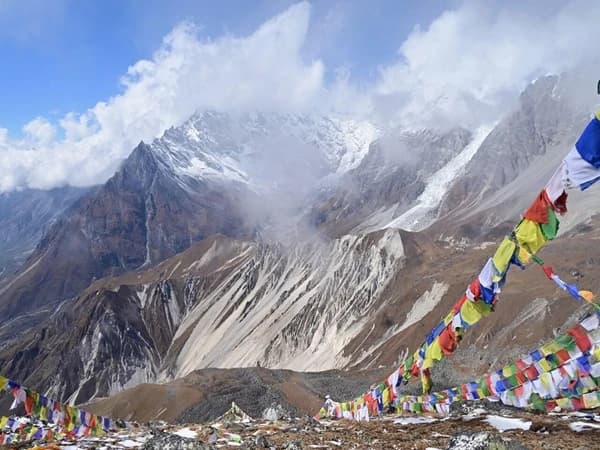
Never offend religious symbols like prayer flags or Mani walls. Dress appropriately and take their permission ahead of time from the natives or religious leaders for photographing them.
Be respectful to the local tradition by greeting villagers with "Namaste" and going to Tamang ceremonies. Be respectful to the local economies by buying handicrafts or snacks at tea houses.
Langtang Valley offers beautiful views of glaciers, meadows, and diverse wildlife such as red pandas. Langtang Valley Tibetan-cultural heritage adds a tremendous cultural taste to the trek, which is highly rewarding.
Our 7 Days Langtang Himal Trek service offers you expert guides, tailor-made itinerary, and full support while trekking. We give you maximum security along with the true cultural experience of Langtang Valley.

Ammonite Adventure gave me a lifetime trekking experience in their 7 Days Trekking in Langtang. They were professional from the
Bookings with Ammonite Adventure to complete the Short Langtang Trek in Nepal was the best I ever did book. They