Manaslu With Annapurna Circuit Trekking - 22 Days

Manaslu With Annapurna Circuit Trek

484 reviews
113 reviews
Recommended by 99% of travelers

The 22-Day Manaslu with Annapurna Circuit Trek is a long walk in Nepal’s high mountains. In 2026, this trek covers approximately 250–300 km and crosses two high passes: Larkya La (5,106 m) and Thorong La (5,416 m). You will see beautiful forests, rivers, and small villages while walking from the quiet Manaslu area to the dry deserts of Mustang. The 2026 cost is about $1665 to $2191 USD, depending on group size. This price includes a required guide and all four trekking permits. The best times to go are spring (Mar–May) or autumn (Sep–Nov). You will stay in local guest houses (teahouses) that now have solar power and Wi-Fi.

⚠️ 2026 Trail Update

  • Road Access: In 2026, the road reaches Machha Khola, the main starting point, saving time and helping with acclimatization in Nubri.
  • Permits & Rules: A guide is required, solo trekking is not allowed, and the group must be at least two. Permits needed: RAP, MCAP, ACAP, and Chumnubri Rural Municipality.
  • Pass Conditions: Larkya La and Thorong La are usually clear
  • Teahouse Facilities: Popular stops like Namrung, Lho, and Manang have more space, hot showers, and charging stations.
At a Glance
Duration22 Days
Trip GradeStrenuous
CountryNepal
Maximum Altitude5,416 m and 5,106 m
Group Size2-8
StartsKathmandu
EndsKathmandu
Travel StyleTrekking and Hiking
Best TimeAutumn and Spring

Manaslu With Annapurna Circuit Trekking 22 Days Trip Overview 

The Manaslu with Annapurna Circuit Trek is an elite, 22-day alpine traverse that synthesizes two of Nepal’s premier Himalayan itineraries into a single, continuous backcountry expedition. This high-altitude trek transitions from the deeply restricted, remote wilderness of the Manaslu Conservation Area directly into the expansive valleys of the classic Annapurna Circuit, creating an uninterrupted 360-degree circuit of two separate eight-thousand-meter mountain massifs.

  • Maximum Elevation: Larkya La Pass (5,160 m / 16,929ft) and Thorong La Pass (5,416 m / 17,769ft

  • Difficulty Rating: Hard to Very Hard (Strenuous Alpine Trekking)

  • Permit Regimes: Restricted Area Permit (RAP), MCAP,  ACAP and Chumnubri Rural Municipality Fee (Note: Under regulatory enforcement, a government-licensed guide is mandatory.)

  • Geographic Route Connection: Natural trail link at the boundary village of Dharapani

The Expedition Route & Geographic Transitions

The 22-day itinerary launches from Kathmandu, tracing the steep gorges of the Budhi Gandaki Valley into the high alpine settlements of the Manaslu region. Trekkers cross the formidable Larkya La Pass (5,160 m) under the backdrop of Mt. Manaslu (8,163 m, the world’s eighth-highest peak) before descending into Bimthang.

At the trail hub of Dharapani, the route merges seamlessly into the Marsyangdi River Valley of the Annapurna Circuit. The trek then climbs past the dramatic peaks of Annapurna II, III, and Gangapurna, culminating in an ascent over Thorong La Pass (5,416 m) one of the highest navigable trekking passes globally. The final phase drops steeply into the arid, rain-shadow topography of the Kali Gandaki Valley, showcasing a radical ecological shift from glacial tundra down to subtropical pine forests.

Socio-Cultural Synergy

Beyond its physical geography, this combined loop serves as a profound ethnological corridor. The 22-day journey exposes trekkers to an authentic cultural gradient:

  • The Upper Manaslu Sector: Deeply rooted in Tibetan Buddhist traditions, characterized by active stone monasteries (gompas), ancient chortens, and long mani walls.
  • The Annapurna & Lower Valleys: Home to the distinct architectural styles, languages, and ancestral heritages of the indigenous Gurung and Thakali communities.

Why This Is One of Nepal’s Most Extreme Trekking Routes

  • The Double-Pass Alpine Challenge: Forcing the human body to acclimatize to and cross two independent high-altitude passes above 5,000 m (Larkya La and Thorong La) within a single expedition introduces compounded physical strain and prolonged exposure to thin air.
  • Endurance-Driven Timeline: A continuous 22-day itinerary removes the option for quick rest-day turnarounds, requiring sustained cardiovascular stamina and psychological resilience across over 100 miles of rugged Himalayan singletrack.
  • Severe Terrain Variance: Trekkers encounter unpredictable microclimates and volatile trail surfaces ranging from loose moraine and slick glacial scree at high elevations to dense, humid river valleys below.

Highlights of 22 Days Annapurna Manaslu Circuit Trekking

  • Trek from subtropical forests to alpine glaciers and appreciate Nepal’s diversity.
  • Test yourself by crossing one of the highest passes, Larkya La Pass, and the peaks will surround you.
  • Cross another major high-altitude pass, Thorong la Pass, with a magnificent view.
  • Explore the lifestyle and tradition of Gurung, Magar and Thakali communities & their warm hospitality.
  • Visit the temple of immense sacred importance for both Hindus and Buddhists, which, in fact, reflects our harmonious spiritual ambiance of Nepal.
  • Close-up view of such majestic Himalayan ranges is surely a life memorable experience for many trekkers.
  • Cross thrilling suspension bridges and witness cascading waterfalls along the trail.
  • Visit ancient monasteries to gain insight into the region’s spiritual heritage.

Manaslu With Annapurna Circuit Trek Cost (2026 Guide)

The cost of a 22-day combined Manaslu and Annapurna Circuit trek decreases per person as group sizes grow, because shared logistical expenses are split among more trekkers.

2026 Price Matrix 

Group Configuration

Price Per Person (USD)

Service Style

2 Pax

$2,191

All-Inclusive Small Group

3 – 5 Pax

$2,055

All-Inclusive Semi-Private

6 – 10 Pax

$1,975

All-Inclusive Standard Group

11 – 15 Pax

$1,835

All-Inclusive Large Group

16 – 20 Pax

$1,665

All-Inclusive Max Discount

Seasonal Impact on Pricing

  • Autumn Peak (Sept–Nov): Premium teahouse pricing and maximum government permit rates ($100 for the first week).
  • Spring Shoulder (Mar–May): Best overall value. Lower base permit rates ($75 for the first week) and lower lodge pricing.

Full Cost Breakdown 

Expense Category

Cost (USD)

Regulatory Status

Manaslu RAP

$75 – $100 (First 7 days)

Mandatory. Must book via registered agency.

MCAP + ACAP Permits

$50 total ($25 per permit)

Entry fees for both conservation areas.

Local Government Tax

$8 (NPR 1,000)

Collected at Chumnubri Municipality.

Licensed Guide

$35 – $45 / day

Mandatory by law. Solo trekking is illegal.

Mountain Porter

$25 – $30 / day

Carries up to 20kg (Shared between 2 clients).

Food & Lodging

$35 – $50 / day

Standard 3 daily meals and twin-share room.

Transit & Buffers

$200 – $300 total

For local road transport, hot showers, and WiFi.

Budget vs Standard vs Premium Packages

  • Budget Level: You pay only for paperwork, permits, and a mandatory guide. You cover your own meals, lodging, and local public bus transport out-of-pocket on the trail.
  • Standard Level: Matches the $1,665 – $2,191 package table above. Covers all permits, a guide, porters, twin-share rooms, all meals, and tourist-class ground transport.
  • Premium Level ($3,000+): Upgrades include private 4x4 Jeep transfers, luxury attached-bathroom lodges at lower elevations, pulse oximeter safety monitoring, and free trail amenities (WiFi and hot showers).

Itinerary

Mountain region public transport bus
local bus in mountains ready for Manaslu Annapurna Trekking

Your Annapurna Circuit with Manaslu Circuit Trek will start early in the morning from Kathmandu to travel across the Prithvi Highway toward the town of Arughat. The drive will show glimpses of urban settlements and rural countryside within the mesmerizing sights of Nepal. The drive winds alongside the Trishuli River, showing terraced fields and age-old villages. Upon reaching Arughat, the road becomes rockier and follows the Budhi Gandaki River till one reaches Machha Khola.

Located around 930 meters above sea level, Machha Khola acts as a doorway toward the Manaslu region. You will get a taste of different communities, such as the Gurung and Ghale, with their unique practices and lifestyles. 

It is a long day but a slow introduction to the range of landscapes and cultures that characterize the Manaslu Circuit. The road conditions are rough, especially around monsoon, and change every time. It takes you through fascinating shifting landscapes-from verdant hilly landscapes into the rocky riverbanks of Budhi Gandaki.

Max. Altitude: 930mMeals: Breakfast- Lunch- DinnerAccommodation: Teahouses
Mountain village nestled beneath massive peaks
Traditional mountain village beneath soaring peaks

Today, you will follow the trail from Machhe Khola; this trail goes along the Budhi Gandaki River. With the advancement, lesser variety in subtropical brings increasing ruggedness in topography. Jagat stands at approximately 1,340 meters, with a walk of 6 to 7 hours, depending on the speed and conditions of the trail. 

Jagat is comparatively important since it is the only place where entry permits are verified in order to gain access to the Manaslu Conservation Area. Within the village, stone-paved streets and related architecture represent its glorious past as a trading post. Most of the people practice Tibetan Buddhism, evidenced by the mani walls and chortens dotting the village. You will learn more about their past and present culture through meetings with them. 

The path to Jagat is not new, but it is sometimes narrow and steep, so footing must be assured when walking this part. During the trip, you will appreciate the many cascading waterfalls and dense forests and you will occasionally see snow-covered peaks far away. Natural beauty combined with some cultural landmarks makes this segment memorable as part of the trek.

Max. Altitude: 1,340mMeals: Breakfast- Lunch- DinnerAccommodation: Teahouses
Green terraced rice fields on hillside
Verdant rice terraces along Nepal trekking route

From Jagat, the trail rises through terraced fields and forests accompanied by the Budhi Gandaki River flowing through it. This mostly consists of a few steep up and downhills and then crossed by a few suspension bridges that give way to magnificent views of most landscapes around. After trekking for about 7 to 8 hours into the evening, the next destination is in the village of Deng, which sits at an altitude of 1,860 meters. 

Deng is the gate to Nubri Valley, which becomes more Tibetan in every sense. The impact of Tibetan Buddhist culture can be felt at the adjacent monasteries and the prayer flags fluttering in the mountain breeze.

This trail to Deng is moderately difficult: rocky and uneven in parts. This long trek boasts rich green hillsides and mighty waterfalls, and it introduces the final components to Deng as it comes under view for the very last time before revealing snow-laden peaks. After a full day of trekking, Deng offers a place to relax in the silence and among cultural riches.

Max. Altitude: 1,860mMeals: Breakfast- Lunch- DinnerAccommodation: Teahouses
Snow-capped Himalayan peaks with valley and clouds
Dramatic views along Annapurna Manaslu Circuit Trek

The journey from Deng to Namrung wears a slow ascend along the alpine forests, which leads to some very beautiful views. The trail passes over the Budhi Gandaki multiple times through suspension bridges, taking the person to small settlements and terraced field areas. After 6 to 7 hours of trekking, one finally reaches Namrung, which is an altitude measured as high as 2630 m from sea level.

Namrung is a cultural center with a Tibetan Buddhist influence over the region. Mani stones, carved intricately, and prayer wheels embellish the village in honor of the spiritual life of its residents. This monastery is the pride of the community in terms of the heritage of the region. The perspective of the villagers is put to light when one intermingles with them.

The Namrung trail is a nicely laid trail with few steep ups and downs that need good care. As you ascend higher, you will see the changes in the landscape, exposing views of the mountain ranges like Ganesh Himal and Shringi Himal. You can observe and feel the elegance of naturalness combined with merged culture at once, which helps make this section of a trek different and worth it not to forget.

Max. Altitude: 2,630mMeals: Breakfast- Lunch- DinnerAccommodation: Teahouses
Group of trekkers posing by traditional stupa
Celebrating at a Buddhist shrine on Annapurna Manaslu Trek

The trail from Namrung ascends through lovely forests and pastures, emerging into a breathtaking view of the towering high Himalayan peaks. Below is the village of Lho, at which the Ribung Gompa, a major Buddhist monastery, can be visited. After walking for 6 – 7 hours, we will reach Shyala at an altitude of 3,520m. Panoramic views of some may be of the majestic mountain peaks such as Manaslu, Himalchuli and Ngadi Chuli from this spot. There are a lot of stone houses made with the traditional style in the village, and all around peace is prevailing there.

The way to Shyala is a moderate trek from the gradual ascend that is manageable with acclimatization. Indeed, this journey will be difficult to beat due to the scenery of mountain ranges and the diverse cultural heritage of the local people.

Max. Altitude: 3,500mMeals: Breakfast- Lunch- DinnerAccommodation: Teahouses
Sunrise over snow-capped peaks with silhouetted trees
Mountain sunrise with spring blooms in Nepal

From Shyala to Samagaon, it's not a long trek, just some three to four hours. When you leave the Shyala itself, the trail descends and then becomes leveled, leading your way across open plains engulfed by great peaks. Thus, it gives you magnificent views of Manaslu, which stands at 8,163 meters, together with glimpses of the other Himalayan giants, such as Himalchuli and Peak 29 or Ngadi Chuli.

Samagaon is one of the biggest, culturally-richest villages at the foot of Manaslu, situated at the height of 3,530 meters. It is the typical Tibetan village, built of stone and nestled in extensive fields. The village land is closely surrounded by the famous ancient Pungyen Monastery that stands on the hill, making for awesome views over the massif of Manaslu. The monastery is of great cultural and spiritual importance to the local Tibetan Buddhist community.

The trail to Samagaon is quite simple and offers the opportunity to enjoy the great scenery. The views consist of glacial moraines, alpine meadows, and streams. As you settle down in Samagaon, you can enjoy pure nature and deep cultural heritage.

Max. Altitude: 3,520mMeals: Breakfast- Lunch- DinnerAccommodation: Teahouses
High-altitude alpine lake with mountain reflections
Pristine waters of  Lake

The seventh day of the Annapurna Circuit with Manaslu Circuit Trek is for rest. Rest day in Samagaon is very important for acclimatization and gives the opportunity to explore the village and its surroundings. This journey to the Manaslu Base Camp takes you at an altitude of 4,400 meters. This section of the trail climbs through the forests of rhododendrons and then out into the glacier-scattered, rugged mountainous terrain. The views of Manaslu, with peaks surrounding it, are magnificent from base camp.

Other places of interest would be Pungyen Monastery, a holy place with beautiful scenery of the Manaslu Glacier. The locals allow a glimpse into the traditional ways of life in a country that is so touched by Tibetan culture and Buddhism. You will be able to observe day-to-day practices in farming, weaving, and prayers, all fitting with nature.

Max. Altitude: 3,520mMeals: Breakfast- Lunch- DinnerAccommodation: Teahouses
Snow-covered trail through mountain valley
Winter wonderland on Himalayan trails

The hike from Samagaon to Samdo is very pleasant and takes around 3 to 4 hours. The trail gradually involves ascension through the valley with the Budhi Gandaki River flowing adjacent to it, which passes you through yak pastures, glacial streams, and scattered mani walls inlaid with Buddhist prayers shadowed behind beautiful mountain views. 

Samdo, situated at a height of 3,860 meters, is the last big town before the Larkya La Pass. It has a small population of Tibetan origins living ancient lifestyles. The unique position of Samdo provides unobstructed views of the surrounding peak-the Syacha Glacier and the north face of Manaslu.

The section of the trek does not seem too strenuous and gives time to acclimatization at a high altitude. The features of the landscape alter dramatically as one climbs, with the tree line giving way to alpine tundra and rocky country.

Max. Altitude: 3,875mMeals: Breakfast- Lunch- DinnerAccommodation: Teahouses
Golden morning light on mountain peaks
First light on Mountains

The hike from Samdo to Dharamsala, which can also be referred to as Larkya Phedi, can take around 4-5 hours to complete. The trail curves up along the Syacha Glacier and traverses some moraines to give good views across the surrounding Himalayan peaks. En route to the seasonal yak herders’ villages, the prayer flags and mani walls make it all feel even more remote.

Dharamsala is a basic camp at 4,460 metres, and most of its rudimentary facilities are being put to use as a base camp for the Larkya La Pass. This site is enveloped in dramatic landscapes created by towers of mountains, glaciers, and rocky cliffs, with each forming an exciting, dramatic backdrop.

This segment is the key acclimatization halt before the challenging climb over Larkya La Pass-a feat indeed in itself. Dharamsala may be very simple, but it gives that feel of adventure and anticipation as one prepares for one of the most thrilling parts of the journey.

Max. Altitude: 3,875mMeals: Breakfast- Lunch- DinnerAccommodation: Teahouses
Trekkers at snow-covered mountain pass with prayer flags
Summit celebration at Larke Pass

The most difficult yet rewarding day on the Annapurna Circuit with Manaslu Circuit trek is today. The early-morning climb to Larkya La Pass (5,106 m) must be done to catch good weather. The path goes steeply upwards over snow, ice, and rocky areas. The climb is grueling, yet it rewards one in encountering views of Himalayan peaks, including Himlung Himal, Cheo Himal, and Annapurna range.

A hike that trumps reaching the top of Larkya La is that much of the success becomes enveloped in color-blotted prayer flags flying in the wind. It is amazing how the past reveals its views, stretching wide to cover all swathes of snow-covered peaks and glaciers.

The descent to Bhimtang promises to be as stunning, going over steep slopes, moraines, and alpine meadows. At an elevation of 3,720 meters lies the quiet valley of Bhimtang, surrounded by dense forest and spectacular mountains. This is indeed a place to rest overnight.

Max. Altitude: 5,160mMeals: Breakfast- Lunch- DinnerAccommodation: Teahouses
Mountain river cutting through dramatic valley with lush vegetation
Powerful mountain river carving through Himalayan valley

It normally takes you about 6-7 hours from Bhimtang to Dharapani, and it provides decent with the throngs of beautiful rhododendrons and pine forests. Along the way, you will pass beautiful villages and suspension bridges connecting them with remoteness.

Coming nearer to Dharapani, the landscapes grow more cultivated-terraced fields and orchards of the slopes. Dharapani is 1,960 meters at the gates of Annapurna region. It is a bustling place for trekkers, as well as for local people.

It is a more gentle section of the trek that gives time to enjoy the beauty of the lower Himalayan region. That will enhance this day as most others because the alpine changes totally into subtropical and brings invigorating change.

Max. Altitude: 1,860mMeals: Breakfast- Lunch- DinnerAccommodation: Teahouses
Dramatic mountain scenery on Annapurna Circuit
Nature's grandeur: Annapurna Circuit vista

It takes 5 to 6 hours to reach Chame from Dharapani, which is the district headquarters of Manang. The climb is gradual along the Marsyangdi River, winding through the pine and fir forests. The valley closes and forms into that beautiful alpine scene as we climb up.

Situated at an altitude of 2,670 meters, Chame is a very vibrant town equipped with all trekking facilities. This town has natural hot springs where you can soak and rejuvenate after a long day's trekking. This place also promises beautiful views of Lamjung Himal and Annapurna II, which tower at the back of the village with snow-clad peaks.

Chame showcases the Annapurna region's culture with hanging Buddhist prayer flags, mani walls, and monasteries along the way. Chame beautifully merges natural beauty with those man-made cultural landmarks that stamp it as a memorable stop.

Max. Altitude: 2,710mMeals: Breakfast- Lunch- DinnerAccommodation: Teahouses
Tents at high altitude camp with golden peaks
Rocky trails of the Annapurna Circuit

Chame to Upper Pisang Trek is a 5 to 6-hour walk to the landscape full of towering cliffs and lush forest. The path meanders along the Marsyangdi River with suspension bridges. Another highlight of this hike is the incredible Paungda Danda, an enormous, curved rock face that rises more than 1,500 m above the valley.

Stretched at 3300 m is Upper Pisang, one of the traditional Tibetan settlements, famous for enchanting views of the Annapurna II and IV and Pisang Peak. The village has an ancient monastery where one can witness Buddhist rituals and ceremonies. Most structural designs include houses made of stone and narrow lanes of access, which reflect the type of architecture distinct to the region.

The route goes towards Upper Pisang, but the altitude goes higher and higher, making it good advice to keep pace and maintain fluid intake. The most inspiring leg of the trek is this part, within the blend of tranquility with panoramic mountain views.

Max. Altitude: 3,300mMeals: Breakfast- Lunch- DinnerAccommodation: Teahouses
Trekkers on rocky mountain trail
Hikers on barren mountain trail

This is the most beautiful part of the Annapurna Circuit with the Manaslu Circuit Trek, takes about 6 to 7 hours. Villages like Ghyaru and Ngawal comes along the ridges and great view of Annapurna range. It is a steep climb and descent, covered with juniper forests and alpine meadows.

At an altitude of 3,540 meters, Manang is the cultural and logistical center of the Annapurna region. The modern amenities that have come to the region so far blend beautifully with the faded glory of tradition. From here, dramatic landscapes stretch into the horizon, ranging from Gangapurna Glacier to Tilicho Peak.

Manang is also a place famous for its monasteries, cultural museums and bakeries that serve mouth-watering local and Western treats. This section traverses from desolate hills to lush forests.

Max. Altitude: 3,540mMeals: Breakfast- Lunch- DinnerAccommodation: Teahouses
Steep mountain walls reflecting in high-altitude lake
Mirror-like waters reflect massive mountain face

Day 15 of the Annapurna Circuit with Manaslu Circuit Trek is another day for rest. This day needs to be reserved for acclimatizing up to higher altitudes before ascending. This rest day has a lot to offer in terms of exploration. A worthy side trip is Gangapurna Lake, which lies under the Gangapurna Glacier. The lake glistens with turquoise water, surrounded by bare cliffs and snowscapes, creating quite a vision.

Another recommendation would be to hike to the Himalayan Rescue Association (HRA) clinic. For the thrill seekers, a trek to the viewpoint at Chongkor offers stunning panoramic views of the Annapurna range; it features Annapurna III, Tilicho Peak, and the Marsyangdi Valley.

Manang bursts with rich cultural heritage through its gompas, mani walls, and traditional stone houses. Coming into contact with the local people will, moreover, give one an insight into their Tibetan Buddhist cultures as well as the life that those people lead living in such a remote, high-altitude place.

Max. Altitude: 3,540mMeals: Breakfast- Lunch- DinnerAccommodation: Teahouses
Traditional Buddhist stone marker on Annapurna hiking trail
Sacred mani stones mark the path to Annapurna

The trek from Manang to Ledar takes an average of 4 to 5 hours and signifies the entry into more barren and alpine terrain. Gradually ascending over rolling juniper and alpine meadows, the air becomes thinner with increasing land deprivation relief and tall peaks and glaciers visually dominate the landscape. 

This tiny human settlement at 4200 m is equipped only with basic trekking facilities. It is the most important acclimatization stop between the trailheads to Thorong La Pass. Surrounding it, tall peaks like Annapurna III, Gangapurna, and the Chulu Peaks make an impressive scene. This part of the trail demands very deliberate pacing in order to adapt yourself to high-altitude living.

Max. Altitude: 4,200mMeals: Breakfast- Lunch- DinnerAccommodation: Teahouses
Traditional Nepali mountain shrine with Himalayan backdrop
Sacred stupa marks the trail on Annapurna Manaslu Circuit Trek, Nepal

It is a relatively difficult trail, which takes around 4 to 5 hours from Ledar to Thorong High Camp. It climbs through rocky moraines and steep slopes. The narrow trail can be icy in certain areas; therefore, caution is needed. With the increasing elevation, thin air becomes more apparent, making its pace slow and steady.

Thorong High Camp, around 4,800 meters high, is an excellent vantage point for the surrounding peaks, including Thorong Peak and Khatung Kang. This high camp is much sought after since trekkers from different corners of the world gather here before they make their crossing to Thorong La Pass the next day.

Max. Altitude: 4,200mMeals: Breakfast- Lunch- DinnerAccommodation: Teahouses
Trekkers in line on misty mountain
Group crossing Thorong La

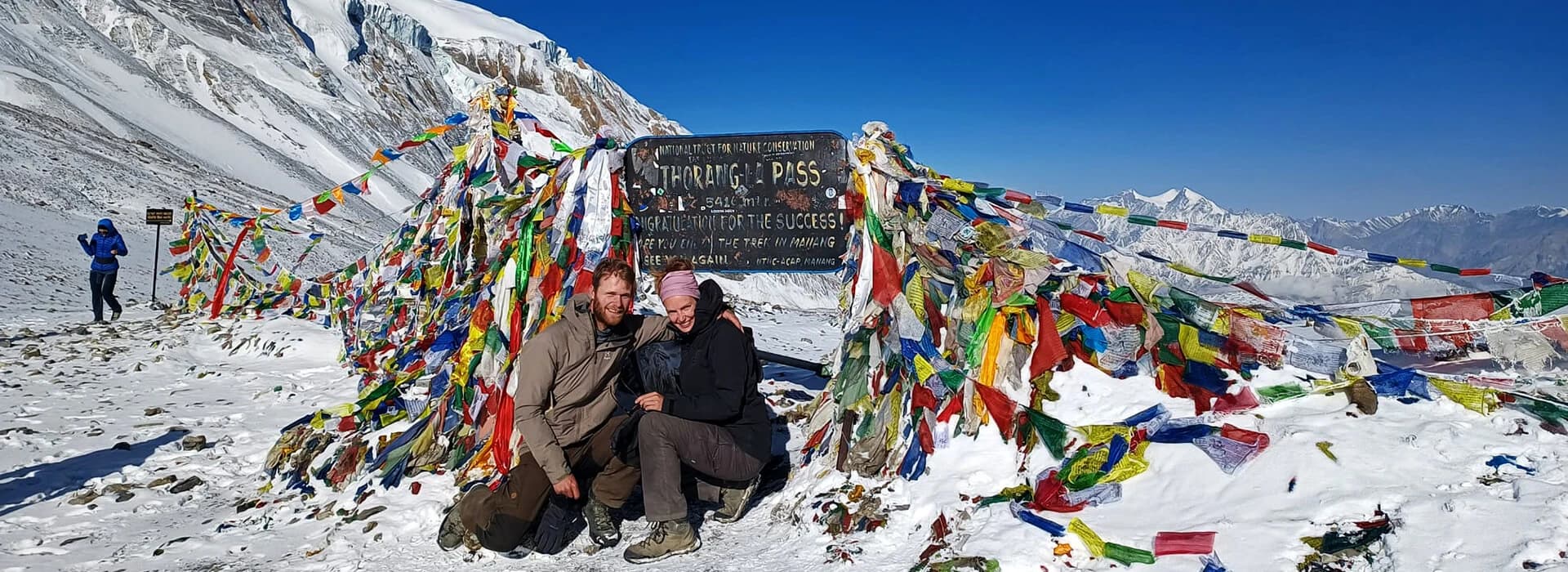
Today's trek sums up around 8 to 9 hours of walking on the 5,416-meter Thorong La Pass, which is the highest point in the Annapurna Circuit. You will start the climb very early as strong winds and changes in weather are likely. It is such a steep and strenuous climb, but the all-attractive views from the pass make it all worth it. You can see a panorama of Himalayan peaks, Annapurna, Dhaulagiri, and the Kali Gandaki Valley in between.

It is a long and steep descent to Muktinath down a steep trail descending over rocky terrain. Muktinath is situated at 3,760 m in altitude and is a holy site for pilgrimage for Hindus and Buddhists. The temple consists of a Vishnu temple, 108 water spouts that represent sacred rivers, and a flame burning continuously. The culture of Muktinath, along with a sense of accomplishment from crossing the pass, indeed makes this one day very much a highlight of the trek.

Max. Altitude: 5,416mMeals: Breakfast- Lunch- DinnerAccommodation: Teahouses
high-altitude-prayer-flag-snow
Sacred symbols crown a snow-dusted mountain ridge

Jomsom is just a five-to-six-hour trek away from Muktinath along a primarily downhill trail in the Kali Gandaki Valley. Views shift rapidly from barren landscapes at high altitudes to green fields and apple orchards as you descend.

You traverse the ancient settlement called Kagbeni, where narrow streets lead to traditional mud-brick houses with a monastery built centuries ago that is still in use. Kagbeni also serves as an entry point into the restricted area of Upper Mustang, making it quite an alluring cultural and historical spot.

Jomsom is at an altitude of 2720 meters. It is a diverse place and is mostly called a "transit point" in the Annapurna region. It is especially known for the powerful afternoon winds and the magnificent views of Nilgiri and Dhaulagiri.

Max. Altitude: 2,720mMeals: Breakfast- Lunch- DinnerAccommodation: Teahouses
Snow-covered Manaslu peak with prayer flags and trekkers in foreground
Prayer flags flutter beneath Annapurna's majestic glacial slopes

Today, you will be flying from Jomsom to Pokhara in the morning-a short flight that gives you an aerial view of the Annapurna and Dhaulagiri ranges. This is a 20-minute flight over the Kali Gandaki Gorge, one of the deepest gorges in the world.

Pokhara will embrace you with its serenity in and around lakes. It’s an ideal place to slow down and re-think about the trek. You can go boating in Phewa Lake and visit the World Peace Pagoda or the International Mountain Museum. Overnight in a hotel at Pokhara.

Max. Altitude: 822mMeals: BreakfastAccommodation: Hotel
prayer-flags-rhododendron-himalaya
Buddhist prayer flags decorating mountain viewpoint at dawn

Today, you will enjoy a flight to Kathmandu. After breakfast at your hotel in Pokhara, you'll be transferred to the airport for your flight back to Tribhuvan International Airport in Kathmandu, where you will be first welcomed in Nepal and transferred to your hotel. You have options like taking some rest on this day at your accommodation or going on a sightseeing tour of Kathmandu City.

Max. Altitude: 1,350mMeals: BreakfastAccommodation: Hotel
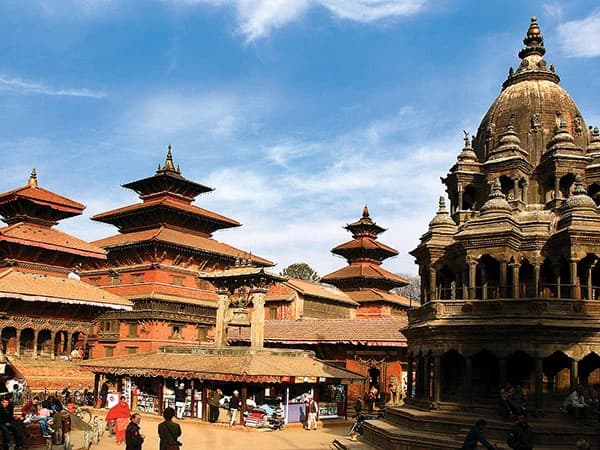
Kathmandu Sightseeing
Kathmandu Sightseeing Before Departure From Kathmandu

Day 22, being your last day with us, one of our team representatives will transfer you to the Tribhuvan International Airport for your return flight to your hometown. We hope that we will meet sometime again in future and will assist you in planning your other trekking destination.

Max. Altitude: 1400mMeals: Breakfast
Customize Trip

Route Map

Manaslu With Annapurna Circuit Trekking - 22 Days
Altitude Chart
Manaslu With Annapurna Circuit Trekking - 22 Days

What is Included?

Hotel in City

  • Kathmandu Accommodation: 1 night Twin-sharing hotel accommodation at Standrad Hotel in Kathmandu after the trek on a bed-and-breakfast basis.
  • Pokhara Accommodation: 1 night Twin-sharing Standard hotel accommodation at Pokhara after the trek on a bed-and-breakfast basis.

Transportation

  • Airport Transfers: For your international and domestic flights, a round-trip transfer and pick-up . 
  • Trek Start: Public bus ticket from Kathmandu (1,350m) to Machhe Khola (930m). 
  • Trek End: One Way Flight Ticket From Jomsom to Pokhara and One way Flight Ticket from Pokhara to Kathmandu
  • Staff Transport: All ground transport for the guides, assistant guides, porters, and any other support staff.

Accommodations

  • Trek Accommodation: Overnight local tea house accommodation on a twin-sharing basis. Single rooms can be arranged for a small surcharge, subject to availability.
  • Total Accommodation Nights: 19 nights of standard twin-sharing accommodation during the trek.

Food

  • Full Board Meals: Breakfast, lunch and dinner meals and hot drinks are provided during the entire trek. 
  • Special Inclusions: Water purification tablets for safe drinking water.
  • Total meals included: There will be a total of 22 breakfasts, 19 lunches and 19 dinners.

Guide

  • One government-licensed English-speaking guide. The assistant guides will join the group, depending on the size of the group.
  • All Guide fees, food, insurance, salaries, accommodation, transport and all equipment will be covered.

Porter

  • Porters: One porter for every two trekkers. Each trekker's personal luggage weight limit is 9 kg.
  • All Porter fees, food, insurance, salaries, accommodation, transport and all equipment will be covered.

Trek Permits and Expenses

  • All necessary permits - including special area permits - are pre-scheduled to make your trek a bit easier and trouble-free. Included permits are:
  • Manaslu Restricted Area Permit (RAP)
  • Manaslu Conservation Area Permit (MCAP)
  • Annapurna Conservation Area Permit (ACAP)
  • Trekkers' Information Management System (TIMS) Card

Medical Assistance

  • Emergency Provision: Guides will be equipped with the emergency oxygen and a first aid medical kit on the trek.
  • Rescue Arrangements: Trained rescuers in case of emergency (included in your Trek Travel Insurance).

Souvenir

  • Goodbye Souvenirs: All participants will receive an Ammonite Adventure cap and T-shirt.
  • Completion Certificate: A completion certificate for all participants.

Gear and Trekking Equipments

  • Sleeping bags and down jackets, duffle bag (one for every two trekkers) if you do not have your own
  • Manaslu Region map.

Additional Services

  • Luggage Storage: Free secure storage for your luggage throughout the trek with us.
  • Full Coordination: Our full coordination team will take care of all logistics, planning, and requirements for you.

Farewell

  • A cultural farewell meal in Kathmandu at the conclusion of your journey.

What is Excluded?

International Flight

  • International flight to and from Nepal is not included.

Accommodations

  • Hotel accommodation in Kathmandu before and after the trekking starts.
  • Extra nights in Kathmandu on early arrival, late departure, or early return from the trek due to any cause.

Food

  • All meals in Kathmandu before and after the trek are at your own expense.
  • Extra meals required due to early arrival, late departure, or early return from the trek are not included.

Guide and Porter

  • Guide, porter, and local support staff tipping is excluded and appreciated on a service basis.

Visa

  • Nepal entry visa fees (to be paid in cash upon arrival at Tribhuvan International Airport) are the traveler's responsibility.

Travel Insurance

  • Travel insurance is mandatory and must include high-altitude medical emergencies, helicopter evacuation and treatment costs.

Personal Expenses

  • Personal expenses such as snacks, beverages (alcoholic/hot/cold), hot water/boiled water, hot showers, Internet/ Wi-Fi, mobile/phone calls, charging batteries, laundry, and additional porter fees.
  • Personal clothing and trekking gear.

Other Expenses

  • Charges for excess baggage (a trekker can carry only 9 kg).
  • Unforeseen additional costs due to natural calamities, adverse weather, modifications to the itinerary for safety reasons, political unrest, government policy, illness, or other unforeseen circumstances beyond our control.

Add-ons & Options

Make your incredible journey perfect with Ammonite Adventure, as we have expertise in Manaslu Region Trek. We are pleased to present some exclusive premium add-ons to uplift your Manaslu Annapurna Circuit Trek experience that will turn your adventure of a lifetime into a memory of a lifetime!

Kathmandu to Machha Khola - USD 200

Make your way to the starting point of your trek with our private jeep service. Book a private jeep and travel in comfort as each vehicle can carry up to 5 passengers towards Machha Khola.

Private Porter Service – USD 380

Make your trek even more comfortable by booking a private porter to carry your gear. This means you can fully enjoy the beautiful surroundings without having to worry about a heavy bag. One porter can be shared between two trekkers, with a maximum load of 25 kg.

Dates & Availability

Starts:May 24, 2026Ends:June 14, 2026
PriceUS$2199
AvailabilityGuaranteed
Starts:May 25, 2026Ends:June 15, 2026
PriceUS$2199
AvailabilityGuaranteed
Starts:May 26, 2026Ends:June 16, 2026
PriceUS$2199
AvailabilityGuaranteed
Starts:May 27, 2026Ends:June 17, 2026
PriceUS$2199
AvailabilityGuaranteed
Starts:May 28, 2026Ends:June 18, 2026
PriceUS$2199
AvailabilityGuaranteed
Starts:May 29, 2026Ends:June 19, 2026
PriceUS$2199
AvailabilityGuaranteed
Starts:May 30, 2026Ends:June 20, 2026
PriceUS$2199
AvailabilityGuaranteed
Starts:May 31, 2026Ends:June 21, 2026
PriceUS$2199
AvailabilityGuaranteed

Additional Information

Is 22 Days Enough for Manaslu + Annapurna Circuit

Yes, 22 days is completely sufficient, but it represents a strenuous, high-performance schedule. While a standard single circuit (just Manaslu or just Annapurna) usually takes 12 to 14 days, merging them into a continuous 22-day itinerary requires sustained stamina and offers a beautifully balanced, logical flow.

Acclimatization Risk Analysis: The 22-Day Strategy

To understand how this itinerary mitigates altitude risks, look at how the elevation data is structured. Unlike short, rushed routes, this 22-day itinerary includes two built-in rest and acclimatisation days positioned right before each major pass crossing.

You are forcing your body to adapt to two distinct atmospheric pressure drops, but the trail is designed to give you a strategic physiological cushion:

  • Day 07 (Rest Day in Samagaon - 3,520 m): You spend a vital 48 hours acclimatizing at the foot of Mt. Manaslu, utilizing a side hike to Manaslu Base Camp (4,400 m) to follow the proven "climb high, sleep low" rule.
  • Day 10 (Larkya La Pass - 5,160 m): You cross your first major pass. Immediately after, the trail drops deeply into the lush valleys of Bhimtang and Dharapani (1,860 m), giving your heart and lungs a massive recovery break.
  • Day 15 (Rest Day in Manang - 3,540 m): Before approaching the second pass, you get another mandatory 48-hour rest cushion to prepare your system for the final push.
  • Day 18 (Thorong La Pass - 5,416 m): You cross the highest point of the journey with a fully acclimatized body.

Duration Comparison: The 22-Day Timeline vs. Shorter Variations

Feature

22-Day Version (Fully Balanced)

18–20 Day Variations (Aggressive)

Acclimatization Cushion

Two Dedicated Rest Days: Complete stops in Samagaon (Day 7) and Manang (Day 15).

Zero Rest Days: Continuous ascents without 48-hour stops, heavily multiplying AMS risks.

Physical Toll

High but sustainable. The descent to Dharapani allows muscles to recover between passes.

Extreme fatigue. Trekkers hit Thorong La with cumulative, unrecovered muscle strain.

Side Excursions

Allows for side trips to Manaslu Base Camp, Pungyen Monastery, and Gangapurna Lake.

Restricted to direct-line transit. You must bypass landmarks to reach the next teahouse.

Safety Contingency

Built-in Safety. The double-rest structure provides a buffer if minor pacing adjustments are needed.

Dangerous. A single day of poor weather or slow pacing completely ruins the flight connections.

Who Should NOT Attempt the 22-Day Version

  • First-Time Trekkers with No Fitness Base: While the acclimatization schedule is safe, walking for 20 consecutive days (excluding rest days) requires good cardiovascular conditioning.
  • Travelers Expecting Luxury Hospitality: This is a remote backcountry expedition. Beyond Pokhara and Kathmandu, you will rely on traditional, unheated mountain teahouses.
  • Trekkers Who Dislike Changing Climates: This route features extreme geographic transitions you will navigate everything from humid subtropical forests up to sub-zero arctic pass conditions.

Who Can Successfully Complete It

  • Active high-altitude trekkers: Ideal for experienced hikers who regularly trek in mountainous terrain, can handle long walking days, and are comfortable with challenging routes like the Manaslu and Annapurna Circuit.
  • Experienced trekkers above 4,000–5,000 m: Best for those who have already trekked at high elevations and understand acclimatization, endurance demands, and multi-day Himalayan trekking conditions.
  • Well-prepared beginners: Fit beginners can also complete this trek with proper training, good physical fitness, and strong mental readiness for high-altitude and long-duration trekking.

Note: Before booking this adventure, it is highly recommended to read this Complete Guide to High Altitude Trekking to better prepare your body, mindset, and equipment for a safe Himalayan journey.

Manaslu to Annapurna Circuit Route Explained

This grand combination connects two of Nepal's most iconic trekking landscapes into one continuous high-altitude journey.

[Entry] Machha Khola -> Manaslu Circuit -> Larkya La (5,106 m) -> Dharapani Hub -> Annapurna Circuit -> Thorong La (5,416 m) -> [Exit] Jomsom

The Route Flow at a Glance

  • The Manaslu Stage: Climb the deep Budhi Gandaki Valley into the high, Tibetan-influenced Nupri region.
  • The First Pass: Conquer Larkya La Pass (5,106m) before dropping into the alpine basin of Bhimtang.
  • The Transition: Descend through rhododendron forests along the Dudh Khola until you hit the valley floor at Dharapani.
  • The Annapurna Stage: Pivot immediately northwest up the Marsyangdi River valley through Chame and Manang.
  • The Second Pass: Complete the journey over Thorong La Pass (5,416m) into the arid landscapes of Muktinath and Mustang.

Key Hubs and Logistics

  • Entry and Exit Points: The trek begins with an 8-to-9 hour drive from Kathmandu to Machha Khola (Gorkha District) and concludes at Jomsom or Muktinath (Mustang District) with options to fly or drive down to Pokhara.
  • Dharapani as the Transition Hub: This village marks the exact geographical junction where the Manaslu Circuit ends and the Annapurna Circuit begins. It offers trekkers a lower-altitude (1,860m) rest stop to recover after Larkya La.
  • The Geographical Break: The connection is carved by nature. The trail tracks the Dudh Khola river down from Manaslu's glaciers until it joins the Marsyangdi River at Dharapani, forming a natural walking corridor between the Manaslu massif and the Annapurna range.

Why It's a "Double-Pass Himalayan Expedition" Trekking single passes over 5,000 meters is an achievement; hitting two back-to-back over a 300+ km journey constitutes an elite expedition.

  • Larkya La Pass: Elevation: 5,106 meters (16,752 feet), Key Characteristic: Wild, remote, and technically demanding glacier moraine crossing.
  • Thorong La Pass:  Elevation: 5,416 meters (17,769 feet), Key Characteristic: The highest navigable trekking pass in the world; a long, high-endurance altitude challenge.

Difficulty of Manaslu With Annapurna Circuit Trekking 22 Days

Manaslu with Annapurna Circuit Trek is a Hard to Very Hard trekking adventure, suitable only for experienced trekkers with excellent physical fitness and prior high-altitude trekking experience.

It involves long steep climbs, sharp descents, and rugged rocky terrain combined with high-altitude alpine sections, with parts of the trail crossing glacier zones. The Larkya La Pass crossing is the most challenging section, where trekkers navigate icy slopes, changing directions on glacial terrain, which significantly increases the difficulty.

On average, trekkers walk 6–9 hours per day, requiring strong stamina and mental endurance. The route demands high physical endurance capacity to sustain continuous long trekking days at altitude. You will also face unpredictable mountain weather conditions, including cold winds, snow, and sudden temperature drops, especially near high passes.

This trek is a true test of adventure, combining remote wilderness, extreme elevation, and continuous physical challenge in one of the most demanding trekking routes in Nepal.

Real Risks of Completing This Trek in 22 Days

Walking the combined Manaslu and Annapurna Circuit in 22 days is an incredible adventure, but it is an aggressive timeline. Most standard itineraries take 24 to 28 days. Compressing this route into 22 days leaves zero room for error and creates real, high-altitude challenges. Before planning such a fast-paced journey, reading a Larke La Pass Guide: Difficulty, Altitude, and Essential Trekking Tips can help trekkers better understand the physical demands of crossing one of the trek’s most challenging sections.

Why a 22-Day Itinerary Is Risky

  • Shortened Acclimatization: Moving fast means your body gets less time to adapt to thin air, which heavily increases the risk of acute mountain sickness (AMS).
  • Accumulated Fatigue: Walking 6 to 9 hours every single day across two different mountain regions causes deep muscle exhaustion and lowers your immune system.
  • No Weather Buffers: If bad weather blocks a pass, a tight 22-day schedule leaves no fallback days, forcing you to rush or disrupt your travel plans.

The Two Critical Danger Zones

  • Larkya La Pass (5,106 m): Because you reach this massive pass early in the trek, rushing the initial ascent up the Manaslu valley can trigger severe altitude headaches and nausea before your body is ready.
  • Thorong La Pass (5,416 m): By the time you reach the Annapurna side, your body is already exhausted from the first pass. Climbing Thorong La with back-to-back muscle fatigue makes the world’s highest navigable pass twice as difficult.

How Guides Keep You Safe on a Tight Schedule

To safely manage a fast-paced 22-day trek, professional guides use three strict safety rules:

  • Daily Health Checks: Checking your oxygen levels and heart rate with a pulse oximeter every morning and night to spot early signs of altitude sickness.
  • Enforced Slow Pacing: Keeping a steady, slow walking speed ("Bistari, Bistari") to save your energy and prevent early physical burnout.
  • Fast Decision-Making: Since there is no time to wait out sickness on a tight schedule, guides will immediately order you to walk down to a lower altitude if your body shows signs of danger.

Altitude Sickness Consideration

Altitude sickness is a major concern on the Manaslu with Annapurna Circuit Trek, as you will head over 5,000 meters. Symptoms include headache, nausea, vomiting, shortness of breath, dizziness, and tiredness. To prevent this, you must maintain a slow pace, stay hydrated, and strictly follow mandatory rest days in high-risk zones, specifically the Samagaon/Larkya La region and the Thorong La crossing.

Recognize symptoms early and descend immediately if they worsen. Because these regions are highly remote, severe altitude sickness requires immediate emergency evacuation. You must have premium travel insurance that covers helicopter rescue up to 6,000 meters, as medical airlifts from these isolated trails cost thousands of dollars out-of-pocket.

Finally, see your doctor 4–6 weeks before your trip to discuss vaccinations and preventive medications like Acetazolamide (Diamox).

Required Permits & Costs (Per Person) 

Permit Type

Autumn (Sep–Nov)

Spring/Off-Peak (Dec–Aug)

Manaslu Restricted Area Permit (RAP)

USD 100 (first 7 days)

+ USD 15/day extra

USD 75 (first 7 days)

+ USD 10/day extra

Manaslu Conservation Area (MCAP)

USD 30

USD 30

Annapurna Conservation Area (ACAP)

USD 30

USD 30

Chumnubri Rural Municipality Tax

USD 15

USD 15

Accommodation & Food on the Trail

Most accommodations along the Manaslu and Annapurna Circuit treks are basic, family-run tea houses or lodges that offer simple, clean, and sufficient shelter. Rooms are minimal, providing lockable doors, windows for ventilation, and 2 to 3 twin beds equipped with foam mattresses, pillows, and blankets. While toilets are usually outside the room, common, and squat-type, the Annapurna region offers notably better amenities, including attached bathrooms and European-style toilets, compared to the highly remote Manaslu stretch.

Food options are a highlight, serving as a haven for food lovers with traditional Nepali cuisines and Western alternatives. Breakfast features healthy options like pancakes, oats, porridge, eggs, toast, or Tibetan bread with honey or jam paired with tea or coffee to fuel you for the rugged trail.

For lunch and dinner, options range from trekking noodles, macaroni, fried rice, pizza, momos (meat/veg dumplings), and vegetable curry to Dhido (a local buckwheat/millet flour dish) though nothing beats wholesome, balanced Dal Bhat (rice, lentil soup, and vegetables), which comes with free refills at most tea houses! To stay warm, choose from black, milk, or ginger tea, but avoid alcohol (local beer/wine) as it dehydrates your body faster at high altitude.

Socializing centers around the communal dining room, which is unheated during the day but heated in the evening, making it the perfect, cozy space where you will spend the most time talking and sharing stories with your new friends while maintaining good hygiene expectations.

Finally, you must factor in charging & internet availability when budgeting your out-of-pocket expenses. While electricity and Wi-Fi are reliable downstream, connectivity drops significantly above 3,500 meters, where you should expect fees ranging from NPR 200 to NPR 900 for device charging and NPR 400 to NPR 1,000 per session for satellite Wi-Fi, which often goes completely dark between Dharmasala and Bhimtang.

Best Time for Manaslu With Annapurna Circuit Trek

The Manaslu and Annapurna Circuit treks are known for their breathtaking scenery and cultural richness. The best time to trek either of these routes is during the Spring (March to May) and Autumn (September to November) seasons as the weather is most reliable.

Spring Season (March to May)

  • Weather & Visibility: The spring season offers exceptional visibility and mountain views, with mild temperatures during the daytime (7°C to 18°C) and minimum temperatures at night dropping to -10°C. Thus, it is also considered the best time to visit Nepal.
  • Flora: The trekking trails are decorated with beautiful blooming rhododendrons (the national flower of Nepal) and other flowers, making it an even more picturesque view that adds to your trek experience.

Autumn Season (September to November)

  • Weather & Safety: Autumn has the best weather, maximum trail safety, and the most stable, predictable trail conditions of the year. Daytime temperatures average 8°C to 20°C, drastically lowering the risk of sudden storms during high-pass crossings.
  • Scenic Views: Post-monsoon, the skies are crisp and clear. The magnificent views of the Annapurna and Manaslu mountain ranges can be seen perfectly with the naked eye, making it a favorite for photographers.
  • Cultural Experience: The major Nepali Hindu festivals of Dashain and Tihar fall during this season, so you can learn more about local traditions and experience some festive cheer.
  • Crowd Levels: Because autumn offers the ultimate balance of safety and clarity, crowd levels peak during these months, causing the trails and teahouses to bustle with international trekkers.

Winter Season (December to February)

  • Weather & Challenges: Winter brings plummeting temperatures. December and January are the coldest months, with daytime temperatures dropping to 2°C–3°C at lower elevations and plunging down to -20°C or lower at high passes.
  • Trail Condition Differences: Trekkers face major trail condition differences, including ice-slicked paths, frozen streams, and heavy snow accumulations. A massive snowstorm can completely block both the Larkya La and Thorong La passes, and many high-altitude teahouses close for the season. However, the quiet atmosphere and crystal-clear winter views allure experienced adventurers seeking absolute solitude.

Monsoon Season (June to August)

  • Weather & Risks: Monsoons bring heavy, daily rain, causing temperatures to vary between 10°C and 25°C.
  • Considerations: The lower valleys turn into lush green forests, but mountain views are completely obscured by thick, lingering cloud cover. Due to severe environmental hazards like deep mud, active landslide zones, and flash floods, trekking during the monsoon should be strictly avoided.

Why This Combined Trek Is One of Nepal’s Greatest Adventures

Combining the Manaslu and Annapurna Circuits is the ultimate Himalayan challenge. This epic journey links two distinct regions, allowing you to circle two separate 8,000 metre mountain systems, Mt Manaslu and Mt Annapurna, on a single continuous route.

Here is what makes this combined trail one of Nepal's greatest adventures:

  • Two Iconic High Passes: Instead of just crossing one high pass, you conquer two legendary high-altitude bottlenecks back-to-back: Larkya La Pass (5,160 m) on the Manaslu side and Thorong La Pass (5,416 m) on the Annapurna side.
  • Extreme Landscape Diversity: Over the course of nearly three weeks, you hike through an incredible shifting landscape. You start in lush, humid subtropical jungles and terraced fields, climb through deep pine and rhododendron forests, and finish in the stark, high-altitude arctic deserts of the Tibetan plateau rain shadow.
  • Remote + Developed Trail Mix: You experience the best of both worlds. The Manaslu stretch offers a remote, quiet, and culturally pristine wilderness steeped in ancient Tibetan-Buddhist traditions. Once you cross over into Annapurna, the trail transitions into a more developed route featuring modern teahouses, wider food varieties, and historic landmarks like the sacred Muktinath Temple.
  • Once-in-a-Lifetime Expedition Experience: This is a true endurance expedition that pushes your physical boundaries. Walking along roaring river gorges, managing sustained high altitude, and standing atop two of the highest trekking vantage points on earth makes it a profound, unforgettable life achievement.

Advantages on Manaslu and Annapurna Circuit Trekking 22 days with Ammonite Adventure

There are several reasons why you should trek the Manaslu and Annapurna Circuit Trekking 22 days with us - Ammonite Adventure:

  • Local Experts: Our local guides and porters are from the Manaslu region and Annapurna Region. They know the area like no one else; they have grown up there, so they provide more cultural experience.
  • Personalized Pre-Trek Support: Get detailed online briefings as per your choice. Krishna B. Pariyar will provide you with deeper insights.
  • Guaranteed Departures: Your trek is confirmed for the date that you have booked.
  • 24/7 Assistance: You can connect with our support team 24/7 via emails, WhatsApp, Viber, and iMessage at +9851230809 or Zoom meeting for inquiries.
  • Flexible Payment Options: We offer 100% secure & convenient payment options.
  • High-Quality Complimentary Gear: Take trek with you some of the best trekking gear without paying a rupee extra for it. (Free rental for a sleeping bag, down jacket and trekking pole).
  • Free Luggage storage: Store your luggage (souvenirs, etc.) in our safe custody free of cost until you come back from the trek.
  • Maps and Souvenirs Included: You will get a trekking map of the entire trip, a company t-shirt and a duffle bag to make this trip an ever-memorable experience.
  • Emergency Support: In any emergency, we are just a call away. We take primary health care for granted.
  • Small Group Adventures: Travel with a Guided Small Group of 2 to 8 like-minded adventurers and enjoy the company of your peers as you hike.
  • Please note that solo hiking is not permitted on this route.

Heroic & Enchanting Crossing of Two High Passes in 2026 and 2027 

At Larkya La Pass (5106 m)

The Larkya La Pass (5,106 m) is the highest point section of Manaslu Circuit Trek, located in the Himalayas of Nepal. You will have magnificent views of Manaslu and Manaslu North with Samdo Peak, Naike Peak, Larke Peak and Cheo Himal from its summit. It is situated between Dharamshala and Bimtang, by the top of Larkya La, where you are literally caught in the midst of a Panoramic view surrounded by the majestic Himalayan peaks. But crossing over this pass during winter is very difficult because of heavy snowfalls that block the trails, making the pass almost impossible to cross.

 At Thorong La Pass (5,416)

Thorong La Pass, at 5,416m, is a major highlight of the Manaslu Annapurna Circuit in Nepal. This tough pass links the village of Manang to the east with the temple of Muktinath and the village of Ranipauwa to the west. Trekking groups generally travel from east to west so as to allow for better acclimatization and a more gradual ascent. Distances involved mean that you overnight at Yak Kharka, followed by Thorong Phedi, before making a dawn assault on the pass. Crossing Thorong La is physically demanding due to altitude, several steep ascent and descent sections and extremely variable weather conditions, especially during winter. However spectacular views of both the Annapurna range as well as Dhaulagiri are your reward.

Trekking group/single

Ammonite Adventure offers private treks and group treks. If you have a group, usually the larger the group gets, the larger the discount.

Ammonite Adventure accepts all size groups and also adds an assistant guide for groups large groups. Ammonite Adventure also provides a porter for every two trekkers, with a weight limit of 9kg for trekkers' luggage. 

Extra Personal Expenses on Trekking

Most of the costs for your Manaslu with Annapurna Circuit trek is covered within your trekking package. However, food and accommodation outside of the trekking duration in Kathmandu, Nepal, is not included.

There are every kind of hotel, lodge, and guest house in Kathmandu, and they can all be booked online.

You may want to have some extra cash on hand for food and accommodation in Kathmandu, any visa fees, travel insurance, personal snacks and drinks, tips or gratuities for the trekking team, souvenirs, and other miscellaneous costs.

When you arrive, you will need cash in the major currency you are holding to exchange into Nepali Rupees, which is the only currency accepted in the trekking areas.

Ammonite Adventure Trekking Crew

While you are on your 22-day Manaslu trek with Annapurna Circuit, you will have experienced and licensed guides and Sherpas on your trek looking after your journey. Mentioning porters, we provide porters, as we take two trekkers for one porter as a standard (maximum 18 kg.), unless you want one porter per person.

All your crew members with you are local to high Himalaya areas, a place where they commonly do very well at high altitudes. The crew members, while you are traveling, ensure fair wages, insurance for all staff, clothing, food, and lodging, and we provide for the medical care of all staff in the crew. 

Our expert trek leaders have:

  • Finished a wilderness first aid course with comprehensive 16-day practical training
  • Selected as a certified Trekking Guide by the Nepal Government
  • Fluent English speaker in addition to other major languages
  • Has experience working with conservation and biodiversity training
  • Has experience rock climbing
  • Storyteller with the ability to express local culture and history
  • Able to communicate with a wide variety of groups
  • Level-headed and rational problem solver when something unexpected occurs
  • Capable of arranging schedules, logistics, etc.
  • Generally has a good sense of humour that is beneficial to group morale
  • Sensitive to all trekker's needs
  • Deeply committed to sustainable/eco-tourism practices and responsible practices for tourists

Booking and Payment Process

Ammonite Adventure is a trek operator that is both government-registered and bonded, a member of the Trekking Agency Association of Nepal (TAAN) and the Nepal Mountaineering Association (NMA). So you can book with confidence. 

To confirm your booking with Ammonite Adventure, only a 10% advance deposit is required by bank transfer, Western Union or online payment. You will be able to pay the balance in Nepal with cash, credit card, bank transfer or Western Union. 

After booking the trek, we request you to email a copy of your important documents- a passport copy, a few photos, confirmation of your travel insurance, and flight details within 1 week of your trek booking. 

Last-minute Bookings

Ammonite Adventure does allow last-minute reservations for the Manaslu with Annapurna Circuit trek. To last-minute book, you must pay for the total cost of the trip 24 hours prior to departure on the trek. We strive to provide treks at any time, but last-minute bookings can be impacted if your flights are delayed, in bad weather, or other uncontrollable reasons. 

Trip Extensions

If you're interested in staying a few more days after the trek, we can set up lots of fun. You could stay in Kathmandu and look at the surrounding area or go on a jungle safari in Chitwan, paragliding, rafting or canoeing.

Feedback

Ammonite Adventure will organize a farewell dinner for you in Kathmandu after your trek from the Manaslu to the Annapurna circuit. You will receive a trek achievement certificate, and you can also provide feedback.

Equipments

We recommend that you bring only the essential clothing and accessories for the trek. Each two trekkers will have a porter. There is a weight limit of 9 kg for the luggage per trekker. You will also be carrying a small day pack with your gear. Use the suggested packing list below to carefully prepare your packing. 

Head

  • Sun hat (wide-brimmed)
  • Beanie (for warmth)
  • Buff or neck gaiter
  • Lightweight headlight (adjustable brightness)
  • Sunblock high SPF and lip balm with SPF
  • UV protection sunglasses
  • Face wipes

Upper Body

  • Moisture-wicking t-shirts (short sleeve and long sleeve) 
  • Thermal base layer 
  • Fleece jacket and down jacket 
  • Lightweight, packable puffy jacket 
  • Waterproof and windproof jacket
  • Raincoat
  • Lightweight, breathable, long-sleeve shirt

Hands

  • Insulated gloves or mittens
  • Waterproof gloves

Lower Body

  • Quick-drying pants/trousers (convertible or full)
  • Insulated pants
  • Lightweight cotton pants 
  • Thermal leggings or long underwear 
  • Two pairs of thermal trekking pants/trousers

Feet

  • Hiking boots (well broken in)
  • Camp sandals or shoes
  • Warm wool or synthetic socks
  • Light socks liner
  • Gaiters (optional)

Toiletries

  • Toothbrush & toothpaste
  • Biodegradable soap
  • Quick dry towel
  • Lip Balm with SPF

Backpacks

  • Large duffel bag (60 litres and above) for your porter
  • Daypack (30-35 litres)

Accessories

  • Trekking poles
  • Water bottle or hydration system
  • Water purification tablets or filter
  • Power bank and camera

Extra Items

  • Four season sleeping bag
  • Sleeping bag liner (optional)
  • Dry bags or plastic bags to put your gear
  • Small locks to lock bags
  • Personal first aid kit
  • snacks (nuts, energy bars)
  • Notebook, pen
  • Travel documents (passport, insurance, permits)

FAQs

Manaslu Circuit is usually 14-18 days. Annapurna Circuit is generally 12-21 days, depending on the specific route and any additional side trips you may want to take.

Both treks are difficult, no doubt, but Manaslu Circuit is considered more remote and less developed, so it can be potentially more difficult. Annapurna Circuit has better infrastructure in that sense, there is some ease.

Manaslu Circuit’s highest point is Larkya La Pass, 5,106 meters. Annapurna Circuit’s highest point is Thorong La Pass, 5,416 meters.

Permits can be made through registered trekking agencies in Nepal. Be sure you have all the necessary permits before starting the trek.

Generally group sizes are between 2 -12 participants. Smaller groups allow for a more individualized experience.

There is no obligation, but it is nice to show your appreciation if you think the guide and porters have done a good job.

The trek leaders are trained to handle emergencies related to mountains. They also carry a well-stocked first aid kit, and most of them carry an oxygen cylinder as well. In case of an emergency arising out of altitude sickness, it is expected that trekkers inform the trek leader about their condition. 

Sturdy, well-fitting boots or shoes with ankle support are an absolute must. Remember that a trek involves walking on uneven ground for the most part and over Scree, sand, rocks, etc. The soles should be non-slippery.

You will have everything from steep ascents and descends to crossing the rivers with river beds, loose rocky paths, and snow, in some cases, at high altitudes. You need to be physically fit and have proper gear for any Himalayan trek.

Yes, there are rest days factored into the trip to help with acclimatization due to altitude and also gives you time to experience some of the local villages.

  • Best Price Guarantee
  • Fully Cutomizable Trip
  • Instatnt Booking
  • Flexible Itinerary
Speak to an Expert