March 30, 2025read more +
Annapurna Circuit Trek with Nima – Highly Recommend!
I had an incredible experience trekking the Annapurna Circuit with
Jack CP,
United Kingdom
The 12-Day Annapurna Circuit Trek is a time-efficient adventure through the Annapurna Massif, designed for trekkers who want to cross Thorong La Pass (5,416m) and experience the shift from lush valleys to the dry Trans-Himalayan landscape without a long 3-week trek.
Lasting 12 days (Kathmandu to Kathmandu), it is a moderate-to-challenging journey best done in spring (March–May) or autumn (September–November), starting from Dharapani and ending at Jomsom or Muktinath Temple with a return to Pokhara by drive or flight.
The 12-day Annapurna Circuit Trek is a high-altitude Himalayan route crossing the 5,416m Thorong La Pass. Starting from Dharapani, this condensed itinerary focuses on the Manang and Mustang valleys. In 2026, the standard cost is USD 800 per person, covering ACAP permits, licensed guides, and teahouses, with group rates available from $700 to $750. This trek is also known as Short Annapurna Circuit Trek.
Famous for its dramatic transition from subtropical forests to the "Trans-Himalayan" desert, the trek offers unparalleled views of Mt. Annapurna (8,091m) and Mt. Dhaulagiri (8,167m). This "mini" version of the classic circuit provides a deep dive into the Tibetan-influenced culture of the Manang and Mustang areas.
While the 2023 mandatory guide rule remains active in 2026, the route remains accessible for those seeking a time-efficient yet physically demanding expedition.
Overall, the journey is a rewarding adventure that fits the highlights of the full circuit into a 12-day window. Success depends on the acclimatization day in Manang, which is essential for safely overcoming the challenge of the high pass at Thorong La.
The 12-day Annapurna Circuit Trek is a scenic journey that starts from Kathmandu and follows the Marsyangdi River Valley through villages like Jagat, Dharapani, Chame, Pisang, and Manang, with an acclimatization day to prepare for higher altitude.
The route then climbs via Yak Kharka and Thorong Phedi to cross the Thorong La Pass (5,416m), followed by a descent to Muktinath, Jomsom, and finally returns to Pokhara and Kathmandu, completing the trek.
Note: The 12-day Annapurna Circuit Trek is ideal for trekkers seeking a shorter version of Nepal’s classic Himalayan adventure. If you have more time and want to explore a more remote and culturally rich route, you may also consider the Manaslu With Annapurna Circuit Trek, which combines the restricted Manaslu region with the Annapurna Circuit, offering fewer crowds, diverse landscapes, and a longer high-altitude trekking experience.
The standard 12-day Annapurna Circuit Trek cost is USD 1175 per person, and you can get a discount based on the size of your group with Ammonite Adventure. For somebody who is completely new to Nepal and looking forward to hiking one of the most popular and physically demanding Annapurna Circuits, our package cost includes the most essential travel and trekking logistics.
The expense of absolute necessities such as food, accommodation, guides, and the cost of trekking permits and transportation used en route are also taken care of by the 12-day cost of the Annapurna Circuit voyage; hence, we believe it is one of the most cost-effective methods for a safe, successful, and satisfying adventure in the Himalayas of Nepal, where we will take care of your needs when you enjoy the raw Himalayan beauty, nature, and culture to the fullest.
To help you plan your budget, here is our current tiered pricing based on group size for 2026. Choosing a group trek is the best way to reduce your individual Annapurna Circuit trek cost.
|
Group Size |
Price Per Person (USD) |
|
1 Pax (Solo) |
$800 |
|
2 - 3 Pax |
$750 |
|
4 - 10 Pax |
$700 |
Your package covers the main costs, but you should still carry extra money for personal expenses on the trail. Teahouses may impose small additional fees for services such as electricity and hot water as you ascend higher in the Himalayas.
The Annapurna Circuit is a popular trekking route in Nepal that offers diverse landscapes, rich cultural experiences, and close views of some of the world’s highest peaks like Mount Annapurna and Mount Dhaulagiri. For trekkers seeking a more remote and challenging adventure, the Dhaulagiri Circuit Trek is an excellent alternative to explore the raw beauty of this region. Along the journey, trekkers pass through traditional villages, monasteries, and scenic trails with stunning Himalayan scenery.
You can expect:
The 12-day Annapurna Circuit is a shorter and faster version of the classic trek, made for trekkers who want to cross Thorong La Pass and see the Annapurna Massif without spending three weeks on the trail.
Beginners can do this trek if they prepare well before coming. You don’t need special climbing skills or equipment, but since this is a faster itinerary, you must walk at a steady pace and drink enough water. Experienced trekkers who have done routes like Everest Base Camp or Langtang will enjoy this trek as a quicker and exciting way to cross a famous high pass.
You don’t need to be an athlete, but you should be in good shape. You should be able to walk 5–7 hours daily, have strong legs for long downhill walks, and prepare at least 6–8 weeks before the trek with activities like hiking, jogging, or stair climbing.
Solo trekkers can enjoy meeting new people in places like Manang and Muktinath Temple. Couples will love the beautiful views and cozy teahouses, making it great for special trips. Small groups (4–8 people) are perfect because they can share costs and support each other during the trek.
Spring, spanning from March to May, and autumn (September to November) are the unrivalled iconic times to do a round trip of the Annapurna circuit. During these months, the weather for hiking is most favourable, characterised by mild temperatures, clear skies, and breathtaking views of the Himalayan giants.
Autumn: This season is renowned for the highest visibility of mountains, as the post-monsoon air is incredibly crisp and dust-free. However, this is also when crowd levels are at their peak.
Spring: This season Offers a different charm with blooming rhododendrons and slightly warmer temperatures at lower elevations, though the weather conditions can bring a light haze to the valleys in the afternoons.
The optimal months for the Annapurna Circuit expedition, however, are early October through December, March, and May. Therefore, with the right hiking gear, the Annapurna Circuit Trek is for every season! Pack what is necessary – not too little, not too much. For trekkers who want a longer Himalayan adventure, the Manaslu With Annapurna Circuit Trek is also a great option, combining two of Nepal’s most beautiful trekking regions into one journey.
| Feature |
Spring (March - May) |
Autumn (Sept - Nov) |
|
Weather Conditions |
Warm lower down; Moderate at high altitude. |
Stable, dry, and crisp; Chilly nights. |
|
Visibility |
Great morning views; some afternoon haze. |
Unrivaled clarity of the peaks. |
|
Crowd Level |
Moderate and steady. |
Very high; the most popular time. |
| Scenery |
Wildflowers and rhododendron forests. |
Golden landscapes and clear blue skies. |
A popular trekking route in Nepal’s Annapurna region, the Annapurna Circuit hike offers a lovely and enjoyable walk, where high altitude is one of the major challenges faced by trekkers.
This adventurous journey begins in subtropical areas of the Annapurna Conservation area and advances quickly, topping 5,416m at Thorong La High Pass through varying elevations, landscapes, and rugged terrains.
As you ascend above 3,000 m, there will be notable thinness in the air where acute mountain sickness can be spotted. Hence, the Annapurna Circuit Trek is considered the moderately strenuous grade C difficulty level Himalayan expedition to add to your bucket list for 2026 and 2027. For those looking for a deeper cultural Himalayan experience, the Tsum Valley Trek offers a similar remote and spiritual trekking adventure in Nepal.
|
Challenge Factor |
Description |
|
Walking Hours |
5–7 hours daily (up to 9 hours on Pass Day). |
|
Terrain Types |
Subtropical forests, riverbeds, rocky ridges, and alpine desert. |
|
Altitude Gain |
Starting at ~1,860m (Dharapani) to 5,416m (Thorong La). |
|
Mental Game |
High; requires patience for acclimatization and basic living conditions. |
Since you are looking forward to a 12-day journey, our guides prioritise a "slow and steady" pace. In 2026, we will use daily SpO2 monitoring to ensure your oxygen levels are safe before we attempt the final push to the pass.
The first day of the trek begins early when you set out for the starting point, Jagat, by traveling from Kathmandu on a local bus. The first section of the road is indeed asphalt, while you enjoy the scenic surroundings along the bank of Trishuli Khola and later on the Marsyangdi River on the off-road.
Upon reaching Besisahar, you will change the four-wheeler into a jeep until you arrive at Jagat to spend the night, which gives an instant insight into the lives of rural people and their swanky culture and costumes as they make their way through several tiny towns, terraced farmlands, and stunning vistas of Ganesh Himal and Mt. Manaslu.
After a long-hour drive from the previous day, today you will hike through the Marsyangdi River on the steep ascent to Tal, in closer proximity to the Manang trekking region. The trekking trail of the day has numerous waterfalls, sandy beaches, and spectacular natural views, making it a pleasant ramble of 5–6 hours.
Upon reaching one of the largest communities of the Manang Valley in Kodo, you will cross the Suspension Bridge to call it a day at Dharapani, past the barely cultivated rice and potato fields
The third day of the Annapurna Circuit Trek starts with passing by the narrow fields of Dharapani, entering the forest of pine, fir, maple, and oak, and moving along the river of Marsyangdi, upholding the sight of Mt. Annapurna I and II beside Lamjung Himal.
Baggarchhap is another notable village to come across, festooned by colorful prayer flags, usually with the fragmented smell of burning incense, eventually leading to the gateway to the Manang district, Chame making a way by the Danaque and several Tamang settlements, which are often referred to as Bhote.
Following breakfast in the morning, you will head to Pisang through a small and steep valley, watching the Lamjung Himal and Pisang Peak greet us from Paungda Danda as you pass by a massive apple orchid with the final glimpse of the previous mountain.
From here, the trekking trail drops significantly to the valley of Manang at the destination of the day, Pisang, to spend the night
It is a comparatively strenuous trek day when you will climb the ridge with excellent views of Tilicho Peak and the Manang Valley below. Leaving it behind, you will descend past the airport of Humde (3,320 m), from where the views of Annapurna III and IV get more expansive along with the plains of the Sabje Khola Valleys.
The route of the day is lined up with ancient Buddhist monasteries to keep you company when the air gets drier, colder, and more abrasive, posing you an opportunity to learn about Buddhist culture and teachings, especially Barge Monastery, and lastly, making a final ascent at the tourist market of Manang.
It is an interesting and crucial day to wander around the famous Manang Valley to recuperate and acclimatize before crossing the Thorong La High Pass. There are several optional side hikes that you can do, including overpassing the river to look at the enchanting icefalls and glaciers.
For proper acclimatization, we suggest you take an ascending hike to Parken Gompa and later on a visit to the Himalayan Rescue Association (HRA) to gain more comprehensive knowledge related to acute mountain sickness (AMS), balancing the intriguing and enlightening aspects of the overall journey.
Now, you will proceed from Manang by taking a path making its way to Yak Kharka by the town of Gunsang, which has more exclusive views of mountains all day long. It is a short hike but can be tiresome due to the high altitude.
A slight difficulty breathing is normal; however, if it gets severe, one must not ignore the symptoms of altitude or mountain sickness.
The journey of the day is to the base of Thorong La Pass with a gentle climb up to a ridge from Yak Kharka, which then descends to the headwaters of the Marsyangdi rivers. Following a brief climb on the right side of the bank of the river, you will take a narrow path across the rugged slope to arrive at Thorong Phedi.
The verdant lowlands contrast significantly with the barren and untamed Thorong Phedi, along with the soaring Himalayan giants.
The much-awaited remarkable day is finally here when you will set out early in the morning to reach Thorong La Pass (5,416m) along a steep but well-traversed trail that begins becoming less steep over time.
On a four-hour continuous walk, the prayer flags and chhortens will be visible, denoting the arrival at the notorious pass with an incredible sight of the brown and purple hills of Mustang, the snow-covered mountains above, and the head of the Kali Gandaki Valley along with its hamlets.
Next, you will descend to Muktinath, a holy Hindu and Buddhist shrine with breathtaking views of Dhaulagiri, which is revered by Buddhists as Chumigh Gyatsa, or Hundred Waters in Tibetan, where you can see 108 stone sprouts flowing from the Kali Gandaki River with the never-dimming eternal flame blazing for more than two centuries.
It is the last day of hiking, which begins with a breakfast at the lodge after taking blessings at Muktinath temple. Then, you will be journeying down the lovely Kali Gandaki Gorge, going through arid regions whose climate and geography resemble those of Tibet.
The trail of the day winds through some of the world’s deepest gorges and canyons, with a notable descent to the rustic village of Kagbeni, noted for Tibetan architecture, after making a path through the incredibly charming Tibetan settlements of Khingar and Jharkot, all heading forward to the apple orchard of Jomsom to spend the night.
On the eleventh day, you will officially leave the Annapurna Conservation Area for yet another tourist hub in Nepal, the hustling and bustling city of Pokhara, watched over by the Annapurna and Dhaulagiri ranges.
After checking into the three-star hotel near the lakeside, you can take a quick nap, hang out with your teammates in your spare time, or enjoy drinking with live music.
The 12-day Annapurna Circuit Trek Package comes to an end today. At 7 a.m., you will board a tourist bus from Pokhara to Kathmandu, passing by many cities, hills, farmed terraces, and stunning scenery along the mesmerizing riverbanks of the Marsyangdi and Trishuli rivers.
As today marks the conclusion of your Annapurna Circuit Voyage with Ammonite Adventure , we will be treating you to a farewell supper in the evening and rest at the three-star hotel. Thank you!
Ammonite Adventure offers you an excellent chance to experience an amazing adventure in the Annapurna Region Trek, being the experts in this region. With a selection of exclusive add ons, we are pleased to enhance your Manaslu Trekking to create a journey you never imagined was possible.
In case you don’t want to carry so much of your gear on the Annapurna circuit Trekking, let our experienced porters do the job for you so you can focus on the stunning landscapes. The load on one porter for two trekkers is 25 kg, and one porter can be shared between two trekkers.
Climbing to the starting point of your trek has never been more comfortable or hassle-free: enjoy a private Jeep. Up to 5 passengers are accommodated in each vehicle.
Flight from Jomsom to Pokhara USD 175
Flight from Pokhara to Kathmandu USD 105
On a private Jeep ride back to Kathmandu or Pokhara, end your trek in style and comfort. The Jeep seats up to 5 passengers in each.
In the Annapurna region, the teahouse trekking style is prevalent, where travelers and trekkers stay in local guesthouses or lodges run by native people, where they also serve meals. You will be able to find a variety of foods and varying-quality accommodations along the trail, most of which come with a common bedroom and bathroom shared between two.
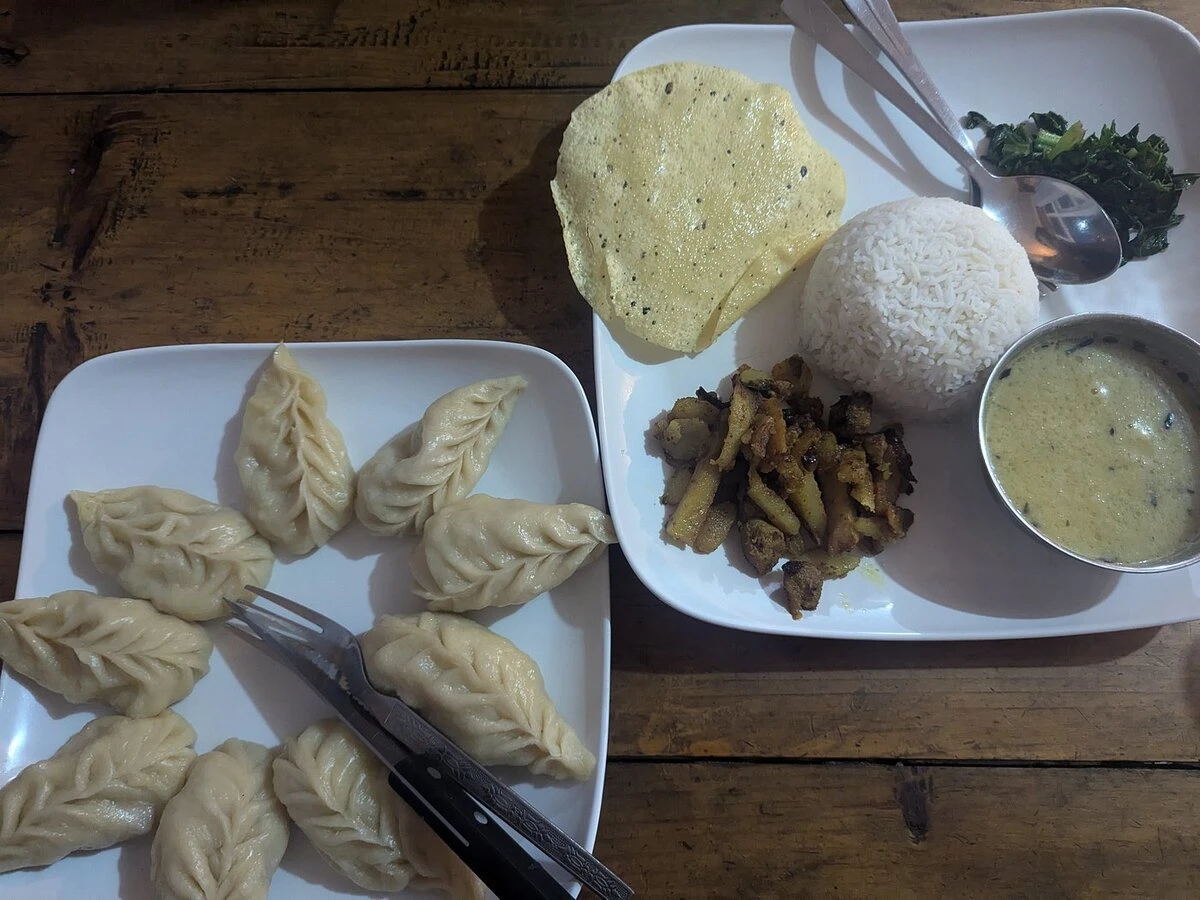
Usually, the menu consists of Dal Bhat, an everyday Nepalese meal that comes with lentil soup (dal), rice (Bhat), seasonal vegetables, pickles, and sometimes meat, momos, noodles, pasta, curry, vegetarian and non-vegetarian soup, bread and pastries, hot drinks, etc.
The teahouses are simply furnished yet convenient enough to have a good sleep, which provides you with bedding, and they may be facilitated with hot showers for an additional fee, which is the same for electricity, wifi, and heating systems. This same teahouse trekking experience is also found on routes like the Manaslu Circuit Tsum Valley Trek, where trekkers enjoy similar local hospitality and food services.
Despite being a difficult trip, the Annapurna Circuit is appropriate for novices who are in good physical shape and have the necessary gear. Participating in guided tours helps to improve the whole experience and increases the likelihood of a pleasant and successful Annapurna excursion.
However, you have to make sure the itinerary you have chosen is flexible and has enough days for acclimatization, and that the travel agency you have decided to go with is reliable. If you are trying to decide who to go with, Ammonite Adventure. is a group of travel, trek, and tour operators in Nepal.
We are one of the most well-versed and reputed travel specialists, catering to the needs of every individual looking forward to enjoying their holiday to the fullest in the Himalayas of Nepal.
Yes, if you are planning to go on an epic odyssey to the Annapurna Circuit or any other remote, mountainous area, getting travel insurance is highly advised, even though it might not be an essential part of the trek.
It does add to the cost of your trip, but it is one hundred percent a wise investment for your safety and well-being, which provides you with a sense of financial security and peace of mind in the face of unforeseen circumstances.
You will specifically need two trekking permits for the Annapurna Circuit voyage. The standard TIMS (Trekkers Information Management System) card and the Annapurna Conservation Area Project Permit (ACAP).
For the TIMS card, citizens from SAARC nations pay USD 10 (about NPR 1200), while the rest of the travelers pay USD 20 each, which is approximately NPR 1,200, which functions similarly for the ACAP as well.
ACAP costs NPR 3,000 for all foreigners, while it costs NPR 1500–2000 for SAARC nationals. We would have already gotten our hands on these permits for you to trek the Annapurna Circuit with Ammonite Adventure.
To stay safe at high altitude, it is important to walk slowly, drink enough water, and avoid rushing. Trekkers should watch for symptoms like headache, dizziness, nausea, or unusual tiredness, as these can be signs of altitude sickness. Acclimatization days are very important because they give your body time to adjust to thinner air, reducing health risks during the trek.
This 12-day route is a faster version of the classic Annapurna Circuit, allowing you to complete the trek in less time while still experiencing major highlights like Thorong La Pass. It saves time but may skip some remote side trails and longer cultural experiences found in the full circuit.
The Annapurna Circuit is longer and more varied, while Annapurna Base Camp is shorter and more direct. The circuit is moderately challenging, whereas ABC is generally easier. The circuit offers diverse landscapes from forests to high mountains, while ABC provides closer, more direct views of the Himalayas. Choose the circuit for a more adventurous journey and ABC for a shorter, easier trek.
Transportation in the Annapurna region includes rough road sections in some areas. Jeeps are the most common and comfortable option, buses are more budget-friendly but slower, and flights save time but depend on weather conditions. Travel time varies based on the route and the type of transport chosen.
You should carry essential items like warm clothing, trekking boots, a water bottle, sunscreen, and a basic first aid kit. Try not to overpack, and avoid carrying unnecessary heavy items or valuables to keep your backpack light and manageable.
WiFi is available in most teahouses, although it may be slow at times. Mobile networks work in many areas, but the signal can be weak at higher altitudes. Charging facilities are available in lodges, but they may come with an extra cost.
Annapurna Circuit Trekking is undoubtedly one of the most famous and enjoyable in Nepal. The trek will bring you stunning changes in scenery, culture, and climate, no doubt due to the massive Annapurna range. You may be trekking solo for personal challenge, or with a group for shared experience. We can arrange your trek exactly the way you would like it.
If you trek solo, you can adjust speed, stops, and rest accordingly; if you trek with a group, you can enjoy team spirit and many shared experiences. If you can gather a group or group of friends, you will benefit from group rates of discount which increase with group size.
Group discounts apply only to groups organized by you, and not to groups organized by Ammonite Adventure.
We can offer the trek for any group size. If 12 or more participants, we will provide an assistant guide to assist in ensuring everything is running as planned. For personal needs and fomfort and safety purposes, we provide one porter per 2 trekkers' gear,with a luggage weight restriction of up to 9 kg for each trekker.
The Annapurna Circuit Trekking package includes everything necessary for your trekking adventure, with the exception of a few personal expenses. Included are permits, accommodation, meals, guide and porter service, and as well as basic logistics.
You may need to plan your own personal expenses, which may include accommodation and meals in either Kathmandu or Pokhara, and you may want to search those both on your own or even at any budget level, including luxury, and both can usually be pre-booked online.
The following is a list of examples and personal expenses for which you may want to budget: visa fee, snacks, tea/ coffee, juice/ coke, crew tipping, gifts, travel insurance, and any extra activities that you may wish to do before or after the trek.
We do absolutely recommend you take any major foreign currency with you and change those into Nepali Rupees while in Kathmandu or Pokhara, and certainly you should do this before you head out on your adventure into the mountains. If you have to wait until you get to the more remote areas of the trails, you will have very limited exchange opportunities, and there will be absolutely no ATMs.
The 12-day Annapurna Circuit Trekking experience will be led by one of our certified and licensed trek leaders with the use of local porters and assistant guides if required.
Each of our porters will never carry more than a total of 18 kg - 2 trekkers will share one porter; however, if you wish to have each of you have a porter, please let us know at least 2 weeks before your trip.
According to local policy, we prefer to utilise crews from mountain communities, they are naturally acclimatized to high altitude trekking. The compensation we provide includes fair wages, good quality food, accommodation, clothing, insurance, and medical cover.
Ultimately, we believe that if we look after our crews and they are happy, they will look after you.
Ammonite Adventure is registered with the Nepal Government and is a member of TAAN and the NMA. To book and secure your trek on the Annapurna Circuit, we need you to pay a deposit of 10% paid by bank transfer, Western Union, or another online payment.
You can pay the balance when you arrive in Nepal, either in cash, by credit card, or by local bank transfer. You'll also need to send us a scanned copy of your passport (depending on whether you are coming with dependants), a recent photo, your travel insurance details, and your flight ticket information within 1 week of booking.
We also take last-minute bookings for the Annapurna Circuit Trek, but full trip payment must be made at least 24 hours before your scheduled departure. We do our best to accommodate those travelers who booking late.
After the treks in the Himalayas, many choose to take extended stays in Nepal. We offer city tours in Kathmandu or Pokhara, tours at Chitwan National Park to do wildlife safari tours, or just fun activities like paragliding, rafting, or canyoning, which are all adventure sports.
We will organize a farewell dinner in Kathmandu after your trip on the Annapurna Circuit to acknowledge the completion of a significant achievement.
You will also receive a printed trek completion certificate and have the opportunity to give your feedback about your experience so that we can continually enhance the value of our services.
On the Annapurna Circuit, you will go through subtropical valleys to alpine passes, meaning you may experience everything from warm weather to freezing temperatures, depending on the altitude.
Therefore, you will have to prepare for all conditions. We provide one porter for every two hikers, which means you should pack your equipment together in one duffel bag.
The bag should be at least 60 liters, with a combined weight of no more than 9 kg per person. You may also want to have a daypack for all your daily essentials.
We can provide you with a (used, nonwaterproof) duffle bag, (used) down jacket, and (used) sleeping bag if you do not have your own.


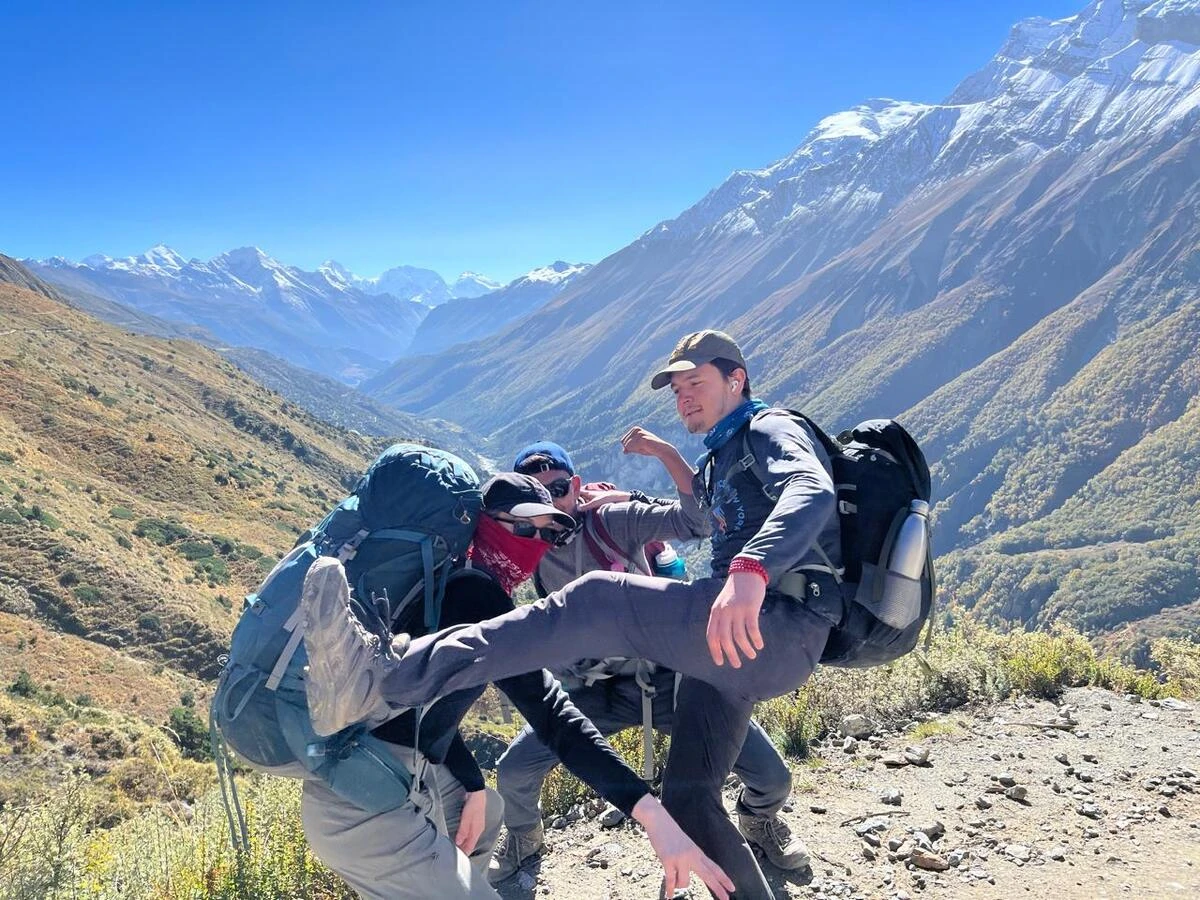
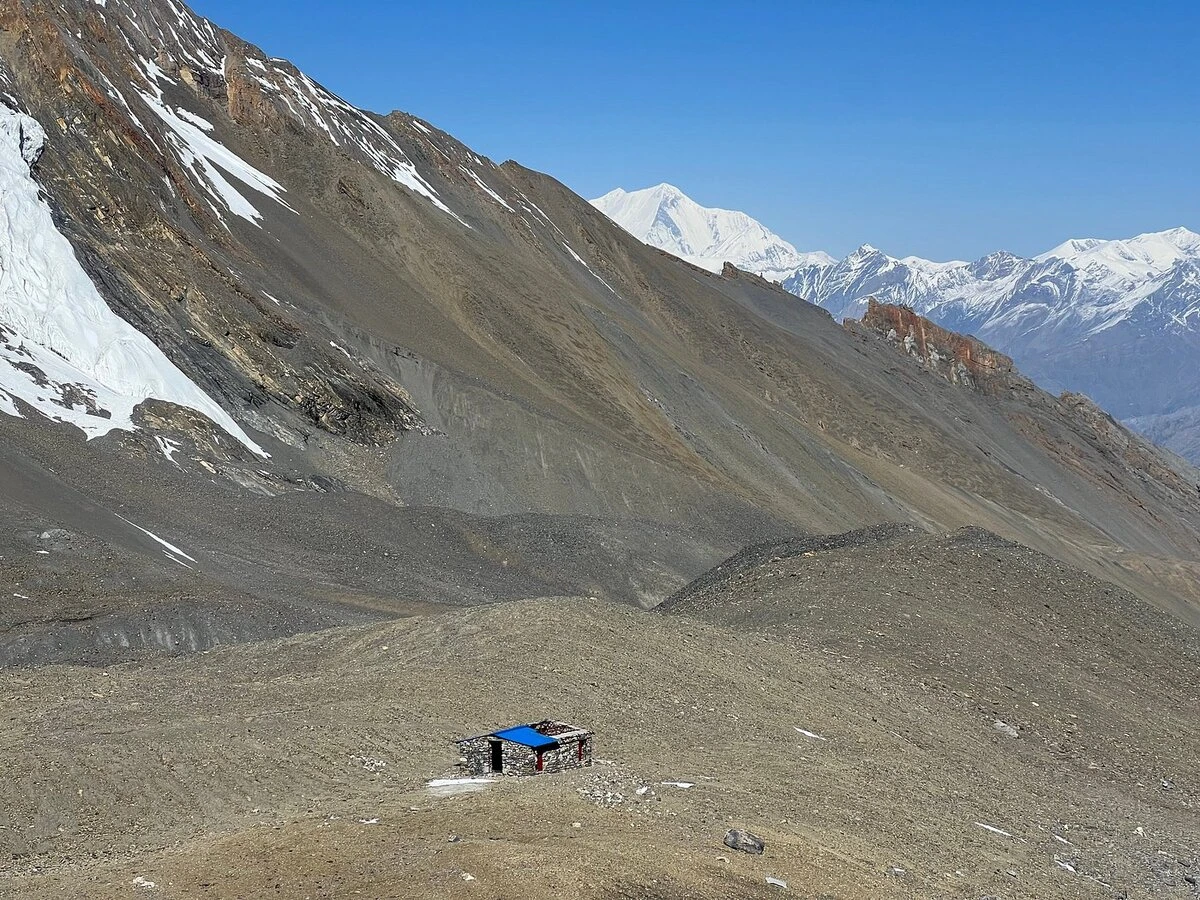
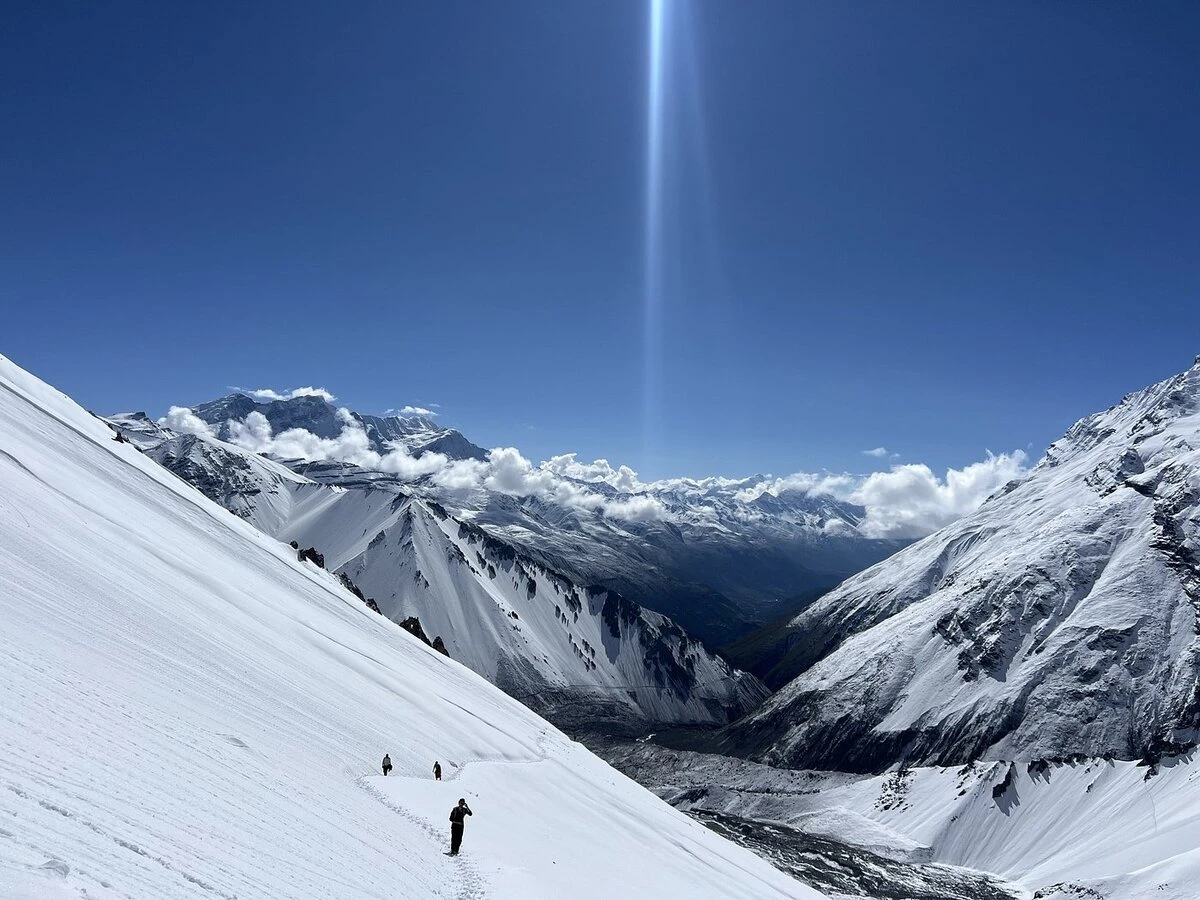
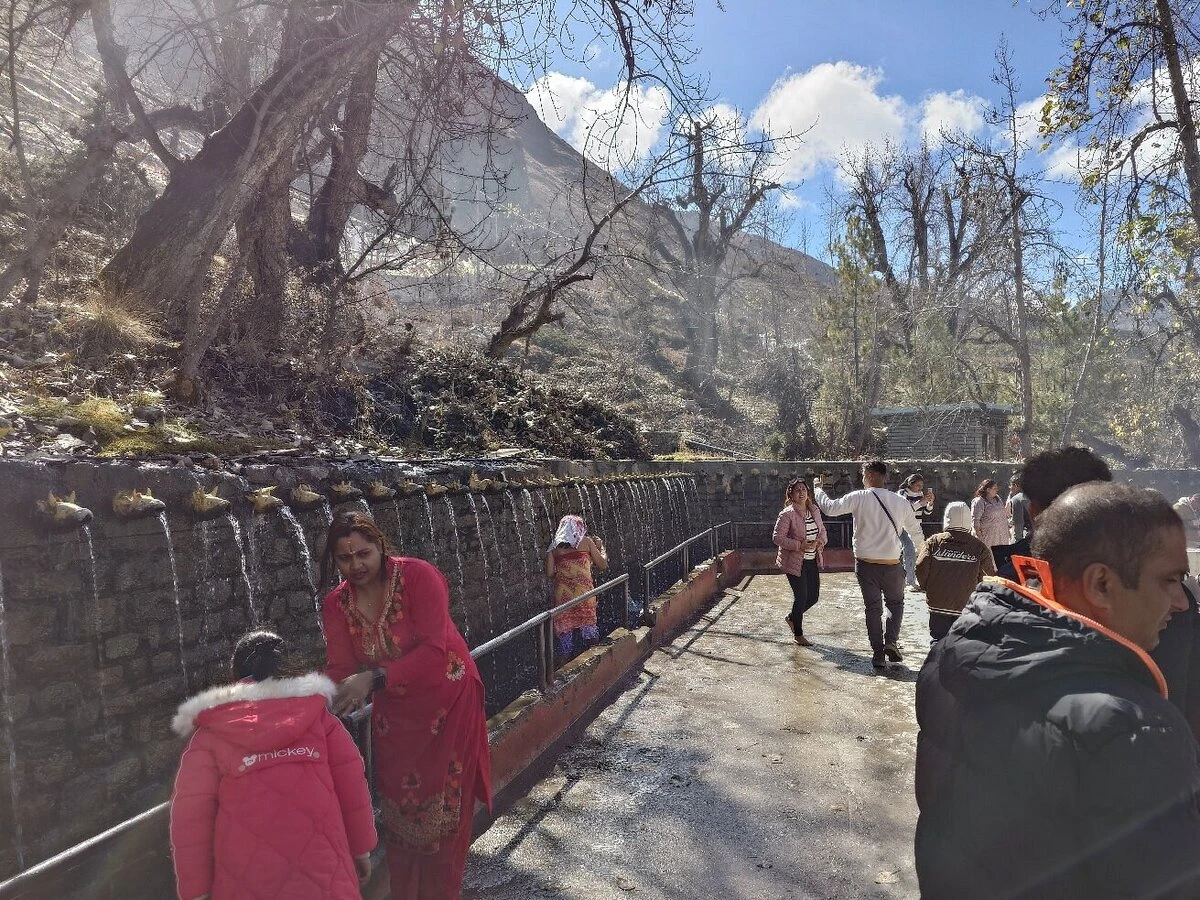
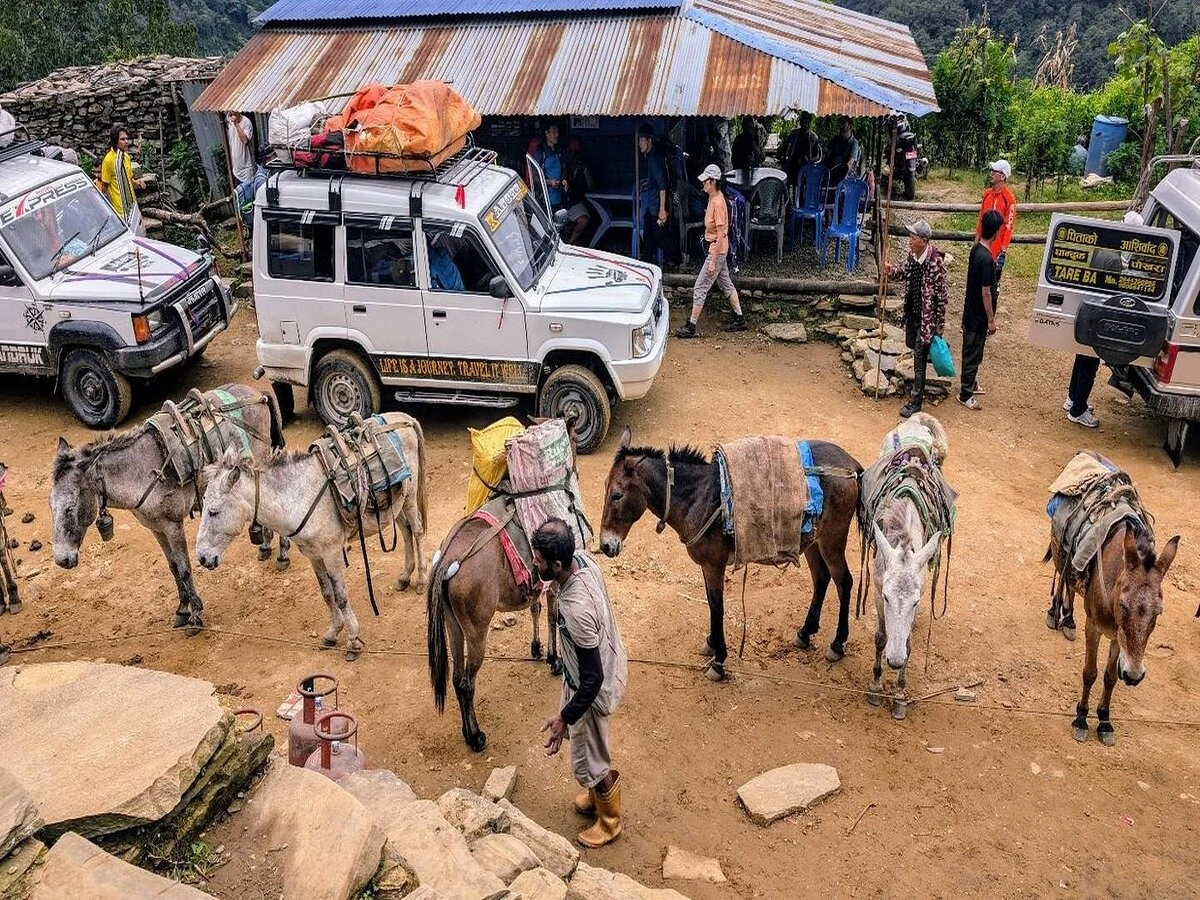
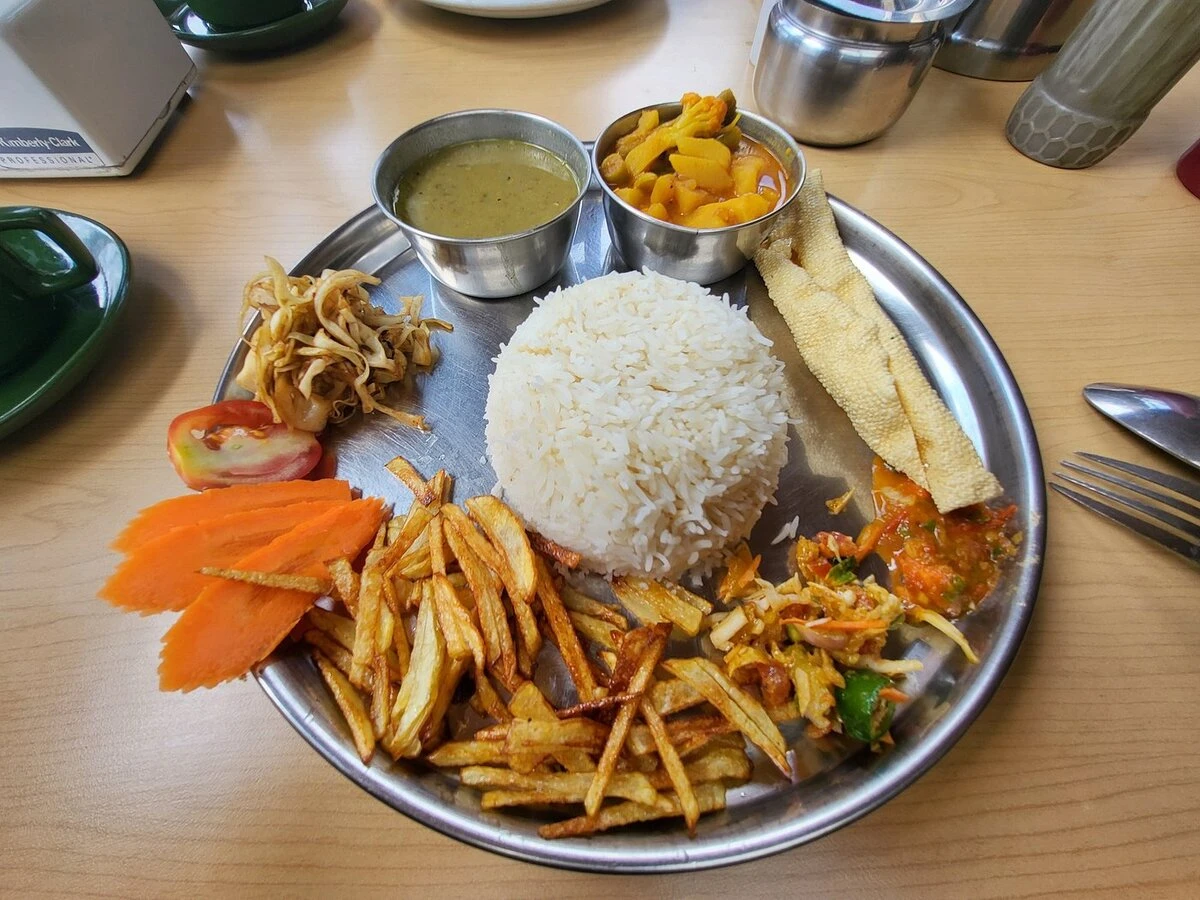
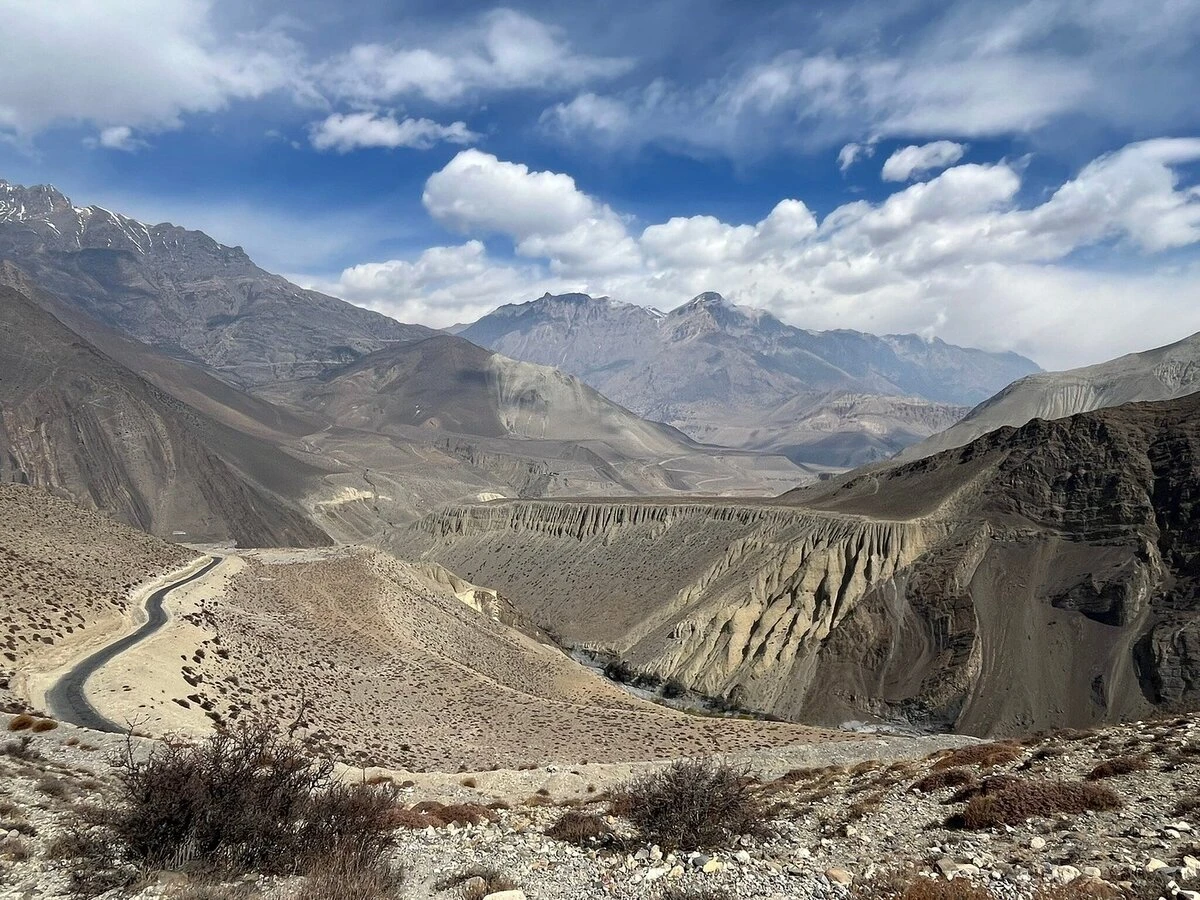
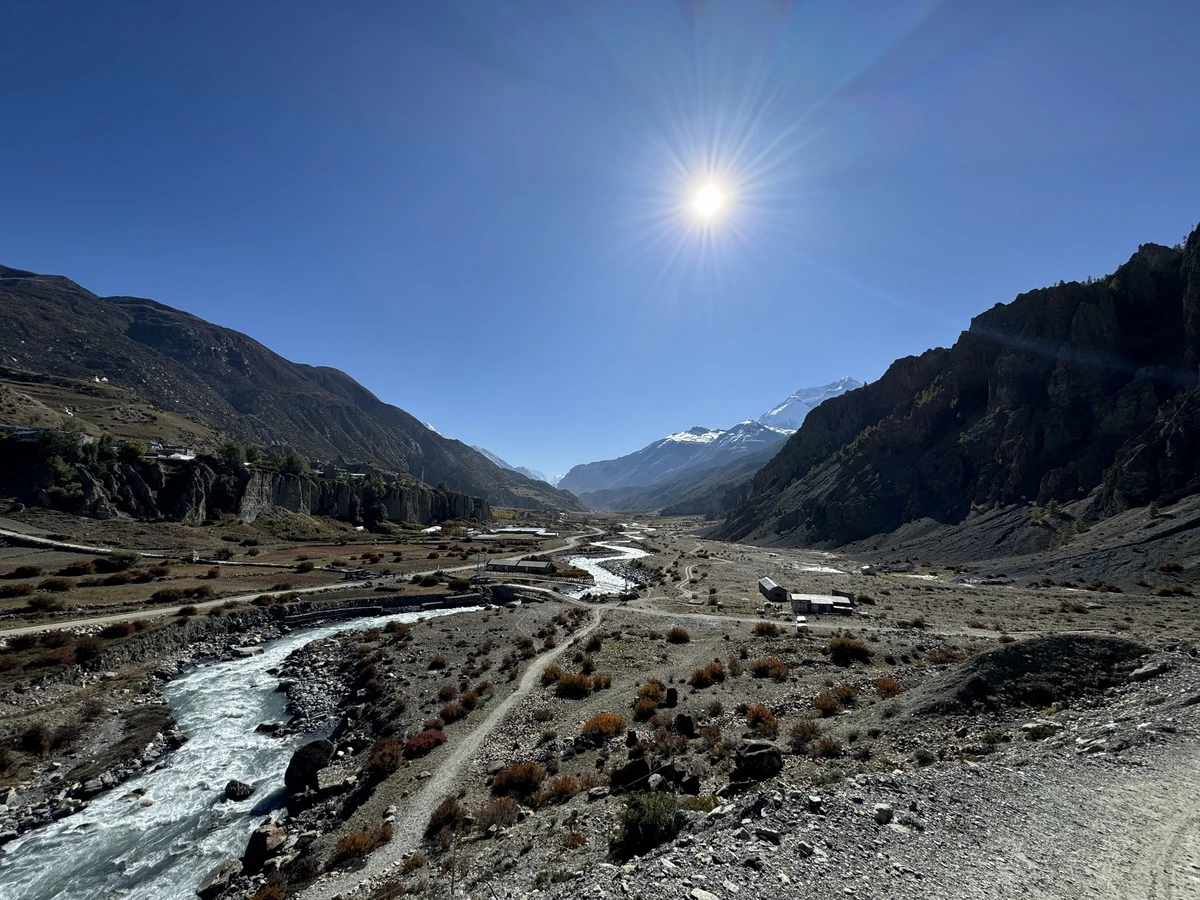
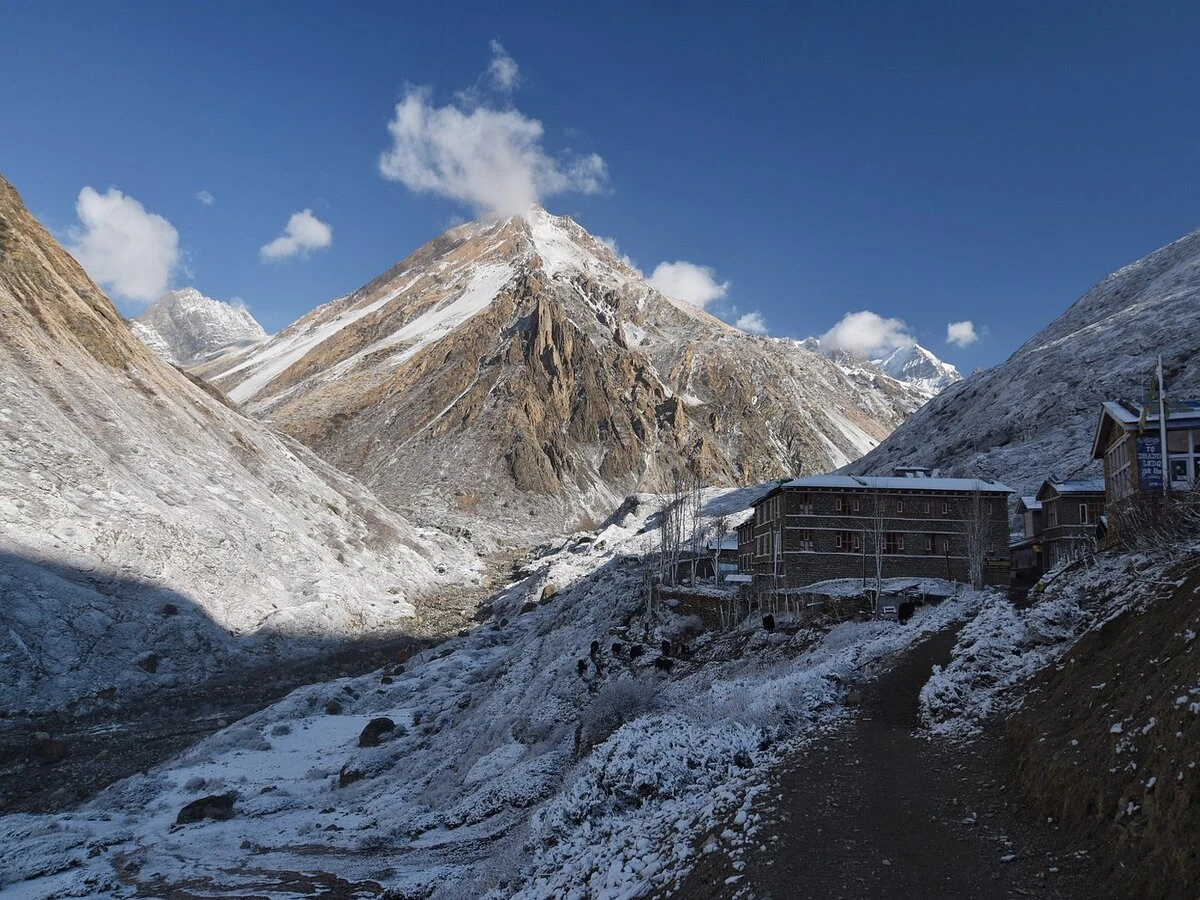
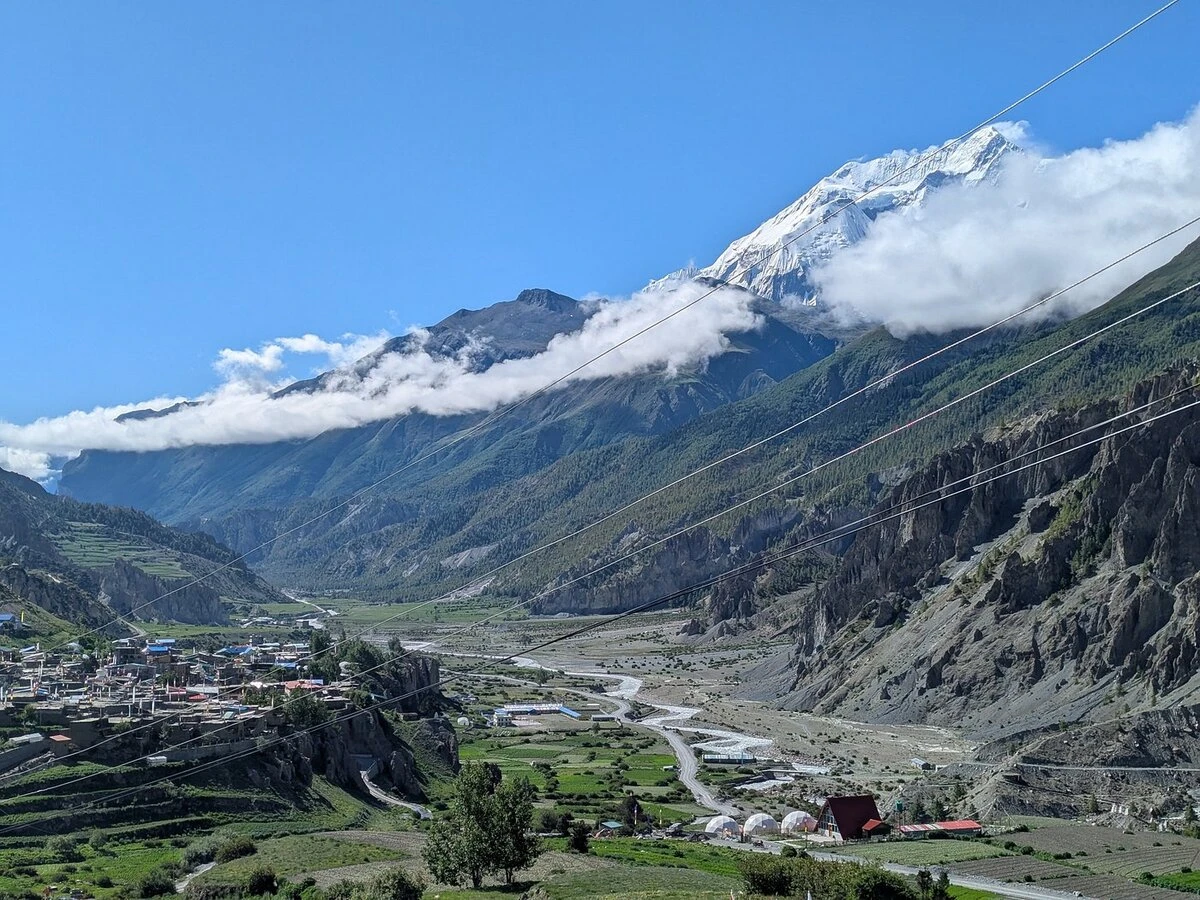
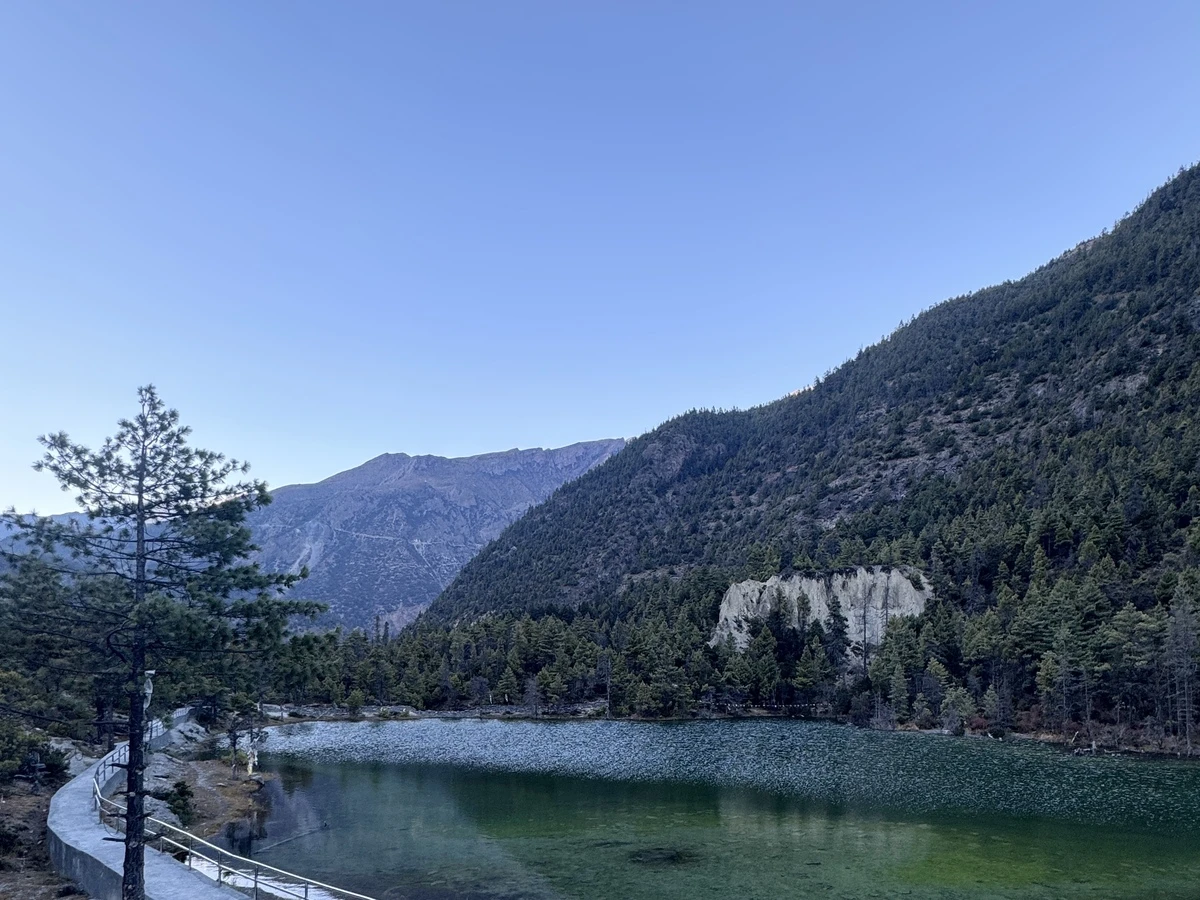
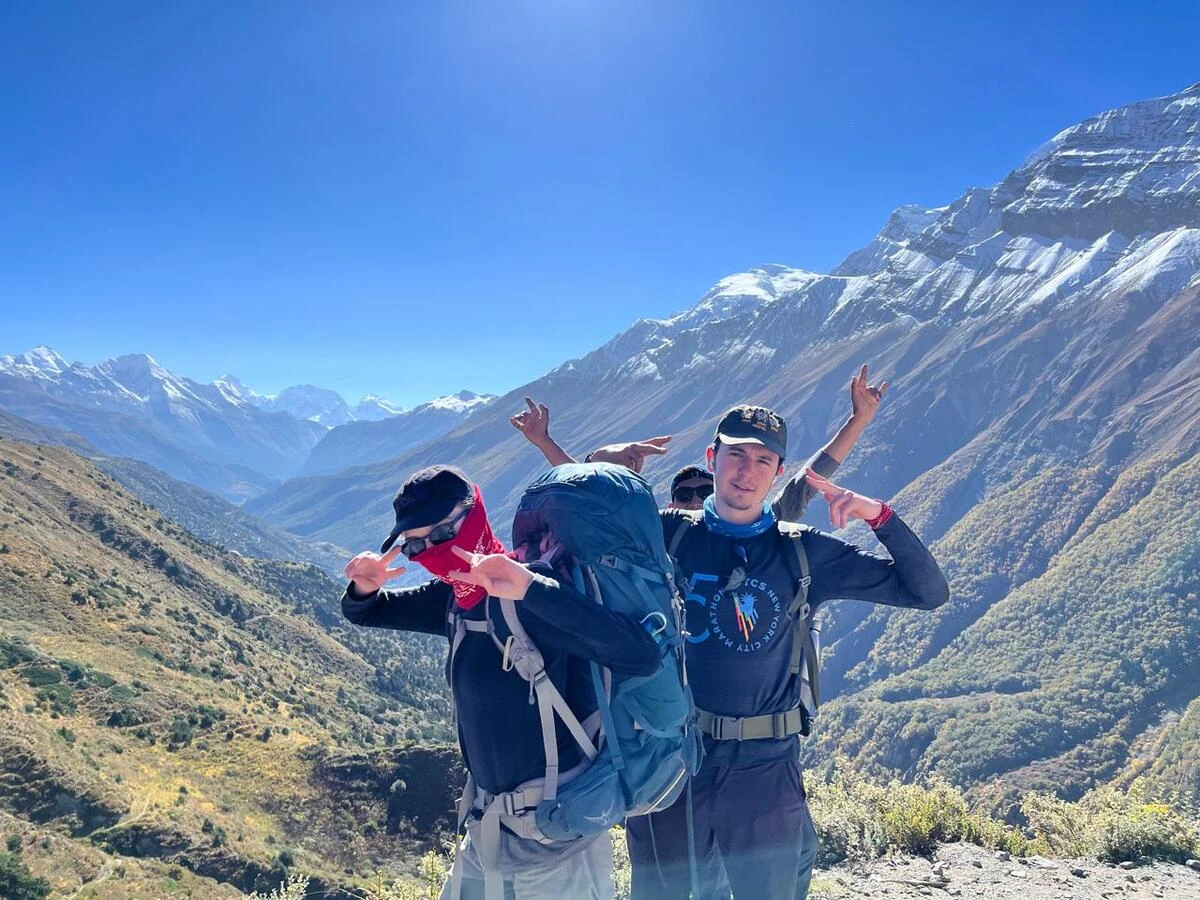
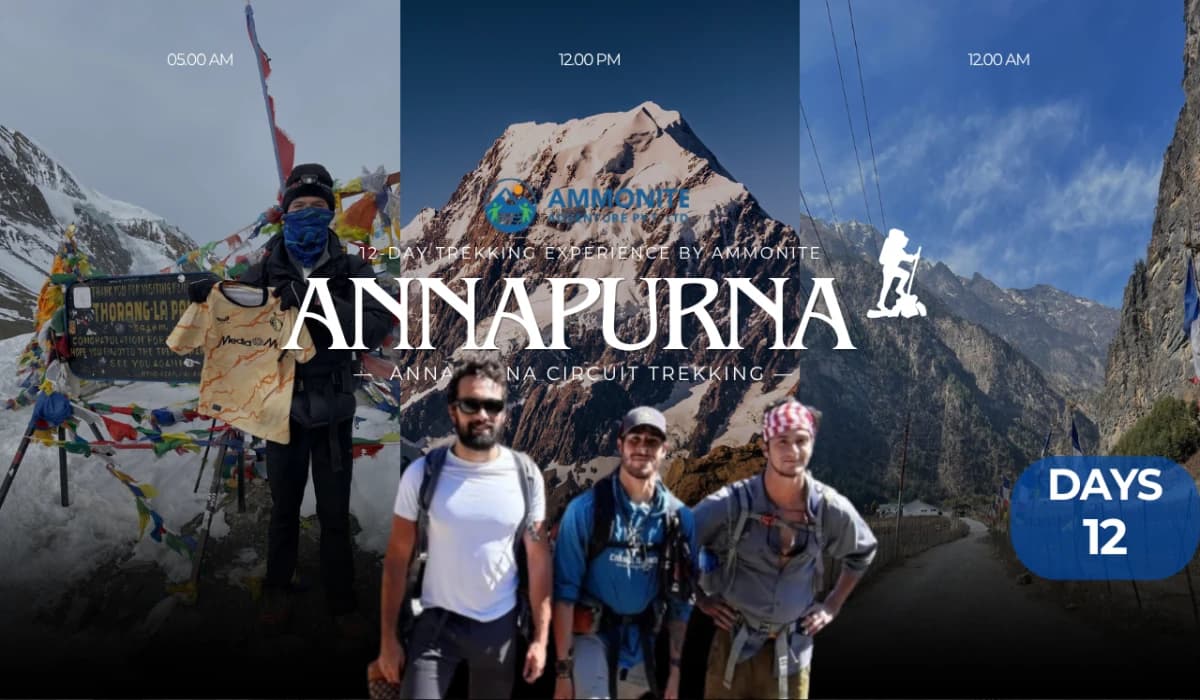
The crossing of the high pass, Thorong La, at 5,416 m is one of the noteworthy differences between the Annapurna Circuit and Annapurna Base Camp Trek, as the trekking route to the base of Annapurna I (8,091 m) does not necessarily go up to cross this specific mountain pass.
Tips are much expected from guides and porters, which is also a kind gesture to express your gratitude to the true heroes of the Himalayas who supported you throughout the journey, lessening the burdens for you.
The duration of the Annapurna Circuit expedition varies based on the precise path followed, the hiker's speed, acclimatization days, and the starting and ending points of the route, which usually covers 160–230 km (100–145 miles) on an average of 18–21 days.
However, with Ammonite Adventure & Treks Pvt. Ltd., you can complete the Annapurna Circuit Trek in a period of 12 days, which is the most cost-effective and time-effective method to see and feel the Annapurna region briefly.
Both the Everest Base Camp and the Annapurna Circuit are considered to be fairly strenuous trekking trails in Nepal. However, due to the comparatively higher altitude of the Everest Base Camp, larger area, and lodging options, the expedition is said to be more difficult.
While the Annapurna trekking route in Nepal does accept hard currency, including Indian rupees, it is advisable to carry some local money on hand to cover any other additional costs in need.


I had an incredible experience trekking the Annapurna Circuit with
My boyfriend and I did the Annapurna Circuit in December and we honestly had an amazing experience, all thanks to