May 03, 2025read more +
Langtang
Dharma is a man! He makes the trip so funny.
Kacper P,
Poland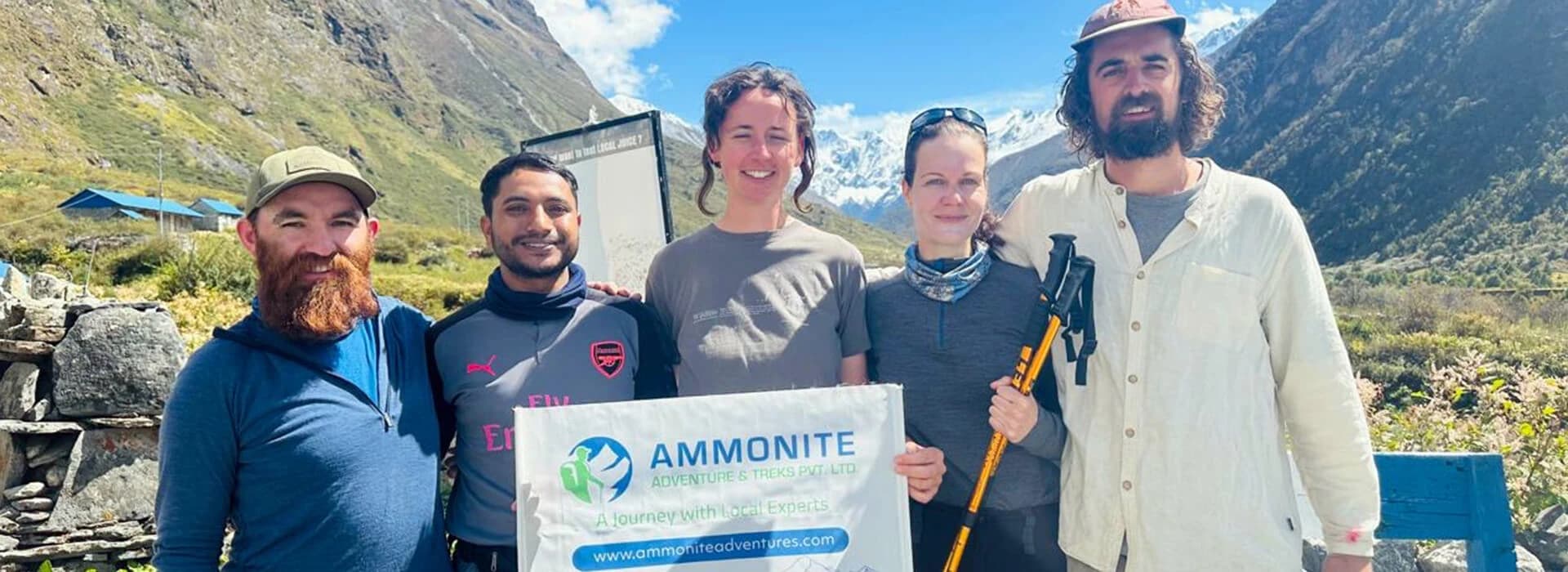
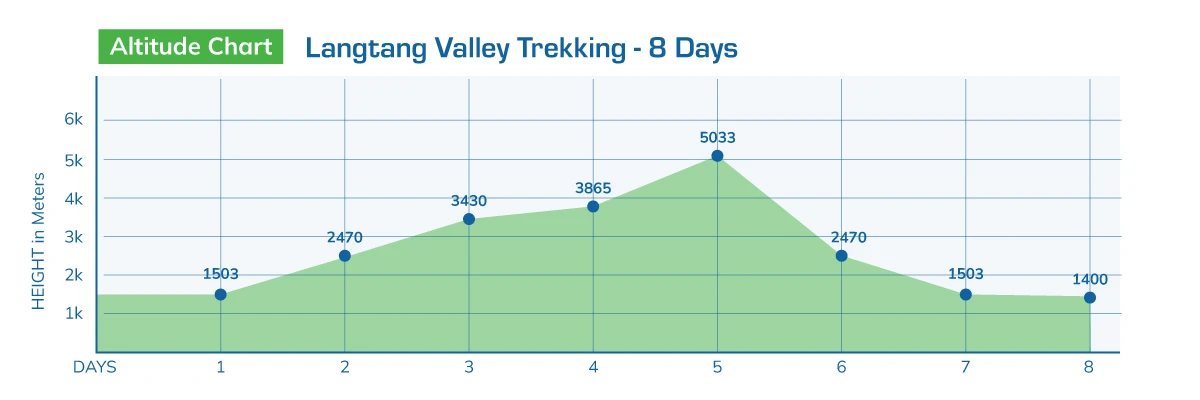
The 8-day Langtang Valley Trek is one of the most accessible high-altitude adventures from Kathmandu, reaching up to 4,984m at Tserko Ri, with an average cost of USD 499–775 per person depending on group size, a licensed guide, and basic teahouse stays; it’s ideal for beginners and offers stunning panoramic Himalayan views, including Shishapangma, one of the world’s 8,000m peaks, without requiring an expedition.
Langtang Valley Trekking – 8 Days is one of the best short and beginner-friendly Himalayan adventures in Nepal, offering a perfect balance of natural beauty, cultural experience, and moderate trekking challenge. Located just 137 km from Kathmandu, this trek is ideal for travellers who want to explore the Himalayas within a limited time and budget of approximately USD $499–$775 depending on group size..
This 8-day journey begins and ends with a drive to Syabrubesi, taking you through the scenic landscapes of Langtang National Park. Over a total walking distance of approximately 65–80 km, you’ll walk along forest trails, rivers, glaciers, and traditional Tamang villages, staying in local tea houses along the way. You’ll experience authentic culture, visit ancient monasteries like Kyanjin Gompa, and reach a maximum altitude of 4,984 m at the Tserko Ri viewpoint.
Often called the “Valley of Glaciers", the Langtang region offers a quieter and more authentic alternative to busier trekking routes, While it is suitable for beginners, the best trekking seasons remain spring (March-May) and autumn (September-November). In this guide, you’ll find a detailed 8-day itinerary, complete cost breakdown, and essential travel tips to help you plan your Langtang Valley Trek in 2026 with confidence.
The Langtang hiking realm is a world of sky-towering peaks, mythical woodlands, and rural villages. As an ideal solitude and isolated experience, one can anticipate a unique voyage with the following:
The offering price for this trekking package from Ammonite Adventure cost you US$550. The majority of services necessary for this trek are included in this price and few are at your own expense. Let me break down the overall cost of the trek so that you can plan and book accordingly.
Costs included from package: US$550:
| Category | Details | Estimated Cost |
| Trekking Permits |
|
$20 $30 |
| Transportation |
|
$20-$60 |
| Accommodation |
|
$50-$70 |
|
Guide |
|
$25 to $30/ day x8 |
| Porter |
|
$20 to $25/ day x8 |
|
Food: * (Includes Veg and Non- Veg option)* |
|
$150-$240 $15-$30 |
| Medical assistance |
|
|
| Gear and equipments |
Sleeping bags, down jackets, and duffle bags. (1 per each two trekkers) Langtang Region Map. |
$30-$70 |
| Souvenir & Additional services |
|
|
|
Farewell |
A cultural farewell meal in Kathmandu at the end of your journey | |
| Total | $550 |
Choosing between a shared group trek and a private trek for your 2026 Langtang adventure depends on your budget and how much flexibility you need.
Here is the breakdown based on the updated 2026 pricing and logistics:
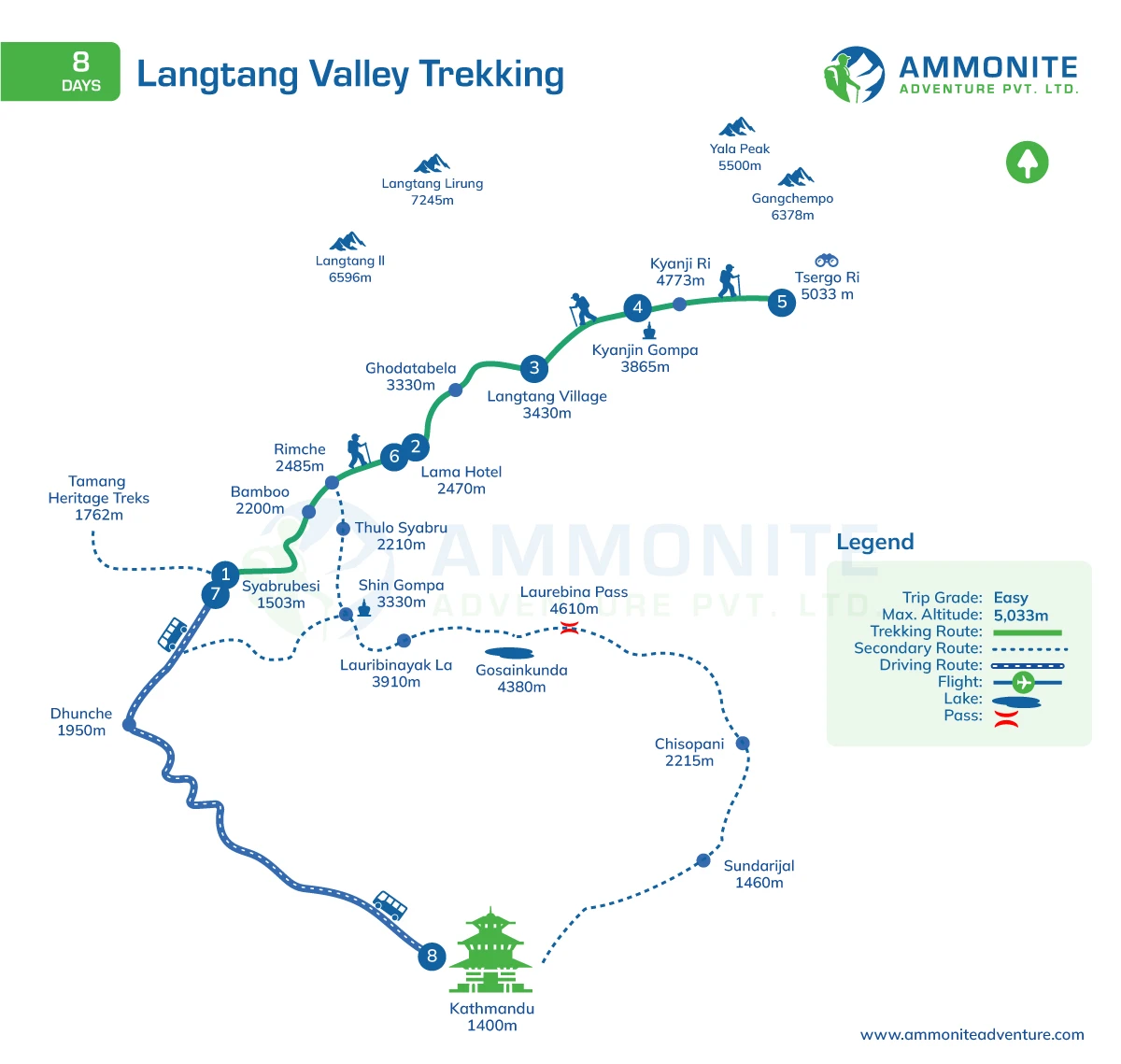
The day begins with an early morning breakfast and departure from the hotel in Kathmandu to take an overland drive to reach Syabrubesi to the north around the Langtang Himal range, followed by fantastic views of roaring rivers, terraced fields, several traditional settlements, and snow-capped peaks, especially Ganesh Himal (7,422 m/24,350 ft).
In around 8–9 hours of joyous riding, depending on the traffic of the day, you will have arrived at the destination of the first trek day, Syabrubesi, past the headquarters of Rasuwa district and Langtang Himalayan region, Dhunche, moving along the river Trishuli.
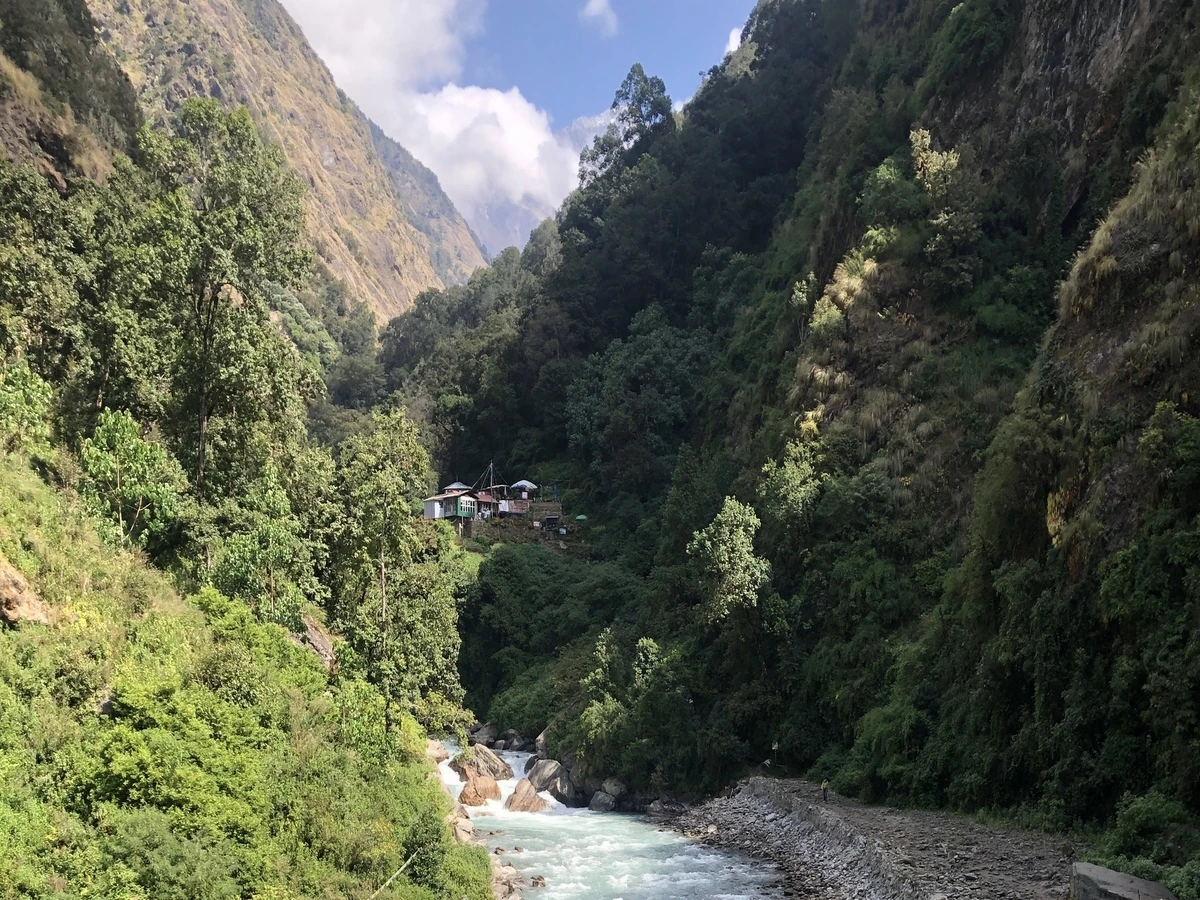
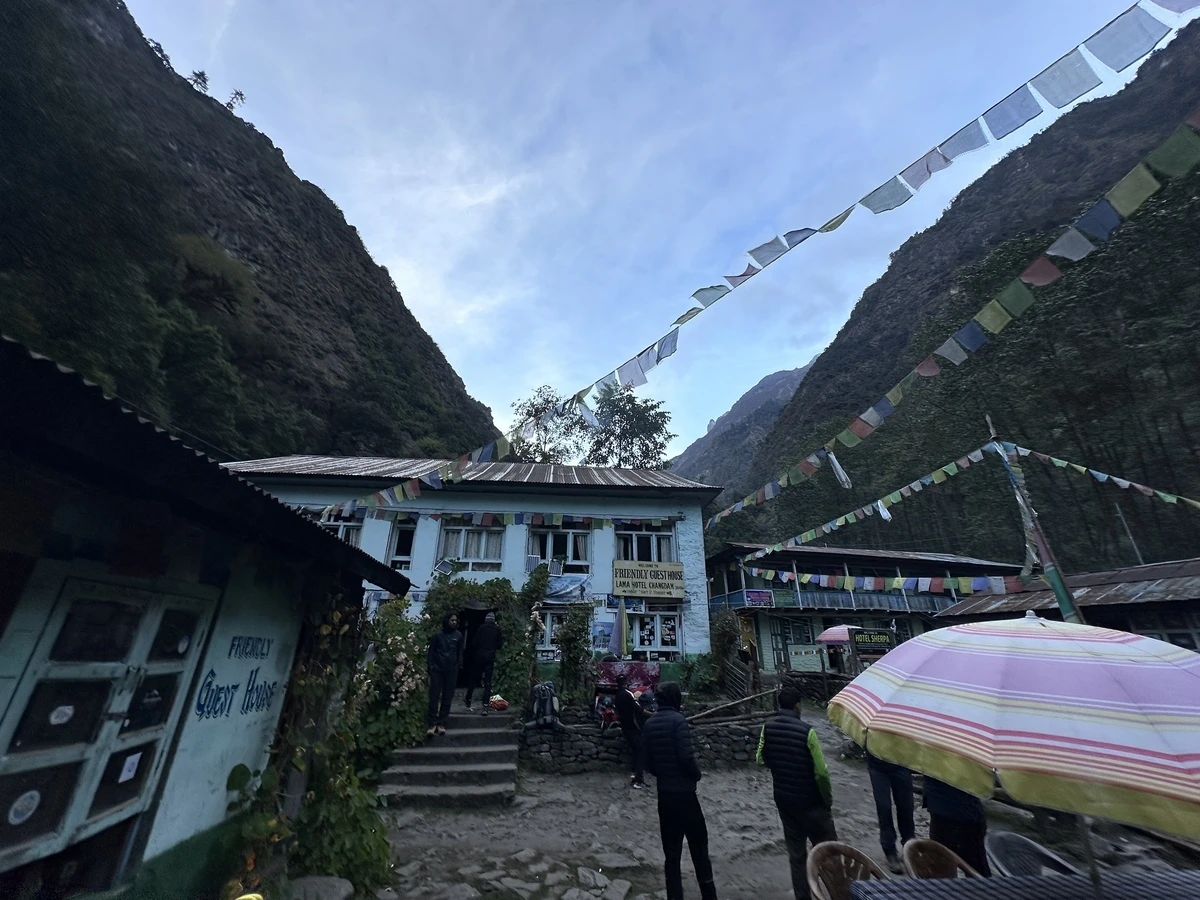
The official hiking commences this day from Syabrubesi, tracing the morning track to a bridge over the river called Langtang, which later on climbs uphill farmlands and thick forests past the typical Himalayan villages, to the second-night stopover at the Lama Hotel amidst the lovely setting of the forests.
The third-day trek also begins with an early morning walk from Lama Hotel, trailing the river upstream through a gorge and deeply forested area that later on enters the much-cooler realm past Ghodatabela and finally, the Langtang Valley, where the tree lines end.
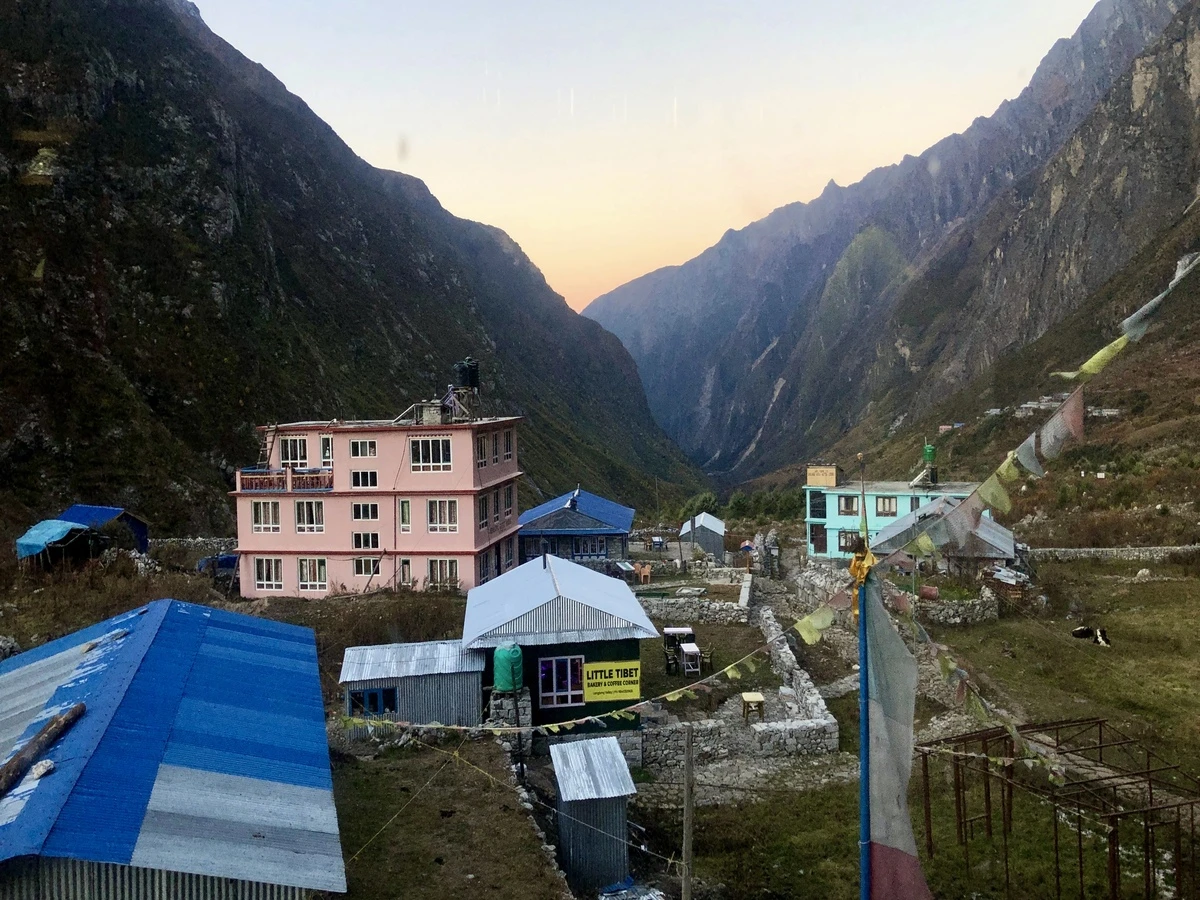
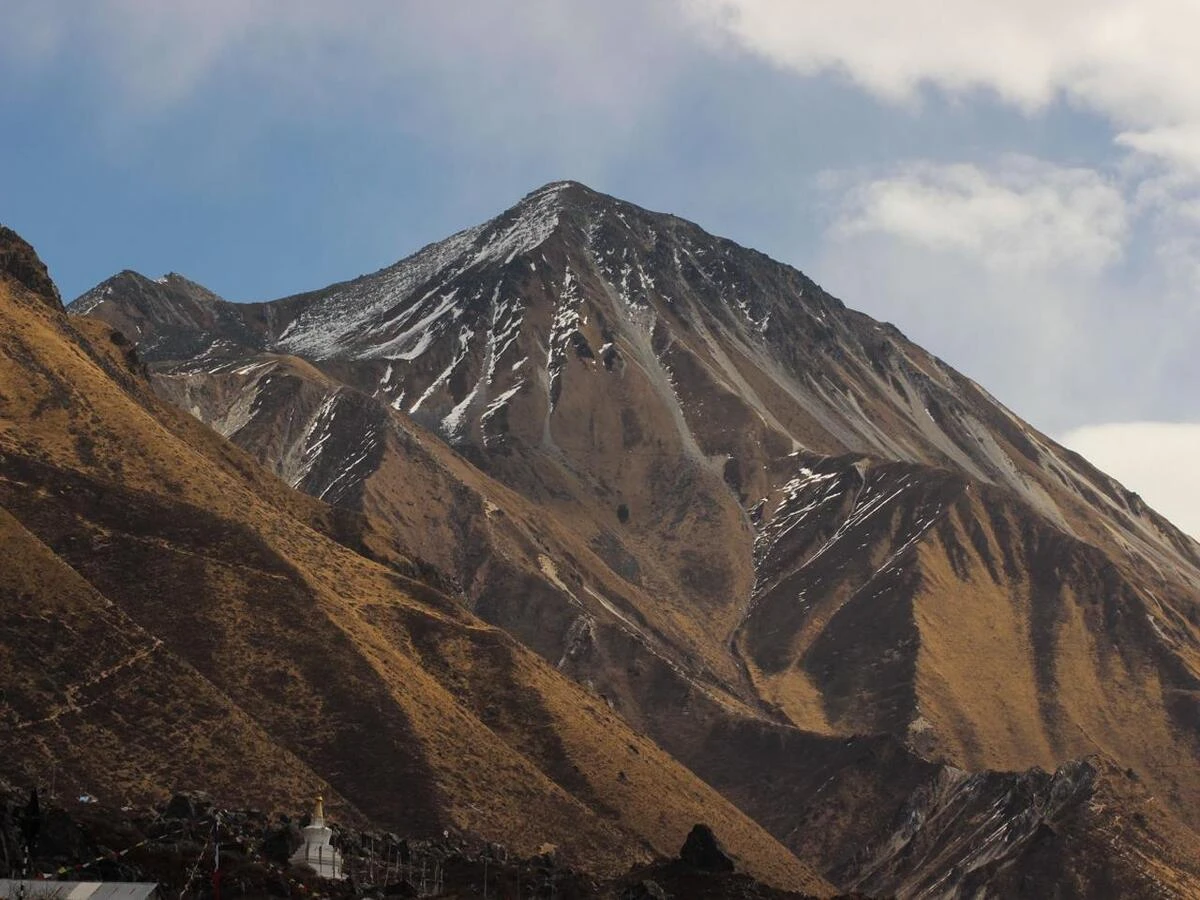
This charming valley is surrounded by several mountain peaks, among which the Langtang Lirung looks most notable to the north above all the high, rugged cliff walls and hills to call it a day in between them.
It is one of the major trek days when you will get to see the most treasured historical landmark of the whole Langtang region, which connects each local and visitor spiritually, named Kyanjin Gompa.
Although you will hike comparatively for a short time of 4 hours, it is undoubtedly scenic, beginning with a small, steep climb to reach a nearby ridge after leaving the forest area behind.
Moving forth here, the trail area widens, giving an exclusive sight of the sky-dominating ranges, making a final stop at the teahouse around the outskirts of Kyanjin Gompa, passing by several chortens, mani walls, water mills, prayer flags, and wheels.
It is a free day to acclimate yourself well to the mountainous environment before starting a descending journey, when you will take a pleasurable stroll at the top of the highest point of the overall Langtang Valley rambling, Tserko Ri.
The entire peaks of the Langtang from the viewpoint of Tserko Ri are astounding to the core, including some of the noteworthy Tibet’s summits below this highland, which is a great alternative amongst Tserko Ri, Kyanjin Ri, Langshisa Kharka, and the cheese factory that you can visit in the evening.
After relishing the most memorable holiday trek to the beautiful valley of Langtang and Kyanjing, the adventure is about to come to an end, before which you will take a pleasurable downhill path from Kyanjin Gompa to arrive at the Lama Hotel to use it as an overnight stop.
It should be a comparatively less strenuous downhill walk through the villages of Mundu, Langtang, and Ghodatabela.
The seventh day marks the final trek day before catching a local or tourist bus back to Kathmandu. Therefore, the trekking route for the day is along the bank of the Langtang and Bhote Koshi River in a scenic manner, taking in all the jaw-dropping scenery as you venture deep into the wooded land of bamboo and birch for the last time.
On a continuous downhill walk of 5–6 hours, you would have made it to the Lama Hotel to spend the night.
The day has come to bid farewell to the stunning Rasuwa area in the Langtang trekking region alongside the Langtang Valley after enjoying the most amazing trek days and driving back along the highway back to Kathmandu.
Throughout the adventurous ride back to Kathmandu, you will be enjoying the picturesque terraced fields, meadows, and hopefully a glimpse of towering snow-clad peaks before making it to your hotel.
Make your Langtang Valley Trek even better with Ammonite Adventure . We are the experts organizing several Langtang Region treks, and we have some unique Add-Ons to offer you that will make the whole trip more convenient based on your preferences.
Make your trip more enjoyable by hiring our porter service at USD 160. A porter will help you to enjoy Langtang Valley’s sceneries without carrying heavy backpacks as a porter can carry a maximum 25KG, reasonable enough for two persons to share the service.
Take our private jeep from Kathmandu to Syabrubesi at USD 200 only. With local transportation taking up a lot of your time as well as being loaded with passengers, the private jeep gives you the convenience to travel on your own time and comfort, making your first day less hectic. Also, enjoy some great views on the way without waiting for other passengers and enter Langtang Valley hassle-free.
Langtang Valley Trek cannot be done independently in 2026, as a licensed guide through a registered trekking agency is mandatory for all foreign trekkers. Trekking agencies handle permits, safety tracking (e-TIMS), accommodation, and checkpoint clearance at Dhunche and Ghoda Tabela.
Book at least 2–6 weeks before peak seasons (March–May, September–November) to secure guides, permits, and lodges, while off-season bookings can be arranged closer to departure depending on availability.
Ammonite Adventure registers its trekking with the Nepal Gov’t as a member of the Trekking Agency Association of Nepal (TAAN) and the Nepal Mountaineering Association (NMA) - so book your trek knowing you are in safe hands. When booking your trek, you will need to pay a 10% deposit via bank transfer, Western Union, or online.
You can pay the remaining balance in Nepal using cash, credit card, or transfer. When you book, you will need to email them a copy of your passport (dependent children, too), photo, travel insurance, and travel details within one week of your booking. If you have any questions or need help completing this formality, you are welcome to reach out to Ammonite Adventure anytime.
We do accept last minute bookings for our Langtang Valley Trekking - 8 Days. You will need to pay for the trip in full 24 hrs before your trip starts. We will try and run treks for any time but last minute bookings can create issues.
Verify that your trekking agency provides a licensed guide registered under the government system, valid travel insurance covering high-altitude trekking, a clear cost breakdown without hidden charges, and a cancellation policy explaining refund conditions before confirmation.
Select a company with proven Langtang route experience, strong safety record, verified reviews from trekkers, and trained local guides familiar with altitude response, weather changes, and emergency procedures in the Langtang region.
Getting to Syabrubesi from Kathmandu offers three main transport options, each differing in travel time, cost, and comfort level depending on your budget and travel style.
|
Transport Type |
Travel Time |
Cost (Approx.) |
Comfort |
|
Local Bus (Kathmandu to Syabrubesi) |
7–9 hours |
$8–$12 |
Low |
|
Shared Jeep |
6–8 hours |
$15–$25 |
Medium |
|
Private Jeep |
6–7 hours |
$120–$180 (per vehicle) |
High |
The journey to Langtang Valley is a classic tea house trekking route in the Himalayas, where trekkers stay in local lodges and experience simple mountain hospitality with views of Langtang Lirung and surrounding peaks.
You will stay in basic tea houses and lodges along the trail that offer simple mountain accommodation and shared facilities, with limited comfort in higher altitudes and reduced availability during peak trekking seasons.
Food is freshly prepared in tea houses with limited but filling options throughout the route.
Safe drinking water is available at tea houses, usually boiled or refilled at stops, while bottled water can also be purchased along the trail, though purification is commonly recommended instead of plastic bottles.
WiFi, Electricity & Charging
Mobile networks and the internet are available in many villages but become weaker at higher altitudes, and electricity is available in tea houses with charging facilities that usually require an extra fee per device.
For an extraordinary expedition to Langtang Valley, one must carry two mandatory permits issued by the Nepal Tourism Board (NTB) and the Trekking Agencies Association in Nepal (TAAN).
which can vary depending on the nationality of the trekkers and travelers.
Spring (Mar-May) and Autumn (Sep-Nov) are the best time for Langtang Valley Trek. During these seasons, there are more cultural festivals celebrated and the weather is more stable and pleasant with comfortable temperatures so you can trek in more favorable conditions.
The skies are prettier and clearer, offering uninterrupted beautiful views of the Langtang mountain range. This is the perfect time for several wild faunas to bloom and go vibrant with colorful flowers including Rhododendrons making the overall hiking experience more exciting.
If you trek during these seasons, expect to see several fellow trekkers along the trail since it is considered the peak time for trekking. The prices for accommodation and transport increase during these seasons as well.
Off-season trekking during winter (Dec-Feb) or monsoon (Jun-Aug) is also doable with proper planning and preparations. If you are looking for cheaper deals with fewer crowds during your journey then off-season trekking it is. Just make sure to be prepared for colder and wetter conditions.
The Langtang Valley trek is considered one of the moderately challenging treks. It is one of the best short treks that is suitable for those with average physical fitness. Before embarking on this journey, you might have wondered how difficult it would be to finish it.
Although it might not be as risky as some other Himalayan treks, you do have to go through steep climbs and descends, narrow trails, and rocky terrains and require several rest days for acclimatization on high altitudes (some sections reaching over 4,500 m). Besides physical fitness, it requires a lot of mental toughness, emotional resilience and endurance to complete this journey.
The total walking distance of the trek is about 70-80 km. You will be walking for 5 to 7 hours covering around 10 km to 15 km per day for a total of 8 days (if there aren't any setbacks like unpredictable weather, illness, etc). So it is crucial to maintain your pace and avoid exhaustion before completing the journey.
Here's the list of challenges you will come across during your Langtang Valley Trek
You must be wondering, why it is considered a moderately challenging trek after looking at the listed challenges above. Well well it is because:
A little advance preparation is always better, especially when you are embarking on Himalayan treks such as Langtang Valley, which is also a key to ensuring your safe, enjoyable, and successful journey. Hence, here's a list of a few things that you can do to be well-equipped for venturing to the Langtang Valley:
| Category | Details |
|
Symptoms of Altitude Sickness |
Headache, Nausea, Fatigue |
|
Prevention and Acclimatization Tips |
Slow ascent, Hydration, Rest and nutrition |
|
Emergency Support on the Trek |
Helicopter evacuation, Medical assistance availability |
Regardless of whether you are doing the Langtang Valley Trekking - 8 Days as a private single adventure or a private group adventure, you have arrived at the right locations. If you can go as a group, it is important to note that we do have some great discounts for groups, and the more in the group, the greater the discounts are maximized.
We can accommodate groups big and small, and if you are an active group of 12 or more, we will assign an assistant guide. A porter will be assigned to every two trekkers, and all trekkers will be limited to 9 kg of luggage.
All costs of the Langtang Valley Trekking - 8 Days package are included, and your significant expenses will be covered. However, our clients are required to pay certain costs we do not cover. All meals and overnight accommodations in/Kathmandu are completely up to our clients. In Kathmandu, you can find every type of hotel/lodge (luxury to budget), and clients can book online.
We expect all of our clients to bring a reasonable amount of personal spending money for:
It is recommended you bring currency: either cash in major currencies (as currency can only be changed in Kathmandu or Nepal for Nepali Rupees) or a debit card, as this can be easily changed into Nepali Rupees in Kathmandu as well. Trekking regions will only accept Nepali currency.
During your eight-day tri in Langtang Valley, we will provide amazing local mountain guides, sherpas, and porters to physically help you and to make your journey smooth and unforgettable. All of our guides are educated and licensed in their field.
Typically, we will hire our porters to carry your bags. Usually, two trekkers will share a porter who will carry your packing no more than 18 kg for two trekkers. If you require more help, we can hire a porter for everyone on the trek, and you need to provide us with more notice.
Our crew are local indigenous people. They live at a very high altitude in the Himalayas and are accustomed to the conditions of their high upbringing. We think it is important to pay fair and competitive wages to our crew's labor, and we provide additional ways to earn more. We also provide medical insurance, food, clothing, accommodation, and medical help if needed. We want to support our crew's health and well-being so they can provide the best health and service to you.
Our trek leaders have:
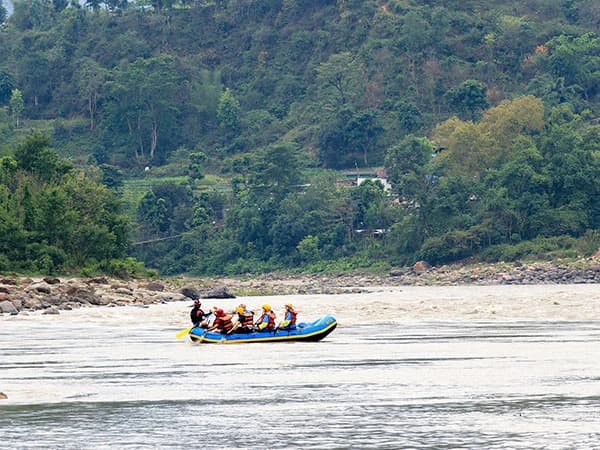
If you wish to extend your experience with additional days after the trek, we can plan some trips with a range of choices. Examples of activities include either Kathmandu or jungle safaris, or additional options may include paragliding, rafting, and canoeing.
At the conclusion of the Langtang Valley Trekking - 8 Days trek, there will be a farewell dinner in Kathmandu that Ammonite Adventure is organizing, at which time you will be awarded your printed certificate and have an opportunity to provide feedback about the trek.
When you are packing for your 8-day trek, you are going to want to pack correctly to make sure you feel secure and comfortable. We organized 1 porter for 2 trekkers to carry your luggage as planned. Please arrange to keep your kit to 1 bag - a 60l duffle bag is preferred.
Rightly so - you have a luggage limitation of 9 kg per trekker. You will also be carrying a normal backpack with your daily items too. Here is a packing list for your assistance:


Of course, although rain gear and insect repellent can be some of the must-haves in a backpack, the monsoon trek to the Langtang Valley is worth a journey, which cannot be said for other higher-altitude expeditions such as the Everest Base Camp or Manaslu Circuit Trek.
Yes, the majority of the teahouses on the way to Langtang facilitate a hot shower, which is a bucketful of lukewarm water and a jug at some additional cost. At Syabrubesi, you might want to take a dip in the hot springs opened by locals.
Hiring a guide and porters is a preference for trekking aspirants. However, to ensure your legal, safe, and enhanced visit to the Langtang Valley, getting a professional guide to lead the mountainous terrain is the least you can do to aid the locals and the fragile ecosystem of the Himalayas.
Yes, the Langtang Valley hike is convenient for all age groups and all levels of experience trekkers and travelers, as it is one of the easiest and lowest-altitude treks after the Ghorepani Poon Hill voyage in the Annapurna Himalaya region.
As per the locals, they are usually the warmest people you have ever met. However, the rugged terrain, steep ascent, and descent might not guarantee the same comfort as being with government-authorized guides and porters, who are usually the natives of the Himalayan land.
As a comparatively lower altitude hike in the Himalayas of Langtang, although it is not completely zero, the chances of acute mountain sickness are as minimal as anticipated in the trek to the Himalayas of Nepal.
Numerous teahouses and local lodges along the Langtang Valley trekking trail offer a charging service for an additional fee. The availability of electricity can be limited; hence, it is wise to carry portable power banks, solar chargers, and spare batteries
Packing is one of the crucial aspects of a successful Himalayan trek ascent, and it is always better to keep your backpack light. Usually, the hotels in Kathmandu provide you with a free storage service to leave your belongings behind that are not required for hiking.
Yes, as one of the leading travel and trek operators in Nepal, Ammonite Adventure and Treks has some of the best Himalayan trekking specialists as female guides to hire as your travel companions.
If you are a female trekker concerned about your period health during an adventurous journey towards the Langtang Valley, you will be glad to know you can get reusable woolen pads in Kathmandu to wash and use again in need, which also provides a hand in sustainable tourism.

Dharma is a man! He makes the trip so funny.
We went on the Langtang Trek with our guide Ram