

The Manaslu Circuit Trek involves exploring above 5,000 meters, and at this altitude, the concentration of oxygen in the air is remarkably low. Acute altitude sickness is one of the most prevalent hazards that trekkers are likely to encounter in their Manaslu Circuit Trek. Here’s the good news: the symptoms of altitude sickness can easily be treated if trekkers are able to identify them in time. Acclimatization is the key to avoiding any issues before they become major problems. Acting quickly in the event of symptoms helps trekkers stay on track and complete their trek.
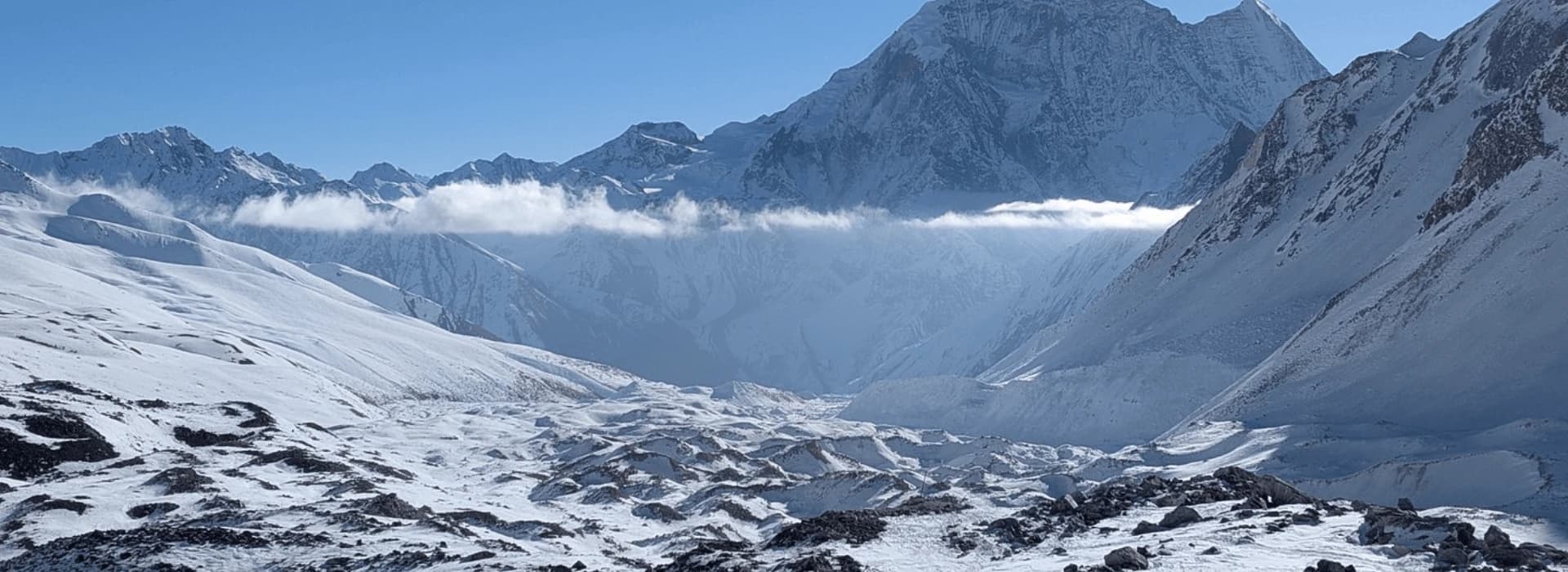
Altitude Sickness on Manaslu Trek: Symptoms, Prevention, and Effective Treatment

Altitude Sickness on Manaslu Trek
One of the most exciting high-altitude treks in Nepal is the Manaslu Circuit Trek. This trek surrounds the eighth-highest peak in the world. The trekking trail passes through several villages, monasteries, and other exciting sites. But the trek is not without its hazards. Altitude sickness can occur even for someone who's quite healthy and experienced in trekking.
Every year, thousands of trekkers successfully complete the Manaslu Circuit Trek. This is because they've prepared for it. Physical fitness is not a safeguard for altitude sickness. A marathon runner can be ill, while an average fitness level trekker will be unaffected. Acclimatization is different for everyone. And trekkers have to listen to their body.
With proper knowledge and planning, altitude sickness can be managed and will not be an issue. Manaslu Trek altitudes should be respected, but not feared. By being informed of what's occurring at high altitude and following proper guidelines for preventing altitude sickness, adventurers can enjoy this incredible trek. Plus, they can remain healthy and safe as well.
What Is Altitude Sickness and Why It Happens
Altitude sickness, also called Acute Mountain Sickness (AMS), happens when your body can’t adapt to the reduced oxygen content in the air at high altitude. At sea level, the concentration of oxygen in the air is 21%. This remains the same even at 5,000 meters, but the air pressure is greatly reduced. The reduced pressure translates to less oxygen being taken into your lungs with each breath, making your body work extra hard to obtain the necessary oxygen.
Your body reacts to the shortage of oxygen in the following ways. You start breathing heavily to inhale more oxygen. Your heart pumps more quickly in order to distribute the oxygenated blood in the body. All this happens, but it takes time to fully adjust. That is why some people adjust quickly, while others take time to adjust.
The most problematic area in high-altitude trekking in Nepal is created by fast ascent. When you ascend too quickly, your body can't keep up with the reduction in oxygen. Your body's cells begin to have problems operating at their best. Fluid may leak from your blood vessels into your tissues, especially in your brain and lungs. This fluid buildup is what causes symptoms in your body. It takes time for your body to adjust to higher altitudes, especially on challenging routes like the Manaslu Circuit Tsum Valley Trek.
For trekkers planning more demanding or combined high-altitude journeys, routes like the Manaslu With Annapurna Circuit Trek also require careful pacing and gradual ascent due to the extended time spent above high elevations.
The adaptation process involves a number of different bodily functions occurring simultaneously. Your kidneys start changing the fluid and electrolyte balance in your body. Your blood composition alters to improve oxygen transport. Also, new red blood cells develop to enhance oxygen transport capacity. These bodily functions take days and even weeks to achieve. This is why pacing is so important.
Why Altitude Sickness Is a Risk on Manaslu Trek
Rapid Altitude Gain
The Manaslu Circuit Trek offers altitude issues that aren't common to all trekkers. The trekking route begins from Soti Khola at only 700 meters. It goes beyond 5,160 meters in just 12 to 14 days. This is an increase of over 4,400 meters in a very short period of time.
The route of the Manaslu Circuit Trek has particularly steep parts between 3,500 meters and the passes. Climbers also tend to ascend 500-700 meters daily. This is well beyond the recommended 300-500 meters daily limit while acclimatizing to high altitudes. So they tend to develop symptoms.
Remote Trail Challenges
Adding to the risks is the fact that the area is geographically remote. This route passes through villages that are not well-equipped medically. The nearest major hospital would be found in Kathmandu or Pokhara, and that would take hours to reach by helicopter. In some cases, weather conditions would further delay evacuation, and trekkers would be forced to focus on prevention.
Larkya La Pass (5,160m)
The route between Samdo and Larkya La Pass is where the options for descending become very limited. Once committed, turning back can become a challenging task. The topography of the region requires very close observation of symptoms prior to the point of no return.
Common Symptoms of Altitude Sickness on Manaslu
Early detection of symptoms of altitude sickness helps in taking measures before the situation worsens. The body provides clear signs in case it is struggling to deal with the consequences of altitude. Being aware of the signs helps in averting a crisis.
Mild Symptoms
- The headache will often be the first warning symptom, usually different from the usual headache experiences.
- Fatigue beyond the level expected from walking around in the day, accompanied by heavy legs and the inability to focus.
- Feeling dizzy or lightheaded when standing up or changing position.
- Loss of appetite, whereby food becomes unappealing even after a long day of trekking
- Feeling sick in the stomach and finding eating difficult, resulting in weakness.
- Insomnia: This refers to the inability to sleep despite feeling very sleepy.
- Shortness of breath during activities that should be easy
Moderate to Serious Symptoms
- Headache that cannot be managed with standard painkillers
- Difficulty in keeping down any food or water due to vomiting
- Overwhelming fatigue that makes even the most routine actions, such as getting dressed-will feel like climbing Mount Everest.
- Feeling confused or having trouble making decisions or thinking clearly
- Loss of balance, such as walking unsteadily or on a side.
- Shortness of breath even at rest, with a sense of choking or suffocation
- Chest tightness and persistent cough, which may be suggestive of fluid in the lungs
- Inappropriate heart rate that does not slow down during rest intervals.
For severe symptoms, you should take immediate steps. They mean that your body is no longer able to deal with the altitude you’re at. Manaslu Trek is only safe if you can recognise severe symptoms from mild ones. Never ignore severe symptoms or try to tough them out, hoping they will go away.
How to Prevent Altitude Sickness on Manaslu Trek
It's much more effective to prevent altitude sickness than to treat it when the symptoms occur. By following effective ways of prevention, you'll be able to avoid the risks and ensure a successful and enjoyable trek.
Walk Slowly and Steadily
You must trek at a leisurely speed to allow your body to acclimatize to the conditions. "Pole pole," which is Swahili for "slowly slowly," is a motto that must be followed during your Manaslu Trek. It's a bad idea to race to the top of the mountain. Also, don't try to keep up with those in your party who are trekking at a faster speed than you are.
This is the reason why you can maintain a controllable breathing rate and a steady heartbeat that isn't racing due to exercise.
It also gives you time to observe your body's reaction to the altitude increase. You can then recognize early signs of altitude sickness before it becomes severe. Most trekkers usually push themselves early in the morning, then collapse later without realizing the toll their body is taking.
Drink Enough Water
Hydration is an important factor in protecting against altitude sickness. The low atmospheric moisture in high altitudes, coupled with an increased rate of breathing and urine output, results in a high rate of fluid loss from the body. The rate at which your body loses water increases in high altitudes compared to low altitudes. You should drink at least 3-4 liters of water per day from the initial phases of your trek.
If your urine is light in color, it means you are hydrated. Dark yellow urine means you need to drink more fluids. Always carry a bottle of water with you to ensure you are drinking fluids all day long. This helps your blood to flow freely, helps your kidneys to make necessary adjustments, and relieves you from headaches. Tea and soup are fluids too, but water should be your main intake.
Take Acclimatization Days
Acclimatization days on the Manaslu Trek aren't optional to be added to the itinerary. But rather, they form a necessary part of the journey, giving your body time to adjust to the increased altitude. The most effective Manaslu Circuit trekking itinerary is one that includes carefully located rest days at critical altitudes. These rest days don't mean spending the whole time in bed.
Also, activities that involve light exercise are helpful in acclimatization. Short treks to higher altitudes and then descending back to the sleeping elevation work well.
The rule "climb high and sleep low" is what makes a proper acclimatization process. During your rest days, you can hike to a spot or village near your location. But at a higher altitude, rest for a couple of hours before going back down to sleep at your current location's altitude.
The most common acclimatization points include Samagaun, which is situated at 3,500 meters, while others may also acclimatize in Samdo, which is about 3,860 meters. The advantage of these places is that they have good accommodations and day trips that help in acclimatization. It is very risky if you decide to skip the acclimatization days in order to save time
Please Follow the Itinerary Carefully
Best Itinerary for Manaslu circuit trek also factor altitude gain rates. A good trekking schedule will not allow more than 300 to 500 meters of ascent above 3,000 meters per day. This is because the body can adapt to the environment. However, trekking fast or trekking the stages together will be counterproductive.
Your guide knows the route and the challenges that each part of the route presents for the trekkers. Follow his advice on how many days he thinks you need for acclimatization and how many for rest. If the weather doesn’t cooperate, your guide might have to alter the itinerary, and such adjustments must be consistent with the acclimatization schedule. Never urge your guide to bypass acclimatization points and ascend too rapidly.
Additional Prevention Strategies
- It is best not to consume alcohol throughout the trek, as this could contribute to dehydration and also affect the process of acclimatization.
- Another reason alcohol is a problem among teens is that it hides symptoms, making it difficult to know when there are issues.
- Equally, sedatives should not be taken if not recommended by a physician who understands altitude medicine.
- Eat normal meals, even if your appetite is not what it used to be. Your body needs energy to operate at high altitude.
- Carbohydrates are a good source of fuel. Some trekkers find that eating small amounts of food at regular intervals is more effective than three meals a day.
- One can consider the use of drugs such as Diamox (acetazolamide) after consulting a doctor who has expertise in altitude medicine.
- This drug may help in acclimation, but it is not a replacement for proper pacing and rest. It is most effective when used in addition to proper training habits.
Acclimatization and Its Role in Staying Safe
Acclimatization and the Importance of Staying Safe
By acclimatization, we refer to the process through which your body adapts to function properly even when there is less oxygen. This occurs at the cellular level and affects all of your body's organ systems. It's essential to comprehend the process of acclimatization if you want to understand the importance of rest days.
The Science Behind Acclimatization
At first, when you arrive at a new altitude, you begin to breathe more rapidly. This hyperventilation is beneficial but leads to a chemical imbalance of minerals in your blood. Your kidneys have to compensate for this by adjusting how they filter certain minerals. Your kidneys need 24 to 48 hours to make this adjustment. Going to sleep before this is completed raises the possibility of developing altitude sickness.
Over a period of days at high altitude, your body increases its production of red blood cells so that oxygen can be transported more effectively. The level of hemoglobin in your blood rises. Your cells also become more efficient at using the oxygen they are able to get. Smaller blood vessels called capillaries increase in number and function.
Key Acclimatization Villages
There are good acclimatization opportunities at Samagaun. This is a traditional village of Tibet, which is located at an altitude of 3,500 meters, thus an excellent place to acclimate before continuing with the journey. The village offers opportunities for good day hikes. You can hike to Pungyen Gompa, trek to the viewpoints of Manaslu, or hike up to the glacier at the end of the valley.
Samdo is another common Manaslu Circuit acclimation day, which is a little higher at around 3,860 meters. Then some itineraries have a rest day at these villages, or it depends on the program. Both villages have basic but comfortable lodges for you to acclimatize properly.
The duration spent in these villages is not only useful for physical acclimatization. It also offers mental relief, helps in overcoming journey fatigue, and offers an opportunity to experience the culture of the local people. This is an indirect factor in keeping you fit throughout the trekking journey.
Recognizing Good Acclimatization
How do you know if you’re acclimatizing properly? Several factors can help you determine if you’re acclimatizing properly. Your heart rate at rest should lower each day at the same elevation. Sleep patterns improve past the first night or two at high elevation. Appetite returns to normal, and headaches go away without taking any medication. Energy levels become more normal.
A lack of acclimatization shows the opposite. Symptoms do not go away; in fact, they get worse. Sleep problems continue every night. Heart rate continues to be high even at rest. These warning signs indicate that you require more time at the current elevation before continuing to go to a higher elevation.
Treatment for Altitude Sickness During the Trek
While measures are in place to prevent them, cases of altitude sickness can still happen. It is essential to know how to handle such situations promptly to avoid them from escalating into emergencies.
Stop Ascending Immediately
As soon as you recognize any symptoms other than slight discomfort, you should stop ascending any further. This alone will help you avoid an aggravation of symptoms. Spend an additional night at the same altitude. Chances are, this will give your body a break, and the symptoms will go away in 12-24 hours. But if you continue your climb with symptoms, you will inevitably make them worse.
Communicate clearly with your guide regarding how you are feeling. Explain the symptoms you are experiencing, but don't sugarcoat them. Your guide, having dealt with many instances before, can then decide whether it is necessary to descend or if it is best to remain at the same location. Your guide is likely to notice warning signs that you, as an inexperienced trekker, would not notice.
Descend if Symptoms Worsen
If there is no relief from symptoms or if symptoms worsen, descent becomes a necessity. A dramatic improvement can be seen even if the descent is 300-500 meters. Descent is the best and quickest treatment for acute mountain sickness. Nothing compares to a descent to a lower altitude.
In severe cases, you should descend immediately, regardless of the time of day or weather. Delaying till morning, if you have severe symptoms, may result in life-threatening conditions. Your guide will take care of the evacuation, which may be done through porters if you are not able to walk comfortably.
Oxygen and Medical Treatment Options
Portable oxygen cylinders may be used to manage symptoms temporarily, though they do not eliminate the need for a descent in serious situations. Oxygen helps to manage symptoms and stabilize a person to allow for evacuation if possible. Most guides on a Manaslu trek will carry basic oxygen equipment in case of emergencies.
Medications can help alleviate symptoms of mild to moderate severity. Pain medication such as ibuprofen can help alleviate headache pain. Anti-nausea medication makes eating and drinking easier. Dexamethasone, a steroid, can be used for severe symptoms in some instances, but only after consulting a professional in altitude medicine. Dexamethasone can alleviate symptoms but will not correct the problem; therefore, descent will still be necessary.
Another emergency treatment available is Gamow bags, which are portable altitude chambers. Gamow bags are inflatable sacks that create a pressurized atmosphere, which is similar to that at a lower altitude. Gamow bags can be used as an emergency measure for seriously ill trekkers before evacuation by a helicopter arrives, but Gamow bags are quite heavy, and not all trekking groups possess them.
Know When to Call for Evacuation
Helicopter evacuation is required if a person shows signs of high-altitude cerebral edema (HACE) or high-altitude pulmonary edema (HAPE). The signs and symptoms of HACE are severe confusion, difficulty walking in a straight line, loss of consciousness, or feeling very drowsy. The signs and symptoms of HAPE are severe difficulty breathing while at rest, coughing up pink frothy fluid, blue lips or fingernails, and feeling very weak.
Such conditions call for immediate medical attention in a hospital. Helicopter availability and weather conditions determine evacuation possibilities; thus, preventive measures cannot be overemphasized. Full travel insurance that includes helicopter rescue services is a must for anyone planning to undertake the Manaslu Trek.
Final Safety Tips for Manaslu Trek
Listen to Your Body
Your body gives you clear warning signs at high altitude. Pay attention to your headache, tiredness, light-headedness, and loss of appetite. These are very significant indications of how well your body is acclimatizing. Trust your body's signals rather than your schedule commitments.
Do Not Ignore Symptoms
Altitude sickness should never be written off as mere fatigue. Headaches can quickly lead to life-threatening situations. Be open with your guide about how you are feeling. Don't wait for a crisis to occur. Going down 300-500 meters can work wonders for altitude sickness.
Go on a Trek with a Licensed Guide
An experienced trekker is aware of the subtle warning signs that the inexperienced trekker may not recognize. They also know the evacuation routes and the equipment to be used in case of an emergency. Choose a trekking company that values acclimatization rather than pace.
Ready to hike Manaslu? Start planning now with a reliable company that has adequate experience with the itinerary. To hedge your position, take out full coverage insurance and make a judgment call with effortful consideration. The respect and patience you show the mountains will not go unrewarded. Your adventure is just beginning.

Need Help? Call Us.+977 9851230809