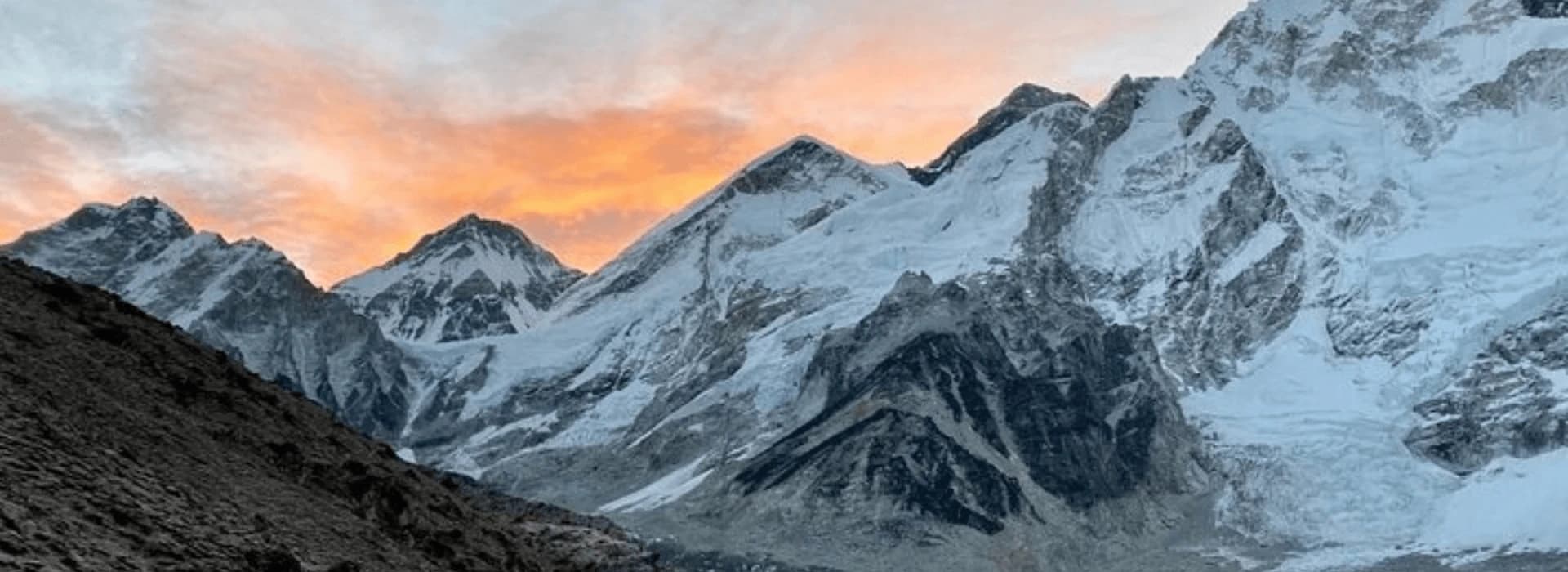

How Difficult Is the Everest Base Camp Trek? Distance, Altitude & Fitness Guide
The Everest Base Camp trekhas a difficulty rating of moderate to difficult. There's no technical climbing involved. You don't need ropes, ice axes or previous mountaineering experience. But you do need physical strength and endurance. The round trip trail distance is about 130 km (80 miles). So you'll need solid cardiovascular conditioning and the mental endurance to tolerate high altitude up to 5,364m. But with the right acclimatisation schedule and a good 14-day itinerary, a standard healthy beginning hiker would do well on this trek.
|
Key Fact |
Details |
|
Difficulty Level |
Moderate to Challenging |
|
Technical Climbing Required |
None |
|
Total Distance |
~130 km (80 miles) round trip |
|
Maximum Altitude |
5,364 m (Gorak Shep / EBC) |
|
Typical Duration |
14 days |
|
Suitable For |
Fit beginners with proper acclimatization |
What Makes People Ask About Difficulty?
Everest region holds the title of highest mountain on the planet. Its name is synonymous with power. And when most people hear the words "Everest Base Camp trek," they usually have one inquiry. "Can I do this?"
Typically, those who raise this question aren't mountaineers. They're common people like you and me. Office workers, parents, teachers, travellers. All who have seen images of those famous prayer flags at 5,364 metres and thought, "I want to be there."
It's understandable to feel some intimidation. High altitude, long days of walking, cold nights, limited facilities. It can all seem quite daunting. But here's the truth. The EBC Trek is about preparation, patience and pacing. Not strength or athletic ability.
This guide will provide the data you need. It covers why this trek could be considered difficult. What the trails are actually like. Your required level of fitness. And how to prepare for it. So each mountain becomes manageable rather than overwhelming.
Our Everest Base Camp Best Season guide will assist you in planning your seasonal expedition correctly.
Overall Difficulty Level
Experience Level
The Mount Everest Base Camp trek can be considered moderate to challenging on a trekking difficulty scale. Here is what that means in practical terms:
- There's no technical climbing involved. You'll walk along established paths. No climbing or technical climbing skills are required. You won't need a rope, a harness or mountaineering gear.
- But you'll be walking extremely long hours daily. Generally between 5 and 7 hours.
- The most significant difficulty is created by altitude. At elevations greater than 3,500m above sea level, there's less oxygen available. So your body is working at an elevated pace.
- But although the trails are challenging, they're fairly easy to accomplish if you train for a minimum of 10 to 14 weeks prior to the start of your trek. You'll be glad you put in that preparation.
Below is a basic scale of trekking difficulty on other mountain ranges.
| Level |
Meaning for Everest Base Camp |
| Easy |
❌ Not easy — altitude and long daily walks rule this out |
| Moderate |
✔ Achievable for trekkers with basic fitness and proper acclimatization |
| Hard |
⚠ Can feel hard above 5,000 m even for fit trekkers — altitude affects everyone differently |
The Everest Base Camp Trek Cost will give you a full picture of the cost of the trek, including permits and daily costs.
Walking Distance & Daily Trek Hours
The round-trip Everest Base Camp Trek Distance from Lukla to Everest Base Camp and back is about 130 km (80 miles). This sounds like a lot of distance; it's about 9 to 10 km per day for 14 days, which will average out if you spread the distance out. This makes for easy walking if you have a slow walking pace.
Also, the total distance is less important than how long you are walking each day. Here is a realistic breakdown of what different days on the trail will look like:
|
Day Type |
Estimated Walking Hours |
Example |
|
Easy acclimatization day |
3–4 hours |
Short hike around Namche Bazaar or Dingboche |
|
Normal trekking day |
5–6 hours |
Namche to Tengboche, Lobuche to Gorak Shep |
|
Long climb day |
6–7 hours |
Phakding to Namche Bazaar (steep ascent), or summit day to EBC |
The inclusion of rest days within the standard Everest Base Camp trek itinerary is purposeful; they are not extra days. Rather, rest days function to ensure the safety of your body leading up to the increased altitude.
Altitude Difficulty — The Biggest Challenge on the Trek
Walking on this trek isn't what's going to make or break you. The altitude will.
Individuals typically do not struggle on the Everest Base Camp trek due to weak legs. They struggle because, as you climb, the air becomes thinner, and it will take the body time to acclimatize to the changes making Everest Base Camp altitude sickness the real hurdle.
Once you reach an altitude of 3,000m, you will experience a drastic loss in the amount of oxygen in the atmosphere. When you reach 4,000m, simple activities, such as tying your boots, will cause you to require a brief second of breath.
This is completely normal; it can be managed by moving slowly through the trek and listening to what is going on with your body.
What Is Altitude Sickness?
Altitude sickness is also called acute mountain sickness (AMS)and occurs due to a rapid ascent of altitude, causing your body to be unable to adjust to low oxygen availability. It is not a fitness issue; even the most elite athlete can experience altitude sickness. Here are some of the key symptoms to look for with AMS:
A persistent headache that does not resolve with water or rest
- Nausea or vomiting
- Dizziness or feeling unbalanced
- Loss of appetite
- Fatigue that is disproportionate to normal
- Difficulty sleeping, waking up frequently during sleep
Mild forms of AMS are quite common and manageable; by using the golden rule of altitude sickness, "never ascend if you have any remaining symptoms," you can successfully manage and prevent more serious forms of AMS.
Drink water, rest and wait for your body to respond. If your symptoms worsen, then it is recommended that you descend. To learn more about altitude sickness, including preventative measures and treatment methods, please refer to the Everest Base Camp altitude sickness guide, where you will find all information written in layman's terms.
Key Altitude Checkpoints on the Trek
| Location | Altitude | Notes |
| Lukla |
2,860 m |
Starting point — relatively comfortable |
|
Namche Bazaar |
3,440 m |
First major acclimatization stop — spend 2 nights here |
|
Dingboche |
4,410 m |
Second acclimatization stop — essential rest day |
| Lobuche |
4,940 m |
Altitude effects felt more strongly here |
|
Gorak Shep |
5,164 m |
Last stop before EBC — sleeping here is challenging |
|
Everest Base Camp |
5,364 m |
Goal destination — low oxygen, slow movement required |
What Fitness Level Is Required for the Everest Base Camp Trek?
You don't have to be an athlete. You don't have to train for a marathon or spend hours lifting weights. But you must have the mental and physical stamina to engage in aerobic activity for multiple days in a row. At above sea-level elevations. And on rugged terrain.
If you've walked 10 km on an easy trail without any negative effects afterwards, you'll be able to complete this trek after 2 to 3 months of consistent training.
You meet the physical requirements if you can:
- Hike 5 to 6 hours consecutively without needing an extended rest break.
- Climb several flights of stairs without becoming exhausted.
- Participate in some type of cardiovascular exercise at least 3 to 4 days per week.
- Have prior experience with day hiking, ideally on short, hilly trails.
- Carry a 7 to 10 kg daypack for several hours without major discomfort.
Ideally, we suggest that you allow yourself at least 2-3 months of prep prior to going on your trek. The following recommendations will assist you:
- Create a cardio base by doing 30-45 minutes of running, fast walking or cycling, at least 4 times a week.
- Repeatedly hike hills to create the closest similarity to the terrain you will encounter.
- Use stairs and perform 15-20 minutes of stair climbing at least several times a week, as this can help you develop leg strength fairly quickly.
- Walk with a backpack weighing 7-10 kg or greater for 1-2 hours on the weekends.
- Develop a daily movement habit, whether it be a 30-minute stroll each day, for there is much improvement you'll see in 30 days.
Mental Difficulty & Real Trek Conditions
The hardest part about trekking isn't physical ability. It's mental ability. And it's what will help get trekkers through their hardest days.
Most treks occur on a trail that looks like this.
Cold Mornings
Prior to sunrise, temperatures at or above 4,000m can drop below -10 degrees Celsius. So getting out of your sleeping bag at 5am and beginning a trek in dark conditions isn't pleasant. But it's a big incentive for getting to camp before the clouds roll in during the afternoon. On cold mornings like these, you'll be glad you packed the right layers. Refer to our Everest Base Camp Packing List for exact clothing layers needed to stay warm.
Basic Teahouses
Teahouses are basic. Small rooms, shared bathroom facilities, thin mattresses and basic blankets. After leaving Namche Bazaar, hot showers become a luxury. And Wi-Fi typically isn't reliable. Some trekkers see this as part of the adventure. But others see it as a test of patient endurance. Either way, knowing what to expect will take away any unpleasant surprises.
Limited Food Variety
Food choices are limited. Dal bhat, noodles, soup, eggs and porridge make up most of the teahouse menus. If your regular diet includes variety, you may have to adjust at higher altitudes.
Flight Delays and Weather Uncertainty
Build buffer days into your itinerary. Lukla is one of the most weather-sensitive airports in the world. So flight cancellations and delays can occur for multiple days. You don't want to miss your international connection. So those buffer days aren't optional. They're a must.
Slow Progress Days
On some days you'll walk for 6 hours and cover only 12 km. It depends on the difficulty of walking uphill. Every metre of altitude is hard earned. But it's all mental. Stay in the moment. Stay focused on the next step. And trust the journey.
How Beginners Can Make the Trek Easier
The EBC trek doesn’t have to be punishing; virtually all of the hardships can be made manageable with the right approach. Here are a few simple things our team is constantly advising all trekkers to do:
- Walk slowly and purposefully: One of the largest downfalls of many trekkers is that they move too quickly within the first few days due to their strength. Slow down; there’s no race. The mountains reward those who are patient.
- Hydrate; drink water continuously at 3 to 4 litres/day: Dehydration leads to altitude sickness and makes you feel fatigued. Drink even when you don’t think you’re thirsty.
- Build “buffer days” into your itinerary: Have an additional 1-2 days to your total itinerary to allow for rest if you develop AMS, or for possible Lukla delays.
- Hire an experienced mountain guide: Know that a great mountain guide will monitor your pace, assess your condition, arrange for teahouse bookings, and know what to do in case of an emergency so they can respond quickly. This is the best money you can spend while trekking. Please visit our Everest Base Camp for beginners page for info on finding the perfect guide for you.
- Use trekking poles: Trekking poles will reduce strain on the knees when going downhill and also provide balance when walking on rocky or uneven terrain. You can rent or borrow a pair from a store in Kathmandu if you do not have your own.
- Follow the acclimatization plan: Absolutely never skip rest days and never go to a higher altitude if you are experiencing AMS symptoms. The mountain will still be there tomorrow for you to climb.
- Get adequate sleep: Daytime peak altitude (or your daily high-point hike) is where our bodies recover and adapt, and if you are sensible with your sleep habits during the night, your recovery at a higher altitude will be even better than before. Quality sleep may be a lesser experience due to bed comfort in the teahouses, but still try to prioritize as much as possible.
Who Should NOT Do the Trek?
This section is an honest opinion. You're the best judge of whether you're capable of completing the EBC trek. But having the input of your doctor can help too. The trek can be done by most people. But it's not suitable for everyone.
You might want to think twice or check with a doctor before booking if you have:
- Heart and lung problems: High altitude places additional stress on the heart and lungs. Medical clearance is required for anybody with a history of heart disease, asthma or chronic lung conditions prior to undertaking EBC.
- Zero walking habit: If you find it challenging to walk 5 km on flat ground, the journey is too much with less than 3 months of focused training. You don't need to be fit now. But you do need to be willing to get fit before you head there.
- No time for acclimatization: Speeding up the itinerary for a tight schedule will make you sick with AMS and force you off the trail. If you can't commit to at least 12 to 14 days including acclimatisation breaks, consider our Short Everest Base Camp trek option. It includes a helicopter return and saves 3 to 4 days.
- A fear of heights on exposed trails: There are sections above 4,000m that are quite narrow with steep drops. It's not technical climbing. But if you have a bad case of acrophobia, google the specific trail segments ahead of time.
Telling the truth about your present condition isn't a sign of weakness. It's prudent planning.
Is Everest Base Camp Hard for You?
Everest Base Camp is challenging but achievable for most prepared trekkers. That is the most truthful answer we can give.
It tends to feel easier for people who:
• Train consistently for 2 to 3 months before the trek
• Arrive at the trek well-rested and healthy
• Accept a slow, patient pace from day one
• Stay well hydrated and take acclimatization seriously
• Go with a knowledgeable guide and a trusted team
It tends to feel harder for people who:
• Underestimate the altitude and go too fast in the first few days
• Skip training and rely on natural fitness alone
• Push through AMS symptoms instead of resting
• Ignore hydration and sleep
• Try to compress the itinerary to save time
The mountain doesn't judge you on how slow or how quickly you travel. It gives its best rewards where there is respect for elevation, your body and the journey itself.
Every year, many thousands of people arrive at Everest Base Camp without prior mountaineering experience. They do so not because they're all athletes. But simply because they're curious, determined and well-prepared. They take one step in front of the other until their destination is achieved.
If this sounds like you, then you can do this trek. Begin your preparation by getting all your plans and itinerary in place before you leave. The view from 5,364 metres is worth every single step.