

This article provides detailed information about why solo trekking in Manaslu is prohibited. This is because the trail lies in a restricted area. To travel here, special permits and a licensed guide are required. The region is close to the Nepal-Tibet (China) border. Exploring the area on your own can be risky due to its remote terrain, unpredictable weather, high elevation, and limited access to rescue services. The article explains the rules, risks, and safest way to enjoy the Manaslu Circuit Trek.
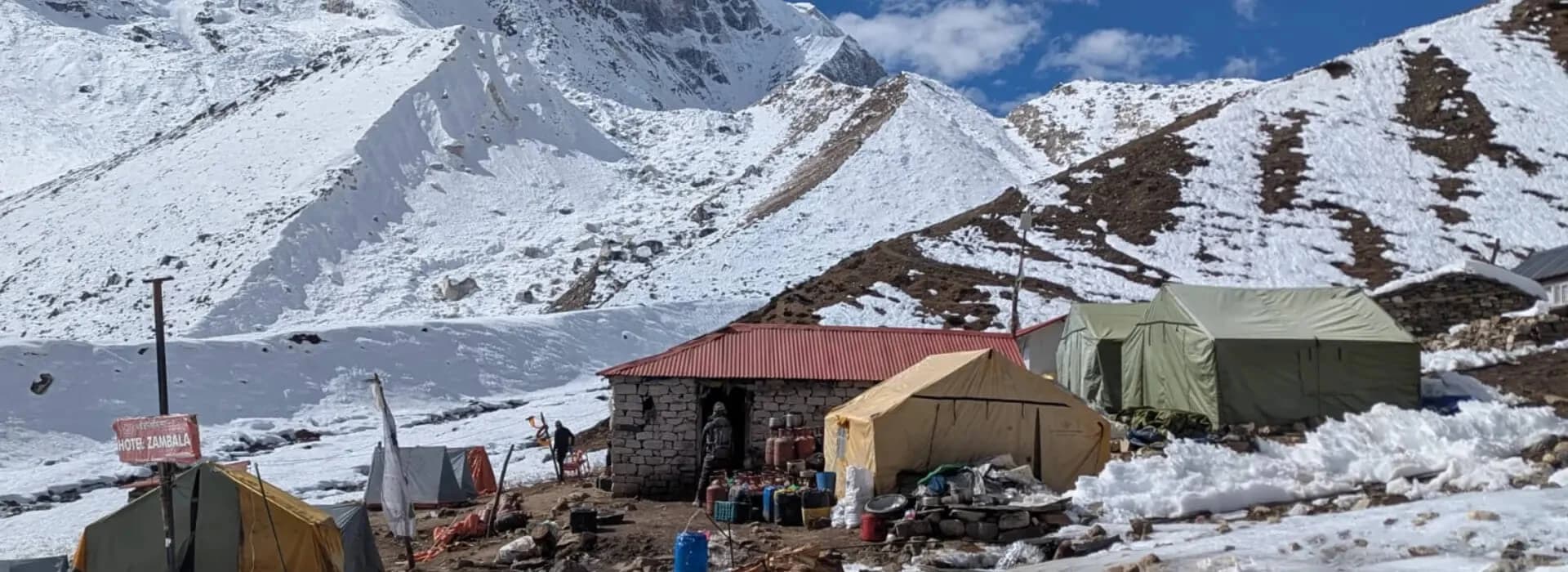
Why Solo Trekking Is Not Allowed in Manaslu

Introduction
If your curiosity is why solo trekking in Manaslu is prohibited, don’t worry, you will find clear answers in this blog. This blog will clearly explain the reasons. The Manaslu Circuit Trekis an off-the-beaten-path journey, located in the Gorkha District, Gandaki Province, Western Nepal. It’s mainly popular for witnessing the panoramic view of the peaks in the Mansiri Range, including Mt. Manaslu (the world’s 8th-highest peak), and learning about the ancient Tibetan Buddhist culture during the trip.
The trek is remote and challenging, especially when you reach near its highest point, Larkya La (Larke Pass) at 5,106 m (16,751.97 ft). To cross the pass, you’ll need to go through a completely rocky trail. So, if you’re a beginner or less experienced hiker, proper guidance from an expert is required to complete this journey safely.
For trekkers who want to extend their Himalayan adventure beyond Manaslu and experience a longer, more diverse route, the Manaslu With Annapurna Circuit Trek is a great option that combines remote wilderness with the classic Annapurna landscapes.
By keeping a close eye on all these factors, Nepal’s government has made solo trekking illegal in this region. Also, due to its elevations, remote terrain, and limited rescue facility, it’s risky to hike alone here, which is why an experienced and licensed guide is mandatory.
Why Solo Trekking Is Not Allowed in Manaslu
Its trekking route is in a restricted area for several reasons. The reasons are as follows:
- Due to religious significance. The region is home to ancient Tibetan-influenced Buddhistculture and traditions that have stayed unchanged for centuries.
- Due to its proximity to the Nepal-Tibet (China) border.
- It’s home to some endangered wild species, the Himalayan Tahr and snow leopard.
Therefore, Nepal’s government has made solo trekking illegal. A guide is required for the Manaslu Trek and a group of at least two people.
The trek is also moderate to challenging in difficulty, which means you’ll need to have proper guidance from experts before going on this adventure, especially if you’re a beginner or less experienced hiker. During the journey, you’ll cross the Larkya La Pass at 5,106 m (16,751.97 ft) through a completely rocky trail, making Manaslu Base Camp Trekking With Larkya la Pass a journey that requires careful preparation
Its altitudes, remote terrain, and limited rescue facilities make it all tough. Moreover, at high altitudes, landslides and avalanches can occur suddenly at any time. That’s why these are also the reasons you aren’t allowed to venture into the area without a guide.
To travel here, along with a guide, you’re also required to obtain three permits: the Manaslu Restricted Area Permit (RAP), the Manaslu Conservation Area Permit (MCAP), and the Annapurna Conservation Area Permit (ACAP), as well as a Trekker’s Information Management System (TIMS) card. They are needed for the following reasons:
RAP
- To protect local culture.
- To control the influx of tourists and ensure their safety.
MCAP
- To protect nature.
- To conserve wild animals, mainly endangered species.
- To maintain the trekking route in the area.
ACAP
- To enter the Annapurna Region legally after crossing the Larke Pass.
- To cover the same things as the MCAP.
TIMS
- To track the visitors' movement in the region.
- To operate a rescue mission in an emergency.
These rules are very strict. If anyone is found breaking local laws, they’re punished with fines or even deportation.
Risks Of Solo Trekking In Manaslu
While hiking at high altitudes, the risk of illness or other dangers is often high. Solo trekking may not be appropriate, even if you’re allowed to explore alone in the Manaslu Region. As a result, we suggest that you’re aware of the risks on the Manaslu Trek before considering going alone. Here are the risks of solo trekking in the area listed below:
Altitude Sickness
Altitude sickness usually begins to show its symptoms, such as headache, loss of appetite, and insomnia, once you reach 2,500 m (8,202.1 ft). And if it's taken lightly, even the chance of losing a life is high. So, while trekking solo, it can be challenging to find any help.
Getting Lost
Some parts of the trail are hard, and there aren’t even any signs or marks to know it. Especially for beginners who haven’t been to nature for hiking, they can get lost without the company of an experienced guide.
Weather & Natural Hazards
At high elevations like the Manaslu Region, the weather isn’t certain, even during peak seasons, spring (March to May) and autumn (September to December). It can suddenly change, and heavy snowfall or rainfall can occur at any time, resulting in an avalanche, landslide, or flood.
Limited Access To Medical Help
There are a few clinics in high-altitude villages along the way. If you get sick, you’ll be in real trouble. The experienced guides also have some knowledge of basic first-aid, which can be useful in emergencies.
Legal Requirements For Trekking In Manaslu
In terms of legal requirements for trekking, especially for the Manaslu Circuit Tsum Valley Trek you need to have four permits: a Trekkers’ Information Management System (TIMS) card, Manaslu Restricted Area (RAP), Manaslu Conservation Area Permit (MCAP), and Annapurna Conservation Area Permit (ACAP), as well as a licensed guide. Refer to the table below for the details of these requirements:
| Requirement | Description | Notes |
| TIMS |
|
Your chosen trekking agency manages it for you, and one copy will be given to you, which you should carry safely. |
| RAP, MCAP, and ACAP |
|
Permits are checked in three different points: Jagat, Phidim, Sama Gaun, and Dharapani. |
| Licensed Guide | Solo trekking is strictly prohibited. Trekkers must be a guide. | A guide helps you with navigating the trail, safety, and cultural insights. |
| Group Trekking | You must have at least two people in your group, excluding the guide. | To assure your safety, proper permit control, and responsible hike. |
Safe Alternatives To Solo Trekking
A Manaslu guided trekis a safe alternative to solo trekking. This is because a licensed guide has years of high-altitude hiking experience in locations like the Manaslu Region. They possess proper knowledge of the restricted area, trail, local culture, handling permits, and altitude-related issues. You can have support on these things.
Furthermore, they have contact with hotels or tea houses along the way, which is helpful in early booking when trekking on the Manaslu Circuit during the peak season. So, hiring a licensed local guide would be beneficial.
Even if you don’t have a group to venture into the Manaslu Region, but have a desire to do so, you can still go on this journey. Contact a reliable local trekking agency and join their organised group. Doing so allows you to enjoy this trek safely and in accordance with the rules and regulations.
Tips For First-Time Trekkers In Manaslu
Here are some useful preparation tips for the Manaslu Trek for beginners:
Acclimatise Properly
The ideal place for acclimatisation on the Manaslu Circuit Trek is Sama Gaun (3,530 m/11,581 ft). From here, Larkya La is two days away. During acclimatisation day, most trekkers hike to Birendra Lake (3,691 m/12,110 ft). This way, your body gets adjusted to the higher altitude and is ready to go the following day.
Monitor The Weather Forecast
The weather can change suddenly in the Himalayas. Even if you’re travelling during spring or autumn, you can’t fully depend on the season. Therefore, always keep monitoring the weather forecast until you’re done with the journey.
Carry Necessary Items
Items such as trekking poles, a raincoat, boot gaiters, water purification tablets, etc., are the basics for the Manaslu Trek. Bring them all for the safe journey.
Respect Local Culture and Environment
While hiking in the wild, you should keep your voice low, as loud noises can disturb the wildlife. You should respect the local culture of the villages along the way by following the rules. Loud noises are also not allowed around the monastery's area, as you know, the trail is mostly occupied by Buddhists. You can enjoy your time peacefully. Also, consider keeping the area clean by disposing of your waste in the proper place.
Conclusion
Solo trekking in the Manaslu Region is prohibited because the trail lies in a restricted area. The other reasons are its remote terrain, high elevation, and cultural sensitivity. Group trekking, special permits, and an experienced guide are compulsory to ensure your safety and protect the fragile culture and natural environment of the region. Hence, the best way to enjoy the Manaslu Circuit Trek is going through a reliable trekking company that provides you with a licensed guide and permits, as well as proper preparation.

Need Help? Call Us.+977 9851230809