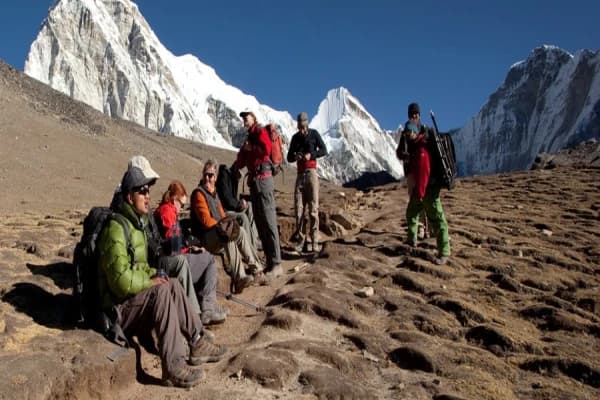
Why Altitude Matters On Everest Base Camp Trek
The trek starts at 2,860m (Lukla) and ends at 5,364m (EBC). Altitude matters on the EBC Trek because the higher you go each day, the thinner the air gets, causing oxygen to drop. Above 3,000m, the concentration of oxygen molecules in each breath decreases significantly.
Due to the change in air pressure and oxygen, you may experience symptoms of altitude sickness, such as headache, insomnia, or fatigue. If you walk fast, the situation becomes more serious, making it hard to reach the base camp and the highest point of the trek, Kala Patthar (5,545 m/18,192.26 ft) from Lukla.
What is the highest altitude in the Everest Base Camp trek? While the base camp itself sits at 5,364m, the highest point reached by trekkers is the Kala Patthar viewpoint at 5,545m.
For this reason, a gradual ascent with acclimatisation days is crucial for a successful journey. Experts mostly design itineraries, including rest and light activity like a short early morning hike in Namche Bazaar and Dingboche (typical points for acclimatisation).
By doing so, your body can adjust as the oxygen level falls, lowering the risk of altitude-related issues and making it easier to enjoy the journey. To understand the physical demands further, you can read about the Everest Base Camp Trek difficulty.
Everest Base Camp Altitude Chart (Day-by-Day Table)
The altitude chart for the Everest Trek is important for trekkers to check when planning a trip. You can have an idea about the daily elevation gain during the trip based on a standard 14-day itinerary.
The adventure begins in Lukla. You’ll hike through some beautiful places, such as Namche Bazaar, Dingboche, and Gorak Shep, before finally reaching the base camp, and also Kala Patthar the following morning for the sunrise view over Everest. The elevation rises slowly. You can adjust to the lower air pressure at higher altitude locations.
A structured elevation table helps you learn about how the altitude changes each day and where acclimatization days are set. General places for rest days are Namche and Dingboche before heading towards Gorakshep, EBC, and Kala Patthar. Additionally, you can go through the Everest Base Camp Trek map to understand the route in the Khumbu Region.
| Day |
Place |
Altitude |
Daily Gain
|
| 1 |
Lukla |
2,860 m (9,383 ft)
|
- |
| 2 |
Phakding |
2,610 m (8,562.99 ft)
|
-250 m (-820.21 ft)
|
| 3 |
Namche Bazaar
|
3,440 m (11,286.09 ft)
|
+830 m (2,723.1 ft)
|
| 4 |
Acclimatization Day
|
- |
-0 m |
| 5 |
Tengboche
|
3,860 m (12,664.04 ft)
|
+420 m (+1,377.95 ft)
|
| 6 |
Dingboche |
4,410 m (14,468.5 ft)
|
+550 m (1,804.46 ft)
|
| 7 |
Acclimatization Day
|
- |
0 m |
| 8 |
Lobuche |
4,940 m (16,207.35 ft)
|
+530 m (+1,738.85 ft)
|
| 9 |
Gorak Shep
|
5,164 m (16,942.26 ft)
|
+224 m (+734.9 ft)
|
| 10 |
EBC |
5,364 m (17,598 ft)
|
+200 m (+656.16 ft)
|
| 11 |
Kala Pathar
|
5,545 m (18,192.26 ft)
|
+381 m (+1,250 ft) |
Key Altitude Jumps:
- The trek involves a massive 830m gain on Day 3.
- Acclimatization days at 3,440m and 4,410m break the ascent.
- The final push to the high-risk zone begins after Dingboche.
Daily Elevation Gain Explained (Where It Gets Hard)
Acclimatization plays a major role in reaching EBC safely. Namche Bazaar and Dingboche are places that most trekkers include in their itineraries for rest days to allow their bodies to become familiar with the higher altitudes. Check our acclimatization day in Namche Bazaar guide for more details.
Rest days don’t actually mean staying freely at the hotel for the whole day. On these days, you exercise one simple rule: climb high, sleep low. Go for a hike to the nearby hill during the day and return to your hotel to sleep, which most trekkers do. Doing so helps your body adjust to the increased altitude naturally.
For altitude adjustment, staying hydrated is also very important. We recommend you drink at least 3 litres of water a day. During the EBC Trek, the risk of altitude sickness or acute mountain sickness (AMS) is high, particularly above 2,500 m (8,202.1 ft).
Symptoms, such as a light headache, fatigue, and trouble sleeping, are common. Therefore, drinking lots of water frequently throughout the day at higher elevations is really good.
Which day has the highest elevation gain?
Day 3, the hike from Phakding to Namche Bazaar, has the highest elevation gain of the trek, climbing approximately 830m (2,723 ft) in a single day.
Acclimatization Strategy And Safe Altitude Gain
Acclimatizationplays a major role in reaching EBC safely. Namche Bazaar and Dingboche are places that most trekkers include in their itineraries for rest days to allow their bodies to become familiar with the higher altitudes.
Rest days don’t actually mean staying freely at the hotel for the whole day. On these days, you exercise one simple rule: climb high, sleep low.
Go for a hike to the nearby hill during the day and return to your hotel to sleep, which most trekkers do. Doing so helps your body adjust to the increased altitude naturally.
For altitude adjustment, staying hydrated is also very important. We recommend you drink at least 3 litres of water a day.
During the EBC Trek, the risk of altitude sickness or acute mountain sickness (AMS) is high, particularly above 2,500 m (8,202.1 ft). Symptoms, such as a light headache, fatigue, and trouble sleeping, are common. Therefore, drinking lots of water frequently throughout the day at higher elevations is really good.
Quick Tips for Safe Acclimatization
Do
- Ascend gradually and follow the planned itinerary.
- Drink as much water as you can during the trip.
- Follow the acclimatization days in Namche and Dingboche.
Don’t
- Rush while hiking or skip acclimatization days to conclude the journey fast.
- Ignore early signs of AMS.
- Drink alcohol or smoke, especially at high elevations.
- Sleep right after reaching the destination of your overnight stay.
Warning Signs
- Continuous headache.
- Nausea or dizziness.
- Severe tiredness or poor sleep.
If you suffer from either of these symptoms, the wise thing you can do is descend slightly until you feel better. For a deeper dive, see our Everest Base Camp for Beginners.
Altitude Sickness Risk By Elevation Level
The risk of altitude sickness increases slowly as you ascend higher during the Everest Trek. The effects of altitude-related issues begin to show up once you reach 2,500 m, as the air becomes thinner, causing the oxygen level to drop, and your body also needs time to adjust.
Early signs of AMS include light headache, fatigue, nausea, insomnia, and lack of appetite. If you walk fast, you’re likely to suffer from either of these symptoms for sure. Slow walking is key for safety, so do acclimatisation day, once you reach 3,000 m (9,842.52 ft).
|
Altitude Level
|
Risk Category
|
What Happens To Your Body
|
Example On EBC Trail
|
|
2,500 m (8,202.1 ft)
|
Mild risk begins
|
Some trekkers may feel a light headache, slight fatigue, or disturbed sleep as the body starts adjusting to thinner air.
|
Around Lukla
|
|
3,500 m (11,482.94 ft)
|
Moderate risk zone
|
Body stress increases; shortness of breath, headaches, and reduced appetite may appear if ascent is too fast.
|
Namche Bazaar
|
|
4,500 m (14,763.78 ft)
|
High alert zone
|
Acclimatization becomes critical; the risk of altitude sickness increases significantly without proper rest days.
|
Dingboche |
|
+5,000 m (16,404.2 ft)
|
High-risk zone
|
Oxygen level drops sharply; strong AMS symptoms are possible if not acclimatized properly. Slow hiking and hydration are important.
|
Gorak Shep and EBC
|
|
5,545 m (18,192.26 ft)
|
Extreme high-elevation viewpoint
|
Very thin air; high strain on the body. Only short exposure is recommended.
|
Kala Patthar |
Safety note: Consider descending immediately if you feel one of the symptoms of altitude sickness mentioned above. Descend at least 500 m (1,640.42 ft). To understand symptoms and prevention in detail, read our blog, Altitude Sickness in Trekking.
At What Altitude Does Everest Base Camp Become Dangerous
The EBC Trek becomes more demanding upon reaching 4,500 m, where the air gets significantly thinner, causing the risk of altitude sickness to rise. You can expect to start to feel elevation’s effects around Dingboche and Lobuche.
Gradual ascent and proper rest are necessary for the final section to Gorak Shep and the base camp. Our research shows that 50 to 85% of people experience the early signs of AMS above 4,500 m. Thus, acclimatisation days, hydration, and slow walking are crucial for a safe journey.
Visual Altitude Profile Graph Explanation
The graph of the Everest Base Camp elevation profile shows how the trail slowly stretches from Lukla to the base camp. Each step in the graph represents a new day for hiking and an alpine village on the route, which looks like a staircase.
In simple words, the chart shows a steady climb from 2,860 m to 5,364 m in 8 days of walking. The journey includes small ups and downs because the Everest Base Camp Trek route passes through areas such as Namche Bazaar, Tengboche, and Dingboche.
The acclimatization days in Namche and Dingboche are shown by a couple of flat or plateau sections in the graph that you’ll notice. On these days, the elevation remains the same, and your body adjusts before ascending further.
From Dingboche, the path sharply climbs to Lobuche, Gorak Shep, and EBC, causing your pace to slow in this section. Altitude charts are often created from GPS trekking data recorded along the EBC trail. It displays the real change in height that you experience during the trek.
Is The Altitude Gain Safe For You
The elevation gain on the Everest Trek is safe for all, but only if you hike slowly and calmly, allow time for acclimatization, and follow your guide sincerely. You’re not required to have technical climbing skills. Many beginners are found completing it successfully every year.
It’ll be much better if you have good physical fitness and mental strength. During this trek, you need to walk 5 to 7 hours a day. For that reason, if you don’t do regular cardio exercise, consider doing it for an hour daily to build endurance, at least a month before the trip.
Also, a positive mindset and patience are essential, as the journey is both mentally and physically demanding. Take your guide’s advice seriously, have control over your pace, and stay constant each day until you reach the base camp safely.