Can Beginners Train for Everest Base Camp in 2026/2027?
The answer to this question is an astounding YES. Our company has successfully led many new trekkers to Everest Base Camp, and the absolute truth is, you don’t need to be super fit to get started; you just need to be consistent. This is one of the most important Everest Base Camp preparation tips beginners should understand.
As a beginner, you will potentially require 8-12 weeks of preparation prior to setting off. If you can currently walk for 30 minutes without stopping, then you have the foundation fitness needed to start your journey.
The important thing to remember is to build your fitness level gradually, be consistent in your training, and allow the process to work. This approach reflects a proven trekking fitness plan Nepal experts recommend.
Our Guides will tell you, the mountain does not care how fast you go, it rewards those who are methodical and remain committed. A slow, methodical walker who trains adequately will always equally or out-achieve a fast runner who has not trained. This is why endurance training for trekking is more important than speed.
In simple terms:
- Beginners can absolutely do it
- 8–12 weeks training is enough
- Basic fitness works
- Slow and steady always wins
How Difficult Is the Everest Base Camp Trek for Beginners?
Can beginners do Everest Base Camp Trek?
Yes. With 8–12 weeks of training, basic fitness, and a slow pace, beginners can successfully complete this high altitude trekking in Nepal.
The EBC trek isn't an easy stroll down the street. But it's not extreme either. Our team has categorised this trek as moderate to difficult. It's a test of your stamina rather than a test of skill.
So ropes and climbing gear won't be required. But you will need to have "mountain legs." That means strong, stable legs ready to support you through long days of walking.
Trek Duration and Daily Commitment
First-time trekkers are recommended to plan for 12 to 14 days to complete the Everest Base Camp Trek Itinerary. The additional days allow for two necessary stops at Namche Bazaar and Dingboche. These are designed to help your body acclimatize to the thin air. So don't skip them, no matter how good you feel.
You'll spend 5 to 7 hours walking each day and will cover between 10 and 15 kilometres at an average Sherpa pace. And newcomers typically experience difficulty on days 3 and 4.
That's because the majority of the trail goes uphill without many level sections. But push through those days and you'll find your rhythm. This is where your Everest Base Camp workout routine and preparation truly pay off.
Altitude: The Invisible Challenge
Rising through the clouds, you will cross various landscape types while trekking in this region. The trekking (at least to Everest Base Camp) is going to be incredibly demanding on your body. 7
Keeping in mind it takes about 4 hours to reach the approximate 5364m altitude of Everest Base Camp, you will experience a decrease in the amount of oxygen that is available for your breath.
This is why we, as guides, feel the biggest challenge is the altitude, and not the distance. Proper high altitude trekking preparation is essential here.
Terrain: What Is Underfoot?
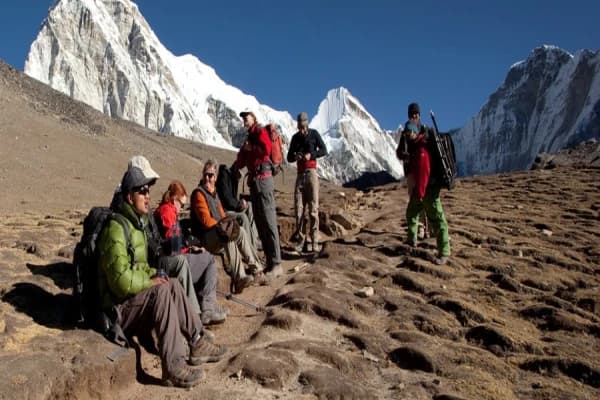
The trekking terrain for the most part is made up of rocky trails, stone steps, suspension bridges, and vast glacier moraines. As you will be trekking primarily downhill, your ankles and knees will be under much pressure.
Tip from our team: Training on uneven surfaces at home will benefit you when you arrive in Nepal and begin your trek to Everest Base Camp. We feel that most headaches will occur between you and Namche Bazaar (a small village about 3400m altitude), so please learn more in our Everest Base Camp altitude sickness guide for all the symptoms you will encounter at altitude, so that you can identify them early on.
How Many Weeks Should You Train Before EBC?
The ideal time to get prepared for an excursion is three months prior to departure. The minimum amount of time you can train is 8 weeks. But training for 12 weeks gives your body a higher probability of conditioning appropriately for your trip.
There are three different phases to your training. This is why following a structured Everest Base Camp training plan is highly recommended.
Phase 1 (Weeks 1 to 4): Base Building
This phase consists of performing low-impact cardio such as swimming, cycling and leg-strengthening exercises like squats and lunges. So you'll be strengthening the ligaments and joints in your body. This is the base of your hiking training program beginners should follow.
Phase 2 (Weeks 5 to 8): Specificity
At this stage, you can begin to hike on uneven or varying surfaces. You can also start using a 5 to 7 kilogram or 10 to 15 pound backpack to simulate the load you'll carry during the hike.
Phase 3 (Weeks 9 to 11): Peak
In this phase, you'll be doing multiple days of lengthy back-to-back hikes of 6 hours or more at a time. The purpose is to develop physical stamina and mental toughness through endurance training for trekking..
Week 12: Tapering
At this point, decrease the intensity of your workouts by 50%. The reason for tapering is to give your muscles rest and allow them to store up energy for your hike.
Why Is Basic Fitness Enough?
You don't have to run marathons or lift heavy things. A number of highly fit athletes experience difficulties at altitude from having pushed themselves too hard and becoming exhausted rapidly. The most important thing is being able to maintain a consistent heart rate over a long period while walking uphill.
We have seen many individuals succeed with their treks by training only four times per week with regularity and adherence to their schedule over 12 weeks.
And that regular exercise has produced much greater results than doing two weeks of high-frequency, intensive exercise at a fitness center. So consistency always wins over intensity.
We recommend starting at least 3 months before departure to build a strong Everest fitness guide routine and follow a proper trekking fitness plan Nepal strategy.
Complete Beginner Training Plan (Step-by-Step)
Our complete training guide is broken down into four separate categories of fitness training. Each one is essential to prepare you for hiking and climbing in the mountains.
Cardio Training
- Walking at a fast pace: Walk at a fast pace for 45 to 60 minutes, 3 to 4 times per week. Maintain a pace where you can still talk briefly.
- Climbing Stairs: If you have access to stairs at home or at your office, use them to get your heart rate up for 20 to 30 minutes per week. And you'll do it without using too much of your energy reserve.
- Cycling: Cycling is an excellent low-impact cardiovascular exercise. It helps improve the strength and endurance of your heart without causing stress to your joints.
Weight Training
- Squats: At least 3 sets of 15 squats will build the exact muscles that will help you go up steep trails.
- Lunges: Step forward and lower your back knee. Do 3 sets of 12 for each leg. Walking lunges also help with balance on the trail.
- Core Strength: Perform planks and sit-ups for at least 15 minutes each day. So you can carry a backpack without back pain.
Practising Hiking
- Long Weekend Walk: Go for a walk for 3 to 5 hours every Saturday on hilly terrain. It replicates your actual trekking experience.
- Backpack Weight Training: Start out with only the weight of an empty backpack. Every two weeks, add 1 kilogram of weight to your pack. So you'll build up until you're carrying between 5 and 7 kilograms comfortably.
Recovery
- Stretching: After each resistance training workout, spend between 15 to 20 minutes stretching your calves, hamstrings and hip flexors.
- Rest Days: Never skip a rest day. Muscles increase in size and strength during your periods of rest, not during your workouts.
Tip: Spring from March to May or Autumn from September to November are the best time for Everest Base Camp Trek. So plan a 12-week training window to fit your month of departure.
How to Train for High Altitude
The most crucial part of acclimating to altitude training is that there is no way to entirely simulate the effects of altitude at home. Unless you can afford a high-tech altitude simulation chamber, by the time you land in Nepal, your lungs will have no prior experience with the altitude and thin air.
However, you can prepare your body to use oxygen efficiently so that when you arrive in Nepal, the effect of the thin air will not be as overwhelming.
Focus on Cardio Efficiency
The heart and lungs are your most valuable assets for the trek. If you have a cardiovascular system that is fit, then it should work as a compensating mechanism when there’s not enough oxygen available by pumping blood harder and smarter.
Long Steady State Cardio (builds aerobic base) - 60-90 minutes of walking, cycling, or swimming at a pace at which you could comfortably converse.
Breath Holding Techniques - Engaging in Box Breathing every day, where you inhale for 4 seconds, hold your breath for 4 seconds, exhale for 4 seconds, and then hold your breath again for 4 seconds, will allow you to maintain your composure when you’re at high altitude and feel the thin air.
The Acclimatization Strategy
- Walking at a Slow Pace: During your trek, make sure you walk at a pace that would normally seem "too easy." Your guides refer to it as the "rest step" pace. So it will keep your heart rate down and allow you to keep moving for hours on end.
- Climb High, Sleep Low: This is the golden rule for those wishing to trek at altitude. And to help you follow this guideline, your itinerary will incorporate rest days.
- Go Slow When Walking: If you wish to ascend quickly to altitude, you might think walking fast is the answer. But it isn't. Walking slowly is the safest approach for both your heart and your body.
- Drink Between 3 and 4 Litres of Water Daily: Dehydration is one of the leading contributors to altitude sickness. So it's important that you start developing this habit before you even arrive at your destination. Don't wait until you're on the trail to start hydrating properly.
Important Safety Rules (Altitude Safety Tips)
Do Not Walk Fast: Go Slow When Walking: If you wish to ascend quickly to altitude, you might think walking fast is the answer. But it isn't. Walking slowly is the safest approach for both your heart and your body.
Drink 3–4 Litres of Water Every Day: Dehydration is one of the leading contributors to altitude sickness. So it's important that you start developing this habit before you even arrive at your destination. Don't wait until you're on the trail to start hydrating properly.
Common Training Mistakes Beginners Make
Our guides have seen thousands of trekkers prepare for this adventure. Here are the most frequent mistakes we have noticed and how you can prevent each one.
- Too Late to Begin Training: Working out in the gym for just two weeks before you leave does not help your body get ready for this trek. You will need at least 8-12 weeks of continued workouts to prepare your body for this journey.
- Not Strengthening Your Legs: Many people forget about leg strength and focus solely on cardio training. Strong legs will support you and prevent you from injury when coming downhill.
- Training Too Much: Training every day without a break can lead to injuries. You do not need to train every day for this journey.
- Not Practicing with a Backpack: Your body needs to be used to carrying extra weight for this trek; Refer to our complete Everest Base Camp Packing List for the items you will bring with you.
- Not Practicing Stairs: There are many stairs on the trail. If you don't practice on stairs, your legs will feel sore and fatigued by day two of the trek.
From our guiding experience: 75% of the people we guide underestimate how much pressure will be placed on their knees when descending. You should also train going down as well as training going up.
Mental Preparation for Everest Base Camp Trek
Preparation for your trip to Everest Base Camp will include physical conditioning. But only your mental toughness will hold you up and carry you on those occasions when your body would otherwise stop moving. Our guides often say the toughest part of trekking to Everest Base Camp is the quiet, slow and repetitive nature of the extended days of trekking.
Long Day's Journey Into Night
Visualize yourself walking for continuous six hours. You're carrying a heavy load in your pack, going up the mountain and the village you're walking to seems no closer than it did one hour previously. It's at this moment, right at the very end of the day, when mental toughness comes into play.
On the mountain, time works differently. There isn't a finish line you're racing toward. So just walk in the tempo of nature of the Himalayan Mountains. Think only of your breathing, the ground immediately in front of you and your next step. And you'll be able to walk much farther than if you had simply done a training run.
Life in the Tea Houses
You'll be in a small mountain lodge (tea houses) that is made of wood, has a warm fireplace in the common area, and you're eating hot soup with other hikers who are also in the tea houses.
- Cold: When the sun goes down behind the mountains, the temperature drops drastically. You'll be sleeping in a very warm sleeping bag and wearing a wool hat, so make sure you bring these with you.
- Silence: The internet is very slow or non-existent, which is a good thing. You should put your phone away, talk to your fellow hikers, and enjoy the rare quietness in the mountains.
The "Slow and Steady" Mindset
As you start to feel tired on Day 6, the sight of the sun rising from Kala Pattharbrings everything into perspective. The trekkers who made it to Base Camp didn't get there in the shortest time.
They got there because they consistently kept moving forward. So start training your mind to appreciate the journey. Your enjoyment should come more from completing each step than from achieving the end result.
Tip: Review our Everest Base Camp Trek Experience guide for more first-hand accounts of trekkers who have successfully completed the trek.
Sample Weekly Training Schedule
This is a sample weekly training schedule from trekkers who successfully completed EBC in previous seasons. Use it as a guide and make any adjustments based on your current level of fitness.
| Day |
Activity |
Goal
|
Simple Instructions
|
| Monday |
Cardio |
Heart Health
|
45 mins of brisk walking, swimming, or cycling.
|
|
Tuesday
|
Strength |
Leg Power
|
30 mins of squats, lunges, and step-ups.
|
| Wednesday |
Rest |
Recovery
|
Let your muscles heal. No hard exercise today.
|
|
Thursday
|
Stairs |
Lung Power
|
Find a set of stairs. Walk up and down for 30 mins.
|
| Friday |
Flexibility |
Injury Prevention
|
20 mins of stretching or light yoga.
|
| Saturday |
Long Hike
|
Endurance
|
3–5 hours of walking on hills with a light pack.
|
| Sunday |
Recovery
|
Active Rest
|
A very slow 20-minute stroll or light stretching.
|
Pro Tips for Success
Pro Tips for Your Successful Journey:
- The Backpack Rule: Begin with a light bag. Every two weeks, add 1 kg until you're comfortably carrying a maximum of 5 to 7 kg in your backpack.
- The Talk Test: On Monday's cardio and Saturday's hikes, you should be able to talk in complete sentences without getting out of breath. But if you're out of breath, slow down.
- Listen to Your Knees: Sudden pain in your knees means stop and rest right away. It's a lot better to miss one training session than to miss the whole trek. So don't push through knee pain.
Tip: Adequate training will reduce your chances of injury and will also protect your financial investment. So refer to our comprehensive guide on the Everest Base Camp Trek cost to get an overall perspective of what the total financial picture looks like.
Final Fitness Checklist Before Flying to Nepal
Pre-flight Preparation for Your Trip to Nepal: Ensure you have met the following criteria before your trip:
- Can you walk comfortably for 6 hours without stopping?
- Can you climb 20 floors of stairs without losing your breath?
- Can you carry a 5 to 7 kg backpack for several hours?
- Do your knees feel strong with no sharp pain on downhill sections?
- Are you comfortable sleeping in cold conditions (below 5°C)?
- Are you mentally ready for days with limited internet and basic facilities?
If all of these conditions have been met, you will be in better shape than most trekkers who will attempt to climb to Everest Base Camp. Many of our staff have guided many inexperienced trekkers to Base Camp. Often, those who made it had two things in common: they committed to a regular training schedule and believed they could succeed in completing the climb to Base Camp.
The mountains are ready for you. Start your training today; take small steps; soon you will be at Everest Base Camp. If you would like to progress beyond these basics and book with the best guides to Everest Base Camp, contact us.