Trekkers-at-Thorong-La-Pass-during-the-Annapurna-Circuit-Trek-in-Nepal

Annapurna Circuit with Tilicho Lake 14 Days

484 reviews
113 reviews
Recommended by 99% of travelers

⚠️ 2026 Latest Trail Update

The road from Besisahar to Chame is open, and jeeps run daily. Dust and small landslide patches can be an issue during or after heavy rains. The suspension bridges leading up to Chame and Pisang are all in great shape! Two cables were replaced close to Danaque by the local committee earlier this year.

  • ACAP Permit Counter (Besisahar): Working as normal, and the TIMS Card rule still applies.
  • Teahouse availability (Manang, Yak Kharka, Muktinath): All teahouses are open and fully stocked. It's currently peak trekking season!
  • New landslide closures: We haven't heard anything new about a landslide closure on the main trail this month either. It's always best to double-check with your guide on the morning of departure due to the unpredictable nature of mountain weather conditions.
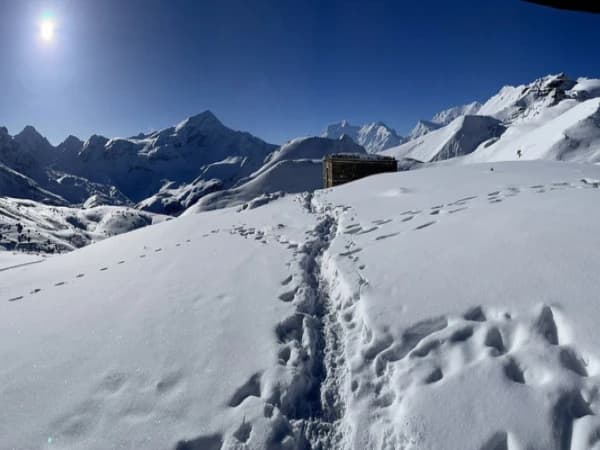
  • Landslide closure at Thorong La? If Thorong La is blocked due to a storm or snowfall, you will simply need to stay an extra day at Manang or High Camp (for your safety).
  • Last Checked: July 15, 2026, by Senior Trekking Lead Krishna Bahadur Pariyar.
At a Glance
Duration14 Days
Trip GradeStrenuous
CountryNepal
Maximum Altitude5,416 m
Group Size1-15
StartsKathmandu
EndsKathmandu
Travel StyleTrekking
Best TimeSpring - Autumn

Annapurna Circuit with Tilicho Lake: 14-Day Overview

The main reason this Annapurna trekking route is popular is that it leads to all of the places that make Nepal famous. You make your way through warm river valleys, visit dry Tibetan-style villages, and embark on an alpine adventure to a high mountain lake located at an altitude of over 4,900 m, surrounded by rock and ice. The inclusion of a Tilicho Lake itinerary overview is justified because it is indeed one of the most picturesque detours in the Annapurna area, so omitting it is equivalent to missing half of the adventure. 

The reason why a two-week Nepal trekking itinerary works is that it gives the body enough time to acclimatise to a higher altitude before taking an even higher hike, while still being relatively short for those who do not have much time to travel.  This Annapurna hiking experience is perfect for fit and not very experienced hikers, and those with significant trekking experience who want a classic Himalayan trekking challenge

These 14 days in the Himalayas are a trekking distance of approximately 160-170 km, with an average daily walking time of 5 to 7 hours. The route begins with a drive from the starting point in Kathmandu to Besisahar, trekking up the Marsyangdi River Valley to Manang, detouring to Tilicho Lake, crossing the maximum altitude of 5,416 m at Thorong La Pass, and finishing at the ending point of Muktinath before driving back. However, if you’re interested in learning more adventures that are waiting for you in the region, then check out our complete Annapurna Region Trek Guide to see which treks may suit your needs best.

Trek Highlights

When you ask the trekkers who have already completed this trail, they are not going to mention names of things that need to be listed. Instead, they are going to narrate an experience. You can find the below-mentioned experiences that we keep hearing from the trekkers.

  • Tilicho Lake at 4,920 metres: Tilicho Lake, located at a height of 4920 meters, is not merely a place for photogenic views. Standing near its shores provides you with a sense of solitude along with the towering peaks of Tilicho that are in proximity. The people believe that this lake gives spiritual strength to individuals, and now you can see why the locals take it seriously.
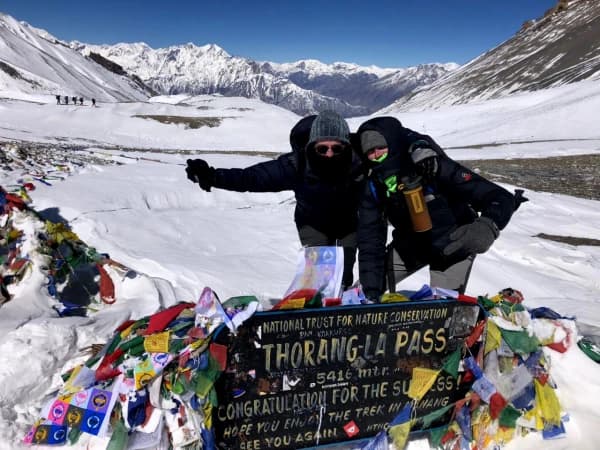
  • Crossing the Thorong La Pass: This is a challenging task that you have to accomplish at 5416 meters; i.e. Thorong La Pass is the highest among all trekking passes in the world. The start of the journey is hard and makes trekkers get the greatest reward by accomplishing the pass along with an amazing view of the area.
  • Manang village and its bowl of mountains: Manang is located in a large valley surrounded by peaks including Annapurna, Gangapurna, and Tilicho Peak, which can be seen from the village. This is also the perfect place to take a break during the trek for the day of acclimatisation, a hike to the glacier lake, and rest your body.
  • The temple of Muktinath: This shrine, which is sacred to both Hindus and Buddhists, presents a reward for crossing Thorong La. As many trekkers describe it, it is a spiritual and emotional point of the route.
  • Changing landscapes in a single week: One starts from green hills and apple orchards near Manang, and in several days crosses desert-like landscapes around Muktinath. 
  • Gurung, Manangi, and Thakali villages: Every village on the route has its culture, language, and architectural style. One of the real pleasures of this walk is moving past it slowly rather than scurrying through it.
  • Old monasteries, mani walls, and prayer flags: Along the route, there are old monasteries, mani walls, and prayer flags that show the influence of Buddhism on everything. You’ll too come across some great little gompas where you can really see how people around here live and live their lives as they have done for many generations.

Short Itinerary

Day 1: Arrival in Kathmandu and transfer to hotel (1,350 m).
Day 2: Drive from Kathmandu to Dharapani (1,960 m) | Duration: 8–9 hours.
Day 3: Trek to Chame (2,710 m) | Duration: 5–6 hours.
Day 4: Trek to Pisang (3,115 m) | Duration: 4–5 hours.
Day 5: Trek to Manang (3,540 m) | Duration: 6–7 hours.
Day 6: Acclimatization day at Manang.
Day 7: Trek from Manang to Tilicho Base Camp (4,150 m) | Duration: 5–6 hours.
Day 8: Hike to Tilicho Lake (4,920 m), return to base camp, trek to Shree Kharka | Duration: 7–8 hours.
Day 9: Trek from Shree Kharka to Yak Kharka (4,040 m) | Duration: 4–5 hours.
Day 10: Trek from Yak Kharka to Phedi / High Camp (4,600 m) | Duration: 4–5 hours.
Day 11: Trek via Thorong La Pass (5,416 m) to Muktinath (3,802 m) | Duration: 7–9 hours.
Day 12: Drive to Pokhara (850 m) | Duration: 8–9 hours
Day 13: Drive back to Kathmandu (1,350 m) | Duration: 6–7 hours
Day 14: Transfer to the International Airport for final departure.

Annapurna Circuit with Tilicho Lake Cost Breakdown 

Let's get to the bottom of the big question ie price: The total Annapurna Circuit trek cost for the whole 14 days is between $900 and $1,400 (per person), and this can depend on the size of your trekking party, the season, and what added comforts you opt for.

A private trekking trip of only one person with a trek guide would cost more for each person than being a part of a group, as all the costs associated with the guide as well as the Jeep ride would be incurred by you alone. A solo trek gives you total independence for your trekking rhythm, yet the price of the trekking trip will be higher, as you will carry all costs without sharing any expenses with other trekkers. Joining a group expedition is a more economical way to enjoy the trek, which is of high standard.

Package Cost

  • Group Joining cost: least expensive option
  • Private trek cost: most costly option
  • Solo trek cost: highest cost per individual, but maximum flexibility

Cost Includes

  • Fees for obtaining the ACAP and TIMS permits
  • Any expenses related to transportation while on the trek
  • Expenses associated with a guide and a porter
  • Overnight stay costs in tea houses during the trek.
  • Food expenses related to trekking
  • Government taxes and office service charge

Cost Breakdown

Expense Estimated Cost (USD) Notes
ACAP Permit $30–$35 Required for all trekkers
TIMS Card (if applicable) $10–$20 Depends on current regulations
Licensed Guide $25–$35/day Shared cost in a group trek
Porter $20–$25/day One porter usually carries luggage for two trekkers
Accommodation (Tea House) $5–$15/night Price increases at higher elevations
Meals

$15–$25/day

Breakfast, lunch, and dinner

Transportation

$80–$150

Depends on bus, jeep, or private vehicle

Wi-Fi & Charging

$2–$5/day

Extra charges at most tea houses

Hot Shower

$2–$4/use

Available at most tea houses

Personal Expenses

$5–$10/day

Drinks, snacks, laundry, souvenirs, and tips

Review our guide on Nepal Trek Costs in order to determine your complete trekking expenses and expenditures. 

Extra Money to Carry

We always recommend that our trekkers carry more money than they think they might need because you won't find any ATMs after leaving Besisahar. If you bring money with you, you will be able to afford snacks and hot showers and pay for charging. You need to plan some extra money in addition to your daily allowance for tips. Most trekkers usually give their guides and porters around $8-12 a day shared among the entire team as appreciation for their work. 

Itinerary

This part will explain the entire day-by-day itinerary, so that you will know in advance what to expect in each trekking schedule before you arrive in Nepal. The Annapurna Itinerary route is uniform on a daily basis and includes the information about the destination and altitude, as well as the distance and the number of hours for walking, meals and accommodation. 

Arrival time is in the afternoon, when our team will be waiting for you at the airport and drive you to your accommodation, passing through the busy streets and old rooftops of Kathmandu city.

You will get a detailed briefing about the journey before bed, as there won't be any treks on day 1. It’s better to rest because the next day’s journey will take a lot of energy from you.

Health Check: At 1,350 m altitude, no problems. Just have a good sleep and plenty of fluids on your flight.

Note: Have a copy of your passport ready this evening; our office requires it for the permit early this morning.

Krishna Pariyar, Lead Guide of Ammonite Adventure

About Kathmandu Hotels

  • Wi-Fi: Available
  • Attached Bathroom: Available
  • Hot Shower: Available
Max. Altitude: 1,350 mMeals: DinnerAccommodation: Hotel

Today we drive along the banks of the Trishuli and Marsyangdi rivers through various villages like Besisahar, Ngadi, etc., before turning towards a rough road up to Dharapani. After passing through farming villages, we continue towards the next destination. We take a roadside lunch during the trip, and have dinner once we are in the tea house.

Krishna’s Pro-Tip: “The Jeep Ride Test”
“After Besisahar, the road will be bumpier; try to occupy the first seat and take light food. Don’t carry too much water, as you have to travel more than seven to eight hours by jeep. Carry water bottles if required for drinking from available small stores, and it’s a good place to enjoy the natural beauty and snow-capped peaks.”

Health Check: Below 2,000 m, no major worries about altitude sickness today. You will feel more tired, so make sure to hydrate enough, as it is dusty from the drive.

Tip/Note: During the last hour of the drive, you should see your first snow-peaked mountain.

– Krishna Pariyar, Lead Guide, Ammonite Adventure

About Dharapani Teahouses

  • Wi-Fi: Available
  • Attached Bathroom: Limited
  • Hot Shower: Available
Max. Altitude: 1,960 mMeals: Breakfast, Lunch, DinnerAccommodation: Tea HouseDuration: 7–8 hoursDistance: 190 to 240 kmMode of Transport: Driving

In the morning, we head off after our breakfast, heading towards Chame with walking trails passing through Bagarchhap and Timang. We will be hiking along the Marshyangdi River through some Pine and fir forest.

We’ll stop at a little village for our Lunch, after which there are more forest trails while you slowly approach Chame itself. When the forests thin out close by, you will get your first view of the mountain that is Annapurna II rising majestically high on top of the ridge, providing great views during dinner time.

Krishna’s Pro-Tip – ‘The Hidden Hot Spring’: Chame has a natural hot spring by the river. A short soak will be the best cure for tired legs.

Health Check: Breathing seems to get a little faster on the ascent upwards, but it is quite normal due to our elevation (2,710 m). Buy more snacks as you’ll see prices rising further up the trail.

— Krishna Pariyar, Lead Guide at Ammonite Adventure

About Chame Teahouses

  • Wi-Fi: Available
  • Attached Bathroom: Available
  • Hot Shower: Available
  • Mobile Network: Available
Max. Altitude: 2,710 mMeals: Breakfast, Lunch, DinnerAccommodation: Tea HouseDuration: 5-6 hoursDistance: 15 to 16 kmMode of Transport: Walking

Early start to the day before taking the trail that passes the enormous Paungda Danda rock face, which splits into two different paths to Pisang. You take your lunch at a tiny tea house located next to the river path, and a short, abrupt incline will get you to Pisang, where the view of Pisang Peak right over the town will be seen during supper.

Krishna's Pro-Tip: "Two Roads to Pisang"

"The higher path will afford views of the mountains that resemble the shape of Annapurnas II and IV, should the weather be pleasant."

Health Check: Minor breath shortness when walking uphill beyond the 3,000 m mark is expected, but a persistent headache is not.

Tip/Note: Always keep a warm jacket with you as the temperature drops quickly in the afternoon once the sun has set.

— Krishna Pariyar, Lead Guide at Ammonite Adventure

About Pisang Teahouses

  • Wi-Fi: Available
  • Attached Bathroom: Limited
  • Hot Shower: Available
  • Mobile Network: Available
Max. Altitude: 3,115 mMeals: Breakfast, Lunch, DinnerAccommodation: Tea HouseDuration: 4–5 hoursDistance: 13.9 kmMode of Transport: Walking

After breakfast, you walk past the towns of Humde and Braga, where a monastery can be found built along the face of a cliff. Take lunch in Braga before making the trek that ends at the Manang village, where you can see the magnificent peaks of Annapurna III, Gangapurna, and Tilicho together before taking dinner.

Krishna's Pro-Tip: "Slow Down Today"

"As Manang sits a lot higher, make sure to slow your pace on the final part of your hike and take breaks along the way as you reach the village."

Health Check: Lightheadedness or poor appetite are typical when travelling above 3,540 m. Usually, with rest and water, the condition will subside.

Tip/Note: Go for the free altitude session at the Manang village (generally held in the afternoon).

— Krishna Pariyar, Lead Guide at Ammonite Adventure

About Manang Teahouses

  • Wi-Fi: Available
  • Attached Bathroom: Available
  • Hot Shower: Available
  • Mobile Network: Available
Max. Altitude: 3,540 mMeals: Breakfast, Lunch, DinnerAccommodation: Tea HouseDuration: 6–7 hoursDistance: 17.2 kmMode of Transport: Walking

Take your breakfast and set off on your climb towards Gangapurna Lake or Praken Gompa, ascending hundreds of metres before descending into Manang for lunch and the rest of the afternoon. Dinner will be served early, allowing for plenty of time for you to relax, wash your clothes or just sit with a coffee at a local bakery and take in the stunning views of the mountains.

Krishna's Pro-Tip: "The Best Kind of Rest Day"

"Take short hikes up before a good afternoon of resting and you'll prevent most of the Altitude problems."

Health Check: Your body needs to adapt itself to altitude; the morning hike will allow you to do just that.

Tip/Note: Grab a slice of apple pie at one of the local bakeries in Manang.

— Krishna Pariyar, Lead Guide at Ammonite Adventure

About Manang Teahouses

  • Wi-Fi: Available
  • Attached Bathroom: Available
  • Hot Shower: Available
  • Mobile Network: Available
Max. Altitude: 3,540 mMeals: Breakfast, Lunch, DinnerAccommodation: Tea HouseMode of Transport: Acclimatisation

You will enjoy an early morning breakfast, after which we will head towards the valley of Khangsar, the last village on the route. Later, you'll walk along narrow cliffside trails that follow a landslide slope above the river for 2–3 hours. The trail then opens into a broader valley leading to Tilicho Base Camp, where you'll enjoy a quiet dinner beneath Tilicho Peak.

Krishna’s Pro-Tip: “The Timing of Your Hike”

“Since the afternoon sun may loosen things up a bit, we should always get an early start, just before the slippage starts”

Health Check: Watch your appetite and breathing levels at 4,150 m. Keep your walking pace moderate.

Tip/Note: Use trekking poles because of the scattered stones on the path here.

Trail Condition: Steep cliffside trail along the river

About Tilicho Base Camp Teahouses

  • Wi-Fi: No
  • Attached Bathroom: No
  • Hot Shower: Available (limited)
  • Mobile Service: Available (limited)
Max. Altitude: 4,150 mMeals: Breakfast, Lunch, DinnerAccommodation: Tea HouseDuration: 5–6 hoursDistance: 2 to 14 kmMode of Transport: Walking

The day begins before sunrise as we trek towards the breathtaking Tilicho Lake.

A narrow and rocky trail leads to the lake which offers a crystal clear water body mirroring the Tilicho peak. The spectacular view is surely one of the highlights of this trek. Afterwards, we head back to Tilicho Base Camp for lunch and proceed towards Shree Kharka for dinner.

Krishna’s Pro-Tip: “Early Bird Catches the Calm

“We leave before the sun rises to get to the lake before the day’s winds get too strong.

It’s amazing how the lake is so calm that it acts like a mirror in the morning!”

Health Check: This is among the highest points of the entire trek. Make sure you set a moderate pace, and let your guide know right away if you experience any dizzy sensation.

About Shree Kharka Teahouses

  • Wi-Fi: Not Available
  • Attached Bathroom: Not Available
  • Hot Shower: Limited
  • Mobile Network: Limited
Max. Altitude: 4,920 m (Tilicho Lake)Meals: Breakfast, Lunch (packed), DinnerAccommodation: Tea HouseDuration: 7-8 HoursMode of Transport: Walking

After breakfast, the trail gradually descends as we rejoin the main Annapurna Circuit route. Along the way, you'll enjoy views of grazing yaks scattered across the wide alpine landscape.

After lunch en route, a pleasant afternoon walk brings you to Yak Kharka well before nightfall.

Krishna’s Pro-Tip: “Take a Breath
“Just relax a bit today and keep some energy in reserve for the bigger effort in getting up to high camp tomorrow. Speak to your guide if you feel you are suffering at the altitude.”

Health Report: If you still feel weak from yesterday’s climb high, just be sure to let your guide know of any condition you feel that you may have.

Tip/Note: You may need to wear your down jacket for the cool evening hours.

About Yak Kharka Teahouses

  • Wi-Fi: Very Limited
  • Attached Bathroom: No
  • Hot Shower: Yes
  • Mobile Network: Yes
Max. Altitude: 4,040 mMeals: Breakfast, Lunch, DinnerAccommodation: Tea HouseDuration: 4–5 hoursDistance: 10 kmMode of Transport: Walking

The walk up after breakfast is short, but steep, with a rocky trail up to the numerous stone huts scattered around a stream. Lunch will be on the way before the final approach to our goal, High Camp, by early afternoon, leaving us time to relax and rest ahead of a hearty dinner and an early night.

Krishna's Pro Tip: "Arrive Early, Rest Properly"

"We climb steadily and arrive at High Camp by mid-afternoon, so that there is plenty of time for a rest before an early dinner. It makes the following day less arduous."

— Krishna Pariyar, Lead Guide at Ammonite Adventure

Health Check: Mild headache or heavy legs can be felt at this altitude; report it if it feels any worse.

Tip/Note: Make sure you have all the gear you'll need for tomorrow ready tonight; put it all out and pack your head torch.

About High Camp Teahouses

  • Wi-Fi: No
  • Attached Bathroom: No
  • Hot Shower: No
  • Mobile Network: Very limited
Max. Altitude: 4,880 mMeals: Breakfast, Lunch, DinnerAccommodation: Tea HouseDuration: 4 to 5 hrsDistance: 6 to 7 kmMode of Transport: Walking

We'll set off from High Camp just before 4 a.m. for our trek to Thorong La to avoid the wind, which will start by 9–10 a.m. The flag-draped summit is the highest point on the trail; from there, we begin a massive descent of more than 1,600 metres to reach the pilgrims holy town of Muktinath.

Krishna's Pro Tip: "Small Steps, No Racing"

"The climb over the pass is one where there are a number of challenges. Small steady steps, and never push it."

— Krishna Pariyar, Lead Guide at Ammonite Adventure

Health Check: This is the highest and toughest part of the trek; consult the guide if any symptoms increase significantly.

Tip/Note: Wear sunglasses; there is a risk of snow blindness because of the bright sun off the snow.

About Muktinath Teahouses

  • Wi-Fi: Yes
  • Attached Bathroom: Yes
  • Hot Shower: Yes
  • Mobile Network: Yes
Max. Altitude: 5,416 m (Pass) / 3,802 m (Muktinath)Meals: Breakfast, Lunch, DinnerAccommodation: Tea HouseDuration: 7–9 hoursDistance: 7.6 kmMode of Transport: Walking

After breakfast, we drive via Jomsom, down the Kali Gandaki Gorge and on towards Pokhara, the air becoming warmer with every hour; lunch will be along the way. As dusk falls, the lakeshore of Pokhara will welcome us, and it'll feel as though we've arrived in paradise.

Krishna's Pro Tip: "Enjoy the Comfort"

"Tonight at our comfortable hotel in Pokhara, after a good hot shower, fine food and perhaps a beer, you'll be forgiven for forgetting you are no longer on the trail!"

— Krishna Pariyar, Lead Guide at Ammonite Adventure

Health Check: No altitude concerns here; enjoy a good night's sleep.

Tip/Note: A good hot shower and meal on arrival!

About Pokhara Hotels

  • Wi-Fi: Yes
  • Attached Bathroom: Yes
  • Hot Shower: Yes
  • Mobile Network: Yes
Max. Altitude: 850 mMeals: Breakfast, Lunch, DinnerAccommodation: HotelDuration: 4WD Jeep: 6 to 10 hoursDistance: 170 km to 200 kmMode of Transport: driving

After having breakfast, you will go in your private vehicle to head towards Trishuli Valley, with breaks once in a town for lunch & final souvenir shopping. We reach Kathmandu in the afternoon for our final dinner.

Krishna’s Pro-Tip: "The Reflection Drive"

"This is where everybody is back to normal pace again. When we talk about our favourite moments, feel free to ask me anything!"

Health Check: No altitude concerns; rest in preparation for your very early morning start tomorrow.

Tip/Note: Last opportunity for shopping; try your skills in Thamel.

About Kathmandu Hotels

  • Wi-Fi: Yes
  • Attached Bathroom: Yes
  • Hot Shower: Yes
  • Mobile Network: Yes
Max. Altitude: 1350 mMeals: Breakfast, Lunch, DinnerAccommodation: HotelDuration: 5 to 6 hoursDistance: 200 kmMode of Transport: driving

Our drive takes you to the international airport in time for your departure. We try to allow extra time for the famous Kathmandu traffic. This final drive is very peaceful; it marks our good-bye after spending two full weeks with each other on the trail.

Krishna’s Pro-Tip: "Until We Meet Again"

"Take a good look out the window as your airplane ascends; if it's clear, you’ll be able to see the mountains that you have hiked up!"

Health Check: No altitude problems; ensure you have all your passports and permits, and don’t forget anything on check-out.

Tip/Note: Leave for your international flight at least 3 hours in advance.

About Kathmandu Airport

  • Wi-Fi: Yes
  • Mobile Network: Yes
  • Charging Facilities: Available
Max. Altitude: 1,350 mMeals: BreakfastDuration: 18 minutesDistance: 6.1 kmMode of Transport: Drive
Customize Trip

What is Included?

Hotel in City

  • One night Twin-sharing hotel accommodation at Pokhara following the trek on a bed-and-breakfast basis.

Transportation

  • Airport Transfers: For your international and domestic flights, a round-trip transfer and pick-up are included. 
  • Trek Start: A shared vehicle transfer is scheduled from Kathmandu (1,400m) to Machhakhola (930m).
  • Trek End: A sharing vehicle transfer is also scheduled from Dharapani to Kathmandu (1,400m) or Pokhara.
  • Staff Transport: All ground transport for the guides, and any other support staff.

Accommodations

  • Trek Accommodation: Overnight local teahouse accommodation on a twin-sharing basis. Single rooms can be arranged for a small surcharge, subject to availability.
  • Total Accommodation Nights: 11 nights of standard twin-sharing accommodation during the trek.

Food

  • Full Board Meals: Breakfast, lunch and dinner and hot drinks are provided during the entire trek. 
  • Special Inclusions: Water purification tablets for safe drinking water.
  • Total meals included: There will be a total of 10 breakfasts, 10 lunches and 10 dinners.

Guide

  • One government-licensed English-speaking guide. Assistant guides will join the group, depending on the size of the group.
  • All guide fees, food, insurance, salaries, accommodation, transport and all equipment will be covered.

Porter

  • Porters: One porter for every two trekkers. Each trekker's personal luggage weight limit is 9 kg.
  • All Porter fees, food, insurance, salaries, accommodation, transport and all equipment will be covered.

Trek Permits and Expenses

All necessary permits - including special area permits - are pre-scheduled to make your trek a bit easier and trouble-free. Included permits are:

  • Manaslu Restricted Area Permit (MRAP)
  • Manaslu Conservation Area Permit (MCAP)
  • Annapurna Conservation Area Permit (ACAP). 

Medical Assistance

  • Emergency Provision: Emergency oxygen and a first aid medical kit will be taken with you on the trek.
  • Rescue Arrangements: Trained rescuers will be arranged in case of emergency (included in your Trek Travel Insurance).

Souvenir

  • Goodbye Souvenirs: All participants will receive an Ammonite Adventure cap and T-shirt.
  • Completion Certificate: A completion certificate for all participants.

Gear and Trekking Equipments

  • Sleeping bags and down jackets, duffle bag (one for every two trekkers), if you do not have your own
  • Manaslu Region map.

Additional Services

  • Luggage Storage: Free and seacure luggage storage throughout the trek.
  • Full Coordination: Our full coordination team will take care of all logistics, planning, and requirements for you.

Farewell

A cultural farewell meal in Kathmandu at the conclusion of your journey.

What is Excluded?

International Flight

  • International flight to and from Nepal is not included.

Accommodations

  • Hotel accommodation in Kathmandu before and after the trekking starts.
  • Extra nights in Kathmandu on early arrival, late departure, or early return from the trek due to any cause.

Food

  • All meals in Kathmandu before and after the trek are at your own expense.
  • Extra meals required due to early arrival, late departure, or early return from the trek are not included.

Guide and Porter

  • Tipping for guides, porters, and local support staff is excluded and appreciated on a service basis.

Visa

  • Nepal entry visa fees (to be paid in cash upon arrival at Tribhuvan International Airport) are the traveler's responsibility.

Travel Insurance

  • Travel insurance is mandatory and must include high-altitude medical emergencies and helicopter evacuation and treatment costs.

Personal Expenses

  • Personal expenses such as snacks, beverages (alcoholic/hot/cold), hot water/boiled water, hot showers, Internet/Wi-Fi, mobile/phone calls, charging batteries, laundry, and additional porter fees.
  • Personal clothing and trekking gear.

Other Expenses

  • Charges for excess baggage (a trekker can carry only 9 kg).
  • Unforeseen additional costs due to natural calamities, adverse weather, modifications to the itinerary for safety reasons, political unrest, government policy, illness, or other unforeseen circumstances beyond our control.

Add-ons & Options

Recommended Add‑Ons (Most Popular)

1) Kathmandu Cultural Extension (Pre‑Trek) — +1 or +2 Days

  • Best time to add: Before Day 1 (arrival) or as an extra day after Day 13

  • Why guests love it: Turns the trek into a “complete Nepal trip” with UNESCO heritage, food, and culture.

Highlights

  • Boudhanath Stupa, Pashupatinath Temple, Kathmandu Durbar Square

  • Optional Thamel shopping + equipment check

  • Relaxed start before the long drive on Day 2

Perfect for: First‑time Nepal visitors, families, and guests who want culture + trekking.

2) Manang Acclimatization Upgrade (Ice Lake / High Viewpoint) — +1 Day

  • Best time to add: Around Day 6 (Acclimatization Day in Manang)

  • Why it’s the “smart upgrade”: Better acclimatization = better Tilicho + Thorong La success.

Upgrade options

  • Ice Lake (Kicho Tal) day hike (strong acclimatization + epic views)

  • Alternative scenic hike if weather/trail conditions require

Perfect for: Guests who want stronger altitude safety and a more premium trekking experience.

3) Tilicho Lake Success Buffer (Weather & Safety Day) — +1 Day

  • Best time to add: Between Day 7 and Day 9 (Tilicho Base Camp / Tilicho Lake section)

  • Why it matters: Tilicho is one of the most weather‑sensitive parts of the route. A buffer day dramatically improves the chance of reaching the lake in good conditions.

What this buffer is used for

  • Waiting out wind/snow for a safer lake visit

  • A more relaxed pace on the landslide‑prone section

  • Backup day if the lake hike needs to shift by a day

Perfect for: Guests who are flying long‑haul, those who don’t want to “rush Tilicho”, and anyone prioritizing safety.

4) Hot Springs Recovery Extension (Tatopani) — +1 Day (Route Dependent)

  • Best time to add: After Day 11 (Thorong La), before arriving Pokhara

  • Why guests love it: The best natural recovery after the toughest day of the trek.

Highlights

  • Soak tired legs in natural hot springs

  • Comfortable rest day after the big pass crossing

Perfect for: Guests who want comfort, recovery, and a relaxed finish.

Premium Adventure Add‑Ons (For Experienced Trekkers)

5) Nar–Phu Valley Extension (Restricted Area) — +3 to +5 Days

  • Best time to add: Before reaching Manang (added into the mid‑trek section)

  • Why it’s premium: Remote hidden valleys, ancient villages, dramatic landscapes—far fewer crowds than the main circuit.

Important notes (good for sales clarity)

  • Requires special permits

  • Usually needs a guide and more logistics planning

Perfect for: Adventure travelers who want the wildest and most unique version of Annapurna Circuit.

Comfort & Service Upgrades

6) Porter Upgrade (Highly Recommended)

  • Best time to add: Whole trek (Day 2–Day 12)

  • Why: Less fatigue at altitude = safer trek + more enjoyment, especially for Tilicho and Thorong La.

Perfect for: Most guests, especially those new to high-altitude trekking.

7) Private Transport Upgrade (Kathmandu ↔ Dharapani / Pokhara ↔ Kathmandu)

  • Best time to add: Day 2, Day 12, Day 13

  • Why: More comfort, fewer delays, easier breaks, and smoother long driving days.

Perfect for: Couples, families, small private groups, and travelers with limited time.

8) Extra Night in Pokhara (Post‑Trek Relax) — +1 Day

  • Best time to add: After Day 12 (arrival Pokhara)

  • Why guests love it: A proper rest day by the lake after the trek before the drive to Kathmandu.

Highlights

  • Lakeside relaxation, massage/spa, easy sightseeing

  • Optional sunrise viewpoint (if guests want a final “wow” morning)

Note:

Option A — Best Value Upgrade (Most Recommended)

  • Manang acclimatization upgrade (+1 day)

  • Tilicho success buffer (+1 day)

Option B — Comfort

  • Hot springs recovery (Tatopani) (+1 day, route dependent)

  • Extra night Pokhara (+1 day)

Option C — Premium Adventure

  • Nar–Phu Valley extension (+3 to +5 days)

Additional Information

Why Choose the Annapurna Circuit with Tilicho Lake 14 Days

If we are going to suggest an itinerary for any version of this trek, then 14 days is probably it, as it manages the delicate balance between comfort and security and time very nicely. You are not pushing your body unnecessarily uphill, and you aren’t taking a month and a half of your time from the comforts of home. This is one single expedition that takes in the full circuit, a proper visit to Tilicho Lake and a successful crossing of the Thorong La.

The amount of time it takes mainly has to do with acclimatisation.

Having two rest days (one in Manang and the acclimatisation along the path to Tilicho Lake), you have a chance for your body to adjust before climbing up the mountain much above 4,500 m. During each walking day you are comfortable for around 4–7 hours. You go to sleep at the end of the day satisfied, and not exhausted. You will also manage a proper look around Tilicho Lake without running up it and down again.

You cross Thorong La Pass at an imposing 5,416 m high and journey across the landscapes of the region which range from verdant forest to harsh arid desert.

Along the way, you pass through villages of the Gurung, Manangi and Thakali tribes, which all feel like entering a miniature new country. Added to that, you have the Buddhist monasteries, mani walls, and prayer flags to keep your eyes occupied, plus a visit to the highly revered Muktinath Temple to finish things off, so the journey is as rich in culture as it is in physical achievement. We simply think it is a more worthwhile journey than the typical Annapurna Circuit, which usually doesn’t visit Tilicho.

Comparison Table

Itinerary Duration Best For Acclimatization Tilicho Lake Included
12 Days Faster pace Experienced trekkers Moderate Usually Yes
14 Days Balanced Most trekkers Excellent

Yes

16 Days Relaxed pace Beginners & photographers Excellent Yes
18 Days Complete exploration Leisure trekkers Best Yes

Head over to our 12-day Annapurna Circuit trek to decide which itinerary to book. Now you understand why 14 days is such a great 

Who Is This Trek For

This trek suits a wide range of trekkers, but it’s important to choose the right itinerary for your fitness level and expectations.

This trek is a great fit for:

  • Beginner trekkers with good physical fitness and some hiking experience (and a little pre-trip preparation) can tackle this trek well. 
  • Experienced trekkers will relish the trek with the inclusion of the challenging Tilicho side trek. 
  • Solo travellers can join as part of an organised group and meet other solo trekkers, or find travel companions. 
  • Couples who wish to combine an exciting and adventurous trek with some quality time together and tranquil moments are well suited for the 14-day trek
  • Families with children over 12 or older teens may enjoy the pace of the 14-day circuit; however, a 16-day option is usually best for the younger members of the family.
  • This trek suits a wide range of people, but it is not for absolutely everyone, and we would rather be honest about that upfront.
  • Photographers and nature enthusiasts will adore the constantly changing landscapes on this trek. Adventure seekers will be looking forward to the thrill of crossing the high Thorong La Pass, and enjoying the adventure side trek.

We wouldn’t recommend this 14-day plan for individuals who are at serious risk from heart or lung conditions, for young children, or for people who are unwilling or unable to commit to at least two or three weeks of practice trekking before they leave home. For everyone else, with preparation, it should be an achievable and rewarding experience.

Accommodation During the Trek

You’ll be staying in tea houses for pretty much all of your trek; these are basic, family-run guest lodges designed specifically for trekkers. Rooms are no-frills, with twin beds and a blanket, perhaps a tiny window, and at lower altitudes, some of the lodges even have private bathrooms. At higher altitudes the rooms are more basic, and shared, squat-style bathrooms and toilets become more prevalent.

Most villages have a hot shower service, although you will generally pay a little for it and availability gets less frequent with altitude, and all tea houses offer Wifi these days (though it tends to get slower and patchier after Manang).

Every tea house will let you charge your phone/camera, but at higher altitudes they sometimes charge a fee as the electricity usually comes from solar panels or a generator. If you want an inside peek at what’s really going on inside those lodges, our guide to our Tea House Trek in Nepal  would make you an expert in the way they work. 

Food and Drinks

The food on this trail is warm and simple, but there is more choice available than you might expect, given the remote location of the villages. In every tea house you will find Dal Bhat: an incredibly filling meal of rice, lentil soup and vegetables.

Guides tend to tell everyone it's the ultimate dish for a day's trek and you can almost always request a second helping for free!

You will also find pasta, noodles, fried rice, soup, and at a few of the bigger villages, such as Manang, you can even order pizza. The majority of the tea houses cater well for vegetarians and can make vegan meals for you if you request it in advance. 

For drinks, we always suggest a filtered bottle or drinking boiled water from tea houses (rather than purchasing disposable plastic bottles), both for you and the environment.

Other useful food to bring with you from Kathmandu are things such as biscuits, chocolate, and energy bars, as prices start to climb with altitude.

Trek Difficulty & Safety Tips

Trekking the Annapurna Circuit with Tilicho Lake would be rated as moderately difficult, but due to the altitude, not necessarily the technical skill. Most days can take you about 4 to 7 hours on your feet, but there can be long days (8 or 9 hours) on the day of the Thorong La Pass. Altitude sickness comes from the thinning air at such altitudes (5,416 meters), but the path also includes some rough rocky patches, steep ascents and some very icy parts during the cooler months.

Before setting off on this journey, it is ideal to spend a few months working on some fitness and hill walking. Pace yourself, stay well hydrated, and acclimatise gradually to avoid any high altitude illness. Walk across suspension bridges one person at a time, use caution in landslides and areas prone to landslides, and avoid walking when there is no light to reduce the risk of being hit by landslides.

All treks that are done through any trekking agencies come with an emergency plan and helicopter evacuation in case there is a need, and we provide access to local health posts. While it is possible to do the trek independently, having a certified guide is highly recommended to keep you safe at high altitudes.

Curious how the challenge compares? Read the Everest Base Camp trekking difficulty comparison to other popular treks.

Altitude Sickness

Altitude sickness, known medically as Acute Mountain Sickness or AMS, can affect anyone irrespective of their fitness level once they are over 3,000 m. Symptoms are generally headache, nausea, dizziness and lack of appetite. Mild sickness is quite common and generally settles after rest, plenty of water and walking at a slower pace.

If symptoms do not improve, they generally get worse, so be careful to turn back if they are!

Prevent sickness from happening in the first place by ensuring you do not increase your sleeping altitude by more than 300-500 m per day after 3,000 m, always carry a water bottle with you and abstain from drinking alcohol. Manang, in particular, has an acclimatisation day, and that's what it's for! If you're concerned and your symptoms are not improving ( or getting worse! ), such as getting confused or struggling to walk in a straight line, or if you feel out of breath while at rest, you should head down immediately.

Helicopter evacuation may be necessary if there is severe illness.

Our guides are well trained in altitude sickness and carry basic medicine and an oximeter to check your oxygen saturation every day. The Altitude Sickness Guide: If you would like to know more about the symptoms of altitude sickness and how to prevent it, take a look at our Altitude Sickness Guide before travelling.

Weather & Temperature

At different elevations, conditions vary significantly, and the weather on this trek changes rapidly. Although low villages such as Dharapani and Chame enjoy mild weather during the day, you'll find cold conditions even during the best of trekking months, in such places as Manang, near the Tilicho and at Thorong La ( which can be well below zero ).

Month Day Temp (°C) Night Temp (°C) Conditions

March–May

10 to 18

-5 to 5

Clear skies, occasional afternoon cloud

June–August

15 to 22

0 to 8

Monsoon rain, cloudy views

September–November

8 to 15

-8 to 2

Best visibility, stable weather

December–February

-2 to 8

-15 to -5

Cold, possible snow at high camp

Winter experiences snowfall near Thorong La, while summer is monsoon season with plenty of rain and landslides possible lower down the trail. You will enjoy clear mountain views in autumn, with days on end when the air is so crisp. Download a copy of our Nepal Trek Weather Guide to make packing choices.

Best Time for This Trek

  •  Spring (March-May): This is one of the best months and offers generally mild temperatures, beautiful blooming rhododendrons and crystal-clear mountain vistas; this is one of the best times for this trek.
  • Summer (June-August): This is the season for Nepal’s monsoon, and this means cloudy, rainy days with significant chances of landslide damage on the lower portion of the route. Many travellers skip this season when visiting the Annapurnas. 
  • Autumn (September-November): This is generally considered the optimum time of the year, with perfectly crisp, clean air and consistently beautiful clear mountain views for long periods. This is the busiest season on the trails.
  • Winter (December-February): This season presents cold temperatures with crisp air; however, be warned, there are chances of snow closing Thorong La pass at this time of year. This season is suitable only for the experienced traveller.

Transportation

Getting in and out of the trailhead is done by both drive and, on occasion, shared local jeep as flights into this part of the country are much more restricted than many parts of Nepal.

  • Kathmandu to Dharapani: Approx. 8-9 hours in a private jeep or public bus. 
  • Chame onwards: Trekking on foot only. Movement on foot from Dharapani onwards.
  • Muktinath to Pokhara: Approx 8-9 hours in a Jeep or Bus on a beautiful mountain route.
  • Pokhara to Kathmandu: Approx. 6-7 hours in a tourist bus, private car, or take a 25-minute flight to avoid travelling.

Required Permits

For the trek, you will need two main trekking permits. We take care of all permits and arrange these prior to you commencing your walk. You will need an ACAP (Annapurna Conservation Area Permit) for the Annapurna region. For trekkers of most foreign nationalities, this permit costs $30-$35.

The permits will be inspected at certain points in the region, typically at the start of the trek and close to Manang, among others.

  • A TIMS card (Trekkers’ Information Management System) is now required for trekking according to current regulations, and costs around $10-$20 depending on whether you are trekking independently or on an organised group trip. For the full list of trekking documentation required, please visit our Guide to Nepal trekking Permits page.

Physical Preparation

Proper conditioning makes a world of difference to an enjoyable trip vs a gruelling ordeal, and doesn’t involve having to be an athlete. Try cardio to condition yourself by walking, jogging, or cyclingtwo to three months prior, or more. Build strength training into your routine to strengthen your legs (which will make steep descents so much less punishing on the knees) and your core.

If you have a choice, try to walk up and down steps and steep hills with a weighted daypack. It helps to train for the type of walking you will encounter. Don’t ignore your mental preparation. Trekking days can be long, facilities basic and weather is unpredictable, and it will take patience as well as fitness. We have developed a simple trek fitness Guide which guides you through exactly what to do before you travel.

Travel Insurance

It may seem obvious to advise this, but in this case we really mean it. An ankle twist at high altitude ( above 5,000 metres) can lead to an expensive evacuation by helicopter costing thousands if not insured. Your policy must cover helicopter evacuation up to 6,000 m (the Thorong La is 5,416 metres).

It must also include general medical treatment, trip cancellation, and, crucially, must list high altitude trekking as a covered activity (as most standard travel insurance policies exclude it if it’s above 3,000 metres). Always double-check the small print and call your insurance provider to confirm in writing if you have any doubts. For specific details and a list of insurers, take a look at our Nepal Trek Travel Insurance Guide. 

Responsible Trekking

It’s really important to us to leave the trail in as pristine condition for the next trekking team as it was for our group, so in order to achieve this, we have a few basic rules that every group member adheres to: Practice Leave No Trace: take all your garbage back down the mountain with you; do not leave any plastic water bottles or packaging on the trail. 

  • Respect local traditions: always ask permission before photographing people, dress conservatively when in villages and walk clockwise around mani walls and stupas as is the local tradition. Minimize your plastic use: fill your water bottle with cooled boiled or filtered water from tea-houses and refilleries instead of buying new plastic bottles at each tea-house. 
  • Support the locals: eat at the tea-houses, buy food, snacks and souvenirs from local village shops, hire local guides and porters wherever you can. You can read more about this in our Responsible Tourism Nepal guide.

Why Book With Us

We are small and local, and that's exactly why clients trust our trek leaders, such as Krishna, who has grown up here, knows all the teahouse owners personally, and has led this exact route for many years, not months. We are fully licensed, and every trek leader is trained to deal with altitude illness, and we have all the latest information on trail conditions prior to each departure. 

Our safety and trekking safety standards are extremely high; health checks for trekkers will be done daily at over 3,000 m, with evacuation procedures in place for each trek. Our trek pricing is fully transparent, with no extra permits to be paid at your trekking lodge (or extra tour costs to be added whilst on the trek). Our office team is available 24/7 when trekking. Former clients always say our trekking leaders really know the mountain, and how to cater to their clients in and around the daily minor details of trekking. 

Many groups take private tours, or need slightly different itineraries, more rest days, or a trek we haven't yet published, we do all of these. Please check our team section on the "About Our Trekking Company" page for further details.

How to Book

Bookings for this trek are easy to make, and we aim to be totally transparent from the outset, whether you choose to book one of our published itineraries or ask our team to put a bespoke itinerary together around your available dates. 

  • Select a preferred departure date from our published schedule, or tell us what dates work for you. Contact one of our trekking experts via phone, email or our online booking form.
  • Build Your Custom Itinerary.
  • Request alternative, extra, or shorter days to allow you to climb more leisurely, in a private group or at a pace of your choice. Confirm availability with our team once you’re happy with the dates. 
  • Pay your booking deposit to guarantee your place. We will then issue your full booking confirmation and details of your trek.
  • Include copies of your travel documents to be submitted with your permits and other required applications. Check out our Pre-Trip Guide in advance. 
  • Pre- Departure Meeting with Guide

Consider various itinerary package options from our Nepal Trekking package to select one that suits your pocket.

Last-Minute Booking

Yes, we do take last-minute bookings, but it really depends on our guide, permit, vehicle, and tea-house availability at the time you’re asking. We normally like 3-5 days to set up any booking, though during our peak spring and autumn months things can book out faster than that. Permits can usually be set up for the next day as our Kathmandu office takes care of the process in-house.

Our guides and porters are a key factor when it comes to busy times, so the more notice you can give us, the more likely you are to secure one of our more seasoned guides like Krishna.

Our jeeps and private vehicles can normally be arranged very quickly even at short notice. Payment for any last-minute booking normally takes place entirely before arrival (bank transfer or card payment). Your passport photos, insurance, and visa information should be ready for submission the minute we can confirm your tour is bookable. For all urgent last-minute requests, just Contact Us, and we’ll tell you openly what is possible.

Equipments

This list covers all the essential items for an epic Nepal trek. Your choice of equipment for a trip to Nepal can have as much, if not more, impact than on almost any other trek. So, if there are areas that need to be covered, look no further than this practical Nepal trek packing list.

Head

  • Warm beanie hat
  • Sun hat or cap
  • Buff or neck gaiter
  • Sunglasses with UV protection
  • Headlamp with spare batteries

Upper Body

  • Base layer thermal tops
  • Fleece or lightweight down jacket
  • Waterproof and windproof outer jacket
  • Quick-dry T-shirts

Hands

  • Lightweight gloves for lower altitudes
  • Warm, waterproof gloves for crossing Thorong La Pass and higher altitudes

Lower Body

  • Thermal leggings
  • Quick-dry trekking pants
  • Waterproof rain/snow pants

Feet

  • Waterproof trekking boots (already broken in)
  • Wool trekking socks
  • Spare pair of walking shoes or sandals for evenings at the teahouse

Toiletries

  • Small quick-drying towel
  • Biodegradable soap
  • Toothpaste and toothbrush
  • Hand sanitizer
  • Toilet paper

Backpacks

  • 30–40 L daypack for daily essentials
  • Duffel bag (if using a porter for your main luggage)

Accessories

  • Trekking poles
  • Sleeping bag (rated to at least -10°C)
  • Water bottle with a filter
  • Basic first-aid kit

Extra Items

  • Portable power bank
  • Spare camera battery
  • Small notebook or journal
  • Small-denomination cash for teahouse snacks and purchases

FAQs

Yes! With 14 days, you have enough time to cover the whole Annapurna Circuit Trek with Tilicho Lake, along with all proper acclimatisation days. So no need to worry about that.

Yes! This is considered a moderately to highly challenging trek, but mostly because of its high altitude factor, not really technical difficulty. But if you are well fit, then just go ahead and pace your walk slowly so that you don’t get overtired.

Generally speaking, the Annapurna Circuit Trek Cost ranges between $900 to $1,400 per person. Also depends upon the number of people going together, when they will start (Season), and which month they go on a  trek.

Yes! If you have trained for it before and can walk at an unhurried pace (especially above 3,500 m).

Yes, you will require both the ACAP Permit and TIMS Card, which you should arrange prior to beginning your trek.

You’ll definitely want some travel insurance and make sure that you get one with Helicopter Evacuation Cover up to at least 6,000 metres.

Thorong La Pass (5,416 m) is the highest point of this route.

The spring months of March to May, as well as the autumn months from September to November, give the clearest sky with favourable weather conditions.

The temperatures are usually below the freezing point at night, even if you’re visiting Tilicho Lake during the prime trek season. You must carry proper warmers on your head for winter treks.

Yes, but we suggest getting a licensed local guide because of potential altitude issues.

You will want around $15–25/day, which covers everything from food and showers to some extra little things, as well as more if you’d like to leave your guide & porter a nice tip.

This really depends on where you travel. Guides aren’t always legal, but they are highly recommended as an essential piece of planning, they ensure safety, navigate effectively, and monitor altitude changes.

Most tea houses have access, but the signal gets weaker above Manang and often requires a small daily fee.

Most tea houses at high altitudes charge small fees, as they have limited power, which mainly depends on solar panels.

You can find different types of wild animals such as Himalayan Langurs, Blue Sheep, and various bird species, along with the colourful Danphe close to lower villages.

No problem at all. We always tailor-make an edited and personal version for the tour, so based on what you like, it’s always possible to get some extra days for the tours, private tours, trips out, etc.

Speak to an Expert