

To assist you in planning a memorable adventure, this blog, Manaslu weather by month, provides clear information about temperature, visibility, and trekking conditions. You’ll have an understanding of which month offers exceptional mountain views, the best time to trek the Manaslu Circuit, and what to expect in each month here. It’ll be easy for you to pick the right time of year for your safe and enjoyable journey in the future.
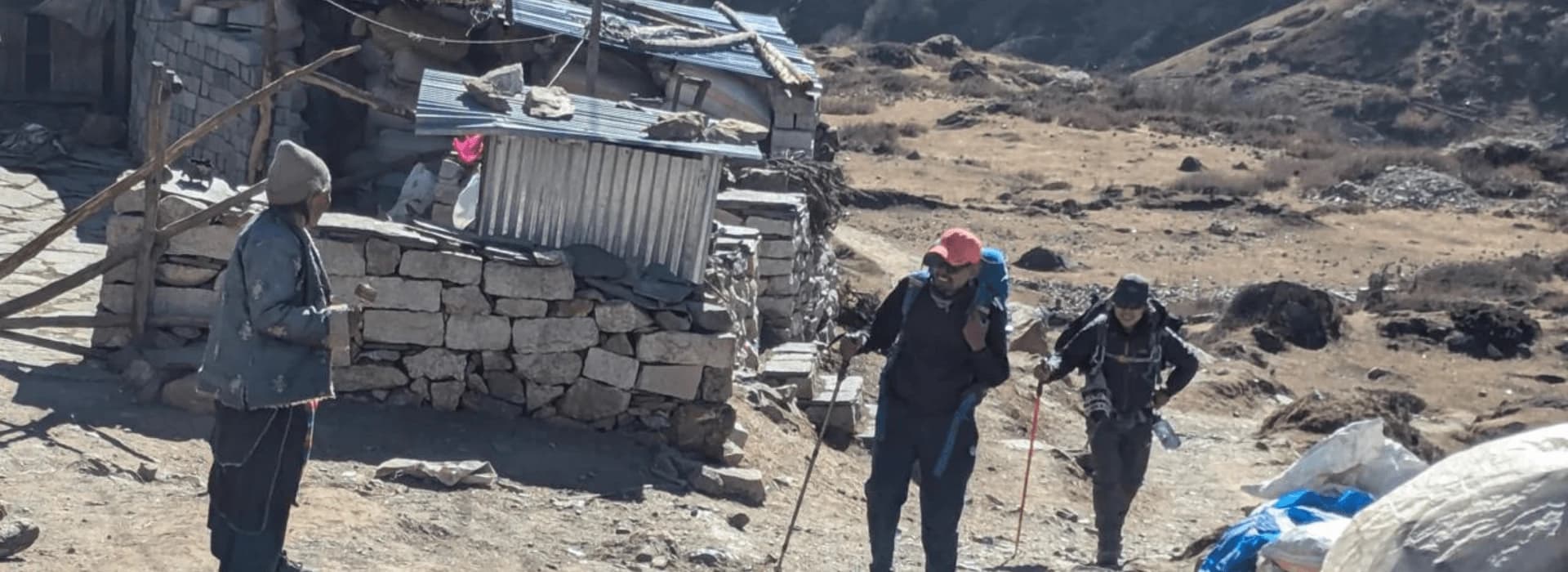
Manaslu Weather by Month: Visibility

Why Manaslu Weather Matters
When you plan to explore the Manaslu Region, you should be aware that it’s a high-altitude trekking area, and what’s certain is that the weather will play a crucial role in your trip. As you gain elevation, circumstances such as dropping temperatures and reducing oxygen levels are expected, making your journey challenging.
Therefore, learning about the weather will help you prepare for sudden conditions during the Manaslu Circuit Trek. You’ll need to do yourself a favour by packing the right gear according to the season to stay safe throughout the journey.
The weather in the region can change quickly over the course of a day. Even if you wake up to a clear morning, by day, it can turn into freezing wind, snowfall, or fog, especially in the upper section, like Larkya La (Larke Pass), the highest and main point of the trek at 5,106 m (16,752 ft).
Hence, it’s essential to plan accordingly. By doing this, you can avoid an unwanted situation anywhere along the trail. Safe adventure and spectacular mountain views are only possible when the weather is good. The risks of natural disasters (landslides, avalanches, snowstorms, and altitude-related issues) are lower in such conditions.
To enjoy the stunning panorama of Mt. Manaslu and other neighbouring peaks in the Mansiri Range, the weather must be in favour. That’s why it matters for a comfortable trip.
Manaslu Weather Overview By Season
Here, in this section, it’s explained in detail about the best time for the Manaslu Circuit Trek. There are four seasons in a year: winter, spring, monsoon, and autumn. Each consists of three months and has its own weather conditions.
Below is the table showing season-wise approximate temperatures and their weather conditions:
| Season | Months |
Approx. Day & Night Temp. In The Lower Section |
Approx. Day & Night Temp. In The Upper Section |
Conditions | Difficutly |
| Winter |
December, January, and February |
5°C to 10°C in the day & 0°C to 5°C at night. |
-5°C to 5°C in the day & -10 to -20°C at night. |
Frigid (especially in the higher-elevations), snowy, fewer crowds, challenging crossings. |
Challenging |
| Spring |
March, April, and May |
10°C to 20°C in the day & 5°C to 12°C at night. |
0°C to 10°C in the day & 0°C to -5°C at night. |
Mild temperatures, stable weather, clear skies, amazing mountain views. |
Moderate to Challenging |
| Monsoon |
June, July, and August |
15°C to 25°C in the day & 10°C to 17°C at night. |
5°C to 12°C in the day & 5°C to 0°C at night. |
Warm but humid, mostly cloudy skies, pouring at lower elevations, leech bites in grassy areas, high risk of natural disasters (landslides and avalanches). |
Extreme |
| Autumn |
September, October, & November |
10°C to 20°C in the day & 5°C to 10°C at night. |
-2°C to 10°C in the day & -5.°C to -10°C at night. |
Peak trekking season, clear visibility, cool temperatures. |
Moderate to Challenging |
According to the table above, the best time for the Manaslu Trek is during spring and autumn. Among these two seasons, autumn is considered the peak time for trekking. While winter and monsoon are recognised as the off-seasons for trekking due to their harsh weather, especially in rainy conditions. As a result, we highly suggest that you don’t plan your trek on the Manaslu Circuit during either of these seasons.
In winter, it's somehow okay if you’re an experienced hiker and want some extreme this time. But, in the rainy season, it isn’t even wise to plan this trek for experienced individuals.
Manaslu Weather By Month
Refer to the table below for month-wise weather in the Manaslu Region:
| Month | Average Temperature | Visibility Level | Trekking Condition | Good For Trekking? |
| January | Extreme Cold | Good | Freezing at night, snowfall is expected.. | No |
| February | Cold | Average | Cold but improves gradually at the end of the month. | Maybe |
| March |
Cold to mild |
Good | The ice and snow on the trails starts getting dry. | Yes |
| April | Mild | Very good | Ice and snow melts thoroughly, resulting in dry trails. | Yes |
| May | Mild | Good | Very little rainfall in the afternoon sometimes, but still stable weather. | Yes |
| June | Mild | Average | Start of the monsoon. | Maybe |
| July | Mild | Poor | The skies are mostly cloudy and heavy rainfall is expected, resulting in muddy and slippery trails. | No |
| August | Mild | Poor | Same as July. | No |
| September | Mild | Improving | Days are mostly clear with less rain. | Maybe |
| October | Cool | Excellent | The weather is stable, resulting in clear skies and best views. | Yes |
| November | Cool to cold | Very Good | Days are warm and dry, and nights are cold but manageable. | Yes |
| December | Cold | Good | Start of winter, snowfall at higher altitudes. | Maybe |
As per the table above, April in spring and October in autumn are perfect for trekking the Manaslu Circuit, as these two months have the most stable weather, clear skies, and dry trail, offering stunning mountain views.
Temperature In Manaslu By Month
The temperatures at night are certainly lower than in the day, causing cold while sleeping, mainly in the upper section of the Manaslu Trek. The risk of cold in the location near Larkya La, which is Dharmashala, is mostly high. The condition is frigid at night and in the early morning almost all the time of year.
Here’s the table below presenting the temperatures in the Manaslu Region by month:
| Month | Average Day Temperature | Average Night Temperature | Cold Feeling | Cold Risk Near Larkya La |
| January | 5°C to -10°C | -10°C to -15°C | Very cold | Very high |
| February | 6°C to 12°C | -8°C to -12°C | Very cold | Very high |
| March | 10°C to 15°C | -5°C to -8°C | Cold | High |
| April | 12°C to 18°C | -2°C to -5°C | Cool | Medium |
| May | 15°C to 22°C | 2°C to 6°C | Cool | Medium |
| June | 16°C to 23°C | 6°C to 10°C | Cool | Low |
| July | 18°C to 25°C | 8°C to 12°C | Mild | Low |
| August | 17°C to 24°C | 8°C to 12°C | Mild | Low |
| September | 15°C to 22°C | 5°C to 8°C | Cool | Medium |
| October | 12°C to 18°C | 0°C to -5°C | Cold | High |
| November | 8°C to 14°C | -5°C to -10°C | Very cold | Very high |
| December | 5°C to 10°C | -10°C to -15°C | Very cold |
Very high |
Best Time To Trek Manaslu Based On Weather
The best times for the Manaslu Trek are in April during spring and October during autumn. During these months, the weather is stable, neither too cold nor rainy. They offer you the real beauty of nature as a reward. The Manaslu Circuit Tsum Valley Trek is also best experienced in these same seasons, when both mountain views and high passes are at their clearest. March and May, during spring and September and November, during autumn, are also good months, offering the best views as April and October do. However, March is just the beginning of spring. Therefore, winter snow and ice on the trail aren’t completely melted.
May is the pre-monsoon time. So, after the middle of the month, a little rainfall mostly occurs in the afternoon. September still experiences rainfall, not as frequently as during the monsoon, but it’s expected. While November is near winter. Thus, the weather is freezing at night and early in the morning.
The months to avoid for trekking are December, January, and February during winter and June, July, and August during the monsoon. These months have harsh weather conditions, mainly in January, July, and August. In January, the weather is extremely cold at higher elevations and snowfall is certain. On the other hand, July and August are the peak monsoon months. Natural disasters, such as landslides and floods, can occur at any time, and in grassy areas, leech bites can cause an itchy wound.
Refer to the table below to understand the best time to trek Manaslu based on the weather:
| Category | Months | Weather Condition | Visibility | Trek Experience |
| Best Months | April and October | Stable and dry | Perfect | Excellent |
| Good Months | March, May, September, and November | Mostly stable | Good | Good with proper care |
| Avoid Months | January, July, and August | Heavy snowfall and rainfall, harsh weather | Poor | Not recommended |
For a better experience, plan to trek the Manaslu Circuit in April and October. January, July, and August are the months to avoid thoroughly. Even if you’re an experienced hiker, we don’t recommend these months.
Worst Time To Trek Manaslu (Weather Risks)
The winter and monsoon are considered the off-season for trekking. The weather conditions are typically unfavourable in both seasons, making the Manaslu Trek even more challenging. During winter, snowfall occurs at higher elevations, especially in the Larke Passand its nearby villages. The area experiences frigid temperatures. Snow and ice on the trail make it slippery.
The way to the high pass can be blocked. Also, cold weather can decrease your sense of thirst, leading to dehydration and increasing the risk of altitude sickness later. During the rainy season, the weather is mostly unstable. The skies are cloudy most of the time, which makes the mountain views poor. Heavy rain in the lower section is for sure, making the route slippery and muddy.
The chance of landslides and floods is also high. Additionally, leech bites are common in the grassy areas, causing an itchy wound. Comparing them, the monsoon is the harshest season. Therefore, we never suggest anyone plan to trek the Manaslu Circuit during the rainy season.
Weather Tips For Manaslu Trekking
Here are the basic weather tips for trekking the Manaslu Circuit:
Check The Weather Forecast
Check the weather forecast for the dates of your journey when planning, and also stay updated with it every day, even when trekking during spring and autumn, because the weather isn’t certain in Nepal’s Himalayas.
Pack Enough Layers Of Clothing
At high altitudes, the weather is cold in every season, particularly at night and in the early morning. For that reason, pack enough warm clothes, such as a down jacket (rated below at least -15°C), a high-neck sweater, a thermocoat, a woollen hat, and woollen socks, along with a regular t-shirt and trousers for the night.
Good layering becomes even more important on long and mixed-altitude routes like the Manaslu With Annapurna Circuit Trek, where weather conditions change quickly between deep valleys and high mountain passes. In such treks, proper clothing helps you stay warm, comfortable, and safe throughout the journey.
Start Hike Early
During spring, days are longer, giving you enough time to hike and reach your overnight destination. However, during autumn, days are shorter, especially in November, as winter is near. So, commencing your daily hike a bit early during the journey would be the smart move to reach another village before dark, safely.
Prepare For Sudden Change
As discussed above, the weather in the Himalayas is unpredictable. It can change at any time. Even during spring and autumn, you can experience heavy rainfall, as well as snowfall. So, bring a raincoat to protect yourself from getting wet as part of a preparation to trek the Manaslu Circuit. In addition, carry boot gaiters to cover your shoes and crampons to avoid slipping while descending from the Larkya La Pass, as the trail can be covered with ice and snow.
Choose The Right Month For Manaslu Trek
The weather always plays a vital role in deciding your trekking experience. Therefore, understanding the best time for trekking the Manaslu Circuit is important. Spring and autumn are the peak trekking seasons. Always plan your trek for either of these times of year by checking the weather forecast for your travel dates. Doing so can help you avoid some unfortunate circumstances, especially when planning Manaslu Base Camp Trekking With Larkya la Pass.

Need Help? Call Us.+977 9851230809