EBC Vs ABC Trek: Quick Comparison Table
Both the EBC Trek and ABC Trek are among the best trekking experiences in Nepal, but they feel completely different once you’re on the trail. EBC is longer, higher, and more challenging, while ABC is shorter, easier, and more beginner-friendly. If you’re trying to decide quickly, this side-by-side comparison will make things much easier.
| Feature |
Everest Base Camp (EBC)
|
Annapurna Base Camp (ABC) |
| Duration |
14 days
|
7 to 12 days
|
| Cost (Standard) |
$1,300 to $2,000 |
$700 to $1,200 |
| Max Altitude |
Base Camp (5,364 m/17,598 ft), Kala Patthar (5,545 m/18,192 ft) |
Base Camp (4,130 m/13,550 ft) |
| Difficulty |
Challenging: High altitude, rocky terrain |
Moderate: Steep stone steps, lower altitude |
| Accommodation |
Basic teahouses (cold at high elevations) |
Standard teahouses (generally more comfortable) |
| Crowd Level |
Very high during peak seasons |
Moderate to high |
| Best Season |
Spring (March to May) & autumn (September to November) |
Spring (March to May) & autumn (September to November); also, possible in winter (especially in early December and late February) |
| Best Traveler Type |
Achievement seekers, experienced hikers |
First-time trekkers, time-constrained travelers |
Key Insights
- Financial Impact: ABC remains the more budget-friendly trek because it avoids expensive Lukla flights and usually takes fewer trekking days.
- Altitude Risk: EBC has a significantly higher altitude risk due to elevations above 5,000 m (16,404ft).
- Logistics & Accessibility: ABC is easier to access by road from Pokhara, while EBC requires a flight to Lukla.
- The View Factor: EBC offers the experience of the iconic Everest Region, while ABC gives more landscape variety with forests, villages, rivers, and panoramic mountain views.
In short, if you want the legendary Everest achievement and don’t mind the extra challenge, EBC trek is the better fit. Nevertheless, if you want a shorter, more affordable, and beginner-friendly Himalayan adventure, ABC trek is usually the smarter choice.
Everest Base Camp Vs Annapurna Base Camp
When planning a trek in Nepal, most travelers eventually end up comparing EBC and ABC. Both are iconic Himalayan adventures, both offer incredible mountain scenery, and both are among the most popular trekking routes in the country. But despite the similarities, the experience on each trail feels completely different.
The Everest Trek is known for its higher altitude, tougher terrain, and experience of the legendary Khumbu Region. ABC, on the other hand, is shorter, more accessible, and generally considered better for beginners or travelers with limited time. This comparison of the base camp trek in Nepal mainly comes down to difficulty, budget, altitude, scenery, and overall trekking style.
Choosing the right trek matters because both routes require a big investment of time, money, and physical effort. Some trekkers want the challenge and prestige of Everest, while others prefer a more comfortable and diverse trekking experience in the Annapurna Region. Picking the trip that matches your fitness level, travel style, and expectations can completely change your overall experience in the Himalayas.
This comparison guide is here to help you make that decision more easily. Instead of saying one trek is “better” than the other, this article breaks down the real differences between EBC and ABC so you can choose the trek that fits you best.
Trek Overview: Route, Distance, & Duration Comparison
The biggest difference between the EBC Trek and the ABC Trek starts with the route itself. EBC takes you into the remote Khumbu Region after a flight to Lukla, while ABC begins with an easier road journey from Pokhara and follows forested mountain trails through traditional villages. Both treks are stunning, but the logistics, distance, and altitude feel very different once you start walking.
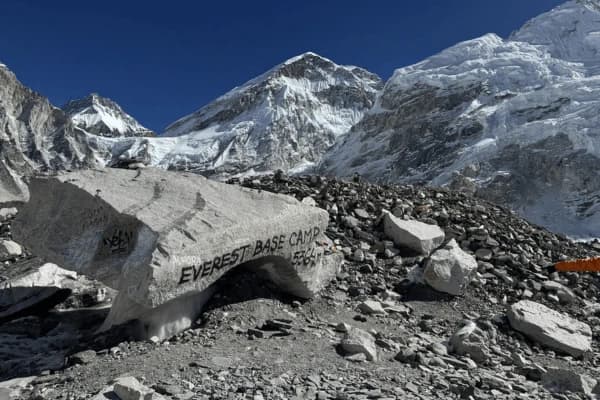
The Everest Trek route follows Lukla, Namche Bazaar, Tengboche, Dingboche, Lobuche, and finally the base camp. Most itineraries take around 14 days because trekkers need acclimatization days at higher elevations. The total trekking distance is roughly 130 km (80 mi) round trip, with the highest point, EBC (5,364 m/17,598 ft) and Kala Patthar (5,545 m /18192 ft).
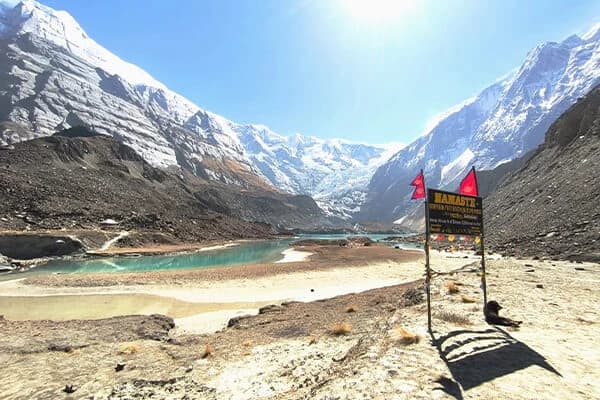
The ABC Trek route in Nepal usually starts from Nayapul, Ghandruk, or Jhinu Danda (Hill) after driving from Pokhara. The trail passes through bamboo forests, stone staircases, rivers, and Gurung villages before reaching the base camp.
If you want a more detailed breakdown of the trail, this Annapurna Base Camp Trek guide explains the route well. ABC generally takes 7 to 12 days and covers around 70 to 110 km (43 to 68 mi), depending on the itinerary you choose. The maximum altitude is 4,130 m (13,550 ft) at the base camp.
In simple terms, EBC is longer, higher, and more demanding in terms of logistics because of the Lukla flight and altitude gain. ABC is shorter, easier to access, and usually a better fit for trekkers with limited time or less high-altitude experience.
Cost Comparison: EBC Vs ABC Trek Cost
One of the biggest differences between the EBC Trek and the ABC Trek is the overall cost. Both treks are affordable compared to many international mountain adventures, but EBC is noticeably more expensive due to Lukla flights, higher-altitude logistics, and durations. ABC, on the other hand, is generally easier on the budget and simpler to organize.
For permits, both treks cost around USD 40 to 60 (NPR 5,500 to 8,000), depending on the permits required. The major price difference comes from transportation. EBC usually requires a round-trip Lukla flight costing around USD 350 to 450 (NPR 47,000 to 61,000), while the trailhead of ABC can be reached by vehicle from Pokhara for a much lower price.
Food and accommodation are also more expensive on the Everest trail because supplies must be carried to higher elevations. On average, trekkers spend USD 25 to 40 (NPR 3,400 to 5,400) per day for meals and teahouses on the EBC Trek, while on the ABC Trek it usually costs USD 20 to 30 (NPR 2,700 to 4,000) per day. Guide costs for both treks are similar, usually around USD 25 to 35 (NPR 3,400 to 4,700) per day, while porters typically cost USD 18 to 25 (NPR 2,400 to 3,400) per day.
In total, a standard EBC Trek usually costs around USD 1,300 to 2,000 (approximately NPR 175,000 to 270,000). ABC is cheaper, with most trekkers spending around USD 700 to 1,200 (approximately NPR 95,000 to 162,000).
There are also a few hidden costs that trekkers often forget to include, such as charging electronics, hot showers, Wi-Fi, snacks, gear rental, travel insurance, and extra hotel nights caused by Lukla flight delays. These small expenses can easily add a few hundred dollars to the total expenses of the Everest Trek.
So, is EBC worth the higher price? For many trekkers, yes, as the Khumbu Region offers an unforgettable experience, higher altitude adventure, and a stronger sense of achievement. But in terms of pure value for money, ABC often wins because it delivers incredible Himalayan scenery, easier logistics, and a shorter trek at a much lower overall cost.
Difficulty Comparison: Which Trek Is Harder
Regarding the difficulty level of these treks, EBC and ABC, EBC is more challenging. The main reason behind it is elevation. On the Everest Trek, you reach up to 5,000 m (16,404.2 ft), which is the base camp and the viewpoint, Kala Patthar, while the Annapurna Base Camp is lower at 4130 m (13550 ft).
You hike 6 to 8 hours daily in mostly rocky terrain during the EBC Trek, especially in the upper section. On the other hand, you walk a bit less, 5 to 7 hours daily, on steep stone staircases and constant up and down sections through the forest during the ABC Trek. Although walking continuously for several hours on an uphill-downhill trail, you may get frustrated and spent, it's still not as extreme as hiking in a rocky landscape.
Once you reach 2,500 m (8,202.1 ft), just know that you can get ill at any time if you don’t have control over your pace, and EBC is already at a higher altitude than ABC. Therefore, the risk of altitude sickness on the Everest Base Camp Trek is higher.
To prevent the symptoms of acute mountain sickness (AMS) during the trek to EBC, most itineraries include two acclimatization days in different places: Namche (3,440 m/11,285 ft) and Dingboche (4,320 m/14,173.23 ft). If you want to learn about the challenges in detail, you may check our blog on EBC Trek difficulty.
If you’re a first-timer and want to explore the Himalaya, plan to trek to Annapurna Base Camp, as it’s easier, shorter, and lower in altitude. You can also do the Everest Trek, but it requires better preparation and endurance.
EBC Vs ABC Pros And Cons Comparison
Both treks are amazing, but they suit different kinds of travelers. In this best comparison of Himalayan treks, Everest Base Camp feels more like a big personal achievement, while Annapurna Base Camp offers a more relaxed and balanced trekking experience. Here’s a simple breakdown to help you decide.
EBC Pros
- You get the iconic Everest experience right in the heart of the Khumbu region.
- Higher altitude makes the trek feel more adventurous and rewarding.
- Strong Sherpa culture, monasteries, and traditional mountain villages.
- Dramatic glacier and Himalayan views throughout the trail.
- Perfect for trekkers looking for a serious challenge.
If you want to better understand the route and itinerary, this Everest Base Camp Trek package provides a good overview of the journey.
EBC Cons
- More expensive because of Lukla flights and longer trekking days.
- Higher altitude means a greater risk of altitude sickness.
- Flights to Lukla are weather-dependent and sometimes delayed.
- Colder and physically tougher overall.
ABC Pros
- More budget-friendly for most trekkers.
- Easy road access from Pokhara.
- Lower altitude makes it more beginner-friendly.
- Beautiful mix of forests, rivers, villages, and mountain scenery.
- A shorter itinerary works well for people with limited time.
ABC Cons
- Doesn’t feel as extreme or high-altitude as EBC.
- Less global recognition compared to the Everest Region.
- Long stone stair sections can feel tiring during descents.
- Popular seasons can still get crowded.
When considering the advantages and disadvantages of EBC and ABC Treks in Nepal, the final choice depends on the kind of trekking experience you want. If you want the classic Everest achievement, EBC stands out. However, if you want a shorter, more affordable, and beginner-friendly Himalayan journey, ABC is often the more comfortable choice.
Scenery, Experience, & Crowd Comparison
Whichever trek you choose to do in Nepal, either EBC or ABC, one thing is sure: you’ll have the best experience of Himalayan trekking, but in a different way. It varies depending on you, what kind of adventure you prefer. Apart from mountain views, the high-altitude trekking is also about learning local culture along the way, and both regions have their own landscapes and receive different numbers of travellers.
Scenery
On the EBC Trek, you mostly have rocky terrain at higher elevations of the trail. It isn’t only snow-capped giants you witness at the base camp, but also centuries-old glaciers. It’s a great opportunity to see such glaciers while trekking in the Everest Region, which you don’t experience on the ABC Trek.
The landscapes of the Annapurna Region are completely different from the Khumbu Region. It’s where you find dense rhododendron forests in Nepal. You don’t get to see glaciers on ABC; nonetheless, you enjoy mostly stunning green landscapes along the route.
Culture
Both the Khumbu and Annapurna Regions are predominantly inhabited by different ethnic groups: Sherpa and Gurung. They don’t share the same language, customs, culture, and traditions. Whatever their local lifestyle, they’re both very friendly in nature and welcoming. These two groups are famous when it comes to trekking in the Himalayas.
Crowd Levels
Both EBC and ABC are the most popular destinations in Nepal. Hence, in terms of crowd levels, they receive a huge number of tourists during the peak seasons, especially in autumn. Comparing the two, it’s EBC that experiences more crowds, causing the lodges along the route to fill up quickly. Nevertheless, it doesn’t mean the ABC trail is quieter. The same thing also happens there, just a bit less than the EBC trail.
Accommodation, Food, & Comfort Comparison
Both treks follow the classic teahouse trekking style in Nepal, where you stay in small mountain lodges run by local families. The rooms are usually simple, with twin beds, blankets, and shared dining areas. You shouldn’t expect luxury on either trek, but the overall comfort level is a bit different between the two routes.
Teahouse accommodation on the EBC Trek becomes more basic as you gain altitude. Higher villages like Lobuche and Gorakshep are colder, rooms feel less comfortable, and facilities become more limited because everything has to be transported into the Everest Region. Whereas lodge options on the ABC Trek are generally slightly more comfortable because the route stays lower and is easier to access. Rooms are still simple, but teahouses often feel warmer and less harsh overall.
Food on both treks is surprisingly decent. Most teahouses serve dal bhat, noodles, fried rice, soups, pasta, potatoes, pancakes, eggs, tea, and coffee. The menu variety is usually larger on the Everest trail, but prices increase significantly at higher elevations. ABC tends to be cheaper overall when it comes to meals and snacks.
Toilets, showers, WiFi, and charging are available on both routes, but the quality changes with altitude. Lower villages often have better WiFi and hot showers, while the tea houses on both trails may charge extra for using these facilities. The comfort level on the Everest Trek gradually decreases as the air gets colder and thinner near base camp. ABC also becomes more basic near the top, but overall, it usually feels slightly easier and more comfortable for first-time trekkers.
Safety & Altitude Risk Comparison
Altitude sickness is always a major concern when trekking. From 2,500 m (8,202.1 ft), it can develop in your body at any time without any prior notice.
Both treks are high in elevation, but the risk of altitude sickness is higher on EBC than on ABC, as EBC is more elevated and has a longer duration. The symptoms of AMS, such as headache (most common), fatigue, trouble sleeping, and lack of appetite, shouldn’t be ignored if you feel any of them happening to you during the journey. You can learn about its symptoms and prevention methods in more detail in our blog, Altitude Sickness in Trekking.
Trails on both treks aren’t technical. You don’t need any advanced climbing training to enjoy these journeys. However, the route to EBC is rockier, unlike the grassy and forested path to ABC. Hence, ABC Trek is more suitable for first-time hikers in terms of safety when trekking in Nepal.
The good news is that helicopter rescue is available in both the Everest and Annapurna Regions, but the weather can cause flight delays in emergencies. Therefore, plan for trekking only in spring or autumn, as they’re the safest seasons.
Best Time & Weather Comparison
The weather conditions in the Himalaya can completely change your trekking experience. For both EBC and ABC, spring (March to May) and autumn (September to November) are the best seasons because the skies are usually clearer, temperatures are more stable, and mountain visibility is at its best.
The best time to trek to EBC is usually autumn if you want crystal-clear Everest views and dry trails. Spring is also popular because the weather is stable and the region feels more active with Everest expeditions. Since the base camp reaches much higher altitude, temperatures near Gorakshep and Kala Patthar can easily drop below freezing at night.
The weather in ABC is generally milder because it stays lower. Days are often warmer, forests stay green, and the trail to the base camp feels less harsh overall. Autumn gives the clearest mountain panoramas, while spring adds blooming rhododendron forests along the route.
Monsoon season (June to August) brings rain, clouds, slippery trails, and reduced visibility on both routes. Winter treks are still possible, but colder temperatures and snowfall become more challenging, especially in the Khumbu Region. In simple terms, EBC experiences more extreme weather conditions, while ABC usually feels slightly warmer and more comfortable for most trekkers.
Permits & Logistics Comparison
The planning side of these two treks feels quite different. Everest Base Camp requires a bit more coordination due to flight schedules and higher-altitude logistics, while Annapurna Base Camp is simpler and easier to organize overall. For EBC Trek, you need Sagarmatha National Park, Khumbu Pasang Lhamu Rural Municipality. The EBC permit system is fairly straightforward, but the bigger challenge is usually the Lukla flight.
During the busy spring and autumn seasons, many flights operate from Ramechhap rather than Kathmandu, which means an extra early-morning drive before the flight to Lukla. The update for the Lukla flight is still common during the peak trekking months.
ABC is much easier from a logistics point of view. Most trekkers simply drive from Pokhara to trailheads like Jhinu Danda, Nayapul, or Ghandruk and start trekking from there. The main permit required is the Annapurna Conservation Area Permit (ACAP), and the other is the TIMS card.
In simple terms, ABC Trek is easier and more flexible for independent travelers. EBC Trek, on the other hand, needs more planning because flights, weather delays, and mountain logistics can directly affect the itinerary.
Which Trek Wins: Category-Wise Comparison
Choosing between EBC Trek and ABC Trek gets much easier when you compare them category by category. One trek isn’t automatically “better” than the other; it really depends on your budget, fitness level, travel style, and what kind of Himalayan experience you want. This guide helps you make quick decisions for trekking in Nepal and breaks down the main differences in the simplest way possible.
| Category |
Winner |
Reason |
| Budget |
ABC |
Cheaper logistics, no Lukla flight needed |
| Adventure |
EBC |
Higher altitude and more demanding challenge |
| Scenery |
Depends |
Everest glaciers vs Annapurna forests and mountain amphitheater |
| Comfort |
ABC |
Lower altitude and generally easier trail conditions |
| Iconic Experience |
EBC |
The stunning panoramas of Mt. Everest and nearby peaks. |
In this comparison of the best treks in Nepal, EBC stands out for adventure, altitude, and the once-in-a-lifetime Everest experience. ABC, nevertheless, wins for affordability, accessibility, and overall comfort.
If your dream is to stand near the world’s highest mountain, the EBC Trek is hard to beat. But if you want a shorter, more balanced Himalayan adventure with easier logistics, the ABC Trek is often the more practical choice.
Which Trek Is Better For You (Final Decision Guide)
At the end of the day, there’s no single “best” trek here; it really depends on what kind of experience you want in the Himalayas. Some trekkers want the Everest dream and high-altitude challenge, while others prefer a shorter and more comfortable journey with diverse scenery. If you’re still wondering, “Which trek should I choose in Nepal?”, this quick guide makes the decision much easier.
- Best for beginners: ABC Trek is shorter, lower in altitude, and easier to manage for first-time trekkers.
- Best for adventure seekers: EBC Trek offers a bigger physical challenge, a higher altitude, and a stronger sense of achievement.
- Best for photographers: It depends. EBC Trek gives dramatic glaciers, huge mountain walls, and iconic Everest views, while ABC Trek offers greener landscapes, forests, villages, and a beautiful mountain amphitheater.
- Best first trek in Nepal: For most trekkers, ABC is the better starting point because the logistics are simpler and the altitude is less demanding.
- Best bucket-list trek: If standing near the world’s highest peak has always been your dream, EBC is hard to replace.
The simplest advice for trekking in Nepal is this: choose ABC for comfort, accessibility, and a balanced trekking experience. Choose EBC if you want the legendary Everest adventure and don’t mind the extra challenge, altitude, and cost.
Final Verdict
Honestly, you cannot really go wrong with either trek. It just depends on what kind of experience you want in the mountains. If you want a bigger challenge, a higher altitude, and the dream of standing near Mount Everest, then EBC will probably feel more rewarding. Nevertheless, if you want a shorter, more comfortable, and budget-friendly trek with beautiful landscapes, ABC is often the better fit.
In this Everest vs Annapurna final comparison, EBC Trek feels more like a once-in-a-lifetime achievement, while ABC Trek feels more relaxed, balanced, and beginner-friendly. One is about the iconic Everest adventure, and the other is about enjoying the Himalayas with fewer challenges and easier logistics.
If you still have questions regarding trekking in Nepal and can’t decide which route fits you better, you can always contact us for trekking advice, personalized recommendations, itinerary help, and support.
FAQs
Is Everest Base Camp harder than Annapurna Base Camp?
Yes. EBC is tougher because of the higher altitude, colder weather, and longer trekking days.
Which trek is better for beginners?
ABC is usually the better choice for first-time trekkers because the route is shorter and the altitude is lower.
Which trek costs more?
EBC is more expensive mainly because of Lukla flights and higher-altitude expenses.
Can beginners do Everest Base Camp Trek?
Yes, but good preparation, slow pacing, and acclimatization are very important.
Which trek has better scenery?
It depends on what you enjoy more. EBC has glaciers and dramatic Everest views, while ABC offers forests, rivers, villages, and a beautiful mountain sanctuary feel.