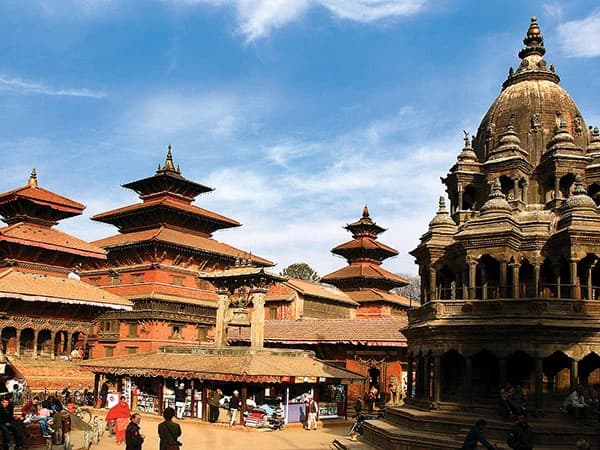
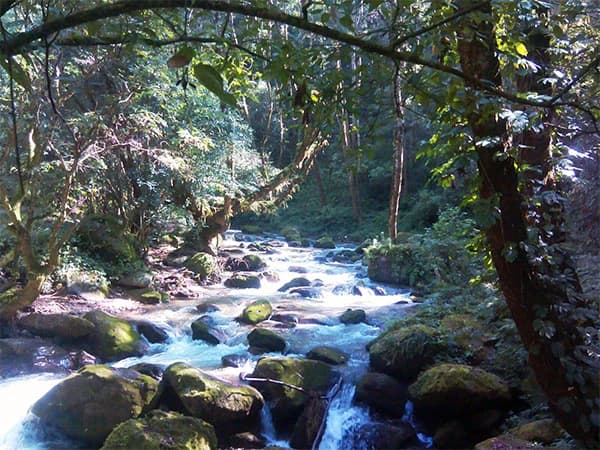
February 18, 2024read more +
Great experience with Bishal
It was an incredible trek. Thank you Bishal for being my guide, teaching your culture and your place. 100% recommended.
Santi,
Australia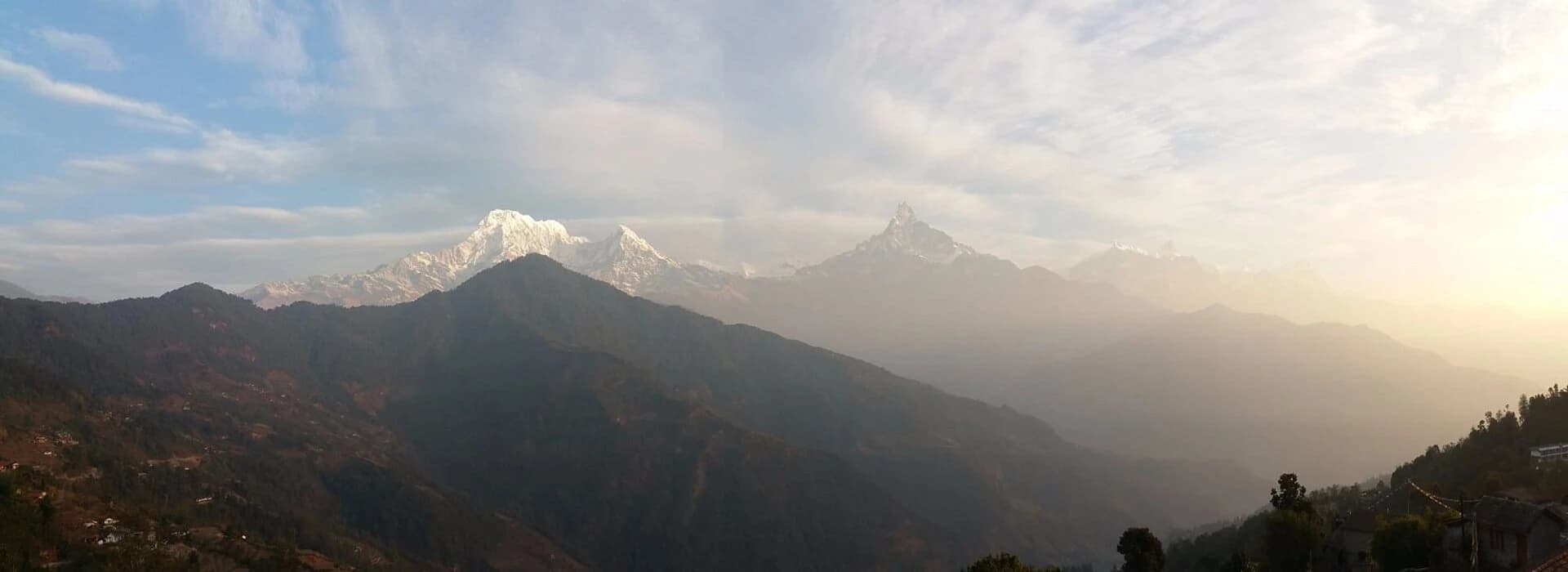
The Ghorepani Poon Hill Trek is a classic 7-day, easy-to-moderate journey through Nepal's stunning Annapurna Conservation Area. Starting and ending in Pokhara, this beginner-friendly trek peaks at a max altitude of 3,210 m, leading adventurers to its ultimate best viewpoint: the Poon Hill Sunrise View. The absolute main highlight of the entire trek is witnessing the spectacular, panoramic Himalayan sunrise over the Annapurna and Dhaulagiri ranges, making it the ultimate short trek for stunning alpine views without extreme high-altitude challenges.
One of the best short, ideal treks throughout the year in the Himalayas is the 7-day Ghorepani Poon Hill Trek, starting and ending in Kathmandu. Located in the Annapurna region, this excursion offers Nepal’s ultimate ethereal Himalayan beauty and unspoiled native culture with a maximum altitude of 3,210 m (10,530 ft) at the Poon Hill summit. From trail experience, this journey is famous in Nepal tourism as a premier beginner trekking route because it provides low-altitude safety alongside immense visual rewards.
For those looking for shorter alternatives, options like the Ghorepani Poon Hill Trek - 4 Days and 3 Days Ghorepani Poon Hill Trek also provide condensed yet rewarding experiences of the same region. This short trip to Ghorepani and Poon Hill takes you right into the heart of the Annapurna trekking region. What makes it different from other Annapurna treks is its unique trekking style: a seamless blend of cozy teahouse trekking Nepal, vibrant cultural immersion, and a scenic hike.
The Poon Hill viewpoint offers a brief overview of the overall area dominated by the tenth tallest mountain in the world, Mt. Annapurna (8,091 m), watched over by the seventh largest mountain giant, Dhaulagiri (8,167 m). For trekkers exploring extended adventures in the region, itineraries like the 7 Days Short Annapurna Base Camp Trek also offer deeper immersion into the Annapurna landscape.
Further, the 7-day Ghorepani Poon Hill expedition is suitable for all trekking aspirants, from youngsters to those considered aged for other upper Himalayan treks, and ranges from single individuals to families. Historically, Ghorepani evolved from a vital ancient horse-watering trade stop into a cultural hub of the indigenous Magar ethnic culture Nepal, known for their Gurkha military legacy and hospitable traditions. The average all-inclusive cost for this 7-day itinerary typically ranges from $355 to $590 per person depending on group size, accommodating both budgeted and luxurious experiences.
Standing out as one of the best voyages to see the Annapurna ranges, Dhaulagiri, Nilgiri, Tukuche Peak, Lamjung Himal, and Varaha Shikar, this journey is a fantastic opportunity to relish the enriching culture of the locals. Get your backpack ready to breathe in the crisp mountain air, take in the expansive panorama of Nepal, and get culturally enlightened on the famous Annapurna Sunrise Hike.
The cost of going on an odyssey to Ghorepani and Poon Hill showcases variation depending upon the duration of the trek, routes chosen, the necessity for a guide or porter, the mode of travel, and your own spending habits. Going on a camping tour can be quite costlier than the usual tea house hikes to Ghorepani and Poon Hill.
Nevertheless, at Ammonite Adventure, we can tailor the best 7-day joyride and trek to Ghorepani and Poon Hill based on your budget, which can alter if you make changes to the standard accommodation or meal services. Remember us for the best reasonable packages to trek Nepal, including Ghorepani and Poon Hill.
Your total trekking expenses Nepal outlays will scale downwards based on group configuration. Travelling during the peak spring (March–May) or autumn (September–November) seasons impacts baseline package rates, while winter and monsoon offer lower-tier costs:
| Cost Component | Budget Range (USD) |
| Trekking Guide | 25 – 30 per day (175 – 210 total) |
| Porter (Optional) | 15 – 20 per day (105 – 140 total) |
| Accommodation (Tea Houses) | 5 – 10 per night (35 – 70 total) |
| Meals (Breakfast, Lunch, Dinner) | 15 – 20 per day (105 – 140 total) |
| Permits (ACAP + TIMS) | 30 – 50 total |
| Transportation (Kathmandu–Pokhara–Nayapul) | 25 – 60 total |
| Miscellaneous (Water, WiFi, snacks, tips) | 30 – 50 total |
While all basic food and board are standardized, independent pocket expenses on the trail are inevitable. Make sure you carry sufficient physical Nepali Rupees (NPR), as there are no functional ATMs on the trail route:
Who can go for the 7-day Ghorepani and Poon Hill Trek? The 7-day Ghorepani and Poon Hill hike is categorised as a reasonably easy one that can be embarked on by anyone with a good physical fitness level, which is appropriate for all sorts of hikers, including novices who are relatively new to the rugged Himalayan terrain.
Specifically, it functions perfectly as an introduction for first-time trekking Nepal candidates; an adventurous route for active family trekking Himalayas groups; budget travellers seeking shorter alpine paths; and solo trekkers looking for a safe, highly social, and thoroughly popular trail network.
Furthermore, as long as the trekkers and travellers are in excellent health and possess nice stamina, people of all ages, including the elderly and adventurous-spirited people, can participate in the expeditions, and it is one of the best family trek alternative trekking routes to breathe the serene air of the Annapurna Himalayas without any age limitation. From trail experience, the route regularly accommodates:
However, it is important to note that everyone has different fitness levels, medical issues, and personal preferences, which need to be talked about and heard. To set realistic expectations for first-time Himalayan trekkers, basic fitness is required as the terrain presents distinct physical obstacles. Therefore, prior to beginning the Ghorepani and Poon Hill Treks, one must seek advice from medical professionals if they have any concerns. Your training preparation should anticipate these trail constants:
Otherwise, the Ghorepani and Poon Hill 7-day tour should not see acute mountain sickness or any other fatal situations while adequately hydrated, acclimated, and prepared well in advance. Financially, this route operates with a highly accessible low-to-mid-budget Himalayan trek framework. It is an exceptionally flexible destination perfectly suited for independent backpackers, cost-conscious group travellers, or premium private package trekkers looking to adjust lodging and transport tiers to fit their personal wallet constraints.
Ammonite Adventure is a reliable local trekking agency with lots of experience. Here's why you should go with us:
We are there for you! If you are looking for a personalized itinerary and date for this trek, then please don't hesitate to contact us.
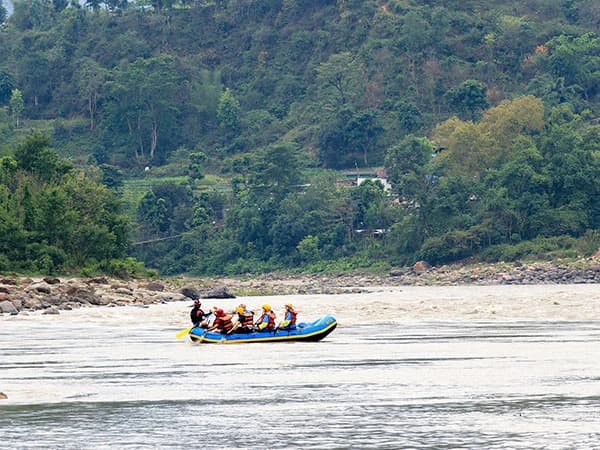
On the first day of the trek, you will leave your hotel in Kathmandu earlier, after breakfast, and travel to Pokhara along the bank of the Trishuli River, renowned for its adventurous rafting. If you wish to, then on the same day you can go for it as well, which will take about 3 hours.
Later on, the drive is along the Marshyangdi River while seeing the chain of mountains, including Ganesh Himal and Mt. Manaslu, beside Pokhara, which is a tourist haven and home to a plethora of natural and cultural landmarks alongside the backdrop of magnificent Mt. Annapurna, Dhaulagiri, and Machapuchare.
Depending on the traffic of the day, the ride can take you 7-8 hours to enjoy the scenic strolling in the evening on the lakeside of Phewa.
Following breakfast in Pokhara is a quick drive to Naya Pool, from where the trek officially commences via Birethanti, the common gateway to the Annapurna Base Camp, Annapurna Circuit, as well as the 7-Day Ghorepani and Poon Hill Treks.
The route first leads to Tikhedhunga with a gentle slope after passing the checkpoint of Birethanti, from where the destination of the day, Ulleri, is just a couple of hours away to spend overnight in the local lodge.
The trail of the day is comparatively gentler as you leave the woodlands from Ulleri, passing through beautiful terraced fields and pastures, stealing glimpses of Dhaulagiri (8,167m / 26,794 ft), Mt. Annapurna (8,091m / 26,545 ft), and others till you make a final accent to the village of Ghorepani by the Banthanti village.
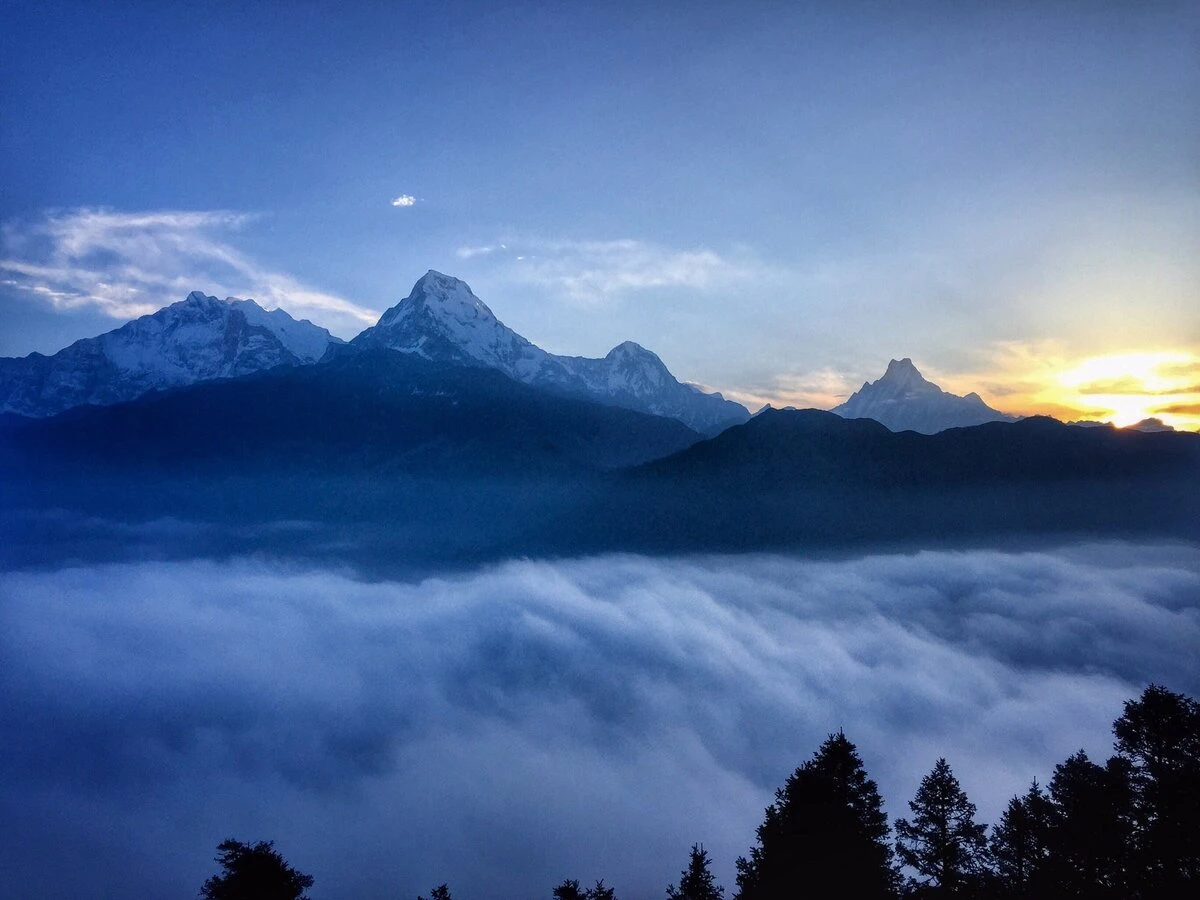
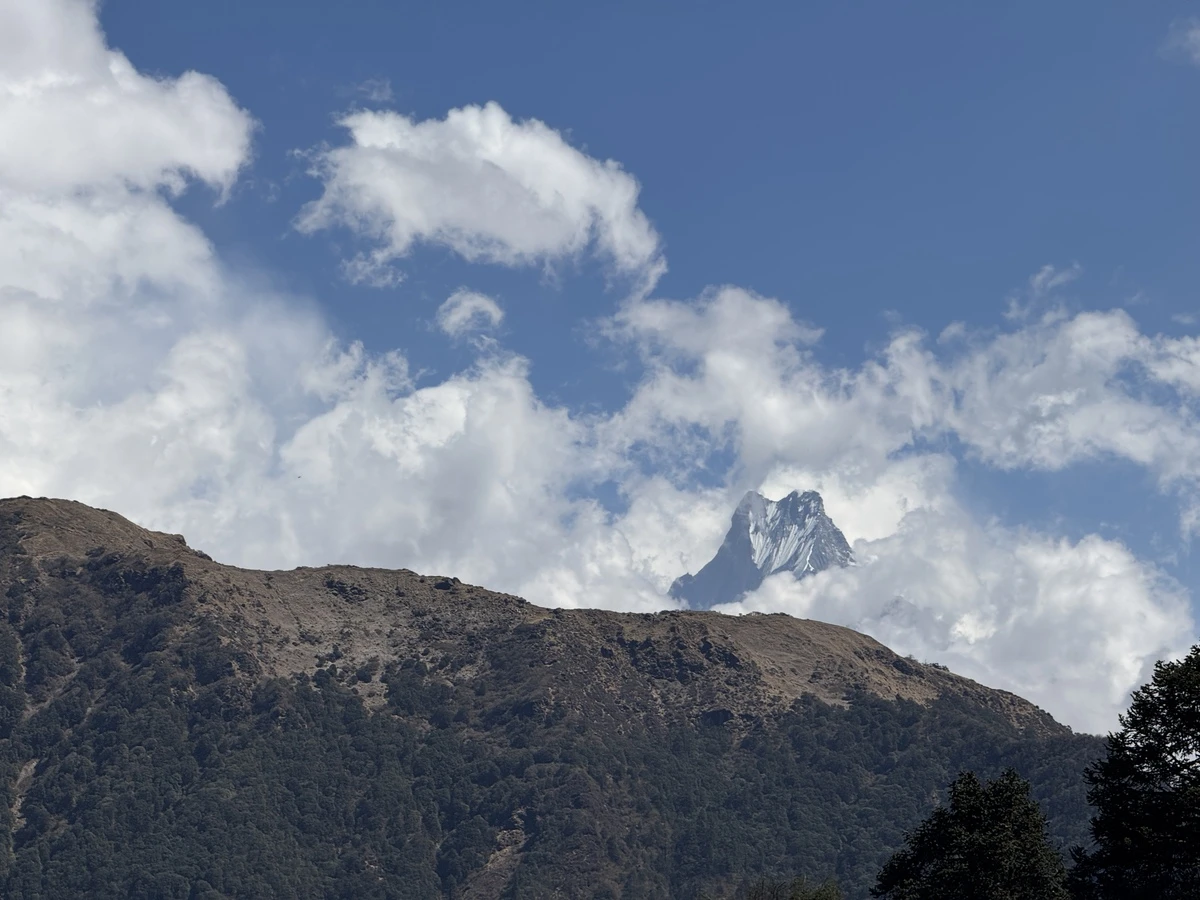
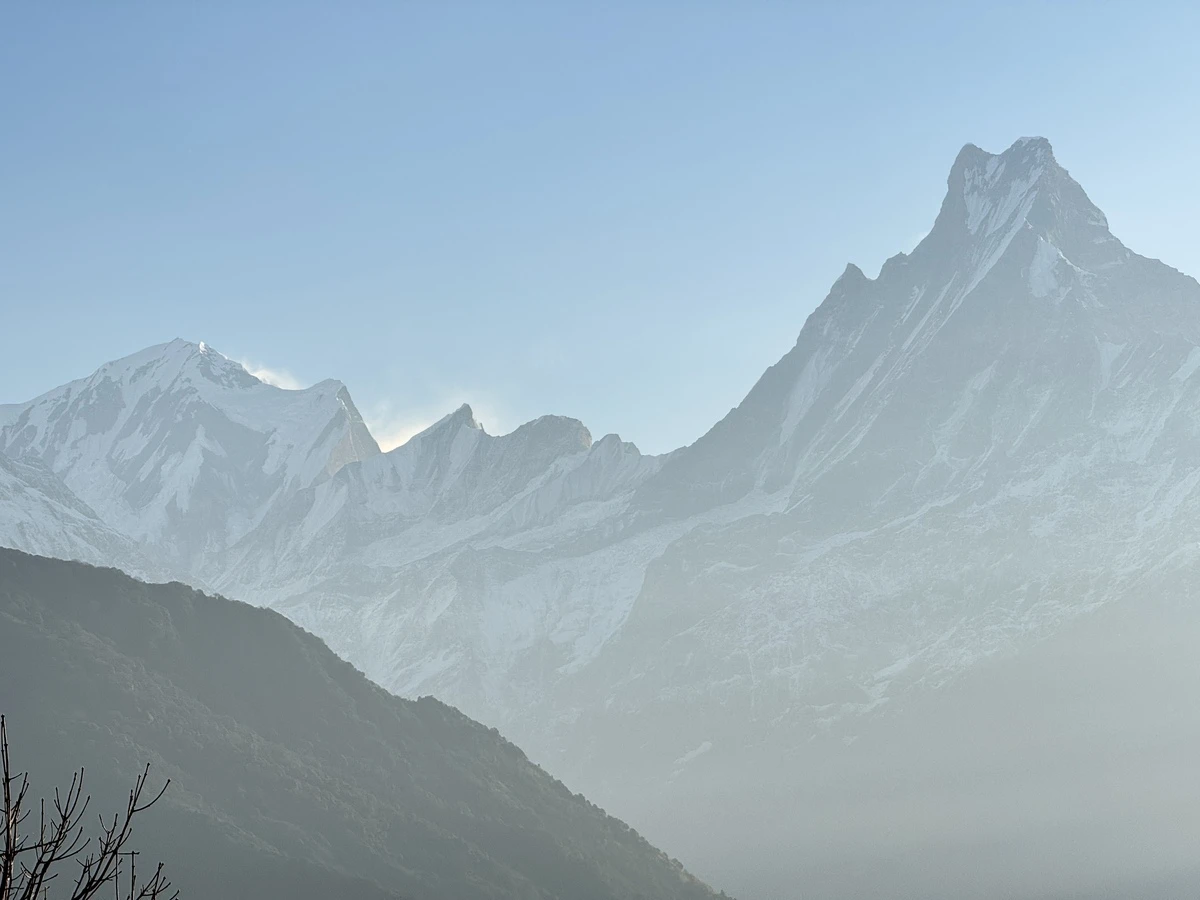
It is one of the major trek days when you will wake up before dawn to climb Poon Hill early in the morning to see the changing color of the sky from total blue to a mixture of bluish-yellow on the completely pale Himalayan giants such as Annapurna, Dhaulagiri, and Mt. Manaslu, along with the mesmerizing backdrop of Mt. Fishtail.
After spending the most thrilling moment of your life at the viewpoint, you will now return to Ghorepani and hit the trail, moving forward to another typical village of Tadapani through the alpine forest with a fluctuating ascend and descend until you make a stop at the local tea house for the night.
On the seventh day, you will head away from the picturesque village of Tadapani towards another sizable settlement of Ghandruk, entering Bhaisi Kharka, a tiny, simple town on a steep hill.
If you begin early in the morning, you will have already made it to the Ghandruk by lunchtime, where in the afternoon spare time you can roam around the exquisite and captivating village surrounded by top-notch views of several mountains and varying landscapes.
You should not miss visiting the Gurung Museum if you are fond of learning about the local way of life, especially that of the Gurung people.
After savoring the last morning meal in Ghandruk, you will hail a cab or a local car to travel back to Pokhara. It is your very last day in the Annapurna region, gazed at by the tenth and seventh-highest peaks in the world.
In the evening, the nightlife of Pokhara comes alive to enjoy your holiday to the fullest, circling around the Phewa Lake accompanied by the stunning Mt. Machapuchare, Mt. Annapurna, and Mt. Dhaulagir
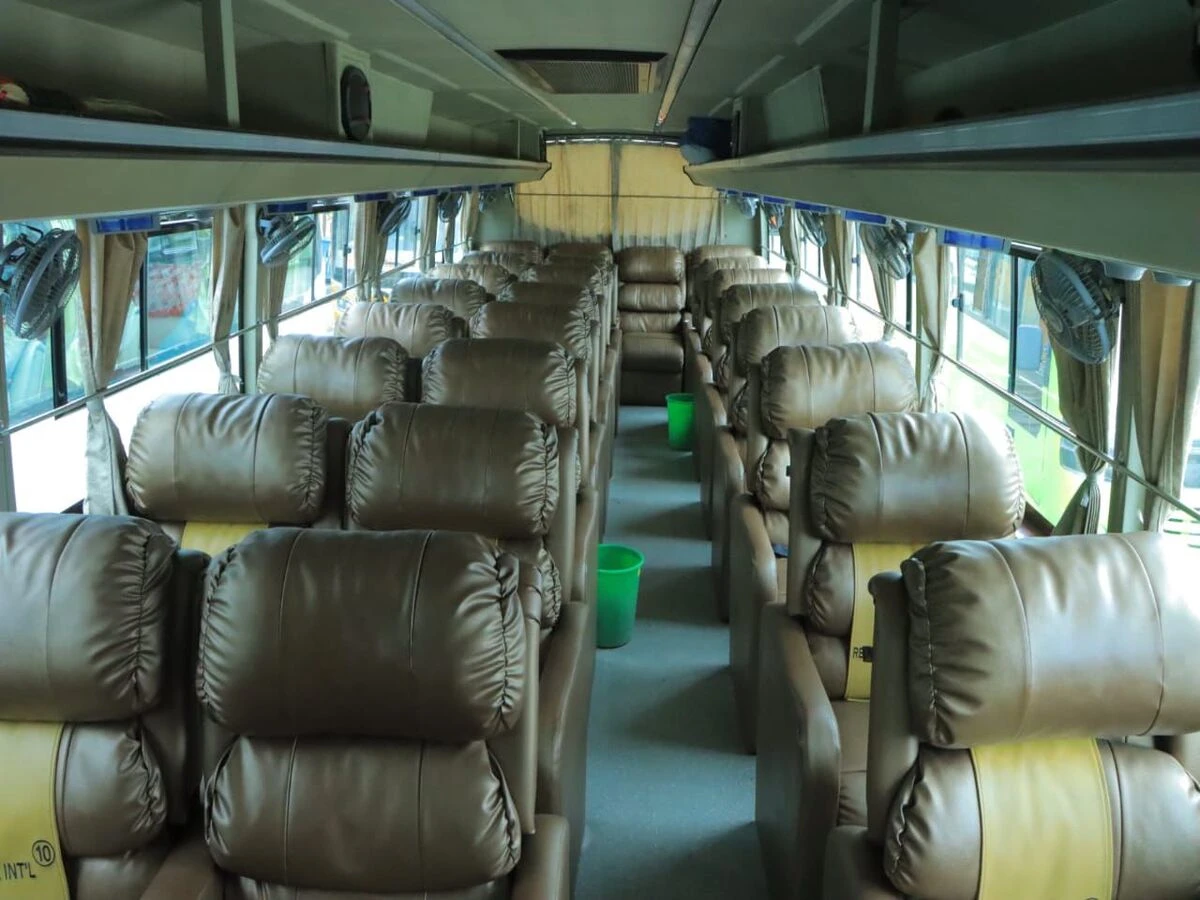
The time has come to bid farewell to the tourist haven of Pokhara city when you board a tourist bus back to Kathmandu, appreciating the astonishing vistas on approximately a 7-8-hour ride.
Congratulations! On successfully completing Ghorepani and Poon Hill with Ammonite Adventure, we hope to see you again soon. Thank you!


Make your Ghorepani Poon Hill Trekking experience even better with our additional services. These services are provided practically to save time or make your trip more comfortable, and they guarantee a perfect vacation.
Take a quick scenic flight from Kathmandu to Pokhara at just USD 106 per person. An hour-long flight that will save you time and will be equally mesmerizing. A convenient start to your trek as it will leave you with more time to soak in the beauty of the route.
Return to Kathmandu from Pokhara with the same scenic flight for USD 106 per person. A quick and picturesque way to complete your trek and head back to the capital.
For extra convenience, one can hire a personal porter at USD 140 per person. Have your luggage carried effortlessly to enable a full focus on the beautiful sceneries and the trek itself. Recommended for solo trekkers but open to groups as well.
We are there for you! If you are looking for a personalized itinerary and date for this trek, then please don't hesitate to contact us.
Understanding the Himalayan hiking map requires looking at both the horizontal distance and the vertical ascent. The route moves smoothly from Nepal's bustling central cities straight into the protected heart of the Himalayas.
This entire trekking trail Nepal runs through the globally protected Annapurna Conservation Area, the largest protected sanctuary in Nepal. Because the trail starts low and climbs quickly, you walk through distinct ecological zones in just a few days:
What makes the Ghorepani route villages world-famous is how cleanly the ethnic geography is split along the ridges:
The physical layout of the path is a classic example of traditional Nepali mountain engineering. Rather than walking on raw dirt paths or loose gravel scree, you will be hiking primarily on an engineered stone stair trail system.
The most famous section is the gruelling climb from Tikhedhunga to Ulleri, a steep staircase of over 3,000 individually laid stone steps. While physically demanding on the knees during descents and tough on your calves on the way up, this stone paving protects the trail from heavy erosion and provides a secure, non-slip footpath through the humid forest zones.
In addition to the exceptionally beautiful sunrise above the sky-towering mountain peaks, Poon Hill has otherworldly views of deep valleys, terraced slopes, and verdant hills where trekkers can take panoramic views of numerous notable Himalayan ranges, such as:
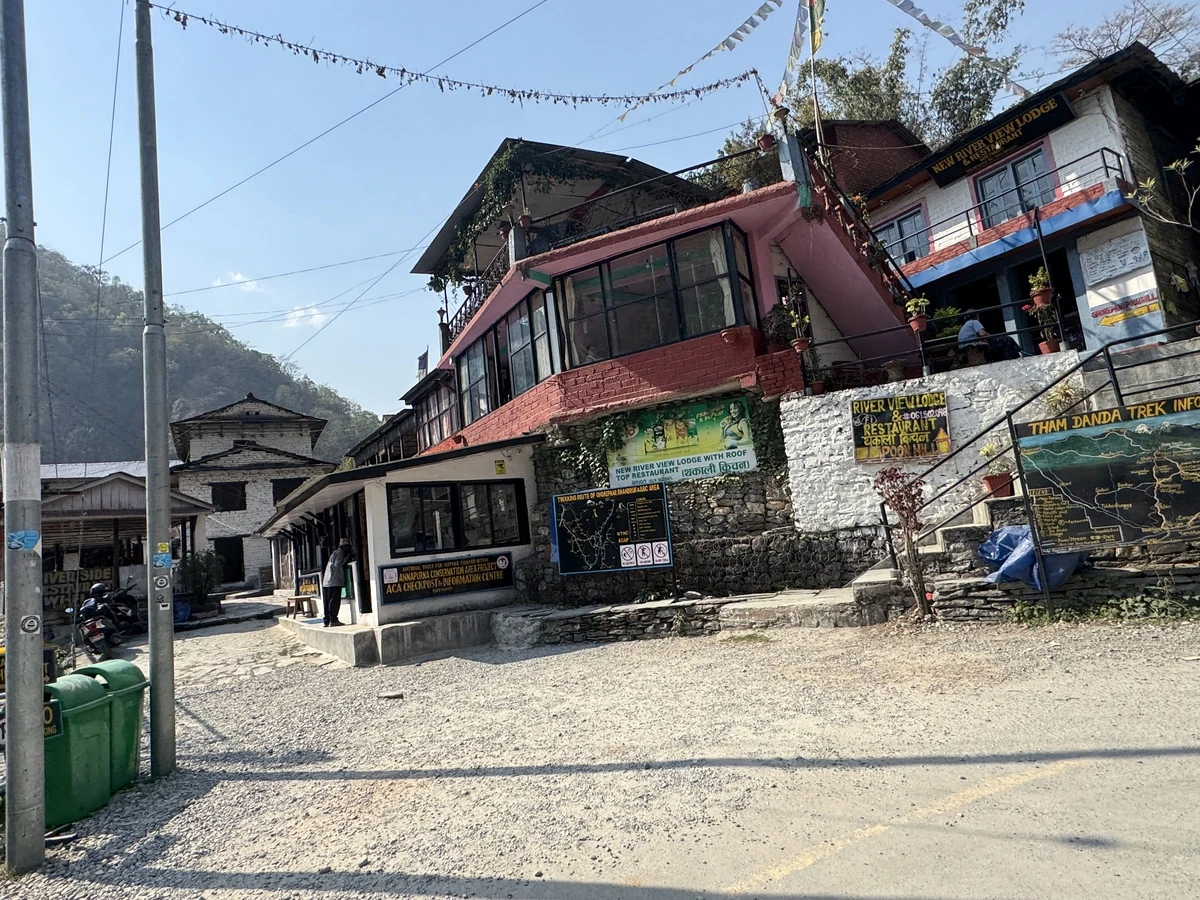
This unmatched panorama serves as the ultimate Himalayan mountain view Nepal arena. Along the way to trek Ghorepani Poon Hill, you will pass through quaint villages of Gurung and Magar such as Tadapani, Ghandruk, and Ghorepani itself, adding much to the cultural excitement where you will get a taste of the local eateries and the friendliness as well as culture of the area, flowered far away from modern civilization.
From trail experience, hitting the ideal sunrise viewpoint Nepal window requires a sharp 4:30 AM early morning hike timing. Expect a lively, energetic crowd experience at the summit tower alongside fellow hikers. The reward is watching the dramatic lighting changes on mountains unfold as the peaks turn from a dark purple to a brilliant, burning orange.
For the absolute best sunrise trek Nepal photography results, autumn offers flawless crystal atmospheric clarity, whereas spring adds colorful floral framing despite mild dust haze. Afternoon cloud impact is common, meaning you must capture your mountain photography Nepal shots during the fleeting 30-minute morning golden hour Himalayas window when the sunrise timing Nepal aligns perfectly.
Definitely the 7-day Ghorepani and Poon Hill tea house experience is well worth it with a moderate effort comparatively in a short time. In fact, there can not be any other perfect destination for those looking for an extraordinary Himalayan trekking involvement without having to deal with longer and more taxing treks.
Therefore, Ghorepani and Poon Hill are brilliant trekking options combining the natural beauty, cultural immersion, and magnificent Himalayan vistas from Poon Hill in Nepal's Annapurna region that must be traversed at least once. Did you hear its call? Get your trekking boots now to not miss this opportunity.
The well-liked Ghorepani and Poon Hill trekking routes are what make it possible to come across the most intriguing Himalayas without having to scale larger peaks, offering the breathtaking vistas of the Dhaulagiri and Annapurna mountain ranges.
If you think you are running out of time to spot the natural and cultural beauty of the infamous Annapurna region, this 7-day trip to Ghorepani Poon Hill is just the perfect one for you to come to the realization that you actually are not. Where you can expect.
The pre-monsoon from March to May also referred to as the spring season, and the post-monsoon from September to November, or the season of fall, stand out as ideal times to traverse the Ghorepani and Poon Hills due to their considerably stable weather conditions and extraordinary scenery. When evaluating the best season for Nepal trekking, these two periods offer the safest trail environments and most consistent climatic patterns.
Spring is specifically famous for the full bloom of rhododendron flowers and other wildflowers, adding vibrant colors to the already smashing landscapes beside the great visibility of panoramic mountains in the sunrise from Poon Hill. This iconic spring rhododendron bloom Nepal window provides spectacular floral backdrops, though rising pre-monsoon temperatures can create minor afternoon valley haze.
While the weather is mild and usually calm, just as in autumn with the dry trail, no wonder these two precise seasons are the ideal time for the Ghorepani and Poon Hill 7-day expedition. According to our firsthand trail logs and the official Annapurna weather guide data, an autumn Himalayas visibility baseline is virtually flawless, offering crisp, bone-dry air and cloudless morning skies.
However, it does not imply that winter and summer trekking are not possible at all. They ponder some of the hidden beauties of Ghorepani and Poon Hill; a voyage at this time of the year will definitely help you to be one of the first ones to come across the mysterious charm of the Annapurna region never seen and heard before. To guide your expectations realistically across all Nepal trekking seasons, here is the raw visibility and environmental truth for the off-peak months:
Though the short 7-day Ghorepani and Poon Hill Trek are also recognized as the family trekking trail, it sits comfortably within standard Nepal trekking difficulty levels as an easy to moderate trek. However, it is somewhat of a demanding holiday trekking route where you will have to overcome the steep hills and valleys. This makes it a premier choice for a beginner Himalaya trek, but it still requires respect for the local terrain. Here are some other potential difficulties that trekkers and travelers may encounter:
Yes, the natural and cultural excursion to Ghorepani and Poon Hill falls under the Annapurna Conservation Area in Nepal; hence, one must obtain the two essential permits called the Trekkers’ Information Management System (TIMS) card and the Annapurna Conservation Area Permit (ACAP).
The ACAP is a mandatory permit to enter the Annapurna Conservation Area, which includes the infamous Ghorepani and Poon Hill Treks, while the TIMS is a standard permit to grant access to any trekking region of Nepal, including the Annapurna region.
For complete legal compliance and trail safety, you can physically secure these official documents at the Nepal Tourism Board (NTB) offices located in either Kathmandu or Pokhara. If you are preparing your final itinerary, bookmarking a comprehensive Annapurna permit guide will help you navigate local checkposts smoothly. To streamline your pre-trip planning, ensure your agency registers your details under the verified TIMS ACAP Nepal system before hitting the trail.
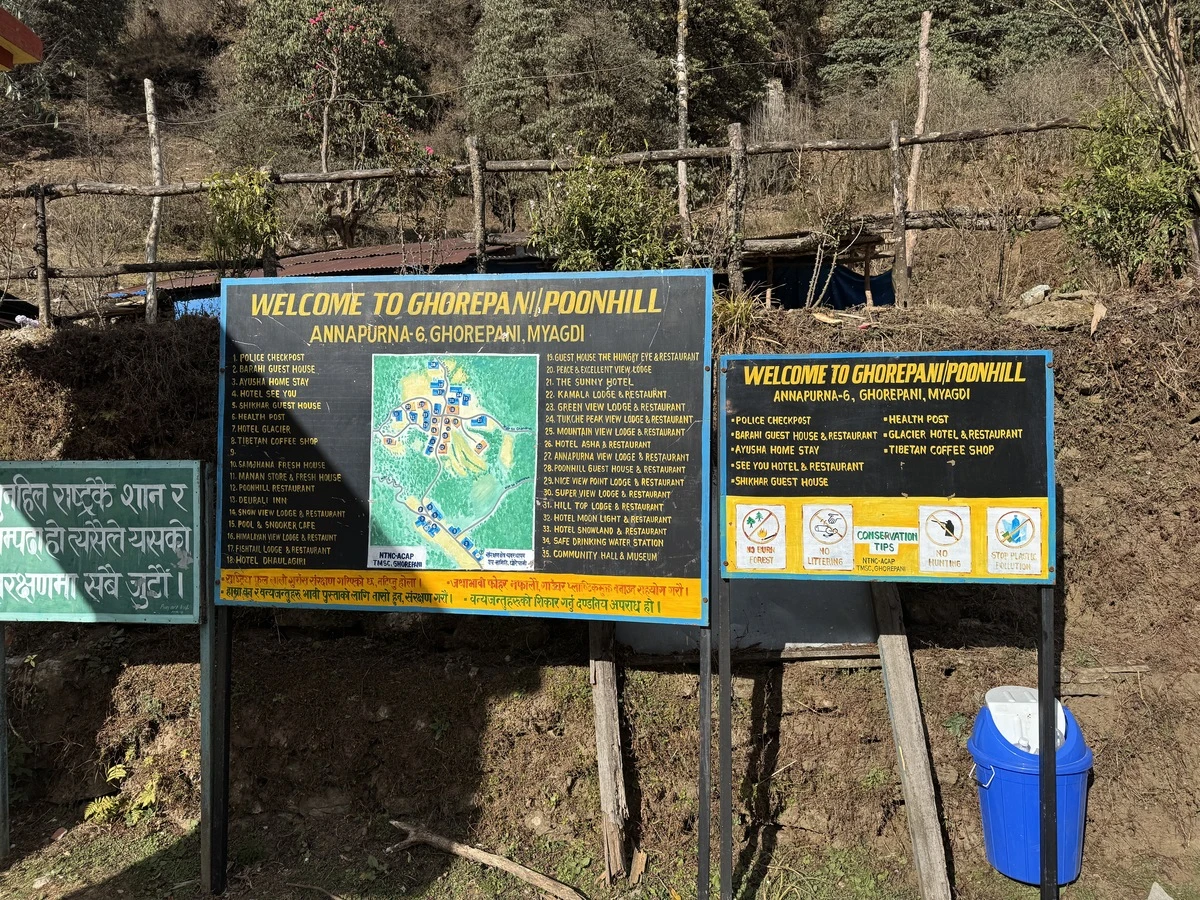
As one of the popular short trekking destinations within the Annapurna region of Nepal, comparatively taking place in the lower territory, Ghorepani and Poon Hill usually offer you convenient lodging and meals along with the basic amenities of a traditional mountain lodge. The Himalayan tea houses serve boiled and filtered water; carrying a thermos helps you refill, an eco-friendly approach to sustainable tourism that reduces plastic use. Expect to pay around NPR 100 to NPR 300 per liter for boiled water at higher altitudes like Ghorepani.
Rooms provided by local Himalayan tea houses are basically furnished with twin beds, shared bathrooms, and a common dining hall. Some offer single bedrooms with attached bathrooms that can be pre-booked or upgraded en route. Electricity and charging are rarely included; teahouses typically charge NPR 150 to NPR 300 ($1.50 to $3 USD) per device to charge phones or power banks via solar panels. WiFi is available for a fee of NPR 200 to NPR 400 per day, though speeds are notoriously slow and unreliable during peak evening hours or poor weather.
The menu varies from international dishes to local authentic Dal Bhat (a nutrient-dense Nepali meal featuring lentil soup, rice, and vegetable curry with free refills), pasta, garlic soup, veg fried noodles, pancakes, and momos (local dumplings). Emphasizing local food like dal bhat ensures fresh ingredients and the high-calorie energy needed for the steep climb up the Ulleri stairs
While the Annapurna foothills provide a highly accessible environment, maintaining a strict safety protocol is essential for a successful journey. Understanding your body's response to changing elevations ensures a safe, predictable experience from trailhead to summit.
The short answer is yes, it is absolutely worth it provided your expectations match the trail's reality. It offers the highest scenic reward for the lowest physical difficulty in the Annapurna region, making it a premier beginner trek recommendation in Nepal for those with limited time.
The Ghorepani Poon Hill trail is highly customizable, adjusting easily to your available holiday window or physical fitness baseline.
Yes, a compact 4-5 day Poon Hill trek is completely viable. By utilising local jeep transport to skip the lower dirt roads and starting directly from trail junctions like Tikhedhunga, you can reach the viewpoint and loop back down to Pokhara efficiently. This condensed timeline is ideal for fit travellers on tight schedules.
While a fast-paced trip is possible, a 7-day timeline offers the most balanced and successful journey for a few key reasons:
Managing your digital connectivity and financial logistics correctly prevents the frustration of sudden outages or running out of funds at key mountain stops.
Choosing your trail depends on your time, fitness, and goals. Here is how Poon Hill compares to its two closest rivals for an instant decision.
The trek to Ghorpani and Poon Hill is often referred to as the Annapurna Sunrise Hike because an early morning walk to Poon Hill to witness the sunrise over the Annapurna and Dhaulagiri mountain ranges is one of these scenic and adventurous trails.
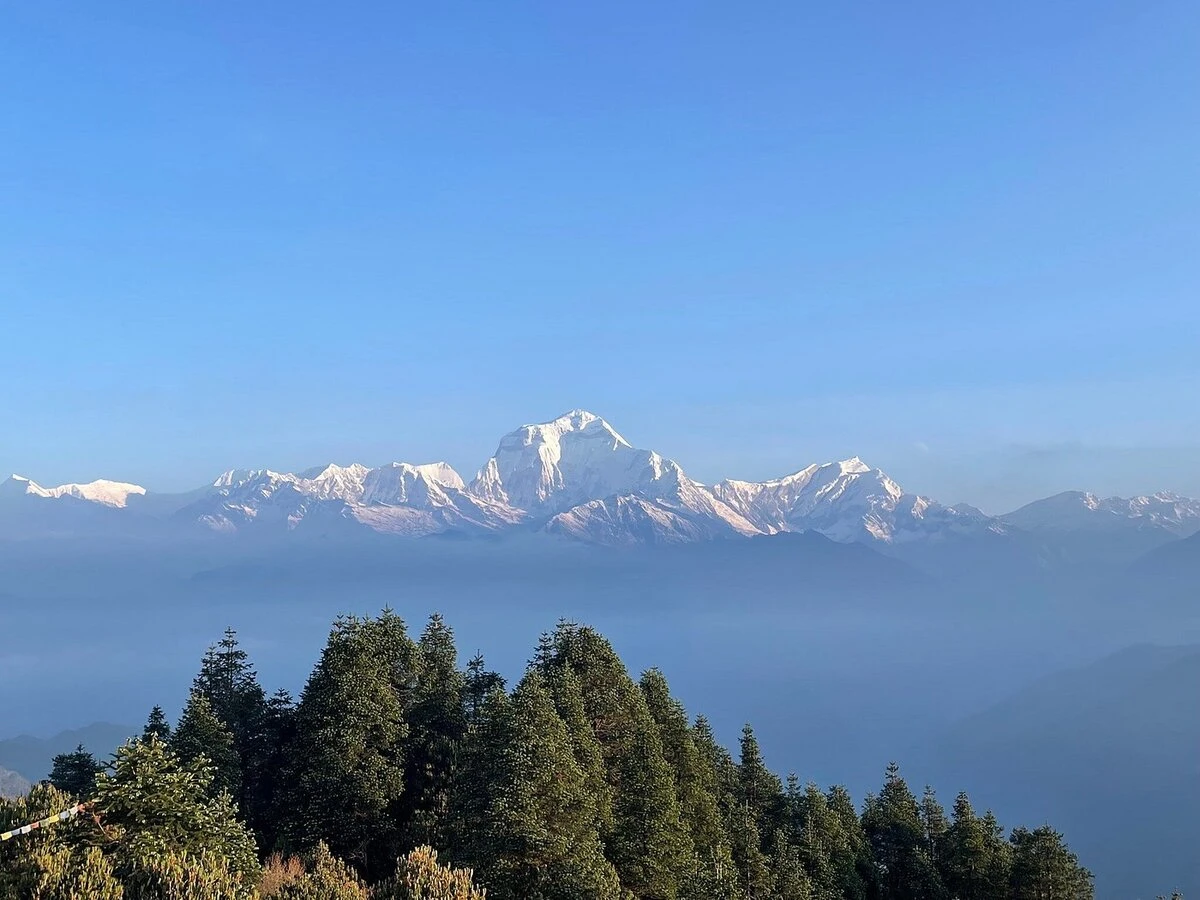
Situated at 3,210 m/10,531 ft above sea level, the sunrise from this Poon Hill is particularly stunning, where you can watch the first sun’s rays playfully mix light and shadows, illuminating the nearby snow-capped peaks and hills of the Annapurna territory.
The ranges of Machapuchare, Annapurna I, Annapurna South, and Dhaulagiri look especially radiant from the viewpoint of Poohill in the Annapurna region as the sun rises.
The Ghorepani and Poon Hill trek is special not only because of the Himalayan ranges but also due to its rich cultural experience, accessibility, diverse landscapes, and beginner-friendly nature, making it a complete trekking experience beyond just mountain views. It offers a perfect balance of scenic beauty, cultural immersion, and a sense of achievement while trekking through forests, hills, and traditional routes.
The trail passes through Gurung and Magar villages where trekkers can experience local customs, hospitality, and stay in tea houses, allowing close interaction with authentic mountain lifestyles. The route is also well-suited for beginners and families, with manageable daily walking hours and beautiful rhododendron forests, adding both comfort and natural diversity to the journey.
Villages like Ghorepani and Ghandruk highlight traditional architecture, local culture, and simple living, offering a deeper insight into Nepal’s heritage beyond the mountains. Combined with cultural richness, easy accessibility, and immersive local experiences, the trek becomes a unique journey that blends nature, culture, and adventure into one memorable experience.
There are several itineraries that you can follow to go on an adventurous journey to Ghorepani and Poon Hill. With Ammonite Adventure, you will be starting and ending this 7-day trip to Kathmandu.
The hike officially begins from Nayapul through several small towns until arriving at Ulleri after a drive from Kathmandu to Pokhara, covering a distance of 202 km (approximately 125.6 miles). Then the route continues through terraced farms, scenic landscapes, and forests to reach Ghorepani, an easier walk compared to the previous day.
Each day involves around 5–6 hours of trekking, with the highlight being the early morning climb to Poon Hill to witness sunrise over snow-capped mountains. Afterward, the trail descends toward Tadapani and then continues to Ghandruk, a traditional Gurung village with cultural experiences and local cuisine.
From Ghandruk, the journey retraces back to Pokhara and Kathmandu through beautiful mountain views, rivers, hills, flora and fauna, making this 7-day itinerary one of the best short routes to explore the Annapurna region.
There are a lot of hikers on the trail. Hiring a guide for Poon Hill Trekking is necessary because the trip will be quite crowded during the peak season. A local guide with excellent logistical management skills is needed during this period. It is possible to become ill at any point in time.
Since the Ghorepani Poon Hill trackway is well-trodden and has low chances of posing any sort of life-threatening threat, many trekkers and travelers opt to complete it on their own.
However, if it is your first journey in the Himalayas of Nepal, one must be cautious with a reminder that solo trekking is banned in the country from April 1st, 2023 when travelers and trekkers must be accompanied by professional guides.
Moreover, guides and porters are an absolute travel essential for Ghorepani and Poon Hill to boost the confidence of trekking aspirants, while they also help with the easy management of expedition logistics, including permits, meals, and rooms, which can be very hard to get in the peak trekking season of spring and autumn.
So, yes, guides and porters are a must to embark on Ghorepani and Poon Hill, ensuring your hassle-free rambling with good navigation skills while keeping you up-to-date on local culture, environment, and language barriers, enhancing your overall trekking experience.
The Ghorepani Poon Hill Trek can be organized as either a private or group trip, regardless of whether you are just trekking alone or with a group. If you are able to do this trek with your group, there are very good prices for groups and extra discounts depending on group size.
This applies only if Ammonite Adventure organizes the group. There is no limit to size, and we will give you an assistant guide for any trekker group of 12 or more. We will also give you one porter for each group of trekkers and limit trekkers to 9 kg of baggage.
Nearly all the expenses related to the Ghorepani Poon Hill Trek are covered. Package usually includes most of the costs, but there are some that we don't cover. For example, meals and accommodation in Kathmandu are completely the clients' responsibility.
There are various hotels and lodges of different standards, and you can conveniently book them online while you are in Kathmandu.
Each of our clients is advised to carry some personal spending money for accommodation and food in Kathmandu, visa process, travel insurance policy, snacks, hot (tea/coffee) and cold drinks, tips for the crew members, souvenirs, etc.
Our suggestion is that you bring cash (major currencies) as the currency can only be exchanged in Kathmandu or in Nepal for Nepali Rupees. Nepali currency is the only one that will be accepted in the trekking regions.
For the 7-day Ghorepani Poon Hill Trek, you will have the help of our experienced guides and Sherpas, who are locally hired to help you and ensure that your trip is successful and one-of-a-kind.
Yes, all our guides have proper certification and training for the job.
Put simply, we usually employ porters to work as your bag carriers. Two trekkers share a porter who does not carry more than 18 kg of combined gear for the two trekkers. If, however, you need more help, we will be able to give you one mountain helper for each person if you let us know beforehand.
Our crew is native to the Himalayas; hence, they are accustomed to being at high altitudes.
We always ensure that our crew is well paid, and we also provide insurance, food, clothing, lodging, and medical aid for our porters and guides. We also want to make sure that our staff is physically fit and that they are in good spirits so that they deliver excellent service to you.
Our trek leaders have:
Ammonite Adventure is a legally registered trekking agency licensed by the Nepal Government, is a member of the Trekking Agency Association of Nepal (TAAN), and is a member of the Nepal Mountaineering Association (NMA), which means by booking with us, you have a secure trekking company.
In order to confirm your trek, you need to put down a 10% deposit by bank transfer, Western Union, or even online.
You will pay the remainder of the amount due in Nepal in cash, credit card, or transfer. When your booking is confirmed, you will need to email us within 1 week: a scanned copy of your passport (along with any dependent traveling with you), a recent passport-style photograph of you, your travel insurance, and your flight details.
We allow for last-minute booking for the Ghorepani Poon Hill Trek. For the trek, you will need to give the total payment in advance, before you set off on the trek, and you will have to book in advance of the trek starting, with a maximum of 24 hours before. We do intend to be operating treks in a long season for all seasons of the year.
Last-minute booking can also indicate we are having a problem with the flight confirmations, or bad changes of weather could be coming in.
If you wish to extend your stay a few more days, we can do trip extensions. There are many activities that could be added on to your trip, not only in Kathmandu and jungle safaris, but also paragliding, rafting, or canoeing.
At the end of the tour, Ammonite Adventure has a farewell dinner in Kathmandu you are invited to attend. When you return, you will receive a printed certificate, and you can give feedback as you like.
During your 7-day trek, the right packing will make you feel comfortable and safe. There is one porter per two trekkers that we provide. You should pack your kit in one bag, preferably a duffel bag of at least 60L volume.
Each trekker is limited to 9kg of luggage weight. Additionally, you will have a regular backpack for your daily belongings. To make it easier for you to carry the necessary things, we have prepared this packing list.


The maximum altitude you will be at the Ghorepani and Poon Hill jaunting is the Poon Hill itself at 3,210m.
Although the probability of mountain sickness or altitude sickness is very rare en route to Ghorepani and Poon Hill, it is not completely zero. So, make sure to follow in the footsteps of your local Sherpa Guide while maintaining your pace and hydration.
Yes, it might cost you slightly more than the group tour to Ghorpani and Poon Hill, but it is achievable by hiring one of the government-registered guides or porters.
Based on the starting and ending points, speed of walking, and exact route, the Ghorepani Poon hill climb can take around 4–7 days. As one of the reputed travel and trek organizers in Nepal, Ammonite Adventure Pvt. Ltd. presents you with a 7-day trip to discover the tranquility of the Annapurna region in 7 days so that you do not miss any of the key features.
Yes, from Pokhara, Poon Hill is an approximately 8-hour drive via the Beni Highway. Please note that the roads can be dusty and uneven; hence, it is better to hike than to ride vehicles.
No, till now, the lofty vantage point of the Annapurna region, Poon Hill, does not have any tea shops or lodges, but the better part is that the Gurung and Magar villages of Ghorepani are roughly 45 minutes of walk to get some refreshment.
Well, you are not obligated to get one; however, travel insurance provides you with financial security in the event of any unforeseen medical emergency, along with the lost goods.
While sanitary pads might not be that feasible, it would be wise to carry some woolen pads from the city of Kathmandu or Pokhara that are washable and reusable, supporting the Annapurna Conservation Area Project to preserve the fragile ecosystem of the Himalayas.
Why not? We do understand and respect your comfort zone. As Ammonite Adventure Pvt. Ltd. excels in more personalized services, if you are pre-informed about the female guide requirement, we can arrange for one of the best, well-versed female guides for you to trek Ghorepani and Poon Hill
Indeed, you can get a 360-degree view of the Annapurna ranges, including Annapurna I, II, III, Iv, and South, along with Dhaulagiri, Machapuchare, and several others from Poon Hill, which are more astonishing in the morning sunrise.
Yes. The Ghorepani Poon Hill Trek is highly accessible for beginners. You don’t need intense training, but you do need decent stamina. The biggest challenge is Day 2, which involves climbing roughly 3,300 stone steps up to Ulleri. Walking or using a stair-climber a few times a week for 2 weeks before the trip is plenty of preparation.
It is very rare. Serious altitude sickness (AMS) is highly uncommon below 3,000 m, and you only spend an hour or two at the 3,210 m peak before descending. If you do feel unwell (headache or nausea), the safety protocol is simple:
Because this route is highly developed, amenities are widely available:
Pro-Tip: Bring a 10,000+ mAh power bank to save money and avoid competing for wall plugs.

It was an incredible trek. Thank you Bishal for being my guide, teaching your culture and your place. 100% recommended.
Had a Great experience with this company. They where flexible and met my demands. Krishna is a really good and