Introduction
The training program for the Everest Three Passes Trek is something most trekkers only take seriously after they’ve already struggled on the trail, and that’s usually the problem. This trek isn’t just a longer version of Everest Base Camp (EBC); it’s a full-on endurance challenge with three high passes above 5,300 m (17388.45 ft), long trekking days, cold conditions, and constant altitude gain. Many trekkers assume normal hiking fitness is enough, but once fatigue and thin air kick in, the reality feels very different.
From what guides consistently see on the route, the biggest challenge isn’t lack of motivation; it’s underestimating how quickly your body slows down at altitude. Even fit people can struggle with breathlessness, low energy, or slow recovery after just a few days. That’s why proper preparation matters more than experience alone, especially on demanding sections like:
- Kongma La (5,535 m/18,159 feet)
- Cho La (5,420 m/17,782 ft)
- Renjo La (5,420 m/17,782 ft)
In this preparation guide for the Everest Trek, we’ll break down everything in a simple way, what kind of fitness you actually need, how to train step-by-step, and how to prepare your body. Hence, the trip feels challenging but manageable, not overwhelming.
How Difficult Is the Everest Three Passes Trek Physically
The difficulty of the Everest Three Passes Trek is no joke; it’s one of the toughest non-technical trekking routes in Nepal. You aren’t just walking for a few hours a day; you’re dealing with 16 to 21 days of trekking, 5 to 10 hours daily walks, and constant altitude changes above 3,500 m (11482.94 ft), going all the way up to 5,535m (18,159 ft) at Kongma La Pass. Add steep climbs, long rocky descents, and thinning oxygen, and the physical demand builds up day by day.
From a guide’s perspective, what really surprises trekkers isn’t just one hard day; it’s fatigue accumulation. Even strong hikers feel the pressure after multiple high passes, because your body never fully resets at altitude.
The Core Challenges & Physical Requirements
Before jumping into details, here’s a simple breakdown of what actually makes this trek physically demanding on the ground:
|
Challenge Element
|
Physical Requirement
|
Why It’s Demanding
|
|
Long Days (6 to 10+ Hours)
|
Deep aerobic endurance
|
Continuous movement over boulders, glaciers, and moraine fields with little rest
|
|
Relentless Steep Climbs
|
Leg strength & power
|
700 to 1,000m ascent days over scree, ice, and false summits
|
|
High Altitude (Up to 5,535m)
|
Cardiovascular fitness
|
Oxygen levels drop to nearly half of sea level, slowing every step
|
|
Consecutive Trekking Days
|
Recovery ability
|
No real recovery breaks for 2+ weeks of continuous effort
|
|
Long Descents
|
Knee & joint strength
|
Repeated downhill stress on stone steps and loose trails |
Breaking Down The Physical Difficulty Factors
Here’s what actually hits your body on the trail, based on real difficulty conditions of the Everest trekking, and guide experience:
- Extreme Altitude & Hypoxia: Above 4,500 m(14763.78 ft), the air feels noticeably thinner. At pass level (5,300 m+), even slow walking feels like effort. This is where trekking endurance really gets tested, not speed.
- Technical Terrain & Footwear Strain: You’ll walk on loose rocks, icy sections, and glacier moraine. Every step needs attention, especially on Cho La and Kongma La, where footing constantly changes.
- Relentless Vertical Profiles: Most pass days involve 700 to 1,000 m (2,296.59 to 3,280.84 ft) of climbing and similar descents in a single day. There’s rarely a flat section to recover mid-way.
- Fatigue Accumulation: The biggest hidden challenge. Even if you recover overnight, your legs and lungs start each day slightly more tired than before.
Note: If you can run a flat half-marathon, your lungs are in a good place, but your legs will still struggle on this trek. Real mountain trekking fitness is about training for long descents, uneven terrain, and repeated uphill effort day after day.
Everest Three Passes Trek Trail Update & Current Physical Demands
The Everest Three Passes Trek trail update is consistent in structure, but the trail's feel varies widely depending on snow, season, and fatigue. Expect a mix of rocky trails, glacial moraine, stone steps, and high-pass crossings above 5,300 m, where the air gets thinner, and every step feels heavier. Daily walking usually ranges from 5 to 10 hours, with long uphill pushes and tough descents after the passes.
From a guide’s point of view, the real challenge isn’t just the terrain; it’s how your body reacts over time. Fatigue slowly builds up because you’re constantly going up and down without full recovery days.
- Average Daily Elevation Change: Around 500 to 1,000 m (1,640.42 to 3,280.84 ft) gain or loss per day, especially on pass-crossing stages like Kongma La and Cho La. It’s not just uphill; it’s repeated climbing and descending in thin air.
- Backpack Expectations: A 6 to 10 kg daypack is typical. It includes water, layers, snacks, and essentials. Even this feels heavier at altitude due to reduced oxygen and long trekking hours.
- The Accumulative Fatigue Factor: This is what surprises most trekkers. Each day feels manageable alone, but over 10 to 15 days, fatigue stacks up, slower pace, heavier legs, and longer recovery time.
Trail Condition Vs Training Adjustment Matrix
Before the table, here’s the simple idea: the Everest trail constantly shifts between glaciers, rocks, ice, and steep climbs, so your training should match real mountain conditions, not flat workouts.
| Condition |
Mountain Reality
|
Muscles Working Hard
|
How to Train for It
|
|
Glacial Moraine
|
Loose, shifting rock sections on glacier crossings
|
Ankles, calves, core, glutes
|
Balance work, single-leg exercises, stability drills
|
|
Stone Stair Climbs
|
Endless uphill stone steps on trails to Namche & passes
|
Quads, hamstrings, glutes
|
Step-ups, incline walking, hill training
|
|
Long Descents
|
Steep downhill sections after high passes
|
Knees, quads (eccentric load)
|
Slow squats, controlled lunges, downhill walking practice
|
|
Ice & Slippery Sections
|
Icy patches near Cho La and high sections
|
Core, inner thighs, stabilizers
|
Core training, grip stability, controlled balance work
|
|
Loose Scree Slopes
|
Rocky, unstable climbs like Kongma La approach
|
Calves, feet, Achilles
|
Calf raises, uphill hiking, power walking
|
The reality is simple: the trail doesn’t stay predictable, so your body also needs to be ready for anything, from slow glacier walking to steep rocky climbs that test every step.
Can You Complete the Everest Three Passes Trek (Fitness Self-Assessment)
Before you commit to the Everest Three Passes Trek, it helps to check where your fitness stands honestly. This isn’t about being super fit; it’s about whether your body can handle long walking days, steep climbs, and repeated effort at altitude without breaking down halfway through the trek.
From guide experience, most trekkers don’t fail because of one tough day; they struggle because fatigue builds up over time. So this simple self-check gives you a realistic idea of your readiness for the Everest Trek before you go.
Endurance Test
Can you comfortably walk 15 to 20 km in a day without feeling completely drained the next day?
- This checks your basic trekking stamina. If it feels hard now, your body will struggle even more once altitude is added.
Stair Climbing Test
Can you climb stairs continuously for 45 to 60 minutes without needing long breaks?
- This mimics the steep uphill sections you’ll face on the passes. If your legs burn too early, you’ll need more uphill conditioning.
Backpack Carry Test
Can you hike for a few hours with a 10 to 12 kg backpack?
- Even though this is a light load for trekking, at altitude it feels much heavier. This test shows how well your body handles real trekking weight.
Recovery Test
After a hard workout or long hike, how quickly do your legs feel normal again?
- If you recover within about a day, you’re in a good place. If soreness lingers longer, your body still needs more adaptation work.
Simple Reality Check
If you can comfortably pass most of these, you’re on the right track for high-altitude trekking. If not, it doesn’t mean you can’t do this trek; it just means you should spend a few more weeks improving endurance, stairs, and leg strength before heading to the mountains.
What Fitness Level Do You Need Before The Trek
You don’t need to be a pro athlete to trek the Everest Three Passes, but you also can’t just show up and hope for the best. The real thing to understand is that this trip is more about steady effort for many days, not one-day fitness. If you can walk long hours, handle uphill climbs, and recover well, you’re already on the right track.
From what guides see on the trail, most issues don’t come from lack of strength; they come from people starting strong and then slowing down badly after a few days at altitude. That’s why knowing your level helps you prepare smarter.
- Beginner level: You can walk regularly, but long hikes feel tiring. You’ll need a proper build-up with consistent training.
- Intermediate level: You’re comfortable with 4 to 6-hour hikes and some uphill work. This is where most successful trekkers fall.
- Advanced level: You already do long hikes or endurance training. You’ll still feel the altitude, but your body adapts faster.
No matter the level, what really matters is how well your body handles the fitness demands of continuous trekking, not just one-off workouts.
Minimum Recommended Fitness Standards
Before the table, here’s the simple idea: these aren’t gym goals, they’re real-world examples based on what trekkers actually face on the trail. If you’re close to these, you’re in a pretty good place to start serious preparation.
|
Fitness Area
|
Recommended Level
|
Why It Matters
|
|
Walking Distance
|
15 to 20 km on uneven trails
|
Builds foot and ankle strength for long trekking days
|
|
Hiking Duration
|
5 to 7 hours continuously
|
Matches real mountain walking time
|
|
Backpack Load
|
10 to 12 kg during training
|
Prepares your body for carrying a daypack comfortably
|
|
Weekly Training
|
4 to 5 active days
|
Builds consistency for multi-day effort |
Realities From The Trail: Trekker Stories
What surprises people most is that fitness on paper doesn’t always match how the trek feels in real life.
- The Marathon Runner’s Trap: “I thought my running fitness would make it easy. But after a few days, my knees and lower back were sore from all the downhill walking. Running flat roads didn’t prepare me for stone steps and a loaded backpack.” — Mark S.
- The Backpacker’s Success: “I wasn’t the fastest, but I trained with a weighted backpack on hills every weekend. That steady preparation made the long trekking days feel manageable.” — Sarah L.
In the end, it’s not about being the fittest person; it’s about being prepared for slow, long, repetitive effort in the mountains.
Training Goals To Achieve Before Departure
Before heading out for the Everest Three Passes Trek, don’t overthink “perfect fitness.” Instead, focus on a few clear trekking goals that your body should already be comfortable with.
These aren’t gym targets; they’re real-world movement goals based on how the trail actually feels day after day. Think of it like this: if your body can already handle long walks, steady climbs, and back-to-back effort, the mountains will feel tough but doable, not shocking.
Target Milestones: Your Pre-Departure Fitness Benchmarks
Before the table, here’s the simple idea: these benchmarks come straight from real trekking conditions. If you can hit most of them in training, you’re already in a solid zone for Everest.
|
Goal Type
|
Target Benchmark
|
Real Trail Demand This Prepares You For
|
|
Walking Distance
|
20 km on mixed terrain
|
Long valley walks where distance adds up fast even when it doesn’t feel steep
|
|
Hiking Time
|
6 to 8 hours continuous walking
|
Big pass days like Kongma La, Cho La, and Renjo La that can stretch all day
|
|
Backpack Weight
|
10 to 12 kg on training hikes
|
Makes your actual trekking pack feel lighter than expected
|
|
Elevation Gain
|
800 to 1,000 m in one go
|
Prepares your legs for nonstop uphill sections from river valleys to high passes
|
|
Weekly Training
|
4 to 5 consistent sessions
|
Builds the habit of repeated effort (which is the real challenge on this trek)
|
Why These Specific Trekking Goals Matter
These goals aren’t random; they match exactly what your body goes through in the Himalayas.
Endurance Goal: 20 km Comfortably
- Real situation: Trekking days often feel long because you’re constantly moving between villages, not just climbing.
- Why it matters: If 20 km feels easy now, you won’t panic on long, never-ending trekking days later.
Elevation Goal: 800 To 1,000 m Gain
-
Real situation: Pass days involve long, steady climbs that don’t really give your legs a break.
-
Why it matters: This builds real trekking endurance, so your legs don’t shut down halfway up.
Backpack Goal: 10 To 12 kg
- Real situation: Even a light bag feels heavier at altitude when oxygen drops.
- Why it matters: Your body learns to stay stable under load, so nothing feels surprising on the trail.
Recovery Goal: Back-To-Back Days
- Real situation: You don’t get “rest days,” you keep walking for 2+ weeks straight.
- Why it matters: Good recovery means you can wake up and still function normally the next day.
Weekly Training Goal: 4 To 5 Days
- Real situation: The trek is a repetitive effort, not a one-off activity.
- Why it matters: Builds consistency, which is more important than intensity for high-altitude trekking.
In simple terms, these fitness targets aren’t about becoming super fit; they’re about making sure your body is already used to long, tiring, repeated effort. If that foundation is there, this journey becomes a challenge you can actually enjoy instead of just surviving.
When Should You Start Training For The Everest Three Passes Trek
A lot of trekkers think they can start training a few weeks before the trek and be fine. In reality, the Everest Three Passes Trek is much easier when you give your body enough time to prepare. You don't need an intense fitness routine, but you do need a consistent training timeline that gradually builds your endurance, strength, and recovery ability.
For most people, starting 3 to 4 months before the trek works well. If you're new to hiking or exercise, giving yourself up to six months is even better.
|
Fitness Area
|
Recommended Level
|
Why It Matters
|
|
Walking Distance
|
15–20 km on uneven trails
|
Builds foot and ankle strength for long trekking days
|
|
Hiking Duration
|
5–7 hours continuously
|
Matches real mountain walking time
|
|
Backpack Load
|
10–12 kg during training
|
Prepares your body for carrying a daypack comfortably
|
|
Weekly Training
|
4–5 active days
|
Builds consistency for multi-day effort
|
The Complete Everest Three Passes Trek Training Program
The Khumbu Circuit Trek isn’t the kind of journey you prepare for with a few weekend walks. You'll be trekking for 6 to 10 hours a day, crossing three passes above 5,000 m (16,404.2 ft), and doing it all for nearly three weeks.
The good news? You don't need to be an elite athlete. A structured training plan that gradually builds endurance, strength, and hiking-specific fitness is usually enough for most trekkers.
Phase 1 (Weeks 1 To 4) – Build Endurance
Before worrying about heavy backpacks or mountain climbs, you need a solid aerobic fitness base. This phase is all about teaching your heart, lungs, and legs to keep moving comfortably for longer periods. Most guides recommend focusing on consistent cardio rather than intense workouts at this stage.
Weekly Plan
Beginner
- Walk 30 to 45 minutes, 4 to 5 times per week
- One easy hike on weekends
- Optional cycling or swimming once per week
Intermediate/Advanced
- Walk, run, cycle, or hike 45 to 60 minutes, 4 to 5 times per week
- One longer hike every weekend
- Add hills whenever possible
Goal by Week 4
- Stay active for 60 to 90 minutes without feeling exhausted
- Build a strong cardio foundation for the next phase
Phase 2 (Weeks 5 To 8) – Build Strength
Now it's time to build the muscles that will carry you over Kongma La, Cho La, and Renjo La. Strong legs and a stable core make a huge difference when you're climbing steep trails or descending rocky slopes. Exercises like squats, lunges, step-ups, and deadlifts are commonly recommended because they closely match the movements used while trekking.
| Exercise |
Trail Benefit
|
| Squats |
Build power for long uphill climbs and improve knee stability
|
| Lunges |
Improve balance and control on uneven trails
|
|
Step-Ups
|
Closely mimic climbing stone steps and steep sections
|
| Deadlifts |
Strengthen your back, hips, and core for carrying a backpack
|
Weekly Plan
- 2 to 3 strength sessions per week
- Continue cardio training
- Add stair climbing or hill walking
Goal by Week 8
- Noticeably stronger legs and improved trekking strength
- Less fatigue on stairs and uphill hikes
Phase 3 (Weeks 9 To 12) – Backpack Conditioning
This is where training starts feeling like real trekking. Carrying extra weight changes how your body moves and uses energy. Many trekkers discover that hiking with a backpack feels very different from hiking without one, which is why backpack training is so important.
Backpack Weight Progression to
Focus During This Phase
- Weekly weighted hikes
- Longer weekend treks
- Trail and stair training
- Practice carrying the same backpack you'll use on the trek
Goal by Week 12
- Complete a 5 to 6 hours hike with a loaded pack
- Build confidence with load carrying and long-distance walking
Phase 4 (Weeks 13 To 16) – Peak Preparation
This final phase brings everything together. The goal isn't to get dramatically fitter; it's to prepare your body for the reality of trekking day after day in the mountains. That means hiking while tired, recovering properly, and then doing it again the next day. This is where real mountain endurance is built.
Sample Weekend Training
Saturday
- 6 to 8 hours hike
- Include steep climbs
- Carry a loaded backpack
Sunday
- 3 to 5 hour hike
- Easier pace
- Focus on recovery and steady movement
This back-to-back approach closely mimics what happens on the Everest Three Passes Trek, where your body needs to perform the morning again after a tough day on the trail.
Goal Before Departure
- Hike comfortably for 6 to 8 hours
- Carry a 10 to 12 kg backpack
- Recover well between long hiking days
- Feel confident rather than nervous about the trek ahead
A lot of trekkers who have completed the route say the same thing: consistency matters more than intensity. One Reddit trekker who finished the Three Passes trek mentioned that being physically prepared and training the legs beforehand made a huge difference on the passes.
The best training plan isn't the hardest one; it's the one you can stick to for 16 weeks.
Best Cardio Exercises For High-Altitude Trekking
You don't need to become a marathon runner to complete the Khumbu Circuit Trek. What you do need is the ability to keep moving for hours, day after day, while dealing with steep climbs and thinner air.
So, cardio training should be a big part of your preparation. However, you can build that fitness with simple activities that fit into your normal routine. to
Hiking
Hiking is easily the best training for trekking because it closely matches what you'll actually be doing in the Himalayas.
- Why it works: It trains your legs, lungs, and stamina all at once.
- What it prepares you for: Long trekking days, rocky trails, and constant ups and downs.
- Recommended duration: Start with 1 to 2 hours and gradually work up to 4 to 6 hours.
- Recommended intensity: Comfortable pace. You should be able to chat while walking.
Stair Climbing
If you don't have mountains nearby, stairs are the next best thing.
- Why it works: It strengthens your legs and gets your heart working harder, similar to climbing uphill on the trail.
- What it prepares you for: Long ascents to the three high passes.
- Recommended duration: 20 to 60 minutes.
- Recommended intensity: Steady effort without rushing.
Running
Running is a simple way to improve aerobic conditioning and build endurance.
- Why it works: It helps your heart and lungs become more efficient over time.
- What it prepares you for: Long days of trekking without getting tired too quickly.
- Recommended duration: 30 to 60 minutes.
- Recommended intensity: Easy to moderate pace.
Cycling
Not everyone enjoys running, and that's perfectly fine. Cycling is a great alternative.
- Why it works: It builds endurance while being easier on the knees and ankles.
- What it prepares you for: Sustained effort during long trekking days.
- Recommended duration: 45 to 90 minutes.
- Recommended intensity: Moderate pace with some hills if possible.
Incline Walking
This is one of the most useful yet overlooked exercises for trekkers.
- Why it works: Walking uphill closely mimics what you'll experience on the Everest trails.
- What it prepares you for: Long climbs to places like Namche Bazaar and the high passes.
- Recommended duration: 30 to 90 minutes.
- Recommended intensity: Steady pace where you're working hard but still in control.
The goal isn't to become the fastest person on the trail. It's about building enough endurance exercises into your routine so that hiking for 6 to 8 hours feels manageable rather than overwhelming. Even a few months of consistent training can make a huge difference when you're trekking in the Everest region.
Best Strength Exercises For Everest Three Passes Trek
Cardio will help you go long, but strength training is what keeps your legs from giving up halfway up a pass. On the Khumbu Circuit Trek, your body is basically doing nonstop climbing, stepping, balancing, and carrying weight for days. So, a few simple mountain workouts focused on legs and core make a huge difference.
Here’s a more relaxed, practical breakdown of what actually works.
Squats
Squats are your base builder. If trekking had a foundation exercise, this would be it.
- Muscles worked: Quads, glutes, hamstrings
- Trail use: Helps you power uphill and stay strong on long descents
- Common mistake: Dropping too fast or letting knees cave inward
- Recommended reps: 3 sets with 12 to 15 reps
Think of every squat as training for those endless stone stair climbs in the Himalayas.
Lunges
Lunges are basically trekking steps in workout form.
- Muscles worked: Quads, glutes, calves, core
- Trail use: Improves balance on rocky and uneven trails
- Common mistake: Leaning too far forward or rushing the movement
- Recommended reps: 3 sets with 10 to 12 reps (each leg)
This is one of the best strength exercises for trekking because it trains each leg separately, just like walking uphill in real life.
Step-Ups
If you want one exercise that feels exactly like trekking, it’s this.
- Muscles worked: Glutes, quads, calves
- Trail use: Perfect for steep climbs and stone steps
- Common mistake: Pushing off the back leg instead of the front leg
- Recommended reps: 3 sets with 10 to 12 reps per leg
Step-ups directly prepare you for those long uphill sections where the trail just keeps going up and up.
Calf Raises
Small muscle, big job.
- Muscles worked: Calves, ankles
- Trail use: Helps on steep ascents and slippery descents
- Common mistake: Bouncing too fast instead of controlled lifts
- Recommended reps: 3 sets with 15 to 20 reps
Strong calves mean less fatigue when you’re constantly pushing uphill on tired legs.
Core Workouts
Your core is what keeps everything together when you’re tired and carrying a backpack.
- Muscles worked: Abs, lower back, obliques
- Trail use: Helps with balance and backpack stability
- Common mistake: Only doing crunches and ignoring lower back strength
- Recommended reps: 3 sets with 15 to 20 reps
Good core strength makes long trekking days feel way more controlled and less exhausting.
Planks
Simple, but honestly, one of the most important moves for trekkers.
- Muscles worked: Entire core (abs + back stabilizers)
- Trail use: Keeps posture stable during long hiking days
- Common mistake: Letting hips drop or holding breath
- Recommended reps: 30 to 60 seconds with 3 rounds
Planks build the strength you really need above 4,000 m (13,123.36 ft).
If you stay consistent with these exercises, your leg endurance and overall trekking strength will improve a lot over a few weeks. You don’t need anything fancy, just regular training, good form, and a bit of patience. And once you’re ready to put that fitness to use, a trek like the EBC Trek with Gokyo Lakes is a great way to experience high-altitude terrain before stepping up to the full Three Passes challenge.
How To Train With a Backpack for Multi-Day Trekking
Training with a backpack sounds simple, but this is the part most trekkers underestimate. On the Everest Three Passes Trek, you aren’t just walking; you’re carrying weight for 6 to 8 hours a day, often uphill, often tired, often at altitude where everything feels harder.
That’s why good load training is less about fitness and more about teaching your body to stay comfortable under pressure for long hours. The key rule is to start light, go slow, and build up naturally.
|
Training Week
|
Backpack Weight
|
|
Week 1 to 4
|
4 to 6 kg
|
|
Week 5 to 8
|
6 to 8 kg
|
|
Week 9 to 12
|
8 to 10 kg
|
|
Week 13 to 16
|
10 to 12 kg |
How This Should Actually Feel (Not Just Numbers)
In the beginning, even 4 to 6 kg will feel “noticeable,” and that’s totally normal. Your shoulders, hips, and lower back are learning how to share the load properly. By the final weeks, 10 to 12 kg shouldn’t feel light, but it should feel controlled, not painful or awkward. Most Everest guides actually say this is the point where your body starts behaving like it will on the real trek.
Start With Short, Real Walks
Don’t jump into long hikes immediately.
- Week 1 to 2: 30 to 60 minutes of walking
- Week 3 to 6: 1 to 2 hours hikes
- Week 7 onward: 3 to 6 hours for long hikes on hills or stairs
Flat roads are fine to start with, but eventually you need slopes and uneven terrain. That’s where your knees, ankles, and hips actually get tested.
Get Your Backpack Fit Right (This Matters A Lot)
A lot of people blame fitness when the real issue is poor pack setup.
Keep it simple:
- Hip belt should carry most of the weight (not your shoulders)
- Shoulder straps are for stability, not lifting load
- Chest strap stops side movement
- Tighten everything so the pack doesn’t “bounce”
If your pack feels like it’s pulling you backward, it’s set wrong, not that you’re unfit.
Common Mistakes Trekkers Make
This is what guides see every season:
- Starting with 10 kg too early leads to knee and back strain.
- Training only on flat ground causes adaptation failure, as mountains aren’t flat.
- Carrying a loose or unbalanced pack causes shoulder pain fast.
- Ignoring posture means leaning too far forward becomes a habit.
- No rest days build up fatigue instead of fitness.
One of the biggest real issues on long treks isn’t strength; it’s bad load distribution and poor progression.
A Simple Reality Check
If you can comfortably hike for 4 to 5 hours with a 10 kg pack on uneven terrain, you’re already in a strong position for the Three Passes Trek. Your real trek pack might not be heavier, but the altitude and duration will still test you in ways training can’t fully copy.
That’s why gradual progression is so important. It builds resilience, not just fitness.
For a full breakdown of what actually goes inside your pack on the trail, check the Everest Trek Packing List. It helps you understand exactly what you’ll be carrying day-to-day in the Khumbu region.
How To Train For High-Altitude Conditions
Here’s the truth first: you can get super fit and still feel the altitude. That’s just how the Himalayas work. On the Everest Three Passes Trek, once you cross around 3,000 m and especially above 4,000 to 5,000 m, your body is dealing with less oxygen, no matter how strong you are.
So training helps, but it’s only half the story. The other half is acclimatization and smart pacing.
Altitude Adaptation Basics (Keep It simple)
At high altitude, every breath gives your body less oxygen. Your body reacts by breathing faster, working harder, and slowly adapting over a few days.
That adaptation process is called acclimatization. And it’s not instant.
Most trekkers start noticing it around places like Namche Bazaar (3,440 m) and higher. This is normal.
What Fitness CAN Help With
Good fitness definitely makes the trek easier, just not “immune-proof.”
It helps you:
- Walk longer without getting exhausted
- Recover faster after tough uphill sections
- Control your breathing better on steep climbs
- Handle back-to-back trekking days more comfortably
So yes, your altitude preparation matters a lot for comfort and stamina.
What Fitness CANNOT Do
This is where people get surprised.
Even very fit trekkers can still feel:
- Headaches
- Fatigue
- Low appetite
- Slow recovery
Because fitness doesn’t change oxygen levels in the air. That’s why AMS (acute mountain sickness) can affect almost anyone if they go too fast. So think of fitness as helping you cope, not escape altitude.
Acclimatization: What Actually Protects You
This is the real safety system on the trek. Simple rules that guides always follow:
- Go up slowly (don’t rush sleeping altitude)
- Take acclimatization days seriously
- Climb high, sleep low” when possible
- Don’t ignore early symptoms
Your body needs time. That’s the whole game. Even strong trekkers who rush usually struggle more than slower, steady ones.
Recovery Tips That Actually Matter
At altitude, recovery is just as important as walking.
Keep it simple:
- Drink water regularly (don’t wait for thirst)
- Eat enough carbs for energy
- Sleep properly and don’t push through exhaustion
- Take headaches seriously early on
Good recovery habits help your body adjust faster and reduce AMS risk.
Myth Vs Fact: Altitude Training
| Myth |
Fact |
|
Being super fit prevents altitude sickness
|
Fitness helps comfort, not immunity
|
|
You can fully “train” for altitude in the gym
|
You can’t fully replicate low oxygen conditions
|
|
Fast trekkers always do better
|
Slow, steady trekkers often acclimatize better
|
|
Drinking water alone prevents AMS
|
Hydration helps, but doesn’t replace acclimatization
|
|
Only beginners get altitude sickness
|
It can affect anyone, regardless of experience |
Final thought
Training makes you stronger, but altitude teaches patience. The safest and most successful trekkers are usually not the fastest or the fittest; they’re the ones who listen to their body, take acclimatization seriously, and don’t rush the mountains.
For a deeper breakdown of symptoms and prevention, you can read more on Altitude Sickness on Everest Trek and understand how AMS actually develops in real trekking conditions.
Weekly Everest Three Passes Trek Training Schedule
Training for the Everest Three Passes Trek works best when it feels like a rhythm, not something extreme you try once in a while and then burn out. Think of it like building a simple weekly habit: move, rest, repeat, and slowly get stronger each week.
The goal of this fitness schedule is pretty simple: train your body to handle long walking days, steep climbs, and tired legs without breaking down too early.
Suggested Weekly Training Plan
| Day |
Activity |
| Monday |
Cardio |
| Tuesday |
Strength |
| Wednesday |
Recovery |
| Thursday |
Cardio |
| Friday |
Strength |
| Saturday |
Long Hike
|
| Sunday |
Active Recovery |
Why This Weekly Plan Actually Borks
Each day has a purpose, and nothing is there just for show:
- Monday & Thursday (Cardio): builds your engine so you don’t gas out on long trekking days.
- Tuesday & Friday (Strength): Keeps your legs and core ready for steep climbs and heavy steps
- Wednesday (Recovery): Our body repairs and gets stronger here (this is where progress actually happens)
- Saturday (Long hike): your real trek simulation day; this matters the most
- Sunday (Active recovery): light movement so your legs don’t get stiff and heavy
This balance is what makes a trekking calendar effective instead of exhausting.
Beginner Weekly Plan (If You’re Just Starting)
No need to go hard from day one. Keep it easy and consistent:
- Monday: 30 to 40 min walk or cycling
- Tuesday: Basic strength (squats, lunges, step-ups)
- Wednesday: Rest or stretching
- Thursday: 30 to 45 min light cardio
- Friday: Light strength session
- Saturday: 2 to 4 hour hike (easy pace, light backpack)
- Sunday: Slow walk + mobility
Focus here is just building routine, not intensity.
Advanced Weekly Plan (If You Already Train Regularly)
If you’re already active, you can step it up a bit:
- Monday: Running or incline cardio (45 to 60 min)
- Tuesday: Heavy strength training (legs + core focus)
- Wednesday: Active recovery (easy cycling or yoga)
- Thursday: Stair climbing or hill cardio
- Friday: Strength + stability work
- Saturday: 5 to 7 hour long hike with backpack
- Sunday: Recovery walk or stretching
Focus here is more about endurance under fatigue, not just fitness.
Why Recovery Days Matter More Than People Think
Most people think training is pushing hard every day. But for trekking, that’s the fastest way to burn out.
Recovery days help you:
- Reduce injury risk
- Improve endurance over time
- Keep your energy steady for long hikes
Without recovery, your body doesn’t adapt properly; it just gets tired.
Real Talk: What This Schedule Prepares You For
If you stick to this kind of weekly rhythm, you’re basically training your body for what the Everest Three Passes Trek actually feels like:
- Long walking days
- Repeated climbs
- Tired legs
- Still needing to keep going.
At the end of the day, it’s not about being perfect; it’s about showing up every week, staying consistent, and slowly building a body that can handle long days in the mountains without falling apart.
Nutrition And Hydration During Training
When people prepare for the Everest Three Passes Trek, they usually focus on workouts and long hikes. But there's another piece of the puzzle that often gets overlooked: food and water. You don't need a strict diet or expensive supplements. You just need to give your body enough fuel to train, recover, and come back stronger for the next session. Think of it this way: if training is the work, nutrition is what helps you get the results.
Carbohydrates: Your Main Source of Energy
Carbs are what keep you moving during long walks, hikes, and cardio sessions. Without enough of them, your energy can drop quickly, especially on longer training days. Some simple options include:
- Oats
- Rice
- Potatoes
- Whole-grain bread
- Fruits like bananas and apples
A bowl of oats with a banana before a morning workout is a great example. It's simple, filling, and provides steady energy.
Protein: Helps You Recover
After a workout, your muscles need time to repair and adapt. That's where protein comes in.
Good sources include:
- Eggs
- Chicken
- Fish
- Lentils
- Beans
- Milk and yogurt
Try to include some protein in each meal, especially after training sessions.
Healthy Fats Matter Too
Healthy fats help support long-lasting energy and overall health.
Some easy choices are:
- Peanut butter
- Nuts
- Seeds
- Avocados
- Olive oil
You don't need large amounts, but including them in your diet can help keep your energy levels more stable.
What To Eat Before and After Training
Before Training
The goal is to start your workout feeling energized, not hungry.
|
Training Time
|
Simple Meal Ideas
|
|
1–2 hours before
|
Oats with banana and honey
|
|
1–2 hours before
|
Rice with eggs
|
|
30–60 minutes before
|
Banana or a handful of raisins |
After Training
This is when your body starts recovering. A combination of carbs and protein works best.
|
Cardio Session
|
Rice, vegetables, and eggs
|
|
Strength Training
|
Chicken, rice, and vegetables
|
|
Long Hike
|
Oats with banana and peanut butter
|
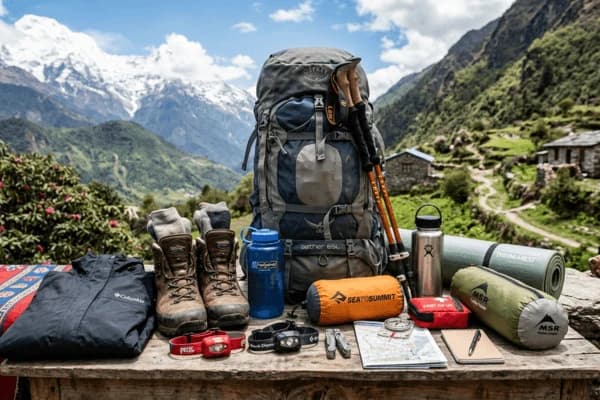
Essential Equipment For Everest Three Passes Trek Training
You don't need a gym full of fancy equipment to prepare for the Everest Three Passes Trek. A few basic pieces of training gear can make your workouts much more effective and help you train in a way that actually reflects what you'll experience on the trail.
Trekking Boots
If possible, do some of your training hikes in the same boots you'll wear during the trek. This helps break them in and gives your feet time to adjust before you reach the mountains. New boots might feel comfortable in the store, but the real test comes after several hours of walking.
Backpack
A backpack is one of the most important pieces of trekking equipment for training. As your fitness improves, gradually add weight to simulate real trekking conditions. Start light and slowly work your way up to 10–12 kg during longer training hikes.
Trekking Poles
Many trekkers underestimate how helpful trekking poles can be. They reduce pressure on your knees during descents and help with balance on uneven trails. The sooner you start using them in training, the more natural they'll feel on the trek.
Stair Machine
Don't have mountains nearby? A stair machine is one of the best workout tools for building trekking-specific fitness. It closely mimics the long uphill climbs you'll face on passes like Kongma La, Cho La, and Renjo La.
Treadmill
A treadmill can also be surprisingly useful, especially when used on an incline setting. Walking uphill for 30 to 60 minutes helps build endurance and leg strength, particularly if outdoor hiking options are limited.
Fitness Tracker
A fitness tracker isn't essential, but it can help you monitor:
- Daily steps
- Workout duration
- Heart rate
- Weekly training progress
It can be a great way to stay motivated and make sure you're gradually increasing your activity level.
Keep It Simple
The truth is, successful Everest trekkers usually aren't the ones with the most expensive gear. They're the ones who train consistently with the basics. A good pair of boots, a backpack, trekking poles, and a few simple pieces of hiking gear are more than enough to prepare for the demands of the Three Passes Trek.
Before heading to Nepal, it's also worth checking our Everest Trek Packing List to make sure you have all the essential gear you'll need on the actual trail.
Common Training Mistakes That Make Trekkers Struggle
Most trekkers don't struggle on the Everest Three Passes Trek because they're "unfit." They struggle because they make a few common mistakes during training. Guides see the same pattern every season: people arrive excited and motivated, but their preparation doesn't match what the trail actually demands. Proper trek-specific training is often more important than general fitness alone.
Starting Too Late
This is probably the biggest mistake of all. A lot of people think they'll start training a few weeks before the trek and be fine. Then they arrive in Nepal and suddenly find themselves walking 6 to 8 hours a day for nearly three weeks. The fix: Start at least 8 to 12 weeks before your departure. Even a few months of consistent training is far better than trying to cram everything into the last month.
Skipping Strength Training
Some trekkers focus only on walking, running, or cardio. The problem is that the Three Passes Trek isn't just about breathing well. Your legs need to handle steep climbs, long descents, and endless stone steps. Strong lungs help, but strong legs make the journey much more comfortable.
The fix: Add squats, lunges, step-ups, and core work to your weekly routine.
Never Training With A Backpack
We've seen trekkers who can hike for hours but start complaining about sore shoulders and aching backs after a few days on the trail. Why? Because they never trained with weights.
The fix: Start carrying a backpack during your practice hikes and gradually increase the weight over time.
Ignoring Recovery Days
Some people think more training always means better results. In reality, training hard every single day usually leads to fatigue, soreness, and sometimes injury.
The fix: Give yourself at least one or two recovery days each week. Your body gets stronger during recovery, not during the workout itself.
Overtraining Before Departure
This often happens in the final month before the trek. People suddenly realize the trek is getting close and start doing double workouts, extra-long hikes, and intense gym sessions. The result? They arrive tired before the trek even begins.
The fix: Focus on consistency. A steady training plan beats an exhausting last-minute push every time.
Depending Only On Gym Workouts
The gym is great, but the mountains don't feel like a gym. A treadmill won't fully prepare you for uneven trails, rocky paths, or long descents. Many strong gym-goers are surprised by how different real mountain hiking feels.
The fix: Get outside whenever possible. Practice on hills, stairs, hiking trails, or anywhere that resembles real trekking terrain.
A Simple Rule To Remember
The trekkers who usually have the best experience aren't necessarily the fastest runners or the strongest people in the gym. They're the ones who trained consistently, carried a backpack, took recovery seriously, and gave themselves enough time to prepare. Avoid these common preparation errors. You'll spend a lot less time suffering on the trail and a lot more time enjoying the mountains.
Beginner Training Plan for Everest Three Passes Trek
Starting from zero fitness? That honestly isn’t a deal-breaker. Most people who complete the Everest Three Passes Trek didn’t start as athletes; they just started early enough and stayed consistent. The truth is, this trek is more about steady progress than current fitness level. If you give your body a few months to adapt, it responds way better than most people expect. Guides in the Everest region often say the same thing: it’s not the strongest trekkers who finish easiest, it’s the ones who trained gradually and didn’t rush the process.
So here’s a simple, realistic beginner path you can actually follow without feeling overwhelmed.
Month 1: Just Get Moving (No Pressure Phase)
This is the “don’t overthink it” stage.
- Easy walks: 20 to 30 minutes, 4 to 5 days a week
- Light stair climbing or cycling (2 to 3 days/week)
- Basic bodyweight moves like squats and step-ups
The goal here is super simple: build routine, not fitness. At this point, even small consistency matters more than intensity. You’re just teaching your body to move.
Month 2: Build Your Base Endurance
Now things slowly start feeling more structured.
- Walks or cardio: 40 to 60 minutes, most days
- One longer hike on weekends (2 to 3 hours)
- Add light strength training 2 to 3 times/week
This is where your beginner trekking fitness really starts forming. You might notice you recover faster and feel less tired after workouts; that’s a good sign.
Month 3: Start Feeling “Trek Ready”
This is where your training starts to feel more like real trekking preparation.
- Long hikes: 3 to 5 hours on weekends
- Cardio sessions: 45 to 60 minutes
- Strength training: legs + core focus
- Light backpack training (4 to 6 kg)
Now your body is learning what long days actually feel like. You’ll probably feel sore after long hikes, but that’s normal. Your body is adapting.
Month 4 (Optional But Ideal): Real Trek Simulation
If you have time, this is the phase that really makes a difference.
- 5 to 6 hours of hiking on weekends
- Back-to-back walking days (Saturday + Sunday)
- Backpack training up to 8 to 10 kg
- Focus on recovery and stretching
This is where your fitness for the Everest trek starts to feel real. Long days won’t feel shocking anymore; you’ve already experienced versions of them.
What Most Beginners Worry About (And Reality Check)
A lot of beginners think:
- “I’m too unfit for this”
- “I need gym-level fitness first”
- “I’ll struggle from day one”
But in reality, most struggles come from starting too late or training inconsistently, not from being a beginner. If you can walk for a few hours and slowly build from there, you’re already on the right track.
Simple Milestones Before You Go
You’re in a good place if you can:
- Walk 4 to 5 hours comfortably
- Handle hills or stairs without constantly stopping
- Carry a light backpack without pain
- Recover within a day after long walks
Conclusion
The Everest Three Passes Trek is one of those adventures that rewards preparation. You don't need to be a marathon runner, a mountain athlete, or the fittest person in your group. What matters most is giving yourself enough time to prepare and sticking to a consistent routine.
If there's one thing to take away from this guide, it's this: start early and stay consistent. A few months of regular hiking, cardio, strength training, and backpack practice will do far more for you than a last-minute burst of intense workouts.
Remember, the goal isn't to make the trek feel easy. The goal is to arrive in the Khumbu Region with the fitness, confidence, and endurance to enjoy the journey rather than struggle through it. The passes will still challenge you, but you'll be much better prepared to handle those long days, steep climbs, and high-altitude conditions.
So start small, build gradually, and trust the process. Every walk, workout, and training hike gets you one step closer to standing on Kongma La, Cho La, and Renjo La.
And when you're ready to turn your training into a real Himalayan adventure, don't hesitate to book the Everest Three Passes Trek with our team. We can help you with a personalized preparation plan, gear advice, and everything you need to feel ready before departure.
The mountains aren't waiting for perfect fitness; they're waiting for consistent preparation. Start today, and your future trekking self will thank you for it.