Introduction
Food and accommodation cost on the Annapurna Circuit is something you should have a rough idea of before setting off, especially if you’re trekking independently. Food is usually your biggest day-to-day expense, while a bed in a teahouse is often surprisingly cheap. The catch is that prices slowly go up as you climb higher, particularly around Manang, Thorong Phedi, and High Camp.
It’s not difficult to keep track of your spending, but it helps to know what things actually cost. A few extra cups of tea, bottled water, hot showers, Wi-Fi, and charging can add up by the end of the trek. Therefore, having a little money set aside for these extra charges is a good idea.
The prices in this guide are based on recent teahouse rates and cost estimates from villages along the Annapurna Circuit. They’re meant as a practical guide rather than fixed prices, since what you pay can vary from one village and teahouse to another.
We’ll look at typical food prices, accommodation costs, the extras that often catch trekkers by surprise, and some simple money-saving tips. With a bit of budget planning beforehand, you’re much less likely to run short of cash halfway through the mountains.
Before planning your budget, learn more about the complete Annapurna Circuit Trek itinerary.
Why Food And Accommodation Prices Increase Along The Annapurna Circuit
If you’ve ever looked at food prices on the Annapurna Circuit, you may wonder why the same basic meal costs more as you get higher. It isn’t simply an “altitude charge.” The main reason is much more practical: getting food, fuel, drinks, and other supplies to the higher villages takes more time, effort, and money.
Besisahar To Chame
The lower part of the circuit is the easiest place to keep costs down. Around Besisahar and the villages further up toward Chame, road access makes it relatively easy to bring in rice, vegetables, cooking gas, drinks, and other supplies. Because vehicles can cover much of the journey, teahouses don’t have to rely as heavily on porters or mule trains. That keeps transportation costs lower, and you’ll generally see cheaper meals and drinks here.
Chame To Manang
As you leave Chame and head toward Pisang and Manang, things start to change. Road access becomes more limited, and supplies have to travel farther into the mountains. Mules and porters become more important for moving goods that cannot easily be brought by vehicle. Even something as ordinary as a gas cylinder has to be transported before a teahouse can use it for cooking. Naturally, those extra transport costs eventually find their way into the price of your meals and drinks.
Manang To Yak Kharka
The difference becomes more noticeable above Manang. You are now dealing with more remote villages, fewer transport options, and a much more demanding supply chain. Teahouses still need the same basic things they need at lower elevations: rice, flour, vegetables, cooking fuel, bottled drinks, and so on, but getting them there is harder. Porters and mules do much of the work, and bad weather can make the whole process even more difficult.
That is why food prices start climbing more noticeably in this part of the circuit. Recent price guides show meals becoming considerably more expensive around Manang and the higher sections compared with the lower villages.
Yak Kharka To Thorong Phedi And High Camp
This is where the altitude pricing becomes easiest to notice. Once you reach Yak Kharka, Thorong Phedi, and High Camp, there’s very little road access. Supplies have to be moved through difficult mountain terrain, mainly by porters and mule trains. Fuel also costs more to get there, and teahouses have to work harder to keep their kitchens running in cold, high-altitude conditions.
So when a cup of tea, a bottle of water, or a plate of dal bhat costs noticeably more at High Camp, you aren’t just paying for the food itself. You’re also paying for everything that had to happen before that food reached the teahouse kitchen. Helicopters can be used for mountain logistics in exceptional circumstances, but they shouldn’t be thought of as the normal way teahouses are supplied. The everyday mountain logistics are much more dependent on people and pack animals.
Muktinath To Jomsom
After crossing Thorong La, prices don’t suddenly drop back to what you saw around Besisahar. The situation does improve as you descend toward Muktinath, Kagbeni, Marpha, and Jomsom because road access becomes more useful again. Still, these are mountain settlements, and supplies may have travelled a considerable distance before reaching the local teahouse. So prices can remain higher than in the lower sections, although they generally become more reasonable as you continue toward Jomsom and the road network improves.
Weather Makes A Difference Too
There’s another factor that’s easy to overlook: season and weather. Rain, landslides, snow, and other trail or road problems can make transportation slower or temporarily disrupt supplies. During busy trekking periods, popular villages can also see stronger demand for food, fuel, and accommodation. This is one reason you shouldn’t expect exactly the same price at every teahouse or in every season.
Hence, rather than thinking of it as simply “higher altitude = higher prices,” think about the journey your food has taken. The farther you get from easy road access, the more complicated the supply chain becomes. Porters, mules, fuel, difficult terrain, weather, and the remoteness of the village all add to the final cost.
Higher elevations increase transportation costs. Learn more in our Annapurna Circuit Altitude guide.
Accommodation Cost On The Annapurna Circuit
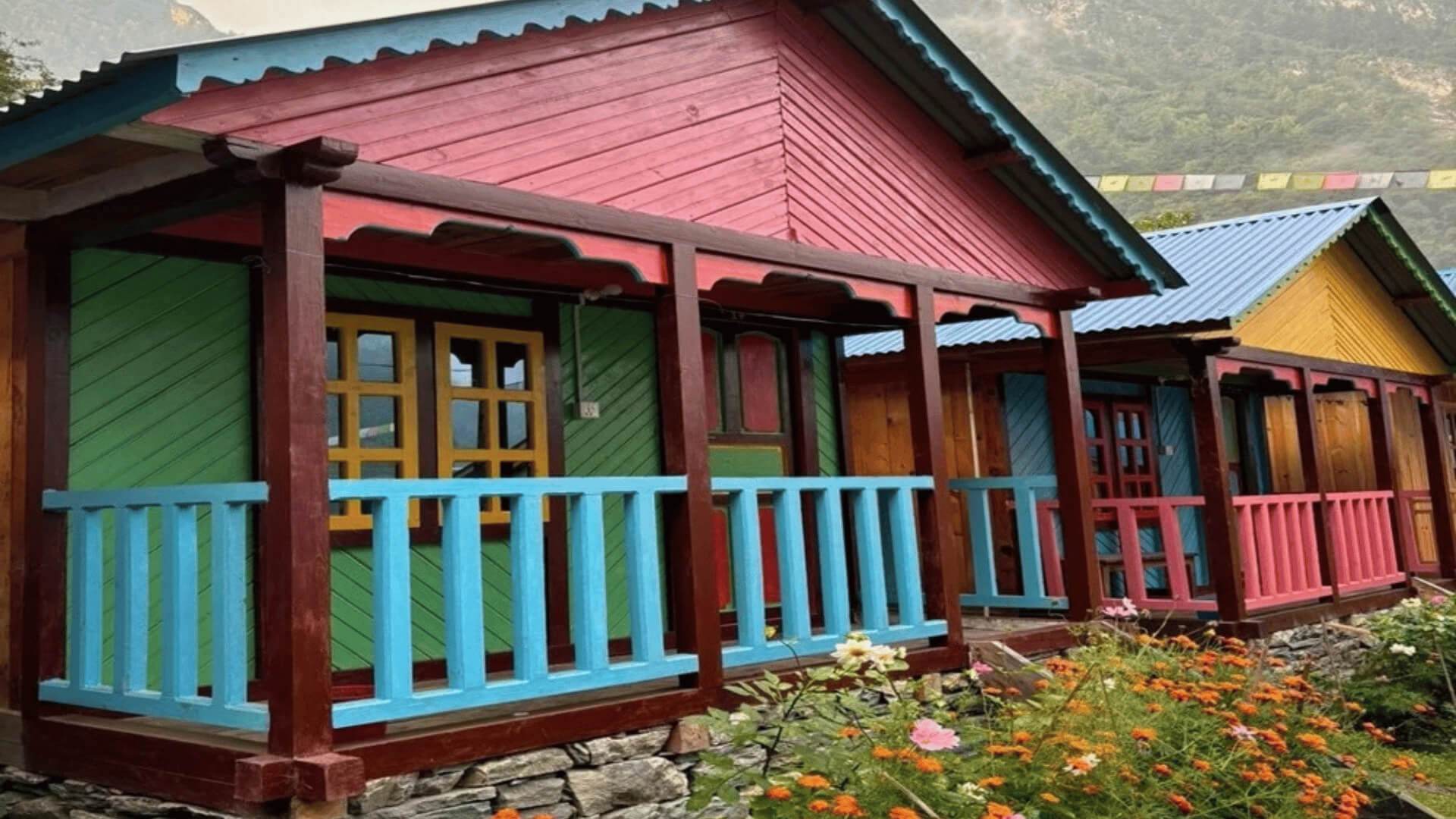
Accommodation is probably the part of the Annapurna Circuit budget that surprises first-time trekkers the most. Tea house rooms are generally quite basic, but they’re also relatively cheap. In many lower and middle sections, you can expect to pay around USD 3 to 10 for a room, while prices can reach roughly USD 8 to 17 or more around Thorong Phedi and High Camp. And there’s a little quirk with room rates here: the price of the bed isn’tt always the main way a teahouse makes money.
What Do Teahouse Rooms Look Like
Most trekkers stay in a simple twin room with two single beds. You’ll normally get a mattress, pillow, and blanket, although the quality of the bedding varies from one lodge to another. A private room is also available at many teahouses, but “private” doesn’t necessarily mean you get your own bathroom. In the more basic lodges, you may have a private bedroom but still use a shared bathroom down the hallway.
Rooms with an attached bathroom do exist, particularly in larger villages and some of the newer or better-equipped lodges. They’re more common around places such as Manang, Muktinath, and Jomsom than at the highest overnight stops. Naturally, these rooms cost more.
At the higher elevations, don't expect hotel-style comfort. Rooms are usually small, walls can be thin, and there may be no heating inside the bedroom. Blankets are generally provided, but a good sleeping bag is still worth carrying for the cold nights.
Accommodation Cost By Village
There’s no single fixed price for the whole circuit. Two teahouses in the same village can charge different amounts depending on their facilities, season, and availability. As a rough lodging cost guide, you can use the following figures:
There’s no single fixed price for the whole circuit. Two teahouses in the same village can charge different amounts depending on their facilities, season, and availability. As a rough lodging cost guide for 2026, you can use the following figures:
|
Village/Area
|
Typical Room Cost
|
What To Expect
|
| Besisahar |
USD 3 to 6
|
Basic rooms, shared bathrooms common
|
| Chame |
USD 3 to 8
|
Simple twin rooms; some better facilities
|
| Pisang |
USD 5 to 10
|
Basic to comfortable teahouses
|
|
Manang
|
USD 5 to 12
|
More choices; attached bathrooms in some lodges
|
|
Yak Kharka
|
USD 5 to 10
|
Basic rooms and shared facilities
|
|
Thorong Phedi
|
USD 8 to 17
|
Very basic and limited options
|
|
High Camp
|
USD 8 to 17+
|
Basic rooms; limited facilities
|
| Muktinath |
USD 8 to 15
|
More lodge choices and better facilities |
These are planning figures, not fixed tariffs. Your actual price can be different depending on the lodge, season, and how busy the village is.
Can You Get A Free Room
Yes, and this is something worth knowing before you start the trek. Some teahouses will give you the room free or at a very low rate if you eat your meals there. The arrangement makes sense from the lodge owner's point of view: rather than making much money from the bed, they make their money from breakfast, lunch, dinner, and drinks.
However, don't assume that every teahouse follows exactly the same rule. One lodge might offer a free room if you have dinner and breakfast there, while another may expect you to eat all your meals at the lodge. If you decide to eat somewhere else, the owner may charge you the normal room rate.
So, if someone tells you, “Accommodation is free on the Annapurna Circuit,” take that with a little context. The room may be free, but your food purchase is usually what makes that deal possible.
What About Peak Season
October and November are among the busiest months on the circuit, so the better mountain accommodation can fill up quickly. You may still find a bed without booking far ahead, but you have fewer choices if you arrive late in the afternoon.
Prices can also be higher during busy periods, particularly for better rooms, attached bathrooms, and popular lodges. The exact increase is not the same everywhere, so it is better to leave some room in your budget rather than rely on one fixed peak-season rate.
Overall, accommodation is usually not the biggest expense on the Annapurna Circuit. The room itself is often cheap; it’s the food and other services you use at the lodge that gradually add to your bill. If you understand how the teahouse system works before you leave, it becomes much easier to keep your spending under control.
Learn what rooms are really like in our Annapurna Circuit Tea Houses guide.
Extra Costs You Should Expect
When people work out their Annapurna Circuit budget, they usually think about two things first: food and a place to sleep. That makes sense, but there are quite a few little expenses along the way. A hot shower here, a phone charge there, a bottle of water, some snacks, and suddenly you have spent more than you expected.
None of these trekking extras will break the bank on its own. The problem is that they can add up over 10 to 14 days, especially in the higher villages where prices are noticeably higher.
|
Extra Expense
|
Typical Cost
|
|
Drinking water
|
USD 1 to 4+ per litre
|
|
Hot shower
|
USD 1 to 4+ per litre
|
|
Wi-Fi
|
USD 2 to 5
|
|
Device charging
|
USD 1 to 4 per charge
|
| Laundry |
Varies by lodge and item
|
| Toilet |
Usually free; occasional small fees
|
|
Mobile data
|
Depends on your SIM/data package
|
| Snacks |
USD 2 to 6+ per item
|
|
Bakery items
|
Usually a few dollars |
Drinking Water
Water is one expense you’ll deal with every single day. A one-litre bottle might cost around USD 1 in the lower sections, but the price can rise to USD 3 to 4 or more at higher elevations. Boiled or filtered water is another option, although that also comes with a charge.
This is one of the easiest places to save money. Carry a reusable bottle and a proper water-purification method rather than buying several bottles every day.
Hot Shower
A hot shower feels pretty luxurious after six or seven hours on the trail. It’s also something you will usually pay for separately. Expect roughly USD 2 to 5 per shower, with the higher end becoming more common as you climb. Availability can also become limited in the highest sections.
You probably won't feel the need for one every day anyway. Skipping a few showers can save a surprising amount over the course of the trek.
Wi-Fi
Most trekkers do not really need Wi-Fi every night, but it’s tempting when you reach a teahouse after a long day and want to message family or upload a few photos. Where Wi-Fi is available, expect around USD 2 to 5 depending on the lodge and the type of access. The connection can also become slower and less reliable as you get higher, particularly above Manang.
So don't count on Wi-Fi being available everywhere just because a teahouse advertises it.
Charging Your Devices
Your phone, camera, power bank, smartwatch; you may have more batteries to worry about than you expected. Charging commonly costs around USD 1 to 4 per charge, and it can be more expensive in the higher sections where electricity is limited. If you’re carrying a camera for the trek, this is worth planning for. A decent power bank can reduce the number of times you need to pay a charging fee.
Laundry
You can usually find some kind of laundry service in the larger villages, but it’s not something to depend on at every overnight stop. Prices vary depending on the lodge and whether you are paying by item or for a larger load. For most trekkers, doing small items by hand and using a laundry service only when necessary is the easier and cheaper approach.
Toilet Fees
You normally won't be paying every time you use the toilet at your teahouse. Toilets at lodges and restaurants are generally part of the service. You may occasionally come across a small charge at a particular trail stop or public facility, though, so carrying a little cash in Nepali rupees is useful.
Mobile Data
Mobile data itself isn’t usually a major part of your Annapurna Circuit expenses. You can buy a local Nepal SIM and data package, and the amount you spend depends mostly on how much data you use. The bigger issue is coverage. Your phone may work perfectly in one village and then have little or no signal in the next. That's another reason not to make mobile data or Wi-Fi your only way of accessing important information while trekking.
Snacks
This is probably the easiest expense to underestimate. Chocolate, biscuits, chips, soft drinks, energy bars and other snacks are available along the trail, but the prices become noticeably higher as you get farther into the mountains. A snack that costs very little in Kathmandu can cost several dollars at a high-altitude teahouse.
If you already know you’ll want snacks during the walk, buying some before heading into the higher sections can save money.
Bakery Items
And then there are the bakery stops. Places such as Manang are known for cafés and bakeries, and after a long trekking day, a cinnamon roll, cake, pastry, or coffee can be hard to resist. These aren’t essential expenses, obviously, but they’re worth remembering if you’re trying to stick to a tight budget.
One coffee and pastry doesn’t seem like much. Doing it every afternoon is a different story.
How Much Should You Keep For Extras
For a normal trek, keeping around USD 5 to 15 per day for these smaller expenses is a reasonable cushion. If you rarely use Wi-Fi, skip most hot showers, carry your own snacks, and purify your drinking water, you can spend considerably less. If you enjoy café stops, hot showers, bottled drinks, and staying connected, you’ll spend more. Current estimates vary, but the general pattern is consistent: these small charges become more noticeable at higher elevations.
The good thing is that most of these costs are optional. You can decide where you want to spend and where you would rather save. Packing wisely can reduce some of these extra costs. See our Annapurna Circuit Packing List.
Village-By-Village Food And Accommodation Prices
Prices don't stay the same throughout the Annapurna Circuit. You’ll notice them creeping up as you leave the lower trekking villages and move toward Manang, Yak Kharka, and Thorong Phedi. The biggest jump is around the Thorong La section, where getting food and other supplies into the mountains is much harder.
Once you cross the pass and walk down to Muktinath and Jomsom, things become a little cheaper again. So, if you want to get a rough idea of your daily expenses, it helps to look at the route village by village.
Here are practical 2026 estimates for meals and a basic room:
| Village |
Breakfast
|
Lunch |
Dinner |
Room |
| Besisahar |
NPR 300 to 600
|
NPR 400 to 700
|
NPR 500 to 800
|
NPR 1000 to 2000
|
| Chame |
NPR 700 to 1,000
|
NPR 600 to 900
|
NPR 700 to 1,000
|
NPR 1000 to 2000
|
| Pisang |
NPR 700 to 1,000
|
NPR 600 to 900
|
NPR 700 to 1,000
|
NPR 500 to 1,000
|
| Manang |
NPR 700 to 1,100
|
NPR 700 to 1,000
|
NPR 800 to 1,200
|
NPR 1500 to 2000
|
|
Yak Kharka
|
NPR 900 to 1,200
|
NPR 800 to 1,100
|
NPR 900 to 1,300
|
NPR 1500 to 1,200
|
|
Thorong Phedi
|
NPR 1,000 to 1,400
|
NPR 900 to 1,300
|
NPR 1,000 to 1,500
|
NPR 800 to 1,500
|
| Muktinath |
NPR 700 to 1,000
|
NPR 600 to 900
|
NPR 700 to 1,000
|
NPR 500 to 1,200
|
| Jomsom |
NPR 500 to 900
|
NPR 500 to 800
|
NPR 600 to 1,000
|
NPR 500 to 1,500 |
These are approximate planning figures. Prices vary between teahouses, and the exact menu depends on what you order.
Besisahar And Chame
The lower part of the circuit is generally easier on the wallet. Besisahar has much better road access, so bringing in food, drinks, and cooking fuel is relatively straightforward. By the time you reach Chame, prices have started to move up, but they’re still fairly reasonable. For example, a recent menu from Chame lists a breakfast set at NPR 1,000 and dal bhat at NPR 800.
Pisang And Manang
This is where you’ll start noticing the difference more clearly. In Upper Pisang, a recent menu lists dal bhat at NPR 800, while a basic breakfast set can be around NPR 1,000. In Manang, prices vary from lodge to lodge, but food generally costs more than in Chame because supplies have to travel farther into the mountains. It’s also a good place to stock up on a few snacks or anything you might need before heading higher.
Yak Kharka And Thorong Phedi
Once you get above Manang, your meal costs by village become noticeably higher. At Yak Kharka, a menu lists dal bhat at around NPR 950, while breakfast sets can be around NPR 1,100–1,200. Thorong Phedi and High Camp are generally the most expensive stops on the circuit. At Thorong High Camp, for example, dal bhat can reach around NPR 1,200 and a breakfast set around NPR 1,400.
That jump makes sense once you consider where you are. There is no easy road bringing supplies directly to these high-altitude lodges, so food and fuel have to be moved through much more difficult terrain.
Muktinath And Jomsom
After crossing Thorong La, you’ll probably notice the prices coming down again. Muktinath is a good example. A recent menu lists vegetable dal bhat at around NPR 700, which is considerably less than the NPR 1,200 charged at Thorong High Camp. The same general trend continues as you move toward Jomsom, where road access makes supplying the lodges easier. That does not mean everything suddenly becomes cheap, but you should notice some relief compared with the high-altitude section.
One Thing To Remember About Room Prices
Don't look at the room price alone when comparing accommodation by village. Some teahouses offer very cheap rooms, or even waive the room charge, if you eat your meals there. Others may charge the normal room rate if you decide to eat elsewhere. This is particularly common on the upper circuit. So your actual tea house costs depend on the whole bill: room, breakfast, lunch, dinner, drinks, and any extras you order.
The figures in the table are therefore best used to get a feel for the route rather than as a fixed price list. Your spending can be a little lower or higher depending on the lodge, the season, and what you order.
Compare your daily stops with our detailed Annapurna Circuit Itinerary.
Average Daily Budget
There’s no single amount you have to spend every day on the Annapurna Circuit. It mostly comes down to how you like to travel. If you’re happy with a basic room, normal teahouse meals, and only a few extras, you can keep your daily spending pretty low. If you want better rooms, more snacks, hot showers, and plenty of tea and coffee, the cost naturally goes up.
For this season, I would roughly plan your trek budget like this:
|
Trekker Type
|
Food |
Accommodation |
Extras |
Daily Total
|
|
Budget Trekker
|
USD 15 to 20
|
USD 3 to 6
|
USD 2 to 5
|
USD 20 to 30
|
|
Mid-range Trekker
|
USD 20 to 30
|
USD 5 to 10
|
USD 5 to 10
|
USD 30 to 50
|
|
Comfortable Trekker
|
USD 30 to 40
|
USD 10 to 20
|
USD 8 to 15
|
USD 48 to 75
|
These are for food, your room, and personal extras on the trail. They don’t include permits, guide or porter costs, transportation, travel insurance, gear, or tips. Current estimates put food and teahouse accommodation together at around USD 25 to 40 a day for many trekkers, with the higher sections costing more.
Budget Trekker
If you’re trying to keep your backpacker budget under control, aroundUSD 20 to 30a day is a reasonable target for the lower and middle parts of the circuit.
That usually means staying in a basic teahouse room, eating regular local meals, carrying your own water bottle, and not paying for every shower or Wi-Fi session. Dal bhat is also your friend here; it’s filling, widely available, and usually one of the better-value meals on the trail.
Just remember that the number can jump on the days around Thorong Phedi and High Camp. Food alone can cost considerably more there than it does in the lower villages.
Mid-Range Trekker
For most trekkers, USD 30 to 50 per day is probably the easiest figure to work with. You can eat what you actually feel like ordering, stay in decent teahouses, have a hot shower occasionally, charge your phone, and pick up a few snacks without worrying about every rupee.
This is the level I would recommend for someone who wants to enjoy the trek but is not particularly interested in luxury. It also gives you a little breathing room when prices are higher in the upper villages.
Comfortable Trekker
If you would rather not think too much about your spending, allow around USD 50 to 75 a day. You might choose a better room when one is available, order more expensive dishes, have drinks or bakery items, take hot showers more often, and use Wi-Fi or charging services without worrying about the extra few dollars.
There is still a limit to how comfortable things can get, though. Even with a bigger comfortable budget, accommodation around Thorong Phedi and High Camp remains fairly basic because of the altitude and remoteness.
One More Thing About Your Daily Budget
Don't expect to spend exactly the same amount every day. The lower sections can be quite cheap, while Nepal trekking expenses usually climb around Manang and reach their highest point near Thorong Phedi and High Camp. After crossing Thorong La and descending toward Muktinath and Jomsom, prices generally start to ease again.
Hence, if you want one simple number to work with, USD 40 per day is a good middle-ground figure for food, accommodation, and normal extras. Keep some additional money aside for the days when you are higher up or feel like treating yourself.
Our complete Annapurna Circuit Budget Guide explains every trekking expense.
Total Food And Accommodation Cost For The Entire Trek
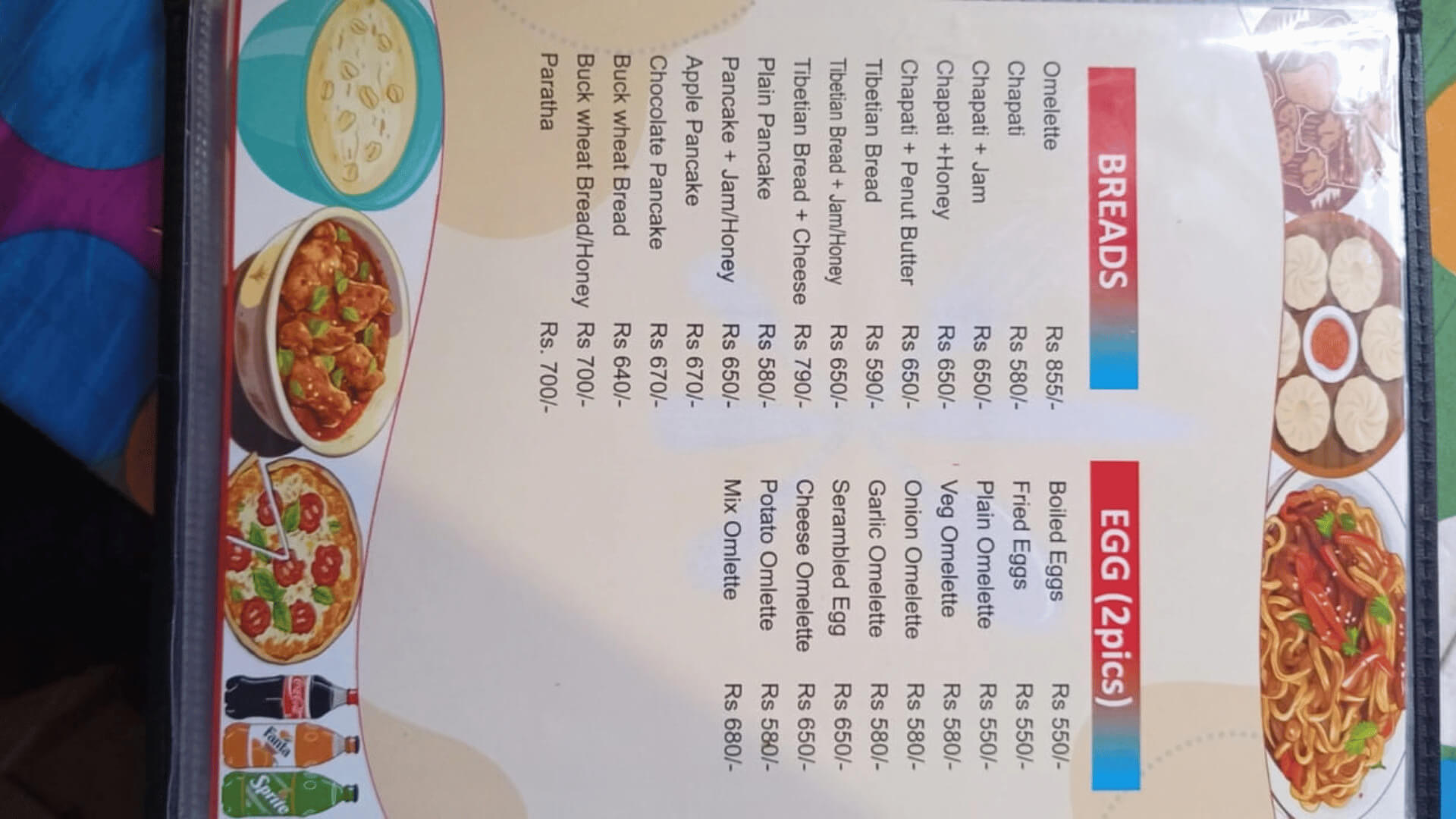
The easiest way to work out your overall cost for food and accommodation is to start with the number of days you expect to spend on the trail. A 10-day trekwill obviously cost less than a 16-day trek, but there is another thing to remember: you won't spend the same amount every day.
The lower part of the circuit is generally cheaper. Once you get around Manang and start heading toward Thorong La, food and other services become more expensive. After crossing the pass and descending toward Muktinath and Jomsom, prices usually ease off again. Recent menu checks show this difference quite clearly.
For the estimates below, I’m assuming three meals a day, a basic teahouse room, and a small amount of extras such as water, charging, showers, and snacks. They’re meant for independent trekkers paying as they go, not for a package where meals and rooms are already included.
What About The Other Trekking Expenses
These figures are only for your food, accommodation, and personal extras while trekking. They don’t include permits, guide or porter fees, transport to and from the trail, travel insurance, equipment, tips, or hotel stays in Kathmandu or Pokhara. That distinction is important when working out your full trek budget. A figure of USD 500 to 600 might be enough for your day-to-day spending on the trail, but it is not the price of the entire Annapurna Circuit trip.
Also, don't worry too much about getting the calculation down to the last dollar. Prices vary between Annapurna villages, and the higher sections can cost noticeably more. Recent estimates put food alone at around USD 25 to 35 a day for many trekkers, while the Manang-to-Muktinath section can reach roughly USD 25 to 40 or more depending on what you eat and drink.
So for budget planning, I’d rather carry a little extra than arrive at Thorong Phedi with exactly enough money left for the meals you have already calculated.
How To Save Money On Food And Accommodation
You don't need to trek the Annapurna Circuit on a shoestring to keep your spending under control. A few simple choices can save you quite a bit, especially once you get above Manang, where food, drinks, water, and other services become more expensive. Here are some budget tips that are actually useful on the trail.
Eat Dal Bhat
If you're looking for a filling meal that gives you plenty of energy for the next day's walk, dal bhat is hard to beat. It’s available at almost every teahouse, and many places offer extra servings of rice and dal
It also tends to be better value than ordering several different dishes. You don't have to eat it for every meal, but choosing it regularly can keep your food bill down without leaving you hungry. Recent menu checks show dal bhat ranging from around NPR 800 in Chame to NPR 1,200 at Thorong High Camp.
Buy Snacks Before You Go Higher
Those chocolate bars and packets of biscuits become noticeably more expensive once you're high in the mountains. Therefore, if you already know you'll want something to snack on while walking, buy a few things in Kathmandu, Pokhara, or one of the lower villages.
You don't need to carry half a supermarket with you. A small supply for the higher days is enough and can save you from paying mountain prices later. Some estimates suggest that snacks can cost several times more above Manang than they do in the cities.
Carry A Reusable Bottle And Purify Your Water
Buying bottled water every day is both expensive and unnecessary. Water prices rise as you get higher, so the cost can add up surprisingly quickly over a two-week trek. A reusable bottle together with purification tablets, drops, or a reliable filter is a much cheaper option. You can also pay for boiled or treated water at teahouses when you need it. Just make sure the water you drink has been properly treated.
Don't Buy Bottled Water Every Day
This deserves its own mention because it is such an easy expense to overlook. A bottle here and there doesn't seem like much, but multiply that by several bottles a day over 10 to 14 days and the bill starts looking different. The higher you go, the more expensive bottled water can become. Your own bottle and purification method can therefore save money while also cutting down on plastic waste.
Carry A Power Bank
If you're taking photos, using your phone for maps, or shooting videos throughout the day, your battery will probably disappear faster than you expect. Teahouses can charge for electricity, particularly in the higher sections. Current guides commonly put device charging at around USD 2 to 4 per charge, although the price varies by lodge.
A decent power bank means you won't have to pay for a charge every time your battery gets low. It’s especially useful if you carry more than just a phone.
Charge While You're Eating
If you do need to charge your phone or camera, ask whether you can plug it in while you're having dinner or sitting in the dining room. You’re already gonna spend some time there, so there’s no reason to pay for a separate charging session if the lodge allows you to charge while you eat. Charging arrangements vary between teahouses, though, so don't assume it’s always free.
Stay Where You Eat
This can make a real difference to your accommodation cost. Many teahouses offer a room for a very small amount, or sometimes waive the room charge, when you eat your meals there. The lodge makes its money from your food instead of the room.
Just ask about the arrangement before taking the room. Some lodges may expect you to have dinner and breakfast there, while others may want you to eat all your meals at the lodge. If you decide to eat somewhere else, the room may no longer be free.
Carry Enough Cash
Don't leave your cash planning until you’re already in the mountains. There are ATMs in some larger places, but you shouldn't expect to find one whenever you need it.
Carry enough Nepali rupees for your expected daily spending, plus a bit extra. You'll need cash for small things such as tea, snacks, showers, charging, and accommodation, and having a buffer is particularly useful if your trek takes an extra day because of weather or other delays.
You Don't Have To Save On Everything
The idea isn't to make your trek as cheap as possible. If you really want that hot shower after a long day, take it. If you fancy a coffee and cake in Manang, enjoy it.
The easiest budget travel approach is simply to cut the expenses you don't really care about. Carry your own water, bring a few snacks from lower down, use a power bank, and stay where you eat. Those small travel hacks can make your money last longer without making the trek feel cheap.
Read more practical advice in our Annapurna Circuit Travel Tips guide.
Conclusion
When planning your Annapurna Circuit Trek, food and accommodation cost doesn't have to be complicated. For most trekkers, allow roughly USD 25 to 40 a day for food and around USD 30 to 50 a day overall for food, accommodation, and basic extras.
For a 12 to 14 day journey, keeping about USD 400 to 700 for your trail expenses is a sensible starting point. Carry a little extra cash as prices can change with the season, inflation, and local supply conditions. The main thing is to leave yourself some breathing room. Spend where comfort matters to you, save on things you don't really need, and don't try to plan your trekking budget down to the last rupee.
Ready to plan your journey? Read our Complete Annapurna Circuit Trek Guide for everything you need to know before you go.
FAQs
How much should I budget per day for food and accommodation?
For most trekkers, USD 30 to 50 a day is a comfortable amount for food, a basic teahouse room, and small extras. You can spend less in the lower villages, while the Manang to Thorong La section usually costs more. If you want fewer money worries, keeping a little extra cash as a buffer is a good idea.
Is accommodation free on the Annapurna Circuit?
Sometimes, yes. Some teahouses charge very little for the room, and some may even give you the room free if you eat your meals there. It’s basically how the lodge makes its money. Just ask about the condition before taking the room, because the arrangement is not identical everywhere.
Are meals expensive on the Annapurna Circuit?
Not particularly in the lower villages. A normal day of three meals can be around USD 15 to 30, but food gets noticeably more expensive as you climb. Above Manang, you can easily spend USD 25 to 40 a day on meals, especially if you order drinks, snacks, or Western dishes.
Is Dal Bhat unlimited on the Annapurna Circuit?
Usually, yes. Dal bhat is commonly served with free refills, particularly rice and dal, which is one reason trekkers love it. Policies can differ slightly from one teahouse to another, so don't assume every lodge has exactly the same deal. Still, for a hungry trekker, it is hard to beat.
Is bottled water expensive on the Annapurna Circuit?
It gets more expensive the higher you go. A bottle that seems reasonably priced at the beginning can cost several times more around Manang and the higher villages. Carrying a reusable bottle and using purification tablets, drops, or a filter is a much cheaper option for a longer trek.
Should I carry cash on the Annapurna Circuit?
Yes, definitely. Don't plan your trek around finding an ATM along the trail. Carry enough Nepali rupees for your expected daily expenses, plus some extra for unexpected delays or purchases. You'll need cash for things like meals, rooms, showers, charging, snacks, and other small expenses.
Can I use cards on the Annapurna Circuit?
You may find card or digital payment options in some larger lodges and villages, but I wouldn't rely on them. Smaller teahouses generally prefer cash, and connectivity can also become unreliable higher up. For a remote trek like this, cash is still the safer option.
Are food and accommodation prices fixed?
No, there isn't one fixed price across the whole circuit. Prices vary between lodges, villages, seasons, and altitudes. The general trend is easy to see, though: costs rise as you get closer to Thorong La because transporting food, fuel, and other supplies becomes harder.
Is the food vegetarian on the Annapurna Circuit?
You’ll have plenty of vegetarian choices. Dal bhat, vegetable curry, noodles, fried rice, pasta, porridge, pancakes, and Tibetan bread are common teahouse options. Meat dishes are also available in many places, but menus can become smaller in the higher villages.
What is the cheapest meal on the Annapurna Circuit?
Dal bhat is usually the best-value option. It’s filling, widely available, and commonly comes with rice and dal refills. Prices still rise with altitude, but you generally get a lot of food for what you pay. It also makes sense after a long trekking day when you need plenty of energy.