What Is Kongma La Pass and Why Do Trekkers Bypass It
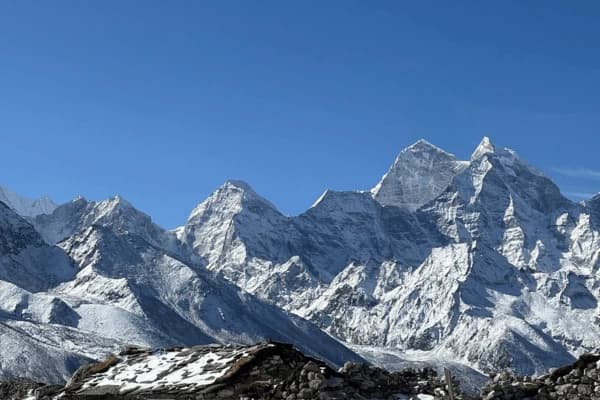
The Kongma La (5,535m) Pass is the lowest of the Three Passes on the Everest Three Pass Trek. Despite being the lowest is often the one that is underestimated the most. It connects the Chhukung Valley on the eastern side of Khumbu to the Lobuche area of Nepal. The trekker who follows the "normal" route of the Three Passes will walk from Chhukung (4,730m) to the top of Kongma La, then descend steeply to Lobuche (4,940m).
There is loose rock and scree on either side of the pass, and a long, relentless uphill trek is involved in getting to the top of Kongma La from Chhukung, followed by a long, downhill to Lobuche with unstable footing that can be hard on tired knees. The majority of trekkers seeking information about the Everest Three Pass Trek difficulty level need to decide for themselves if they will be crossing Kongma La as part of their overall trekking goals, and a fair number will determine it will not be necessary.
What Is Kongma La Pass and Why Do Trekkers Bypass It
The Kongma La (5,535m) Pass is the lowest of the Three Passes on the Everest Three Pass Trek. Despite being the lowest is often the one that is underestimated the most. It connects the Chhukung Valley on the eastern side of Khumbu to the Lobuche area of Nepal. The trekker who follows the "normal" route of the Three Passes will walk from Chhukung (4,730m) to the top of Kongma La, then descend steeply to Lobuche (4,940m).
There is loose rock and scree on either side of the pass, and a long, relentless uphill trek is involved in getting to the top of Kongma La from Chhukung, followed by a long, downhill to Lobuche with unstable footing that can be hard on tired knees. The majority of trekkers seeking information about the Everest Three Pass Trek difficulty level need to decide for themselves if they will be crossing Kongma La as part of their overall trekking goals, and a fair number will determine it will not be necessary.
Physical Reasons Trekkers Skip Kongma La
- Altitude: The Kongma La pass is at an elevation of 5,535 meters, above most people's ability to adjust to the lack of oxygen. If you have not grown accustomed to altitude through acclimatization, it can be a very dangerous climb.
- Fatigue: Most trekkers will be on day eight or nine of their Three Passes Itinerary by the time they reach Kongma La. They will have already built up a lot of fatigue and will not have the physical capabilities required to ascend to the top of the pass safely.
- Risk of Injury: Descending from Kongma La to Lobuche involves an excessive amount of loose scree, making this the most treacherous section of the Three Passes Route, causing most trekkers to sustain ankle and/or knee injuries. If you have already been suffering from a lower leg injury, it is going to be aggravated by this descent.
Practical Reasons Trekkers Skip Kongma La
- Limited time: The bypass route allows trekkers with tight itineraries to save 1 full day by bypassing Kongma La using an established route. On top of that, the bypass route connects naturally to the typical EBC/Kala Patthar itinerary that most trekkers wish to complete anyway.
- Weather: Kongma La is an exposed and dangerous pass when it is cloudy, windy or snowing. When our guides check the weather conditions at the time of the trek, and the forecast predicts unstable weather (5,000 m+), we will make an immediate recommendation to take the bypass instead of attempting the Kongma La pass. No pass crossing is worth risking crossing the pass in poor conditions (extreme weather).
- Budget: For trekkers on a strict schedule (ie, planned to arrive in Lukla in 3 days), the bypass route enables trekkers to arrive in Dzongla much quicker without the risks that might have delayed the Kongma La pass.
Our guide's authentic perspective: Skipping Kongma La is a practical alternative route. Most experienced Himalayan trekkers worldwide will opt to take the bypass route instead of tackling the pass crossing over the Kongma La. The pass has nothing to prove, and if you decide to cross the pass despite the weather.
Main Kongma La Pass Bypass Route: Lobuche to Gorak Shep to Dzongla
Standard bypass takes you along the standard EBC route from Lobuche to Gorak Shep, takes you past Everest Base Camp and to Kala Patthar, before diverging west toward Dzongla to continue the Three Passes route over Cho La. The bypass largely follows the standard Everest Base Camp Trek Itinerary as used by most trekkers – you will never stray from the well-marked, well-catered for trail.
| Section |
Distance |
Walking Time
|
Elevation |
Key Note
|
|
Lobuche to Gorak Shep
|
~4.5 km
|
1.5 - 2 hrs
|
4,940 m to 5,164 m
|
Flat moraine trail, straightforward navigation
|
|
Gorak Shep to Everest Base Camp (optional)
|
~3.5 km
|
2 - 2.5 hrs return
|
Up to 5,364m
|
Worth the detour if time allows
|
|
Gorak Shep to Kala Patthar (optional)
|
~1.5 km
|
1 - 1.5 hrs
|
Up to 5,644m
|
Best sunrise viewpoint on the route
|
|
Gorak Shep to Dzongla
|
~8 km
|
4 - 5 hrs
|
5,164 m to 4,830 m
|
Long descent, rough terrain near Cho La base |
Step-by-Step Route Description
- Lobuche to Gorak Shep (1.5-2 hours): A mostly flat section across moraine with very obvious trail marks; the least arduous leg of the upper Khumbu. A gentle ascent of approximately 220 metres is achieved along the lateral moraine of the Khumbu glacier. You are walking along the moraine with Pumori looming directly in front of you.
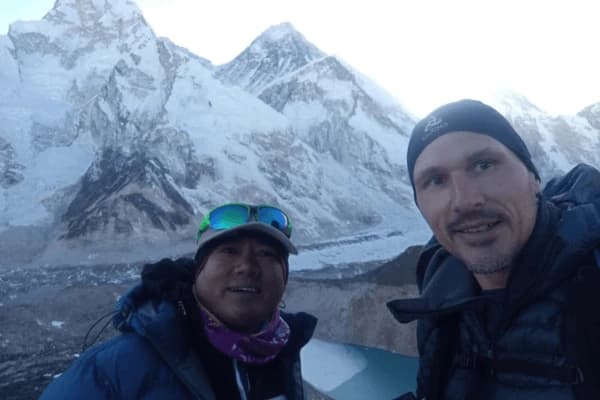
- Gorak Shep rest and options (flexible): Most trekkers on the bypass spend one night at the very least here. Two vital side treks are undertaken from here, the treks to Everest Base Camp (3.5km each way – 2 hours) and to Kala Patthar (1.5km, 1 hour ascent). It is always recommended by our team to undertake the pre-dawn climb to Kala Patthar; the panorama from 5644 metres of the sunlit Everest is the highlight of the route, and the most memorable of all the vistas.
- Gorak Shep to Dzongla (4-5 hours): The only long section of the bypass involves trekking from Gorak Shep back down to Lobuche and then turning west along the valley floor to Dzongla. It gets significantly rougher here as you get close to the foot of the Cho La. There are far fewer trekkers here than along the EBC path, but it is easily navigated.
- Accommodation: Lodging is available at teahouses in Lobuche, Gorak Shep, and Dzongla. Gorak Shep has the most options, but during the peak season (October and May), teahouses will fill up quickly; we recommend making a reservation for at least two days prior to your trek. Dzongla offers fewer teahouses, but they are comfortable, well-managed, and located perfectly to support your access for climbing Cho La the following morning.
Navigation note: When you are trekking from Gorak Shep to Dzongla, there is a junction where the trail divides (approximately 2 km west of Lobuche). You should take the lower trail, which follows the river valley, instead of the upper trail, this will lead you back to Kongma La. Our guides use their GPS to mark this junction for every group we take through this area.
Comparing All Kongma La Bypass Route Options
Trekking to Everest Base Camp via either of Kongma La's bypass routes is permitted, but the options each fulfill different types of trekker needs: Examples of the aforementioned (both pros and cons) can be found at this location by comparing all routes and determining which one best serves your total Everest Trek Cost, schedule, and overall trek experience.
| Route Option |
Distance |
Walking Hours |
Cost |
Difficulty |
Scenic Value |
Safety |
Best For |
| Lobuche to Gorak Shep to Dzongla |
~12 km |
6 to 7 hrs total |
Normal teahouse costs |
Moderate |
High, EBC and Kala Patthar views
|
High |
Most trekkers
|
| Via Everest Base Camp addition |
~15 km |
8 to 9 hrs total |
Normal + 1 night Gorak Shep
|
Moderate |
Very High |
High |
First-timers wanting EBC experience |
| Helicopter Lobuche to Dzongla area |
No walking |
20 to 30 min flight |
$350–$600 per person |
None |
Aerial Himalayan panorama |
Very High |
Injury, illness, time-limited |
| Return via Dingboche (reverse) |
Variable |
2 extra days |
Normal + 2 nights |
Easy–Moderate |
Moderate, same trail back |
Very High
|
Beginners, families |
Beginners and First-Time High-Altitude Trekkers
The best option for beginner and first-time high-altitude trekkers is to go through Gorak Shep with the option of going to Everest Base Camp and Kala Patthar (to get a complete physical and visual; "the best way to go is from Gorak Shep through the EBC sidetrip". The route is very well-marked and is well-supported by staff. Our guides feel that this is the most rewarding way to see Mount Everest and "no one will miss out on not going over Kongma La".
Senior Trekkers
When considering who to take to Everest at higher altitudes, there are several options to consider for those looking to go above & beyond in the safety of a helicopter and avoid the physical risks involved with descents on loose scree (due to joint injury). We have had many satisfied customers over 60 years of age who have successfully trekked using this method.
Photographers
The Gorak Shep route should not be avoided on an adventure to Kala Patthar. This location has one of the best photographic opportunities of both the Everest Pyramid and the surrounding mountains, with the Khumbu Sandstone below. Therefore, when planning to spend at least two nights in Gorak Shep for the purpose of photography (one night for Base Camp and one night for the Kala Patthar sunrise) should take a quick look at the location vis-a-vis one of the most photographed areas in the entire Khumbu Region.
Time-Limited Trekkers (10 days or fewer)
If you are time-constrained, use the bypass to get to Gorak Shep without going through EBC. You can do the trek from Lobuche to Dzongla via Gorak Shep in a "very long" (7-hour) day if you are motivated - this is, however, highly unlikely to happen. The preferred approach is to stop halfway as you hike to Gorak Shep and spend the night to photograph the sunrise from Kala Patthar. The 30-minute trip down to the summit is well worth it.
Pros and Cons of Skipping Kongma La Pass
This is the question our guides get asked the most. People want to get a straightforward answer, not a political answer. This is it. If you want to do the entire Everest High Pass trek, you will not be able to do this if you do not pass through Kongma La.
Benefits of Skipping Kongma La
- Lower risk of injury: You will be able to omit the steepest and most challenging descent of the Three Passes route.
- Better acclimatisation: You will be able to stay at more stable altitudes for longer, enabling your body to have longer to adjust to higher altitudes.
- More time flexibility: You will reach Dzongla according to your original schedule, even if you are delayed by poor weather or fatigue.
- You will have experienced the full EBC (Everest Base Camp) experience, as you are travelling via Gorak Shep to visit Base Camp and Kala Patthar, whereas you would not if you travelled the Kongma La route.
- You will be safer in bad weather as the bypass route does not take you to the high, exposed ridge of Kongma La, which is dangerous in the poor visibility associated with bad weather.
Drawbacks of Skipping Kongma La
- You don't actually do Three Passes when taking the shortcut; you haven't technically "done" Three Passes if this bypass is what you intend to do.
- The summit experience from the pass itself is worth it. Kongma La has unique 360-degree views of Makalu and the Eastern Himalayas, from directions inaccessible from the bypass.
- The "satisfaction factor" of taking the bypass may not be the same; it may be intangible, but it's something trekkers have experienced.
- The distance covered, taking the bypass route including the stretch from Gorak Shep to Dzongla, is longer than the direct route over Kongma La to Lobuche.
Make the effort and attempt to go over Kongma La if you feel you are physically able and if the conditions are good, and stick to the bypass route if you are worried or if your body says no. The mountain is not going anywhere, and there is nothing to be ashamed of about smart route choices.
Honest Guide advice: If you are physically fit enough and the weather is acceptable, then take Kongma La. If you are not feeling either, take the bypass without guilt. The mountain is not going anywhere; a shrewd route decision isn't anything to be ashamed of.
Final Recommendation: Should You Cross or Bypass Kongma La Pass
For most people, the Gorak Shep bypass will be the better option. If you're an experienced hiker and have acclimated properly to the altitude, and the weather is favourable, then you will have an unforgettable adventure when you cross the Kongma La. If you're not sure which route is best for your Everest Three Pass Trek, check out the various packages available and see which itinerary fits your fitness level, time of year, and how much you're able to dedicate in terms of time and energy toward achieving your goal.
|
If You Want...
|
Best Choice
|
Reason
|
|
Full adventure and Three Passes completion
|
Cross Kongma La
|
The pass is a defining part of the Three Passes experience
|
|
Maximum safety and comfort
|
Bypass via Gorak Shep to Dzongla
|
Lower risk, still reaches all key viewpoints
|
|
Fastest possible route
|
Helicopter transfer
|
Saves 1 full day, no physical demand
|
|
Complete EBC experience without high pass
|
Gorak Shep bypass + EBC side trip
|
Gets you to Base Camp and Kala Patthar without Kongma La
|
|
Limited fitness or altitude sensitivity
|
Return via Dingboche
|
Gradual descent on familiar, well-served trail
|
|
Bad weather forecast on crossing day
|
Bypass via Gorak Shep
|
Never attempt Kongma La in poor visibility or heavy snow |
When you should cross the Kongma La
- Your acclimatisation should be good - you must have spent a minimum of two nights above 4,000m prior to crossing the pass.
- The forecast looks clear and calm for the crossing and the morning after.
- You are trekking the Three Passes in its entirety and don't want any diversions from the intended route.
- Your knees and lower legs must be in good condition – the descent can be taxing.
When you should avoid crossing the Kongma La
- If you are in doubt about your current physical or acclimatisation state.
- Weather over 5,000m above sea level is volatile or uncertain.
- This is your first high-altitude trek in the Himalayas.
- You are going on a trek to Everest Base Camp and Kala Patthar, and not the full Three Passes.
- You already feel slightly ill with AMS in Lobuche or Chhukung.
FAQ: Quick Answers
Does bypassing Kongma La affect the Everest Base Camp experience?
No, as the detour around Gorak Shep includes EBC & Kala Patthar.
Can I decide on the day?
Yes, many people at this stage in Chhukung will assess how they are feeling and make the decision based on how the morning is. This is accounted for in all our three-pass trips.
Is the bypass route marked clearly?
Yes, with one exception, west of Lobuche, there is a fork on the road to Gorak Shep on your way to Dzongla. Keep low.
How does it affect my schedule?
Adds 0 to 1 day, depending on whether you stay overnight in Gorak Shep. Both crossings with or without Kongma La take a similar time to arrive in Dzongla.
For most people, the Gorak Shep bypass will be the better option. If you're an experienced hiker and have acclimated properly to the altitude, and the weather is favourable, then you will have an unforgettable adventure when you cross the Kongma La.
If you're not sure which route is best for your Everest Three Pass Trek, check out the various packages available and see which itinerary fits your fitness level, time of year, and how much you're able to dedicate in terms of time and energy toward achieving your goal.