What is Nepal's Mandatory Guide Policy
Think of it this way. The mountains of Nepal are some of the most enticing locations on the planet. But they also have the potential to be hazardous. So to help ensure safe environments for trekkers, Nepal introduced the Mandatory Guide Policy. Under this regulation, nearly all foreign trekkers obtaining a trekking permit for regulated trekking zones are required to hire a licensed tour guide.
The Nepal Tourism Board (NTB) monitors and enforces this policy through the existing Trekking Information Management System (TIMS) and Conservation Area Permits (CAP). Here's what happens if you don't have a licensed guide. Your permit application won't go through. And without a permit, you simply can't trek in Nepal. This is not a suggestion. It's an update to Nepal's tourism policy, and it carries legal ramifications.
Why This Policy Exists
The trekking regulations in Nepal have been established for a number of reasons that include:
- The number of trekking injuries in the remote Himalayas has been increasing each year.
- Emergency teams are unable to reach people who are off the trail and without adequate support.
- There is severe overcrowding on many of the popular routes, and this causes problems without an experienced manager (guide).
- Nepal Trekkers are now required to have a licensed guide (as per Nepalese Law) to ensure that there is someone responsible with you while you're trekking.
The purpose of this policy is not to create difficulties for you. It's to reduce the number of people who have had to be rescued because they were lost, injured, or on the trails without any support at all. The government is trying to correct this situation. So don't see it as a restriction. See it as a safety net.
For more information about what a licensed guide does for you, also check out our complete Nepal trekking guide information.
What Changed in Nepal Trekking Rules
Before we go into detail about the differences here is a high-level overview of the trekking rules in Nepal. Although trekking in Nepal was previously considerably more flexible with respect to permits and was mostly self-guided, the majority of this is no longer the case in any of the regulated trekking zones. Overhaul has increasingly limited the opportunities for self-guided trekking and has also provided for an increasing number of guided and supervised treks within the larger scope of regulated zones.
Here is a clear breakdown:
| Feature |
Before |
After |
|
Guide Requirement
|
Optional in many routes
|
Mandatory in most regulated zones
|
|
Solo Trekking
|
Widely allowed
|
Restricted in high-risk areas
|
|
Permit System
|
Independent application
|
Guide-linked approval system
|
| Enforcement |
Low monitoring
|
Strict digital enforcement |
Key Changes
The new TIMS (Tourist Information Management System) for Nepal now has a direct link to the guide registration when applying for a trekking permit in restricted zones; if you get your guide registered but do not get your trekking permit, or vice versa, you cannot do so.
Additionally, some specific details that have changed:
- The number of trekking limited areas (restricted trekking zones) has increased a lot.
- The guide verification process has now become a requirement for applying for a trekking permit, rather than being optional.
- There is a much stricter level of digital tracking and monitoring/enforcement at checkpoints, compared to previous levels of enforcement/by.
- The new trekking regulations/removal of loopholes for trekkers who were required to obtain a trekking permit and then go solo without a guide.
- The change that has the biggest impact on independent travelers; if you were planning to trek solo in now restricted areas (such as Everest/Manaslu), you need to immediately adjust/reassess.
Why Did Nepal Introduce Mandatory Guide Policy
When Nepal introduced mandatory trekking guides for trekkers in 2012, it was to protect tourists, not to ban them. Our team has been observing how the new trekking safety regulations around the Himalayas were established, and it has concluded that all of these new rules were/are based on actual, unfortunate events (not just arbitrary administrative decisions).
Key Reasons
- The number of lost trekkers on remote trekking routes continues to grow every year.
- Rescue operations in the Himalayas are extremely challenging, costly, and in some cases impossible when not being able to locate people using GPS.
- The Nepal rescue system trekking is overwhelmed with unregistered trekkers, and there is no way of contacting them to provide assistance.
- Having certified trekking guides helps to boost employment opportunities within local communities (Nepal).
When you are traveling with a licensed trekking guide, there is a record of your existence. Your guide has your information recorded and is familiar with emergency procedures to communicate with the rescue organization. Without a licensed guide, you will be completely unattended.
Real-World Issues
These are very real issues that affect trekkers on every expedition every year:
- Trekkers can remain stranded on the mountain for days due to weather delays affecting rescues or assistance from mountain staff.
- When there are no guides around, communication ceases to exist (our tracking devices will not work properly in these locations; they will not give you an accurate position until you are within 1,900 mph of a known location.
- If you trek by yourself in Nepal and you suffer from altitude sickness and cannot get the help you need, you could die without anyone able to come and assist you.
- If you do not register your trek with the Nepali Government, your families may need to wait weeks for any information about you.
This decision is supported by the statistics of Himalayan accident in Nepal. The rescue of dozens of trekkers is required every year and most cases relate to people who have gone guide-free.
Get the full run down on trekking safety tips Nepal, it might just save your life before you strap on your bag.
Where Does the Mandatory Guide Rule Apply
Not every trail in Nepal needs a guide. It's essential to understand that the guidelines cover only large, high-risk, and high-volume locations. Here's where it applies:
Applicable Regions (Guide is Mandatory):
- Everest trekking rules Nepal: The entire Mount Everest Base Camp ecosystem requires you to hire a licensed Guide to travel on this route.
- Annapurna trekking guide requirement: The Annapurna region will require you to hire a licensed Annapurna Guide to travel on most routes within the Annapurna Conservation Area.
- Manaslu Circuit Trek: Additionally, the entire Manaslu Circuit Trek is a regulated area of travel that will require you to hire a licensed Guide to travel in this zone.
- Restricted Areas/ Zones in Nepal: If the location you are trekking to is a Restricted Area, then you will need to hire a Licensed Guide for Upper Mustang, Dolpo, Kanchenjunga, or a similar area.
Partial or Conditional Areas:
The following cultural lower altitude areas may allow you to trek independently, provided certain restrictions do not apply. Short to medium-length day hiking activities located near the cities of Pokhara or Kathmandu may be accomplished without hiring a formal Guide.
Note: If you require trekking permits to enter the Restricted Area of travel in Nepal and you wish to avoid a guide, then check with a Nepal Trekking Zone Map provided by the Nepal Tourism Board (NTB), which is the most reliable resource to use when planning for your trek.
Are you planning to trek to Everest Base Camp? We have a detailed Everest Base Camp Trekking guide with all permits, checkpoints, and requirements.
Who Needs a Guide in Nepal (RULE BREAKDOWN)
Let us make this very simple. Here is who needs a guide and who might not:
|
Trekker Type
|
Guide Required?
|
|
Foreign trekkers
|
YES — in most restricted zones
|
|
Solo trekkers
|
MOSTLY NO — solo trekking is restricted in regulated routes
|
|
Group trekkers
|
YES — group must include a licensed guide
|
|
SAARC nationals
|
DEPENDS — varies by route |
Quick Answer Format:
- Are foreign trekkers required to have a guide in Nepal? → YES if trekking in a zone designated as trekker-only by law
- Is it possible to trek alone, as a foreigner? → No, not typically, due to the Nepal government ban on solo trekking for foreigners, effective from 2026, for high-risk regulated trekking areas
- Can Nepali citizens trek freely? → Most likely yes; foreign trekkers cannot join/navigate without a guide
The requirement to have a guide as a foreigner applies across the board on Everest, Annapurna, Manaslu, and all restricted areas within the trekking permit system in Nepal. It is also our team's opinion that no foreign trekker will be able to claim themselves exempt from this requirement without fully verifying before they begin their chosen trek or claim it's not accurate.
The rules for trekking as a foreigner in Nepal require that any application for a permit without a guide gets flagged at the very first step of the process. So don't assume there's a way around it. For specific guidance on which routes still allow for independent trekking and how to properly navigate those exceptions, see our extensive Solo Trekking Nepal Guide.
Requirements for Hiring a Trekking Guide
You have separate breakdowns for every step in the hiring of a trekking guide.
- Step 1: Book only through an official trekking agency recognized by the Nepal Tourism Board - do not use informal channels, or you will not obtain a permit.
- Step 2: Hire a government-certified licensed guide (ask the agency for the guide's license number; you can check the numbers).
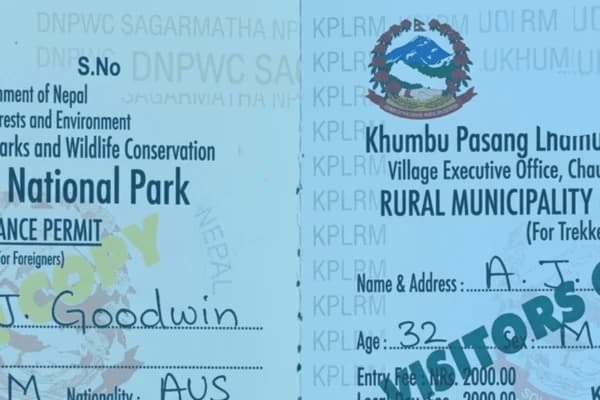
- Step 3: Obtain your TIMS card for Nepal 2026 and National Park/conservation area permit, along with your guide's details attached.
- Step 4: Confirm with the agency that his package includes insurance coverage for the guide - this is NOT optional; it is a legal requirement.
- Step 5: Confirm your itinerary with the agency so the digital trekking record matches the actual trek you make.
Note: The only legal guides who are certified by the Nepal Tourism Board will be valid for the 2026 policy. A guide not certified by the NTB may be illegal when leading you through a regulated area, which would render your permit invalid.
The new system regarding trekking permits in Nepal checks to verify that the permits are valid at the time they are purchased. A workaround does not exist.
Booking now? Here is what you must know regarding Licensed Trekking Guides Booking in Nepal: this includes how to verify a guide's credentials before making a payment.
Cost of Hiring a Guide in Nepal (NEW UPDATE)
Our team is well aware that you want actual figures to match, so your numbers are below for a couple of cost options per day:
- Standard Fee: $25.00 - $35.00 (USD)
- Porter-Guide Combination: If you want a combination (guide plus porter), the daily cost will be greater than for the individual guiding only, and could be as much as $45.00 - $65.00 based on your specific route and season.
What does the Fee include:
- You will receive guidance on all of your travels.
- Insurance compliance as required by law (as indicated above)
- Basic logistical assistance from the beginning of your journey until your last day on the trail.
Extra Costs to Budget For:
- Tips are an important source of income for guides. $5.00 to $10.00 per day would be considered a reasonable amount.
- Emergency evacuations can be costly. If you do need emergency evacuation of any type, ensure you have purchased separate travel insurance to cover those types of expenses.
- Beverage and meal costs for your guide. In most standard (not porter) packages, YOU will be responsible for the costs for your guide's food and lodging.
Your cost per day for a Nepal trekking guide is one of the best values in adventure travel today. $35.00 per day for a $2,000.00 safety fee on Everest Base Camp is an incredible deal for the level of safety that you will receive.
As you consider your trekking budget for Nepal, be sure to consider your guide's costs when creating your budget from the beginning. Many trekkers fail to fully budget for guide costs, thus needing additional funds at the end of their trip when reaching the Nepal trekking trail head.
For a complete cost summary, including permits, flights, and equipment, please review our complete trekking cost in Nepal guide.
Pros and Cons of Mandatory Guide Policy
All policies have advantages and disadvantages. Our group has great respect for individuals who enjoy their independence when traveling on their own and accept that the implementation of this policy may alter their experience entirely. Our two-sided evaluation would be something like this:
Pros:
- Increased safety while trekking: You will always have a trained trekking professional to assist you nearby.
- Better guidance on where to go and how to navigate the terrain: When you are trekking in the Himalayas, it can be challenging to find your way due to the vast similarities from place to place.
- Creation of growth in local employment: Directly supporting the guide communities of Nepal through this mandatory guide policy.
- Enhancing the cultural experience with a good guide to provide information and tell stories that no itinerary and maps can provide.
Cons:
- Increased cost for trekking: Each of the fees associated with hiring a guide will increase the costs of your trek.
- Fewer independent travel opportunities. For the experienced trekkers, being forced to hire a guide limits the travel they have become used to doing.
- Less flexible opportunity to arrange independent trekking: Because of the requirement to use a guide, there will be a limitation as to what type of itinerary you can arrange if you want to go spontaneously or at your own pace.
The debate over whether to use a guide or go independently when trekking in Nepal should be respected as your preference. However, with Nepal's tourism regulation impact rule changes in 2026, your choice in the larger regulated zones will have already been determined for you when making your itinerary.
Are you still not sure how to plan your trip? Check out our comparison of the guided vs independent trekking Nepal to trek in Nepal versus planning your own itinerary.
Myth vs Fact
There’s a lot of confusion out there on the web. Here is a breakdown of facts and myths, so there can be more accurate information on the Internet about trekking in Nepal.
First, here’s what is actually true about solo trekking and guide requirements:
- Myth: In Nepal, solo trekking is not permitted anywhere at all.
- Fact: There are certain areas (high risk) where solo treks are prohibited, such as the high-altitude Everest region, but not all low-altitude trails and other cultural treks require guides to do so independently.
- Myth: Every trekking route in Nepal requires a guide.
- Fact: You may still be able to do independent treks at lower altitudes on some trails. However, the trekking regulatory facts of Nepal note that there are distinct regulations concerning the pattern of regulated/restricted zones.
- Myth: Anyone from that area can be your unofficial guide.
- Fact: Only registered and licensed guides with valid licenses from the Nepal Tourism Board (NTB) can legally guide you through Nepal. If you choose not to hire or use an NTB-certified guide, there is no compliance with the Nepal guide regulation established under the 2026 policy.
Interested in more detailed information about trekking in Nepal? The Nepal trekking rules facts page answers many of the common questions used by trekkers that we see every season.
Real Trekking Scenarios
Let me provide you with two examples of what this policy means to you as a trekker.
- Scenario 1 — Everest Base Camp Solo Trek: You are planning to trek EBC alone with all of your own equipment and would like to apply for an EBC Permit on your own. When you go to the online application page, the online form will also require that you provide information regarding your Guide's Registration Number to process your permit/subscription. Without the Guide's Registration Number, there is no way for them to know who your Guide was or whether he/she had the appropriate licenses to take you to the base camp.
- Scenario 2 — Annapurna Circuit Trek: Depending upon your chosen route, therefore, the Annapurna Circuit would normally require a Guide through the Annapurna Circuit Conservation Area, but there may be some variations to this rule that would depend on which specific area/circuit you are planning to trek. If you are going to trek the Annapurna circuit, you will need an Annapurna trekking permit in order to do so, and it is your responsibility to contact NTB and confirm which route you are planning to take & obtain your permit. You must check your precise route first with the NTB before assuming your own update, and do so now, prior to being approved to trek.
- Scenario 3: Pre-Booked Permits Before the Rule Change: Permits that were initially pre-booked prior may be approved under the new guidelines at the time of being present at the check-in point. You cannot rely on previous approvals to satisfy any requirements. Permits will have to be matched to the appropriate documentation at check-in by the rangers.
It is a common practice in Nepal, so your trekking permit may also be rejected. We have witnessed trekkers arriving at checkpoints to be turned back because the documentation for their guide and the permit on which they were traveling do not match. Confirm everything before departing from Kathmandu.
And for your specific itinerary, you will find all details in our Everest Base Camp trek guide and Annapurna planning sections.
Permit + Guide System Integration Explained
This is how the entire system is interconnected. And knowing this will help you avoid making any mistakes.
How It Works:
- The licensed guide that you select will register with the Nepal Tourism Board, and their license will be linked to a nationwide database, or the national database will be used to verify their credentials.
- When you apply to obtain your TIMS card for trekking in the restricted areas of Nepal, the TIMS system will check to see if the guide you selected holds a valid guide ID. If they don't have one, you can't get a TIMS card approved.
- The trekking agency that you're using will be required to submit a digital trekking record, which will include all of the following information: the routes you'll be trekking on, the dates of your trek, the guide's name, and your emergency contacts.
- At several points along your trekking route, usually called major checkpoints, the rangers staffed at these checkpoints will scan and check to see if the guide has the proper credentials listed in the TIMS system.
With the recently updated TIMS system, it'll be faster and harder to get through these checkpoints than ever. There'll no longer be paper-only alternatives to the TIMS system. The guide verification system is a digital system, and the different checkpoints will be linked together and will be able to communicate with each other.
In addition, the entire trekking process will now be digitally trackable. So if anything happens while you're trekking, the search and rescue teams will know the location of the last checkpoint that has verified your presence. You'll be glad that the system is in place if things go wrong. This will be very helpful if there's an emergency during your trek.
If you require assistance with navigating through the required paperwork our Nepal trekking permit system guide will provide you with step-by-step instructions. On what forms to fill out and how much you need to pay in fees.
What Should You Do Now
You've got the policy. You've got the rules. So now's the time for action before your trekking date catches you off guard.
Action Steps to Complete Before Departure:
- Confirm your specific route's current trekking regulations with the Nepal Tourism Board website or through our guide.
- Secure a licensed guide well in advance. Certified guides will be booked up during peak trekking seasons, from March to Early May and September to Early November.
- Apply for permits via a legally registered agency. Don't use unlicensed operators, even though they may be cheaper. It's not worth it.
- Comply with route-specific regulations for renting a guide (Everest, Annapurna, and Manaslu)
- Don't wait until two weeks prior to travel for compliance. Attempting to finish permits and guide rental two weeks prior can lead to lots of anxiety.
While the rules regarding the itinerary for Nepal treks may appear daunting, they're quite manageable when you take the time necessary to prepare in advance. Our crew has witnessed trekkers meet these challenges with only a few months of advance preparation for their treks.
The advantages of trekking preparation in Nepal are considerably enhanced by working with those who are familiar with the local system. So, to develop an itinerary in accordance with the new rules and regulations.
Ensure that you comply with Mandatory Guide Policy and book your licensed guide to ensure you have zero risk while planning your Nepal trekking adventure. You can rest assured that you will have all of the necessary permits and authorizations when traveling to Nepal.
Do you want to start planning your trip to Nepal? Check out our complete range of Nepal trekking Packages with licensed guides, all necessary permits, and time-sensitive itinerary planning all developed specifically around new regulation.