April 01, 2022read more +
Manaslu & Tsum Valley trek
An incredible 18 days itinerary, with an insight in life in the villages on the trail. The views on the
Anne,
Netherlands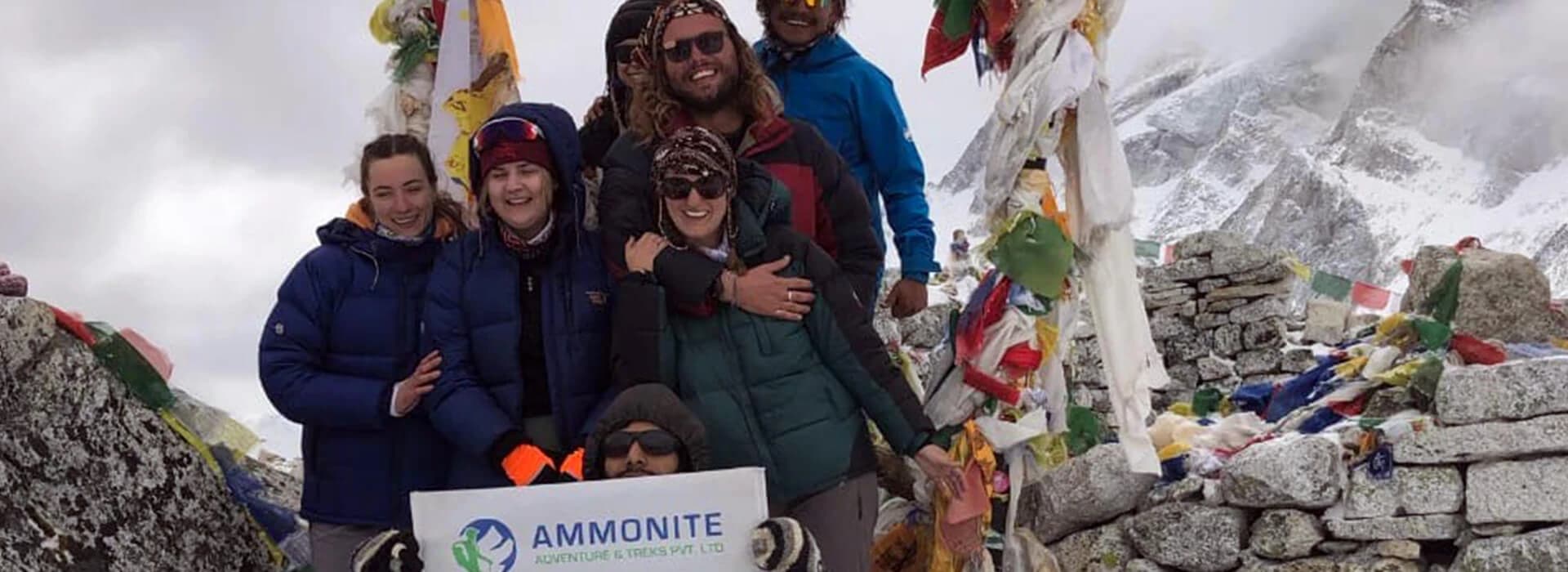
This 20-day Manaslu Circuit Tsum Valley Trekking, with a price range between $1450 to $1725, depends on group size, and the Tsum Valley Trek is a challenging Himalayan adventure, combining both Tsum Valley's Tibetan Buddhist culture with Larkya La Pass (5,106 m). Spring (Mar–May) and Autumn (Sep–Nov) are the best times. It required good fitness and permits for RAP, MCAP, ACAP and the Chumnubri local fee.
The adventure to the Manaslu Circuit Tsum Valley is in the northern part of Nepal and covers a total trekking distance of roughly 177 to 230 kilometers. This 20-day trekking route flows logically from Kathmandu → Machha Khola before branching into remote villages and restricted areas.
Trekkers first enter Tsum Valley before joining the main Manaslu Circuit later because the gradual ascent through Tsum serves as a natural high-altitude acclimatization buffer. The trail passes through the hidden traditional villages of the lower Tsum called Chumling and the upper Tsum known as Chhaikampar, showcasing the distinctive culture of the native Tsumbas, who are the locals of the Tsum Valley.
After exploring Upper Tsum up to Nile, the route merges back onto the main Manaslu Circuit trekking trail, advancing through Deng → Sama Gaon and climbing the demanding Larkya La Pass route at 5,106 metres (16,752 feet) before concluding at Dharapani. Trekkers can trace this entire footprint using our Manaslu Circuit Trek Route Map.
Guarded by the Boudha Himal and Himal Chuli to the west, Sringi Himal to the north, and Ganesh Himal to the south, all under the protection of the Manaslu Conservation Area, Tsum Valley offers the most scenic landscapes along with the breathtaking views of the Himalayas and the rich cultural encounters of the Manaslu region.
The whole Manaslu Circuit boasts its abundance in cultural and historical landmarks represented by several Mani walls, chortens, vibrant prayer flags, the holiest monasteries, and gompas, including sacred caves where Guru Rinpoche and Tibetan spiritual leader Milarepa were believed to have meditated and been blessed with liberation.
Moreover, the Manaslu Circuit Tsum Valley Trekking Route was opened as a restricted trail in 2008 and presents trekkers and travellers with the most unspoiled, untainted natural beauty, along with the witnessing of a wide range of flora and fauna, including some endangered species like snow leopards, red pandas, Asian black bears, lynxes, and many more. As one of the prime remote trekking routes Nepal features, this path preserves its wild terrain through strict eco-tourism and permit tracking.
This comprehensive trekking itinerary Nepal guide provides a day-by-day quick overview format of your 20-day trek plan Nepal schedule, highlighting walking hours, major overnight stops, and elevation changes.
According to Ammonite Adventure, the standard package price for the 20-day Manaslu Circuit Tsum Valley Trek is USD 1,725 per person depending on group size. Groups of more than 10 trekkers can get a special group discounted budget, which implies that solo trekkers or small groups might have to pay slightly more.
It is for a guided trekking package of 20 days to Manaslu Circuit with a side trek to Tsum Valley, where all of the travel and trek logistics will be taken care of by Ammonite Adventure, including food, accommodation, trekking permits, guides, and their necessities, along with their insurance.
Private vs. Group Trekking:
Seasonal Price Variations: Autumn (peak) features higher government-restricted area permit fees due to prime weather. Spring/Winter (off-peak) drops permit fees significantly, lowering the Manaslu trek package price baseline.
What Affects the Overall Trek Price: Total itinerary duration (18–23 days), choice of transport (public bus vs. private 4x4 jeep), porter allocation, and escalating food/lodging prices at higher altitudes.
|
Cost Item |
Price Range (USD) |
Summary of Details |
|
Trekking Package |
$1,450 – $1,725 |
Depends heavily on group size and transport choice. |
|
Permits (Manaslu RAP + Tsum RAP + ACAP + MCAP + Chumnubri Fee) |
$150 – $200 |
Fixed government entry fees. See our Manaslu Permit Cost Guide. |
|
Guide & Porter (Mandatory) |
$25 – $40 per day |
Includes mandatory licensed guide ($25–$35) and optional porter ($20–$25). |
|
Accommodation & Meals |
Included in package |
Separately: Rooms cost $5–$15/night; meals average $25–$45 daily. |
|
Equipment Rental (Optional) |
$50 – $100 |
Sleeping bag and down jacket rentals in Kathmandu. |
|
Travel Insurance (Recommended) |
$100 – $250 |
Must cover high-altitude helicopter evacuation up to 5,000m+. |
Essential for planning your Manaslu Trek Budget Plan :
These out-of-pocket expenses affect your Tsum Valley trekking cost Nepal and Nepal trekking cost Manaslu region estimations:
After breakfast, the day begins with an early drive along the Prithvi Highway west of Kathmandu, crossing the Trishuli river to Dhading. Later, at Arughat, you will change vehicles to a jeep.
The jeep first stops at the notable Soti Khola. From here, Maccha Khola is a 2-3 hour drive through the village of Lapubesi (880m) along the bank of Dordani Khola to the northwards of Gorka and later on the scenic river valleys of the Budhi Gandaki River.
The total drive time is about 9–10 hours, passing by epic scenery of terraced farms, roaring rivers, beautiful traditional villages, and verdant forests that make up a few sections of bumpy roads, which usually begin from Arughat onwards.
Today, the trek aim to reach Jagat, the entry point of the Manaslu region. The route crosses Tharo Khola and heads up to Khola Besi stream, which gradually leads you to the famous natural hot spring of Tatopani.
From the famous natural hot spring of the Manaslu region, the trekking route of the day follows the trail that crosses the Budhi Gandaki River via a thrilling suspension bridge. Onwards, you will carefully trek through landslide-prone areas to reach Dhoban village.
Thereafter, you will cross Yaru Khola, climb the steep walk of Thado Bharyang, and ascend to the lovely typical village of Jagat to register your trek.
The traverse to the restricted area of the Manaslu region officially begins now and onwards after completing the ACAP entry process at Jagat, which ascends initially to Salleri along the rocky ridge and descends subsequently to Sirdibas. From Sirdibas, it is again an uphill trek up to Ghatta Khola.
Ghatta Khola widens the valley while you continue ascending through the large Gurung settlement in Philim, passes through lush forests and mountain views to meet Lokpa after taking a delicious lunch break at Ekle Bhatti, from where the trekking trail diverges into two halves: one takes you to complete the circuit while another approaches Tsum Valley.
On day four, you will move forth to explore the lower Tsum, Chumling, which begins with a descent from Luangwa River Valley and then a pleasant ascent through the packed natural beauty of pine, rhododendrons, and juniper to make it to Gumlung.
Today's trek is comparatively strenuous. You walk through the lush woods and enjoy Himalayan vistas of Shringi Himal. After crossing the Siyar Khola, you finally reach Chumling.
The stone-paved pathways, friendly locals, and traditional villages along with the historic Chumling Gompa are worth a visiting before you call it a day in the teahouse or local lodge.
Chekampar is in the Upper Tsum Valley, a 10 km trek from the lower Tsum; From Chumling, cross the hanging bridge to the new forest towards Tanju; and the tiny Gompa of Daphe, which consists of several statues of Buddha made of ceramic.
From here is an enjoyable hike to Dumje and Sarphu Khola with expanded views of Ganesh and Baudha Himal that follows the trekking trail to upper Tsum Valley, Chhokang, and Paro, collectively referred to as Chekampar.
The Nile to the west of Shikhar Khola is about a 20–25 minute hike from the last village in the north-upper Tsum Valley, known as Chhule. Therefore, on this day, you will walk through the series of Tsum Valley villages such as Ngakyu, Leru, and Lama Gaon, from where you will head to honor the ‘Pigeon Cave’ or Piren Phu.
A spiritual journey to the cave where the Buddhist saint Milarepa is believed to have mediated takes you through Burji, Phurbe, and Pangdun to spend overnight at the Nile after savoring the day's lunch at Lar.
This day's walk is as you move through the western outskirt of the valley, near the Tibetan border to reach Mu Gompa, the ancient largest Gompa of the region.
It is also the maximum altitude you will reach at Tsum Valley Trek, adorned with vibrant prayer flags and numerous chhortens, offering panoramic views of surrounding peaks and a glimpse into Tibet that returns to the Nile to spend the night.
On the eighth day of the Manaslu Circuit Tsum Valley Trek, you will gradually descend back to Chekampar from the Nile to complete the round trip to the Manaslu region before officially continuing your journey from Chumling.
The trek takes place in the reversed form of Chekampar to Nile via Pangden, Phurbe, Burji, Lama Gaon, Leru, Nagakyu, and finally to the upper Tsum right after Chhule.
Today is yet another descending trail from Chekampar to Chumling, passing by Gho, Rainjam village, and the low Tsum Valley to finally reach Chumling after overpassing a bridge near the village of Gho.
You will begin trekking early in the morning so that you get enough time to roam around the lively town in the afternoon and spend a comfortable night at the local tea house or lodge
The day has come when you will bid goodbye to Tsum Valley as you continue down the hill trek from Chumling along the river coast of Shair Khola, which passes by Lokpa to follow the Budhi Gandaki.
Hence, on this day, you will take a descending trek to Sirdibas, Salleri, Ghatta Khola, and lastly to Ekle Bhatti from Philim, which is a walk that presents you with the possibility of encountering domestic sheep and goats along with their wild species.
By the time you cross the Budhi Gandaki River on a suspension bridge, you will have already made it to Nupri. Upon passing through the dense forest of bamboo from here, the Gurung village of Deng welcomes you at an altitude of 1,860m.
What a beautiful day to have when you will keep on playing hide and seek with the Budhi Gandaki river along with the awe-inspiring views of several mountains including a series of centuries-old Buddhist Gompas and monasteries which initiates from a gradual climb to Rana, Bhiphedi, Serang Khola, and Ghap.
At Ghap, you will take a lunch break and move forward traversing the steeper trail rich in bamboo and rhododendron trees to reach the gateway of the Nupri region, the village of Namrung to spend the cozy night at a tea house.
The twelfth trekking day calls out yet another lovely hike day to Lho, passing by many Mani walls, peaceful Gompas, and typical villages with crystal-clear views of Manaslu Massif, including a glimpse at Himal Chuli and Phungi, to spend the most relaxing, well-deserved, and comfortable night at Lho.
The most iconic day is here when you will hop for an easy-going hike to Sama Gaon, moving along the river bank following the jaw-dropping sight of Mt.Manaslu (8,163m), Naike Peak, Himalchuli, Nagadi Chuli, Larkya Peak, Saula Himal, etc.
Particularly, the village of Shyala is renowned for its spectacular view of these gigantic peaks, where the pastureland of yaks and potatoes barely magnifies the distinctive alpine meadows and whole picturesque mountainous landscapes.
Once you make it up to Sama Gaon, Ganesh Himal to the east cannot go unnoticed alongside Tibet nearby.
Proper acclimatization is crucial for a safe trek in the Himalayas. With continuous ascends and descends, it is time to let your body acclimate and adjust to the varying altitude of over 3,000m.
Therefore, day fourteen is allocated as acclimatization day, where you will be presented with the option of hiking to Manaslu Base Camp or Pungyen Gompa. Birendra Tal is another alternative side trip; however, due to its being situated relatively at a lower altitude, a trek here might not be as effective as a ramble up to base camp or the Gompa of Pungyen.
You will start the trek of the day at dawn, descending through the terraced farms and series of Mani walls that cross the Budhi Gandaki river back and forth via numerous hanging wooden bridges, consequently leading to the Samdo Valley.
The valley shares a border with Tibet showcasing a noteworthy Tibetan influence in art, culture, and overall architecture ensuring an outstanding enhanced trekking experience while you spend the filling night at Samdo preparing for the next day.
Day 16 marks the beginning of an adventurous journey to cross the Larkya La Pass as you make your way through the temporary Tibetan marketplace known as Larke Bazaar after breakfast in Samdo.
Then, the trekking route of the day crosses two rivers with shimmering water and, later on, Larkya Glacier, which goes around the Salka Khola Valley before making a final ascent to Dharamsala, otherwise called Larkya La Phedi.
Throughout the trek day, the views seen are fantastic to fill yourself with necessary nutrients during your overnight stay at the tea house in Dharamsala.
Probably, it could be the longest and most challenging part of the comprehensive Manaslu Circuit Tsum Valley Trek when you are atop the highest elevation of the overall journey at the Larkya La Pass at 5,160 m, right below the majestic panorama of Himlung Himal, Cheo Himal, Kang Guru, and Annapurna II.
Usually, the afternoon wind is considered unfavorable to cross the pass; hence, you will leave Dharmasala very early in the morning. It begins with a gentle climb across the moraine, which becomes quite rugged and steep as you move closer and closer to the pass, which is visible once you pass by a ridge with two cairns.
Offers an unparalleled sense of achievement to make a memorable descent to Bhimthang to the west of the mountains, which is quite strenuous for a few hours and relatively easier after a while till you make it to the teahouse of the day.
The trek from Bhimtang to Tiliche is a downhill walk, passing by charming hidden valleys, rugged cliffs, dense woods, and raging waterfalls. Hampu Cave, Puktu Kharka, and Karche Pass, along with Gho village, are some of the noticeable landmarks of the trail, surrounded by several majestic mountains and terraced fields till you make it to the tea house of Tiliche to spend the night.
It is yet another relaxing trek day that takes you to the starting point of the top-notch Annapurna Circuit Trek in Dharapani, from where you will drive back to Besisahar to decide whether to head to Kathmandu or stop by Pokhara awaiting extra adventure.
Last day in Nepal, a lot to reminisce about as you take a flight back to your country. Three hours before the scheduled flight, you will be transported to the Tribhuvan International Airport by our airport representative.
I hope you enjoyed your Manaslu Circuit and Tsum Valley Trek with us. We look forward to seeing you again. Thank you!


The isolated wonderland of Manaslu ponders trekkers with a bountiful natural and cultural gem of the country secluded in the center of the Langtang Himal, forming an extraordinary natural amphitheater of the western region of the majestic crown jewel alike set Himalayas, including the Jugal Himal.
Therefore, the Manaslu Circuit Tsum Valley Trek is an adventurous expedition moving back and forth to the Budhi Gandaki river valleys, passing by scenic terraced farms, lush forests of oak, rhododendrons, and blue pine trees, and following the mesmerizing mountain views of Manaslu (8,163 m), Himalchuli (7,893m), Ngadi Chuli (7,871 m), the Ganesh Himal range, and others, presenting you with a once in a life time opportunities with:
To properly define what to expect on Manaslu trek before booking, plan around these three operational constraints:
The 20-day Manaslu Circuit Tsum Valley itinerary is designed after thoughtful consideration of trekkers so that you get the best out of the least amount of grueling experience based on our years of sharpened knowledge in the field of catering personalized services in travel and tourism.
Choosing a 20 day Manaslu trek is the ultimate formula for altitude safety. This timeline provides a naturally staggered altitude profile. By spending the first half of your journey exploring the lower elevations of Tsum Valley, your body produces necessary red blood cells gradually. When you rejoin the main loop to tackle the higher alpine villages of Samagaon and Samdo, you are already strongly pre-acclimatized. This systematic pacing heavily minimizes the threat of Acute Mountain Sickness (AMS) before stepping onto the high-altitude pass.
Understanding the operational differences reveals why choose Manaslu trek's extended version over compact ones:
Opting for this Tsum Valley combined trek means experiencing two totally distinct worlds on a single journey. You gain comprehensive exposure to two unique, isolated valleys: the ancestral, sacred Tibetan sanctuaries of the Tsum region, and the raw, glacial wilderness of the classic Manaslu circle. Financially and logistically, it maximizes your restricted area permit investment by merging two premium destinations into a single mountain entry deployment.
If you want a pristine, offbeat Nepal trekking experience, this circuit is the ultimate sanctuary. While trails like the Everest Base Camp Trek or Annapurna Circuit see massive seasonal crowds and heavy commercialization, Manaslu’s strict government permit quotas maintain an undisturbed atmosphere. You get to experience the unrefined majesty of the Himalayas without sharing the trails with hordes of tourists.
The journey according to this 20-day itinerary to trek Manaslu Circuit Tsum Valley begins with a scenic and thrilling drive from Kathmandu to Maccha Khola, passing initially by the Trishuli River Valley and later the Budhi Gandaki, covering a distance of 140 km (87 miles) in 9–10 hours.
Then, the true expedition begins as you venture into several tiny and some larger Himalayan settlements, such as Chekampar and Chumling, also known as upper and lower Tsum, with a continuous ascending and descending ramble of 5–6 hours each day to the Larke La Pass and finally to Dharapani.
From Dharapani, you will take a jeep back to Besishar to catch a local bus either to Pokhara or Kathmandu, where we recommend you immerse yourself in the tourist paradise of Nepal, Pokhara for sure.
This itinerary is tailored to make sure you do not miss any highlights of the Manaslu region, including Mu Gompa, Manaslu Base Camp, and several others, for not only a better natural experience but also a cultural endeavor in the celestial presence of the killer mountain, Mt. Manaslu (8,163 m).
Navigating high altitudes safely requires strict adherence to wilderness medicine physiology specifically the principle of grading your ascent to allow your body to adjust to a lower partial pressure of oxygen.
The 20-day combined itinerary offers a structurally superior altitude progression compared to standard routes. Your journey begins at a modest elevation of 870 meters in Machha Khola. Over the first week, the trail climbs through a subtropical gorge into a temperate alpine zone, crossing into lower Tsum Valley at Chumling (2,386 m).
Instead of pushing directly up the steep vertical profile of the main river canyon, you detour northeast along the Shiar Khola into Tsum Valley. This layout forces a slow, horizontal progression across intermediate heights, providing an ideal physiological stepping stone before you face the extreme alpine zones above 4,000 meters.
To trigger proper red blood cell production and avoid cellular hypoxia (oxygen deprivation), this itinerary locks in two non-negotiable rest and exploration hubs:
The primary catalyst for Acute Mountain Sickness (AMS) is ascending too rapidly without sufficient resting plateaus. By expanding the timeline to 20 days, this itinerary minimizes the daily net altitude gain above the critical 3,000-metre threshold.
The extended schedule gives your body the time required to balance blood pH levels and prevent fluid retention in lungs or brain tissues, drastically lowering the statistical risk of severe high-altitude emergencies like HAPE or HACE. Refer to our Altitude Sickness in Nepal Trekking guide to understand early physiological warning signs.
The full combined journey spans approximately 18 to 22 days, covering an average total distance of 160 km.
Several trekking days include steep up-and-down hill hikes through rocky terrain as well as above 3,000 m, where the chances of acute mountain sickness can be concerning.
While it is not a technical climb requiring ropes, it scales high-altitude thresholds where oxygen drops by nearly 50%. Excellent cardiovascular endurance and lower-body strength are essential. Your training regime should ideally begin 2 to 3 months before departure, focusing on:
This journey tests your psychological endurance just as much as your physical limits. The remoteness of the restricted area means minimal infrastructure. You must mentally prepare for basic teahouse accommodations, shared amenities, freezing night temperatures, and disconnect from cellular networks.
Is this the hardest trek in Nepal? While it doesn't require mountaineering skills, it is significantly more demanding than standard routes like the Annapurna Circuit or Everest Base Camp due to its duration and remoteness.
Verdict on Beginners: It is not recommended for absolute novice hikers without preparation. However, a fit beginner who has a dedicated pre-trek training routine, excellent stamina, and a properly paced itinerary with adequate acclimatization days can successfully complete it.
Nonetheless, all your effort comes to fruition with the dramatic landscapes, diverse flora and fauna, authentic Himalayan culture and tradition, typical villages rooted to nature, and never-ending vistas of the magnificent peaks.
For context on how the extension alters your itinerary, evaluate the structural shifts:
|
Route Option |
Typical Duration |
Peak Elevation |
Main Technical Hurdle |
|
Manaslu Circuit Trek |
12 to 14 Days |
5,106 m |
Larkya La Pass crossing |
|
Manaslu with Tsum Valley |
18 to 22 Days |
5,106 m |
Extended remote isolation & cumulative fatigue |
Choosing the right time to trek the Manaslu Circuit is the most important planning decision you will make. Because this route crosses the high-altitude Larkya La Pass at 5,160 meters, weather stability and trail safety change dramatically from month to month.
The peak trekking windows are Autumn (September to November) and Spring (March to May). Below is a detailed seasonal breakdown to help you pick the perfect window for your journey.
| Season | Months |
Weather & Visibility |
Trail Conditions |
Crowd Levels |
| Autumn |
September – November |
Crystal clear skies, highly stable |
Dry, clean, and safest for the pass |
Peak / High |
| Spring |
March – May |
Mild days, morning clarity, late-day clouds |
Mostly dry, clearing winter snow |
Moderate |
| Winter |
December – February |
Freezing, crisp morning skies |
Deep snow, Larkya La often closed |
Very Low |
| Monsoon |
June – August |
Heavy rain, high humidity, dense fog |
Muddy, slippery, landslide risks |
Negligible |
Autumn is widely considered the premium season for the Manaslu Circuit. Immediately following the monsoon, the rain washes the atmosphere clean, leaving behind the crispest air and most reliable weather of the year.
Spring is the second peak window and is the ultimate choice for nature lovers who prefer quieter trails compared to the autumn rush.
Winter brings extreme alpine conditions to the Manaslu region. While lower valley walks are crisp and quiet, temperatures above 3,500 meters plummet severely, regularly dropping between -15°C and -20°C at night. Heavy snowfall frequently blocks the Larkya La Pass entirely, and many teahouses close for the season as locals migrate to lower elevations. This season is only recommended for highly experienced winter trekkers with expedition-grade gear.
The monsoon season brings heavy, relentless rainfall, particularly to the subtropical lower sections of the trail below Jagat. The risk of landslides, flooding, and muddy trails rises significantly, and leeches are common in the forest zones. Cloud cover obscures the mountain views completely, making it the least recommended time for a standard trek.
You will need three major permits along with a specific regional permit to begin your trip to Manaslu Circuit Tsum Valley because the Manaslu region falls under the highly restricted area of Nepal, where you must be assisted by local guides.
Independent solo trekking is legally prohibited. You must hire a licensed guide in Nepal through a registered agency. For a restricted area permit in Nepal, updates now allow individual booking, but you are strictly required to be accompanied by an official guide on the trail.
This core Manaslu permit covers the restricted zone from Jagat:
The unique permit you are obligated to get is the Tsum Valley permit, whose cost can vary depending upon the season of your trekking and has a time limit on how many days you can spend, unlike other trekking areas in Nepal. As of now, the RAP fee is USD 40 per person per entry for seven days from September to November and USD 30 per person per entry from December to August. If you wish to extend your stay in the Tsum Valley, you will have to pay USD 7 per additional day.
The first permit you will have to get on hand is the Manaslu Conservation Area Permit (MCAP), which costs NPR 3,000 (approx. USD 23) for foreign tourists and NPR 1,000 for SAARC nationals.
The second permit you will need to enter the Manaslu region is the Annapurna Conservation Area Permit (ACAP), due to several common trails passing by the Annapurna region that are similarly payable as the MCAP (NPR 3,000 for foreigners / NPR 1,000 for SAARC).
Note: A TIMS card is not required when holding active Restricted Area Permits. See our comprehensive Manaslu Trek Permit Guide for more updates.
In contrast to other well-traversed trekking trails in Nepal, the food and accommodation options are quite limited in a few remote sections of the Manaslu Circuit and Tsum Valley Trek route, such as Tsum Valley. Staying in local teahouses or lodges is part of this amazing teahouse trekking in the Himalayas of the eighth-highest mountain in the world, Mt. Manaslu (8,163m).
Therefore, anticipate seeing the fair availability of modern amenities and Western menus. In the meantime, you wonder how the rooms are in teahouses and lodges. It's a win-win, i.e., rooms are tidy enough to spend a cozy night, mostly simply furnished with two beds, and sharing bathrooms.
In our 20-day package to trek Manaslu Circuit Tsum Valley, you will cover a distance of approximately 220km (136.7 miles), which has separated two days for adequate acclimatization. As one of the professionals in organizing travel, treks, and tours, we know the importance of letting your body adapt to the Himalayas of Nepal to ensure your safe and sound trekking involvement.
Therefore, we believe the 20-day itinerary to go trekking Manaslu Circuit Tsum Valley is the best one where you can adjust the itinerary as per your needs and preferences. Adding days is a wise thing to do for a more enhanced experience.
Another plus is that you will not have to rush your steps. While we say so, it is important to note that side trips, specific trekking routes, additional acclimatization, rest, or exploration can affect the overall distance covered during the trek.
We can arrange group and private treks with Ammonite Adventure . If you have a group, the more people you have in your group, the bigger the discount.
We can handle any group size, and we can provide an assistant guide if the group is 12 or bigger. We provide one porter for every two trekkers. Every trekker can carry a maximum of 9 kg of luggage.
The Manaslu Circuit Tsum Valley trek package takes care of most of your trekking costs. However, you are responsible for your meals and hotels in Kathmandu. There are lots of hotels and lodges in Kathmandu, from budget to luxury; you can easily book online.
You will need to bring money with you for your hotel and meals in Kathmandu for your visa fees, travel insurance, snacks, drinks, tips, souvenirs, and personal expenses. We suggest only bringing large currency cash that you can convert into Nepali Rupees, as all of the trekking areas only take Nepali currency.
On the 20-day Manaslu Circuit Tsum Valley trek, Ammonite Adventure provides licensed, experienced guides and Sherpas to oversee the trek and keep it safe and enjoyable. Porters will carry your luggage; you will generally be provided with one porter per two trekkers or one per person if you request it; porters can carry up to 18 kg.
The crew we provide is all local, high-altitude natives. They are living comfortably at that altitude and have a high endurance threshold. They are well-paid and provided with insurance, clothing, con notes, shelter and paid medical care. We want our staff to be happy as happy staff provide happy experiences to the trekkers.
Our expert trek leaders have:
Ammonite Adventure is a known trek operator registered with the government of Nepal, bonded and a member of TAAN (Trekking Agency Association of Nepal) and NMA (Nepal Mountaineering Association).
You can feel comfortable undergoing the booking process with Ammonite Adventure .You can pay a 10% deposit on your trek (which can be paid via bank transfers, Western Union, Online, etc) to secure your trek.
Your only obligation post-booking is to send us your photos, your travel insurance, flight details and passport copies within a week of booking.
Ammonite Adventure is offering some last-minute booking options for the Manaslu Circuit Tsum Valley trek. In order to use this service, you must pay 100% of the trip cost at least 24 hours before the trek start date.
While we strive to run treks at any time, last-minute bookings can incur delays for reasons completely beyond our control, such as missed flights or bad weather.
If you want to spend a few extra days after your trek, we will include some very exciting activities for you. You can go to interesting places in and around Kathmandu, or do a Chitwan jungle safari, paragliding, rafting or canoeing.
When tackling a challenging, multi-week restricted area route like the Manaslu Circuit and Tsum Valley, choosing a safe trekking company in Nepal makes all the difference between a successful summit and an early evacuation. Ammonite Adventure stands out as a leading local trekking expert Nepal agency, specializing in custom, high-altitude logistics tailored specifically to the unique cultural and geographical landscape of the Manaslu region.
Our dedicated Manaslu Tsum Valley guide service ensures that you explore with highly experienced, government-licensed professionals who possess a deep-rooted connection to the local communities. From handling complex, multi-zone restricted permits seamlessly to maintaining a strict safety-first approach with customized acclimatization rhythms, first-aid prep, and active emergency support, we manage every detail. We prioritize transparency with clear upfront pricing, no hidden trailing costs, and personalized arrivals including airport pickups and lodge selection.
Why trek with Ammonite Adventure? Learn how our decades of field expertise can transform your journey into an unforgettable, worry-free Himalayan expedition, or Book your Manaslu Tsum Valley Trek with us today to secure your peak season permits.
The combined Manaslu Circuit Tsum Valley Trek Nepal is absolutely worth it if you prioritise raw cultural authenticity and true off-the-beaten-path Nepal trek isolation over luxury. Adding the sacred hidden valley trek Nepal detour gives you a rare look at untouched Tibetan Buddhist culture, centuries-old monasteries like Mu Gompa, and unparalleled solitude. Furthermore, the extra days spent wandering through Tsum Valley provide your body with optimal high-altitude acclimatisation, making the final strenuous crossing of the iconic Larkya La Pass 5,106 m significantly safer and more comfortable.
However, you must be honest about the demands of this long-duration, restricted area trek Nepal. It requires excellent physical fitness to handle 18 to 22 days of rugged terrain, steep ascents, and remote Himalayan trekking Nepal conditions with very basic teahouse facilities, limited electricity, and scarce internet. Because this is a controlled border zone, solo trekking is legally prohibited. Partnering with a registered agency guarantees you travel with licensed guides, rich local experience, and reliable emergency support. If you are an experienced hiker ready for a profound spiritual trekking Nepal challenge, Contact us for Manaslu Tsum Valley Trek logistics and booking updates.
For the trek, we suggest that you carry your basic clothing and basic accessories. You will have one porter for every two trekkers. Luggage has a weight limit of 9 kg for each trekker, but you will want to carry a standard backpack with your essentials.
We provided a list so that all packings can be made easily.


Yes, in terms of unspoiled nature and culture, the Manaslu region definitely holds the lead as one of the most remote and less-crowded trekking trails.
Tsum Valley is one of the most culturally and naturally swanky traditional valleys in the restricted region of Manaslu. Tibet from here is just a morning walk away.
Watch out! Though the water from natural sources seems pure and drinkable, it often isn’t safe to drink. So in rare occurrences, as boiled water is mostly refillable throughout the journey, consider purifying it rather than drinking it directly.
Along the trekking trail of the Manaslu Circuit Tsum Valley Trek, you may find mobile network coverage. Several tea houses and lodges in the lower region also provide access to the internet. Although it can be unreliable and limited, it is good enough to convey your message of well-being. Therefore, make sure to get an NTC or Ncell SIM card before officially commencing the trek.
Yes. However, you must be informed that the definition of solo trekking in Nepal since April 1st, 2023 has upgraded into a group of at least two individual trekkers seeking a more secluded and isolated experience in the Himalayas with an authorized guide.
The answer is very simple: safe navigation, sound communication, and a memory of a lifetime while your government-licensed guide takes care of all your trekking logistics.
Well, it depends on the season of your travel and the altitude of the region because, depending on your preferences and special requirements, Ammonite Adventure Pvt. Ltd. can arrange a single room in the lower region that cannot be said to be the same once you have gained a notable elevation.
It isn’t zero at all. Yet, if you choose to go with a 20-day itinerary to trek Manaslu Circuit Tsum Valley, the probability gets on a very low graph as several days of the package are allocated solely for acclimatization, where you don't need to force your pace.
Larkya La Pass, at an altitude of 5,106m above sea level, is the maximum elevation of the Manaslu Circuit and Tsum Valley Trek.
Generally, it will take you between 14 to 20 days to complete the Mansaslu Circuit Tsum Valley Trek depending upon the itinerary, budget, side trips, pace, and number of days you have chosen for acclimatization.

An incredible 18 days itinerary, with an insight in life in the villages on the trail. The views on the
Manaslu Circuit Trekking with Jhamka.
With 3 to 5 feet of snow on the pass I was