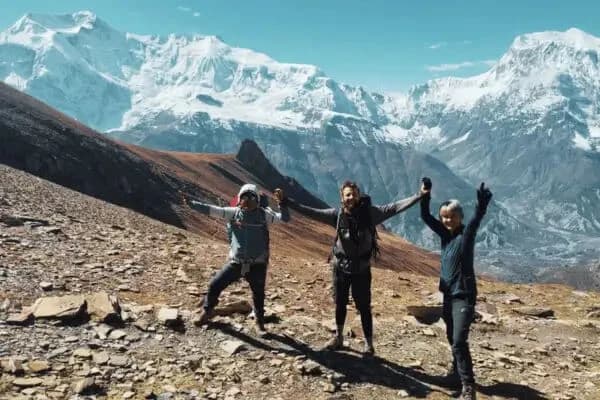
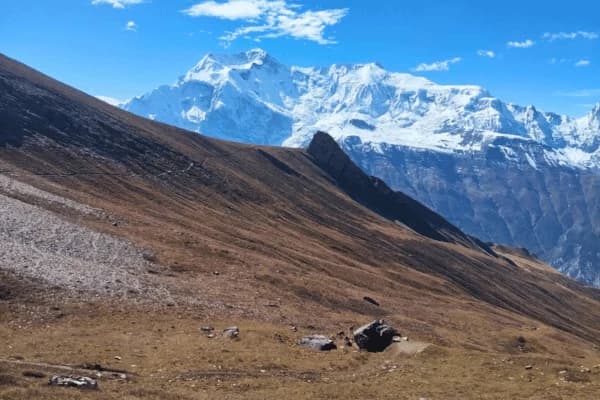
Introduction: Is the Annapurna Circuit Trek Difficult
Yes, the Annapurna Circuit Trek is generally a moderate to challenging, but it doesn’t feel equally difficult to everyone. For some trekkers, the long walking days are the biggest test; for others, it’s the altitude, especially when the trail climbs above Manang. The highest point is Thorong La Pass at 5,416 m (17,769 ft), and most trekking days involve roughly 5 to 8 hours of walking.
- Walking Distance: Moderate
- Altitude: High
- Technical Skills: Easy
- Overall Difficulty: Moderate to Challenging
There are no technical climbing sections, but that doesn’t mean the trek is easy. Your fitness, acclimatization, walking pace, trail condition, weather, and the amount of altitude gain all affect how the journey feels. A regular hiker may find the daily walking manageable, while someone unused to long hikes may struggle with the same route. The trekking terrain also changes along the way, from lower valley trails to rougher and higher sections.
It’s normal to wonder whether you’re fit enough before committing to a trekking challenge in Nepal like this. The good news is that beginners can complete the circuit if they prepare properly and give their bodies enough time to adjust to the altitude. If you're not familiar with the full journey, explore our Annapurna Circuit Trek Route guide to understand the trail first. Now, let’s look at the trip section by section and see where the real challenge begins.
What Makes Annapurna Circuit Trek Difficult
The Annapurna Circuit isn’t the kind of trek that’s difficult from the moment you start walking. The lower sections can actually feel quite comfortable. The real challenge builds slowly as you gain altitude, spend more hours on your feet, and move into colder and more remote parts of the mountains. Most days involve around 5 to 8 hours of walking, while the route eventually takes you to the world’s highest trekking pass.
Here are the main things that can make the adventure harder than you might expect.
Altitude
Altitude is probably the biggest concern on the Annapurna Circuit. As you climb higher, the amount of available oxygen decreases, so your body has to work harder just to keep moving. You may notice that you're breathing more heavily, walking more slowly, or needing longer breaks than you normally would. This becomes much more noticeable after Manang and especially as you approach Thorong Phedi and the pass. The higher you go, the more important proper acclimatization becomes.
The best way to make altitude more manageable is to take your time. Follow a gradual itinerary, allow enough time to acclimatize, keep your pace comfortable, and don't ignore unusual symptoms just because you want to stay on schedule.
Distance
The total distance can vary depending on the route, road sections, and side trips, but a full circuit can cover roughly 16 to 230 km (10 to 143 mi). That sounds manageable when you look at the number on its own. The tricky part is that you don't cover it in one go. You walk day after day, and the tiredness slowly adds up. A distance that feels easy on day two can feel quite different after a week in the mountains.
You can prepare for this by doing longer hikes before your trip. Try to include some uphill walking and, if possible, a few back-to-back hiking days. That gives your legs an idea of what several consecutive days of trekking actually feel like.
Daily Walking Hours
Most days on the circuit involve around 5 to 8 hours of walking, although the exact time depends on the route, your pace, and the terrain. And honestly, five hours of walking in the mountains isn't always the same as five hours on a normal trail. A slow climb at high elevation can leave you more tired than a much longer walk at lower altitude. By the time you reach the higher sections, your body has already spent several days walking.
Don't try to keep up with the fastest person in your group. A comfortable, steady pace is usually the better choice. Take short breaks, eat properly, and save some energy for the later part of the day.
Weather
The mountain climate changes quite a bit along the Annapurna Circuit. You start in much warmer lower valleys and gradually move into colder, drier, and more exposed areas. The Annapurna Region itself includes very different environments, from forested areas to the dry landscapes around Manang and Mustang.
Rain, snow, strong wind, or poor visibility can make a familiar trail feel completely different. Wet rocks can be slippery, while strong winds at high elevations can slow you down and make the cold feel much worse. You obviously can't control the weather, so the sensible approach is to prepare for changes. Check the forecast, carry suitable layers, and keep a little flexibility in your schedule instead of forcing yourself to walk in poor conditions.
Cold
Cold becomes a bigger issue once you reach the high-elevation sections. Temperatures around Thorong La can fall well below freezing, particularly during the early-morning start used for the pass crossing. Being cold for several hours can drain your energy and make the whole day feel harder. Cold hands and feet are especially annoying when you're trying to adjust your gear, eat, or use trekking poles.
The simple fix is to dress properly. Use layers rather than relying on one very thick jacket. A warm base layer, insulating layer, windproof outer layer, gloves, warm socks, and a good hat can make a huge difference.
Remote Villages
The remote parts of the circuit can be challenging in a different way. As you move beyond the larger villages, facilities become simpler and the surroundings feel much more isolated. The Nepal Tourism Board (NTB) notes that the route passes through high Himalayan and trans-Himalayan landscapes, with smaller mountain settlements along the way.
After several days of walking, sleeping in simple teahouses and being away from the comforts of home can test your patience as well as your body. You may also have fewer choices when it comes to food, accommodation, and other everyday conveniences. It helps to know what you're getting into. Don't expect city-level comfort, especially at higher elevations. Bring the essentials you need, keep your expectations realistic, and use each evening to properly rest for the following day.
Steep Climbs
Then there are the steep ascents, which can make even a relatively short walking day feel exhausting. When the trail climbs sharply, your heart rate rises and your legs have to work much harder. The biggest example is the climb toward Thorong La. From Thorong Phedi, trekkers gain roughly 1,000 m before reaching the 5,416 m pass. The thin air makes that climb considerably harder than the same ascent would be at a lower elevation.
The best trick is to slow down before you feel exhausted. Take smaller steps, find a rhythm you can maintain, and take short breaks when necessary. Before the trek, uphill hikes, stairs, squats, lunges, and step-ups can also help prepare your legs for the trekking challenges ahead.
In the end, it's the combination of these factors that makes the Annapurna Circuit challenging. Altitude, distance, long walking days, changing weather, cold, and steep terrain all add up, and that's why the same trek can feel quite different from one person to another.
Stage-by-Stage Difficulty Guide
The Annapurna Circuit doesn't feel equally difficult from beginning to end. The lower trail sections are usually quite manageable, but things change once you get higher into the Manang Valley. The air gets thinner, the walking pace naturally slows down, and even a short uphill stretch can leave you breathing harder than expected. Then comes the big one: Thorong La Pass at 5,416 m (17,769 ft).
Here's a simple breakdown of how the main trekking stages compare:
| Stage |
Difficulty |
Why |
|
Besisahar to Chame
|
Easy to Moderate
|
Gradual climb and relatively lower elevation
|
|
Chame to Pisang
|
Moderate
|
Steady uphill walking and increasing elevation
|
|
Pisang to Manang
|
Moderate |
Longer day with more elevation gain
|
|
Manang Acclimatization
|
Easy
|
Short hike with time to adjust to altitude
|
|
Manang to Yak Kharka
|
Moderate |
Higher elevation and thinner air
|
|
Yak Kharka to Thorong Phedi
|
Challenging |
High elevation despite the shorter distance
|
|
Thorong Phedi to Thorong La to Muktinath
|
Very Challenging
|
High altitude, steep climb and a long day
|
|
Muktinath to Jomsom
|
Moderate |
Long descent and tired legs |
Besisahar To Chame
If you're walking this whole section, it's a pretty gentle way to get started. The trail gradually works its way uphill through villages, forests and river valleys, and you're still at a relatively low altitude compared with what comes later. A common Dharapani-to-Chame section takes around 6 to 7 hours.
You might be tired at the end of the day, especially if you're new to long-distance trekking, but altitude isn't likely to be the main issue yet. This is really the time to settle into your walking rhythm. And if your itinerary uses a jeep for part of the lower route, you'll obviously walk less here.
Chame To Pisang
Things start to feel a little more serious after Chame. The trail climbs through pine forest and eventually reaches Pisang at around 3,200 to 3,300 m. A typical day takes roughly 5 to 6 hours. It's not a brutally hard day, but you may notice that you're not walking quite as quickly as you were earlier. That's normal. You're gaining altitude, and your body is starting to adjust.
There's no need to push yourself here. Just keep a comfortable pace and let the elevation profile of the trek work gradually in your favour.
Pisang To Manang
For many trekkers, this is where the circuit starts to feel like a proper high-altitude trek. The popular upper route goes through Ghyaru and Ngawal before dropping toward Manang, so there's more climbing than you might expect from the distance alone. Depending on the route, expect roughly 6 to 8 hours of walking. The altitude is now a bigger factor too.
Manang sits at around 3,540 m, so you may find yourself taking more breaks and walking more slowly. If you feel fine, that's great, but don't use that as a reason to speed up. The harder sections are still ahead.
Manang Acclimatization
This is one stage where less walking is actually part of the plan. You spend an extra night in Manang, usually with a short hike during the day. Some trekkers head toward a viewpoint above the village or visit places such as Gangapurna Lake. The idea isn't to exhaust yourself; it's to give your body more time to adjust before you continue higher.
So, in terms of daily trekking difficulty, this is probably the easiest stage. But don't underestimate its importance. A relaxed acclimatization day here can make the higher sections much more manageable.
Manang To Yak Kharka
Once you leave Manang, you can really feel the altitude becoming part of the trek. Yak Kharka is around 4,050 m, and the walk generally takes about 4 to 5 hours. The distance isn't huge, but that's not really the point anymore. You're walking at high elevation, where the lower oxygen availability means your body needs more effort for the same amount of movement.
You might find yourself stopping for a quick breather on an uphill section that you'd normally walk without thinking twice. That's perfectly normal. Slow down, keep your steps short and don't worry about how quickly other trekkers are moving.
Yak Kharka To Thorong Phedi
This is another one of those days that looks easier on paper than it feels in real life. The walk is relatively short, usually around 4 to 5 hours, but you're heading toward Thorong Phedi at roughly 4,500 m. At this point, the high elevation matters more than the distance. The air is thinner, and your body is already carrying several days of trekking fatigue.
Once you reach Thorong Phedi, there's not much reason to keep wandering around. Eat well, drink enough, get your gear ready and rest. Tomorrow is the day that most trekkers have been thinking about since they started the circuit.
Thorong Phedi To Thorong La Pass To Muktinath
This is the toughest trekking stage of the Annapurna Circuit Trek for most people. Thorong La reaches 5,416 m, making it the highest point of the trek. From Thorong Phedi, the climb to the pass is followed by a long descent of roughly 1,600 m toward Muktinath. Starting from Phedi, the whole day can take around 8 to 10 hours; trekkers who stay at High Camp have a shorter crossing day.
What makes it hard isn't just the climbing. You're dealing with high altitude, cold, an early start and a long day on your feet. The trail itself doesn't require technical climbing skills in normal conditions, but the combination of altitude and endurance is no joke. Take it slowly. There's no benefit in racing toward the pass. Short steps, regular breaks and a steady rhythm are your friends on this day.
Muktinath To Jomsom
The good news is that the biggest altitude challenge is now behind you. Muktinath is around 3,800 m, and Jomsom sits much lower at about 2,720 m, so you'll gradually feel the difference as you descend. The walk to Jomsom can take around 5 hours, depending on the exact route and conditions. It isn't necessarily an effortless day, though.
Your legs have just gone through the Thorong La crossing, and long downhill walking can be surprisingly tough on tired knees. Still, compared with the pass day, most trekkers find this section much more comfortable. If you want to see the complete route, overnight stops and hiking hours in one place, check our Annapurna Circuit Trek Itinerary before moving on to the next part of this guide.
Thorong La Pass Difficulty
If you ask trekkers which part of the Annapurna Circuit was the hardest, there's a good chance they'll mention Thorong La Pass. At 5,416 m, it's the highest point of the trek, and crossing it means dealing with thin air, a steep climb, cold temperatures, and then a long walk downhill to Muktinath. None of this involves technical climbing, but putting everything together makes this the toughest day for most people.
Why Is Thorong La The Hardest Day
The biggest problem is simply the altitude. At 5,416 m, the air contains much less available oxygen than you're used to at lower elevations. So even if you're reasonably fit, you can find yourself stopping to catch your breath after a short uphill stretch. Then there's the timing. Most trekkers leave Thorong Phedi or High Camp very early, often around 3 to 4 AM.
It isn't because you need to prove how tough you are. The crossing takes several hours, and an early start gives you enough daylight for the descent to Muktinath while also helping you get across before stronger afternoon winds develop. The climb itself is steady and tiring. From Thorong Phedi, you gain roughly 1,000 m before reaching the pass.
Once you finally get there, though, you still have a long descent ahead. The trail drops more than 1,600 m toward Muktinath, so your knees and legs can take quite a beating after the climb. And don't forget the cold. You're starting while it's still dark, and temperatures around the pass can fall well below freezing. Wind can make it feel even colder.
What Makes The Crossing Feel So Difficult
It's really the combination of things. Imagine waking up before 3 to 4 AM, putting on your cold trekking boots, and then walking uphill for several hours when the air is thin. You've already been trekking for days, your body is tired, and every step takes a little more effort than it would at a lower altitude.
That's why Thorong La difficulty isn't something you can judge just by looking at the distance. A relatively short section can feel much harder when you're walking at this elevation.
Common Mistakes On Thorong La Day
A few simple mistakes can make an already demanding summit day unnecessarily difficult:
- Starting too late: You may have less daylight and more exposure to changing afternoon weather.
- Walking too quickly: Trying to maintain your normal hiking pace at high altitude can drain you quickly.
- Ignoring altitude symptoms: Don't assume a headache, nausea, unusual weakness, or worsening breathlessness is something you simply have to tolerate.
- Not eating enough: It's a long day, so you'll need enough energy to keep going.
- Dressing too lightly: The pre-dawn cold can be intense.
- Rushing the descent: After reaching the pass, tired legs and steep terrain can make the downhill section surprisingly difficult.
How Should You Prepare For Thorong La
You don't need mountaineering experience to cross the pass, but you do need to arrive there in decent shape. Regular uphill hikes, stair climbing, longer walks, and leg-strength exercises are useful preparation.
More importantly, give your body enough time to acclimatize before attempting the pass. NTB recommends gradual altitude gain and rest days as part of altitude-sickness prevention.
A simple checklist can help too.
Before crossing:
- Get a good night's rest as far as possible.
- Eat a proper dinner and have breakfast before leaving.
- Prepare your layers, gloves, hat, headlamp, water, and snacks the night before.
- Check the weather and listen to your guide's advice.
- Don't start the crossing if you're already showing serious altitude-sickness symptoms.
After crossing:
- Put on another layer if you're getting cold.
- Don't spend too long at the pass.
- Take your time on the steep descent.
- Use trekking poles if you have them.
- Keep drinking and eating along the way.
Watch for emergency signs: severe or worsening headache, confusion, difficulty walking normally, severe breathlessness at rest, repeated vomiting, or a noticeable deterioration in your condition are not things to push through at high altitude. Serious altitude illness requires immediate descent and medical attention.
Thorong La is a tough day, there's no point pretending otherwise. But with good acclimatization, sensible pacing, proper clothing, and some preparation before the trek, it is a challenge that many well-prepared trekkers can handle.
Annapurna Circuit Difficulty By Season
When you do the Annapurna Circuit can make a noticeable difference to how difficult the trek feels. The trail itself doesn't suddenly become easier in October, of course, but dry weather, good visibility, and stable conditions can make a long day in the mountains much more comfortable. On the other hand, snow in winter or wet trails during the monsoon can add another layer of difficulty.
Here's how the four main seasons compare:
| Season |
Temperature
|
Snow |
Rain |
Visibility |
Crowds |
Trail Condition |
Difficulty |
Who Should Choose It |
| Spring (Mar to May) |
Mild lower down, cold at high altitude |
Possible at higher elevations Increasing rain later in spring |
Increasing rain later in spring |
Usually good in the mornings |
Moderate to high |
Mostly good, with possible snow at higher sections |
Moderate |
Most trekkers and prepared beginners |
| Monsoon (Jun to Aug) |
Warm lower down, cooler higher up |
Usually not the main concern |
Frequent rain in lower sections |
Often cloudy or hazy |
Low
|
Wet, muddy and sometimes slippery
|
Moderate to Challenging |
Experienced trekkers who can handle changing conditions |
| Autumn (Sep to Nov) |
Comfortable lower down, cold at altitude |
Usually limited, but possible later |
Generally low |
Excellent, especially Oct–Nov |
High |
Usually dry and stable |
Moderate |
Beginners and trekkers wanting the most reliable conditions |
| Winter (Dec to Feb) |
Very cold at high altitude |
Snow and ice possible around Thorong La |
Generally low |
Often excellent on clear days |
Low |
Snowy or icy at higher elevations |
Challenging |
Experienced trekkers with proper winter gear |
Spring: Comfortable, But Higher Sections Can Still Be Snowy
Spring is a really nice time to walk the circuit. The lower hills become warmer, rhododendrons are in bloom, and the weather is generally pleasant. NTB lists March to May among the best periods for trekking in the Annapurna region. Early spring can still be different from late spring, though. Snow may remain around the higher parts of the route, while rain and afternoon cloud become more common as May approaches. So if you're trying to keep the trekking challenge as manageable as possible, April is usually a safer bet than pushing too far into the pre-monsoon period.
- Difficulty: Moderate
- Good for: Most trekkers, including beginners who have prepared properly.
Monsoon: Wet Down Low, Surprisingly Dry Up High
Monsoon is probably the most misunderstood season on the Annapurna Circuit. June to August brings plenty of rain to many parts of Nepal, and the lower sections of the circuit can become muddy, slippery, and less pleasant to walk. Landslides can also affect roads and trails.
But there's a twist. Manang and Mustang sit in the rain shadow of the Annapurna range, so the upper part of the circuit can be much drier than the lower valleys. Nepal Tourism Board even notes that the rain-shadow areas can be suitable for monsoon trekking. That doesn't mean monsoon is automatically easy. Getting to and from the upper sections can be more complicated, and clouds can hide the mountains for much of the time.
- Difficulty: Moderate to challenging
- Good for: Experienced trekkers who don't mind wet trails and less predictable weather.
Autumn: Usually The Easiest Season
If your main concern is Annapurna Circuit difficulty, autumn is probably the safest choice. September can still have some leftover monsoon conditions, but October and November are generally much drier, with clearer skies and better mountain visibility. NTB also identifies September to November as one of the region's best trekking periods.
The downside is obvious: everybody else knows this too. October and November are busy, so you can expect more trekkers on the trail and more demand for teahouse rooms. Still, for a first Annapurna Circuit Trek, those stable conditions are a big advantage. Dry trails and good visibility don't remove the altitude or long hiking days, but they do take away some unnecessary difficulty.
- Difficulty: Moderate
- Good for: First-time trekkers, beginners with reasonable fitness, and anyone looking for the most predictable conditions.
Winter: Quiet, Beautiful, And Much Colder
Winter gives you a completely different version of the circuit. The lower trail can be wonderfully quiet, and clear days can offer excellent mountain views. But once you get above 4,000 m, things become much more serious. Temperatures can drop below freezing, and snow or ice can cover the higher trail. Thorong La can become particularly difficult after heavy snowfall, and in some conditions the pass may not be safely crossable. NTB notes that winters in the higher Manang area can bring significant snowfall.
So winter isn't necessarily a bad season; it just leaves less room for poor preparation. You need proper cold-weather clothing, good footwear, enough flexibility in your itinerary, and ideally some experience with winter mountain conditions.
- Difficulty: Challenging
- Good for: Experienced trekkers who are properly equipped and comfortable with snow and cold.
Which Season Makes The Annapurna Circuit Easiest?
For most people, autumn, especially October and November, is the easiest time to deal with the Annapurna Circuit difficulty. Spring is another excellent option, particularly March and April. Both seasons generally offer more reliable conditions than the monsoon or winter. That said, don't choose a season based only on temperature. Your experience, fitness, acclimatization, and tolerance for changing conditions still matter. A well-prepared trekker can handle a challenging season much better than someone who arrives unprepared during perfect weather.
Fitness Level Needed
You don't have to be super fit or spend every day in a gym to do the Annapurna Circuit. What you really need is good endurance and enough strength to keep walking uphill and downhill for several days in a row. Most trekking days are around 5 to 8 hours, so being comfortable on your feet for a long time matters much more than being able to run fast.
A simple way to judge your current trekking fitness is to look at what you can comfortably do now:
Beginner
Being a beginner doesn't automatically mean you can't do the circuit. If you can walk for a couple of hours but haven't done a full-day hike yet, you simply need to build up gradually. Try working towards a 12 to 15 km hike and get used to spending several hours on your feet. Add some stairs or hill walking, too. You don't need to smash yourself during every workout. The goal is to make long walks feel normal.
Average
This is a pretty good place to be before starting the trek. If you can comfortably walk around 15 km, climb stairs or hills for roughly an hour, exercise three or four times a week, and recover without feeling completely wiped out, you've got a useful fitness base. From there, focus on hiking practice rather than just gym workouts. Try some longer weekend walks and gradually add hills. Your body needs to get used to the kind of movement you'll actually be doing in Nepal.
Experienced
If you've already done multi-day hikes, you're in a much better position. Being able to hike 15 to 20 km over uneven terrain, carry around 8 to 10 kg, and keep moving for 5 to 7 hours is a useful benchmark. Even better if you can do a long hike one day and still feel reasonably good the following morning. Back-to-back hiking is valuable because the circuit is about accumulated fatigue, not one massive day.
Advanced
If long hill walks are already part of your routine, the physical side of the circuit may not be your biggest concern. Someone who regularly trains four or five days a week and is comfortable with long climbs and descents will usually have a strong fitness base. But there's an important catch: being very fit doesn't make you immune to altitude sickness. Altitude affects people differently, so your fitness level shouldn't be a reason to rush the ascent.
What Should You Train
You don't need anything fancy. In fact, some of the most useful training is pretty simple:
- Long walks: Gradually increase the distance and time you spend on your feet.
- Hills and stairs: These are excellent for getting your legs used to climbing.
- Cardio training: Brisk walking, cycling, running or swimming can improve your aerobic endurance.
- Leg strength: Squats, lunges, step-ups and calf raises are useful for the constant ups and downs.
- Backpack practice: Once your base fitness improves, practise hiking with the pack you'll actually use.
- Back-to-back hikes: Occasionally hike on two consecutive days so you know what tired legs feel like.
Some trekking-specific programmes recommend building towards 4–6 hours of walking with a loaded pack and eventually including consecutive hiking days. You don't need to reach those numbers immediately; build up slowly and give your body time to adapt. And if you're not there yet, don't panic. Fitness is something you can build. For most people, several weeks of consistent walking, hill work, cardio and strength training can make a noticeable difference.
For a more structured plan, see our Annapurna Circuit Trek Training Guide.
Can Beginners Do Annapurna Circuit Trek
Yes, a beginner can do the Annapurna Circuit Trek, but I wouldn't call it an easy first trek. You don't need climbing experience or any technical mountain skills, but you do need to be ready for several days of walking, altitude, steep sections, and the crossing of Thorong La Pass. With enough training, a sensible pace, and proper acclimatisation, a first-time trekker can make it.
Who Is Actually A Beginner
Being a beginner doesn't necessarily mean you're unfit. You might simply be someone who has never done a long Himalayan trek before. Perhaps you go to the gym, walk regularly, or do shorter hikes on weekends but haven't spent a week or two walking in the mountains. That's a perfectly reasonable starting point. What matters is whether you can gradually build up your stamina before the trip. Ideally, you should become comfortable with several hours of walking, some uphill and downhill sections, and being active on consecutive days.
Who Can Successfully Do The Trek
A reasonably active beginner who is willing to train can certainly take on the circuit. You don't have to be exceptionally athletic. It helps if you can eventually handle around 5–8 hours of walking a day on varied terrain, since that's what many stages of the trek involve. Acclimatisation is just as important as fitness, though. You might be able to run 10 km at home without much trouble and still struggle at 4,000 m. Your body has to adjust to the lower oxygen availability as you climb higher.
Hence, a properly paced itinerary matters. Spending time around Manang before continuing towards the pass gives your body a chance to adjust, rather than simply trying to get higher as quickly as possible. Nepal Tourism Board advises gradual ascent and rest after significant altitude gain.
Who Should Wait
If you currently find a few hours of walking exhausting, I'd wait and work on your fitness first. There's nothing wrong with taking a few months to prepare rather than making your first trek unnecessarily difficult. I'd also be cautious if you're planning to squeeze the entire circuit into a very short itinerary. Rushing through the route means less time for your body to adjust to the altitude, and that isn't a good trade-off just to save a couple of days.
And if you're already feeling unwell at high altitude, don't let the fact that you're travelling with a group convince you to keep going. Altitude problems can affect anyone, regardless of how fit or experienced they are.
Pros Of Doing It As A Beginner
There are some pretty good reasons why the Annapurna Circuit can work as a first Himalayan trek:
- No technical climbing is required. The standard trek is a hiking route rather than a technical mountaineering expedition.
- You build up gradually. The route starts much lower and gets higher over several days.
- There are villages and teahouses along the route. You aren’t completely cut off from basic accommodation and food.
- You get plenty of variety. Forests, valleys, high mountain terrain and the Thorong La crossing all come as part of the same journey.
- You can get support. A guide and porter can take away much of the stress of navigation and carrying a heavy load.
For a beginner, that gradual progression can actually be a nice introduction to Himalayan trekking. You get several days to find your rhythm before reaching the toughest section.
Cons Of Doing It As A Beginner
The downside is that the circuit is still a serious trek. The hardest part comes after you've already been walking for days, which means tired legs and altitude can arrive at the same time. Then there's Thorong La. At 5,416 m, it's not something you should treat like an ordinary hill hike. The climb is physically demanding, the air is thin, and the descent to Muktinath is long.
So, while you can prepare your muscles and endurance, you can't completely train away the effects of altitude. That's one of the biggest differences between doing a beginner trek in Nepal at lower elevation and taking on the Annapurna Circuit.
Who Should Choose Another Trek
If you simply want a short and relatively easy introduction to Nepal's mountains, I'd choose something gentler first. There are plenty of shorter trekking routes in the Annapurna Region and elsewhere in Nepal, so there's no need to jump straight into a high pass if you're not ready. NTB highlights trekking options in the region ranging from short trips to the full circuit.
On the other hand, if you're reasonably active, have time to train, and are prepared to take the trek slowly, being a beginner shouldn't stop you. The better question isn't “Have I trekked before?” It's “Am I prepared for what this trek is going to ask of me?” If the answer is yes, the Annapurna Circuit can be a challenging but very achievable first Himalayan adventure.
Common Mistakes That Make The Trek Harder
The Annapurna Circuit is already a demanding trek, so there’s no real reason to make it harder for yourself. And honestly, many of the problems trekkers run into aren't because the trail is unusually difficult. They're often the result of small mistakes that seem harmless at first. Guides commonly see trekkers starting too quickly, carrying far more than they need, drinking too little, or trying to stick rigidly to a schedule even when their body isn't responding well to the altitude. A few simple changes can make the whole experience much easier.
1. Walking Too Fast At The Beginning
It's tempting to walk quickly when you're feeling fresh. You might even find yourself thinking, “Why is everyone walking so slowly?” That's usually when you should slow down. The lower sections of the circuit can feel relatively easy, so it's easy to use too much energy without noticing. A few days later, when the trail gets higher and steeper, that accumulated tiredness starts to show.
What to do instead: Find a comfortable pace from the first day. You should be able to walk steadily without constantly stopping to catch your breath. Good pacing becomes even more important once you're above Manang.
2. Going Higher Too Quickly
This is one of the more serious trekking mistakes on the circuit. Some trekkers feel perfectly fine at a lower elevation and assume they'll feel the same way after climbing another 500 or 1,000 m. Unfortunately, altitude doesn't work that way. As you climb, the amount of available oxygen decreases, and your body needs time to adjust.
If you go up too quickly, you increase your risk of altitude sickness. NTB advises gradual ascent and says trekkers should not continue higher if symptoms are getting worse.
What to do instead: Follow a sensible itinerary, take the acclimatization stop in Manang seriously, and tell your guide if you develop symptoms such as headache, nausea, dizziness, or unusual fatigue. If you want a more detailed explanation, see our Altitude Sickness Guide.
3. Carrying Too Much Stuff
This one happens all the time. At home, an extra pair of trousers or another jacket doesn't feel like much. Put everything into a backpack and carry it uphill for six hours, though, and you'll feel every kilogram. A heavy backpack weight becomes particularly noticeable on steep climbs and during the long descent from Thorong La. Your shoulders and back get tired, while your legs have to work harder with every step.
What to do instead: Pack for the trek rather than for every possible situation. Take the essentials and leave the “maybe I'll need this” items behind. If you're travelling with a porter, there's even less reason to carry a huge load yourself.
4. Waiting Until You're Thirsty To Drink
You can get surprisingly busy on the trail: walking, taking photos, talking to your trekking partners, and suddenly realise you've barely had any water. By then, you may already be feeling tired or headachy. Hydration is especially important at altitude. NTB recommends drinking plenty of clean water while trekking and advises trekkers to stay properly hydrated during ascent.
What to do instead: Keep your water easily accessible and take regular sips throughout the day. Don't wait until you're desperately thirsty to start drinking.
5. Ignoring a Small Blister
A tiny hot spot on your heel doesn't sound like a big deal when you've still got hours left to walk. But leave it alone for several hours and you may end up with a painful blister that makes every step uncomfortable. This is particularly annoying on a multi-day trek because you don't get to simply go home and rest your feet the next morning.
What to do instead: Deal with foot problems early. Stop, adjust your socks or footwear, and protect the area before it becomes a bigger problem. It takes a few minutes and can save you a lot of pain later.
6. Trying To Keep Up With Everyone Else
Every group has that one person who seems to fly up the trail. Don't let that person set your pace. People have different fitness levels, walking styles, and responses to altitude. Trying to stay beside someone who naturally walks faster can leave you exhausted long before the day's walk is over.
What to do instead: Walk at a pace that works for you. On the Annapurna Circuit, getting to the teahouse a little later is much better than arriving completely drained.
7. Skipping Meals Because You're Not Hungry
Altitude can mess with your appetite. After several days of trekking, you may also get tired of eating the same kinds of meals. Still, your body needs fuel. If you head out after eating very little, you may notice the difference during a long climb. This is especially true on demanding days when you're walking for several hours at high elevation.
What to do instead: Have something before starting the day and carry a few easy snacks. You don't have to force down a huge meal; just make sure you're eating regularly.
8. Thinking Fitness Protects You From Altitude
This is a mistake even experienced hikers can make.You might run regularly, spend hours in the gym, or be comfortable doing long hikes at home. That's great preparation for the physical side of the trek, but it doesn't guarantee that you'll handle altitude well. Altitude sickness can affect fit and experienced trekkers too. NTB specifically notes that symptoms can occur above 2,500 m and advises gradual ascent.
What to do instead: Think of fitness and acclimatization as two separate things. Train your legs and endurance before Nepal, then give your body enough time to adjust once you're actually at altitude.
9. Treating the Weather Like It Can't Change
You leave in beautiful sunshine, so you decide you don't need your rain jacket or extra layer. A few hours later, you're wishing you had brought it. Mountain weather can change quickly, particularly at higher elevations. Snow, wind, rain, clouds, and cold can all make a familiar trail feel much more difficult.
What to do instead: Check the conditions before setting out and listen to your guide. Keep the basic protection you might need within easy reach instead of buried at the bottom of your bag.
10. Trying to Push Through Serious Symptoms
This is the mistake you really shouldn't make. Maybe you've spent months planning the trek. Maybe Thorong La is only one day away. That can make it tempting to tell yourself, “I'll be fine. I'll just push through today.” That's not a good approach when altitude sickness is involved. NTB lists worsening headache, vomiting, difficulty walking normally, altered mental status, severe fatigue, and shortness of breath at rest among the warning signs requiring descent.
What to do instead: Tell your guide or trekking partner as soon as something feels wrong. Don't hide symptoms because you don't want to slow everyone down. If symptoms become serious or worsen, descending takes priority over sticking to the itinerary.
A Few Simple Things Make A Big Difference
You don't need to overcomplicate the Annapurna Circuit. Walk steadily, keep your backpack weight reasonable, drink regularly, eat enough, and give yourself time to acclimatize. Most importantly, listen to your body. The trek isn't a race, and reaching the next village an hour earlier isn't worth turning a manageable day into a miserable one.
How To Make Annapurna Circuit Trek Easier
There’s no magic trick that will make the Annapurna Circuit easy. You still have long walking days, plenty of uphill and downhill, and eventually a climb to Thorong La Pass. But you can make the whole thing much more manageable. Good trekking preparation before the trip and a sensible approach once you're on the trail can save you a lot of unnecessary suffering.
Train For Walking, Not Just The Gym
If you're preparing for the circuit, don't spend all your time doing exercises that never resemble hiking. Your body needs to get used to walking for hours, especially uphill and downhill. Start with regular walks and slowly make them longer. Add hills, stairs, and some basic leg exercises. Once you're comfortable, try a few longer hikes while carrying your daypack.
Even better, do two hiking days back to back once in a while. That second morning tells you much more about your preparation than one big Saturday hike. You don't have to become a fitness fanatic. You just want several hours of walking to stop feeling like a huge event.
Keep Your Backpack Light
A backpack that feels fine for 20 minutes can feel very different after five hours of climbing. Don't pack for every imaginary emergency. Take the trekking gear you genuinely need and keep your daypack as light as practical. A lighter load means less strain on your legs, shoulders, and back, especially on the steep sections and long descent from Thorong La. If you're travelling with a porter, there's even less reason to carry everything yourself.
You can see our Annapurna Circuit Packing List for a more detailed look at what is actually worth taking.
Think About Hiring A Guide
A guide isn't going to make the mountains flatter, obviously, but they can make the whole experience less stressful. You don't have to constantly think about where the trail goes, where you're sleeping, or whether your pace makes sense for the next section. An experienced guide can also keep an eye on how you're handling the altitude and changing conditions.
This becomes particularly useful once you get above Manang. That's where the trek starts feeling quite different from the lower sections, and the margin for poor decisions gets smaller.
Slow Down Before You Have To
One of the easiest ways to make the circuit harder is to walk too fast. It's especially common during the first few days. You're excited, you're feeling fresh, and you see other trekkers moving quickly. So you speed up too. There's really no prize for reaching the teahouse first. As you gain elevation, your normal walking speed won't feel normal anymore.
A slow, steady rhythm is usually much easier to maintain than repeatedly pushing hard and stopping to recover. This is particularly important above Manang, where altitude starts affecting breathing and recovery more noticeably.
Drink Regularly
Don't wait until you're desperately thirsty before drinking. Keep your water within easy reach and take regular drinks throughout the day. You're walking for several hours, often in dry mountain air, and higher elevations can make the whole experience feel more tiring. At the same time, don't turn hydration into a competition. You don't need to force huge amounts of water down just because you're trekking at altitude. Drink regularly and pay attention to your body's needs.
Don't Forget To Eat
Your appetite may change as you climb higher. Some days you'll be hungry enough to order a second plate of dal bhat; on other days, nothing sounds particularly appealing. Try to eat anyway. You're using a lot of energy each day, and long climbs become much harder when you're running on an empty tank. Keep some simple snacks in your daypack for those moments when lunch still feels far away.
You don't need some complicated “trekking diet.” Regular meals, enough carbohydrates and protein, and snacks when needed are generally more useful than obsessing over perfect nutrition.
Give Yourself Time To Acclimatize
This is one part you really shouldn't try to rush. The circuit gradually takes you higher, and acclimatization becomes increasingly important as you approach the high sections. Manang is an important stop on many itineraries because it gives your body time to adjust before you continue towards the higher elevations.
Use the acclimatization day properly. A gentle hike during the day is fine; turning it into another exhausting trekking day defeats the purpose. And remember, being fit doesn't make you immune to altitude problems. A very fit person can still struggle if they ascend too quickly.
Get As Much Sleep As You Can
Sleeping in a Himalayan teahouse isn't always going to be perfect. The room may be cold, someone may be snoring next door, and you might wake up earlier than you'd like. That's part of the experience. Still, give yourself the best chance of recovering. Get to bed at a reasonable time, stay warm, and don't stay awake half the night scrolling through your phone.
Sleep can become more difficult as you get higher, so don't panic if you don't sleep brilliantly every night. What matters is giving your body as much rest as the conditions allow.
Prepare For The Mental Side Too
The physical part gets most of the attention, but the mental side can catch you off guard. There may be a day when your legs feel heavy, the weather isn't great, the trail seems to go uphill forever, and you start wondering why you ever thought this was a good idea. That's normal. The Annapurna Circuit isn't going to feel amazing every single day. Some days will be spectacular; others will simply be about putting one foot in front of the other.
Don't think too far ahead when you're having a rough day. Get to the next village, take a break, have something warm to eat, and worry about tomorrow tomorrow.
A Little Preparation Goes A Long Way
You don't need an elaborate strategy to make the Annapurna Circuit more manageable. Train your legs and endurance, keep your backpack sensible, walk at your own pace, eat and drink regularly, and follow a proper acclimatization plan. Most importantly, don't turn the trek into a race. The people who finish comfortably aren't necessarily the ones who walk the fastest.
They're usually the ones who know when to slow down, when to rest, and when to listen to their body. That's really what makes a difficult trek feel manageable.
Altitude Sickness And Difficulty
Altitude is one of the biggest things that can change how difficult the Annapurna Circuit feels. The trail eventually reaches Thorong La at 5,416 m, where the air is much thinner than at lower elevations. As you go higher, your body has less oxygen available, so even a climb that looks easy on the map can leave you breathing heavily.
That doesn't mean you should be scared of the altitude. Most people simply need to give their bodies enough time to adjust. The important part is knowing what is normal, what isn't, and when it's time to stop going higher.
What Are the Symptoms
AMS (Acute Mountain Sickness) is the most common form of altitude illness. It can start after you reach a higher elevation and may feel a bit like you're coming down with a bad headache or a hangover.
- Headache: Usually seen with mild AMS. What to do: Rest and don't ascend further.
- Tiredness: Usually seen with mild AMS. What to do: Slow down and monitor yourself.
- Dizziness: Usually seen with mild AMS. What to do: Stop, rest, and see if it improves.
- Loss of appetite: Usually seen with mild AMS. What to do: Eat small, regular meals.
- Nausea or vomiting: AMS can become more serious. What to do: Don't go higher if symptoms continue.
- Difficulty walking normally: May indicate severe altitude illness. What to do: Descend immediately and seek urgent medical help.
- Confusion or unusual behaviour: Possible HACE (high-altitude cerebral edema). What to do: Treat as an emergency, descend immediately, and seek urgent medical help.
- Shortness of breath at rest: Possible HAPE (high-altitude pulmonary edema). What to do: Treat as an emergency, descend immediately, and seek urgent medical help.
NTB lists headache, loss of appetite, nausea, fatigue and dizziness among the early symptoms of AMS. More worrying signs include severe headache, vomiting, difficulty walking normally, altered mental status and shortness of breath while resting.
Why Does It Happen
The simple answer is less oxygen. At higher elevations, atmospheric pressure drops and your body gets less oxygen with each breath. Your body can adapt to this, but it doesn't happen instantly. That's why the rate at which you gain altitude matters so much.
And here's something worth remembering: being physically fit doesn't guarantee that you'll avoid AMS. A very fit runner and someone who rarely exercises can both become sick at altitude. Previous experience at a similar altitude is more useful for judging how someone might respond, although it still isn't a guarantee.
How Can You Reduce The Risk
The best protection is a sensible acclimatization schedule. Don't rush from one high village to the next simply because your legs feel good. Once you're sleeping above about 3,000 m, the CDC recommends limiting increases in sleeping altitude to around 500 m per day and adding an extra acclimatization day for roughly every 1,000 m of sleeping-altitude gain.
For the Annapurna Circuit, this is one reason the stop around Manang (about 3,550 m) is so important. It gives trekkers time to adjust before heading towards the much higher sections of the route.
A few simple habits help too:
- Walk at a relaxed pace.
- Don't rush the ascent.
- Drink regularly.
- Eat properly, even if your appetite isn't great.
- Avoid alcohol while acclimatizing.
- Take acclimatization days seriously.
- Tell your guide or trekking partner if you start feeling unwell.
You don't have to feel absolutely perfect every minute at altitude. Getting a little more tired or short of breath while walking uphill can happen. What matters is whether symptoms are mild and stable or whether they're getting worse.
What If You Develop Mild AMS
If you develop a headache, nausea, dizziness or unusual tiredness after gaining altitude, don't simply continue upwards and hope it disappears; stop gaining altitude and rest. If the symptoms improve while you're staying at the same elevation, that's a good sign. If they continue getting worse, you should descend.
NTB's advice is straightforward: if you're experiencing AMS, don't go higher; rest and drink fluids. If symptoms worsen, descend with someone.
Medication such as acetazolamide (Diamox) can be used in some situations to prevent or treat AMS, but whether it's appropriate for you depends on your health and circumstances. It's better to discuss medication with a healthcare professional before the trek rather than making the decision yourself once you're already in the mountains.
When Does It Become An Emergency
This is the part every trekker should know, even if they never experience altitude sickness. Serious altitude illness can affect the brain or lungs. Confusion, unusual behaviour, severe drowsiness, loss of coordination, difficulty walking normally, or shortness of breath while resting are not symptoms to ignore.
If these symptoms appear, the priority is getting to a lower elevation and obtaining medical help. Don't wait until the next morning just because the day's trekking schedule says you're supposed to stay there.
When Should You Descend
If you're getting worse, go lower. If mild symptoms aren't improving while you're resting at the same altitude, or if they're becoming more severe, continuing upward is a bad idea. For severe symptoms such as confusion, loss of coordination or breathing difficulty at rest, descent should be treated as urgent.
It's also worth telling your guide early. Trekkers sometimes stay quiet because they're worried they'll have to turn around or disappoint their group. But catching a problem early is much easier than dealing with a serious one later. The Annapurna Circuit is a high-altitude trek, so some extra tiredness and heavier breathing are part of the experience. The trick is knowing the difference between “this climb is hard” and “something isn't right.”
If you're preparing for the circuit, understanding altitude is just as important as improving your fitness. Take the ascent slowly, respect your acclimatization schedule, and don't let the goal of reaching Thorong La make you ignore what your body is telling you.
For more information, see our Altitude Sickness in Nepal guide.
Difficulty Comparison With Other Popular Treks
If you're wondering how the Annapurna Circuit compares with other popular treks in Nepal, it's fair to say that it sits on the more demanding side of the trekking scale. It's not a technical climb, but the combination of long walking days, changing terrain, altitude, and the Thorong La Pass makes it more challenging than shorter routes such as Mardi Himal or Annapurna Base Camp.
Here's a quick look before we get into the details:
| Trek |
Difficulty |
Typical Walking Hours
|
Highest Altitude
|
Best Fo
|
|
Mardi Himal Trek
|
Moderate |
4 to 7 hrs/day
|
4,500 m( 14,764 ft)
|
First-time trekkers wanting a shorter adventure
|
|
Langtang Valley Trek
|
Moderate |
4 to 7 hrs/day
|
3,870 m (12,697 ft)
|
Beginners and trekkers with limited time
|
|
Annapurna Base Camp Trek
|
Moderate |
5 to 7 hrs/day
|
4,130 m (13,550 ft)
|
Trekkers wanting a shorter Annapurna trek
|
|
Annapurna Circuit Trek
|
Moderate to Challenging
|
5 to 8 hrs/day
|
5,416 m (17,769 ft)
|
Trekkers wanting variety and a high-pass crossing
|
|
Everest Base Camp Trek
|
Moderate to Challenging
|
5 to 8 hrs/day
|
5,364 m (17,598 ft)
|
Trekkers wanting the classic Everest experience
|
|
Manaslu Circuit Trek
|
Challenging
|
5 to 8 hrs/day
|
5,106 m (16,752 ft)
|
Experienced trekkers wanting a quieter, remote route |
The standard Langtang Valley route finishes in Kyanjin Gompa; optional climbs such as Tserko Ri (4,984 m/5,033 ft) go considerably higher. Everest Base Camp (EBC) itself is about 5,364 m; Kala Patthar, a common side trip, reaches about 5,545 m (18,192.26 ft).
Annapurna Circuit Vs Everest Base Camp
This is probably the comparison most people want to make. The two are actually quite close when it comes to altitude. The Annapurna Circuit reaches 5,416 m at Thorong La, while EBC is around 5,364 m. If you include Kala Patthar, the Everest trek goes even higher.
But they don't feel difficult for exactly the same reason. On Annapurna, you have one very obvious challenge: crossing Thorong La. You start early, climb to the pass in thin air, and then have a long descent on the other side. The entire route is also quite long, so your legs have to keep working day after day.
Everest Base Camp is different. You don't cross a 5,000 m pass, but you spend several days at high elevation. The altitude gradually becomes a bigger part of the experience as you approach Gorak Shep and Base Camp. So, which is harder? Honestly, there's no universal answer. Annapurna can feel harder on the pass-crossing day, hile EBC can feel harder because of the number of days spent at high altitude.
If Everest itself is the reason you're trekking, have a look at our Everest Base Camp Trek guide before making your decision.
Annapurna Circuit Vs Manaslu Circuit
These two are much closer. Both are long Himalayan circuits with a major high pass. Annapurna crosses Thorong La at 5,416 m, while Manaslu Trek crosses Larkya La at around 5,100 m. The interesting thing is that the lower altitude of Manaslu doesn't necessarily make it easier. Manaslu is known for being more remote, and some sections are rougher and less developed. That can make the trek feel more demanding even though its highest point is lower than Thorong La.
Annapurna, on the other hand, has a more developed trekking infrastructure, with villages and teahouses along much of the route. You still have a serious high-altitude crossing to deal with, but the overall logistics are generally easier. So if you're choosing between the two, I'd put it this way: Annapurna is challenging because of altitude, distance and Thorong La; Manaslu adds remoteness and rougher trail conditions to the equation.
Annapurna Circuit Vs Langtang Valley
This one is easier to separate. Langtang Valley Trek is generally a shorter and less demanding trek than the Annapurna Circuit. The standard route reaches Kyanjin Gompa at around 3,870 m, while optional hikes can take you higher. The Annapurna Circuit, by comparison, eventually takes you above 5,000 m and over Thorong La. It also covers a much larger distance.
That makes Langtang a nice choice if you want a genuine Himalayan trekking experience without committing to a long high-pass trek. If this is your first time doing Nepal hiking, and you aren’t sure how your body will handle altitude, Langtang can be a more comfortable place to start.
Annapurna Circuit Vs Mardi Himal
Mardi Himal is considerably shorter, and for most trekkers it is also easier. You still get steep climbs, stone steps, and a high-altitude finish, but you aren't dealing with a 5,000 m pass. The highest point commonly reached on the trek is around 4,500 m, depending on the exact route and viewpoint. That's a big difference when you're comparing it with Thorong La at 5,416 m.
I'd choose Mardi Himal if you want a relatively short Himalayan adventure and don't want to spend two weeks dealing with the demands of a long circuit. Choose Annapurna if you're looking for a bigger journey with much more variety along the way.
Annapurna Circuit Vs Annapurna Base Camp
These two are easy to confuse because they share the Annapurna name, but the trekking experience is quite different. Annapurna Base Camp (ABC) reaches 4,130 m, which is substantially lower than Thorong La. It's also a more compact route, while the Annapurna Circuit travels around the massif and crosses a high mountain pass.
ABC isn't effortless, though. There are plenty of stairs and steep sections, particularly around the approach to the sanctuary. Your legs will still get a good workout. The big difference is what happens at the top. On ABC, you reach a spectacular mountain sanctuary at 4,130 m and then return through the valley. On the Circuit, you're climbing above 5,000 m and crossing Thorong La before descending towards Muktinath.
For most trekkers, Annapurna Base Camp is the easier of the two.
Which Trek Is Right For You
There's no need to choose the hardest trek simply because it sounds more impressive. Think about what you actually want from the trip.
- Mardi Himal: A good option if you want a shorter and more manageable Himalayan trek.
- Langtang Valley: Great for a relatively moderate trek with less exposure to extreme altitude.
- Annapurna Base Camp: A good choice if you want to experience the Annapurna mountains without crossing a 5,000 m pass.
- Annapurna Circuit: Best if you want a longer journey, changing landscapes, different cultures, and the challenge of Thorong La.
- Everest Base Camp: The obvious choice if standing at the base of Everest is the main reason you're coming to Nepal.
- Manaslu Circuit: Better suited to trekkers who like quieter trails, remote valleys, and a more rugged experience.
So, where does the Annapurna Circuit sit? For most people, it's harder than Mardi Himal, Langtang Valley, and ABC, while its overall difficulty is broadly comparable with EBC and Manaslu. The reason isn't simply the altitude. The length of the trek, the terrain, your pace, acclimatization, and the conditions on the day all make a difference.
And that's probably the most useful way to look at trek difficulty. Don't just ask, “Which trek has the highest mountain?” Ask yourself what kind of challenge you actually enjoy.
- A long-distance trek with a big pass? Annapurna Circuit.
- A famous high-altitude destination? EBC.
- A quieter and more remote adventure? Manaslu.
- Something shorter and less demanding? Langtang, Mardi Himal, or Annapurna Base Camp.
Expert Tips For Completing The Trek Successfully
A little preparation can make a surprisingly big difference on the Annapurna Circuit. You don't need to be an elite athlete, but you do need to be ready for several days of walking, changing weather, uneven trails, and eventually very high altitude. These trekking advice tips can help you arrive better prepared and enjoy the journey instead of spending the whole time trying to keep up.
1. Train For Long Days, Not Just Fitness
- What: Build your walking endurance with regular hikes, stairs, uphill walking, and some strength training for your legs.
- Why: The challenge isn't one difficult climb. Your body has to keep walking day after day, sometimes for 5 to 8 hours.
- How: Start several weeks before the trek and gradually make your weekend hikes longer. If possible, practise on hills while carrying a light backpack.
- Benefit: Your legs, feet, and lungs become more comfortable with the kind of effort the circuit demands.
You don't have to destroy yourself in training. In fact, arriving exhausted because you've trained too hard right before the trek isn't going to help. Consistency is much more useful.
2. Eat Enough Along The Way
- What: Have regular meals and keep a few easy snacks in your daypack.
- Why: Long uphill sections burn plenty of energy, and some trekkers notice that their appetite changes at higher elevations.
- How: Eat proper meals at the teahouses and carry things such as nuts, chocolate, energy bars, or dried fruit for the trail.
- Benefit: Keeping your energy levels up makes long climbs and back-to-back trekking days much easier.
You don't need a fancy trekking diet. Eat the food available along the route, listen to your appetite, and don't make a habit of skipping meals just because you're trying to walk faster.
3. Drink Water Regularly
- What: Carry enough drinking water and take regular drinks throughout the day.
- Why: You're exercising for several hours, often in dry mountain air, so becoming dehydrated can make an already tiring day feel worse.
- How: Keep your bottle somewhere you can reach easily instead of buried at the bottom of your backpack. Use treated, filtered, or boiled water where appropriate.
- Benefit: Regular hydration helps you stay more comfortable and keeps you from starting a long climb already thirsty.
One important point: drinking more and more water isn't a substitute for acclimatization. At altitude, your ascent rate and sleeping elevation matter much more when it comes to preventing altitude illness.
4. Take Rest Seriously
- What: Give your body proper recovery time during the trek.
- Why: Your muscles are working every day, and tired legs don't recover instantly just because you've reached the teahouse.
- How: Use planned rest or acclimatization days, sleep as much as you reasonably can, and don't turn every afternoon into another hard hike.
- Benefit: You start the next morning with more energy instead of carrying yesterday's fatigue into today's climb.
The acclimatization stop at Manang is particularly valuable. Treat it as part of the trek, not as a day you've somehow “lost.”
5. Take The Right Gear, Not Everything You Own
- What: Pack practical clothing and equipment for cold, wind, rain, sun, and changing trail conditions.
- Why: A heavy or poorly planned backpack becomes a nuisance after several hours of walking.
- How: Choose layers so you can adjust what you're wearing as the temperature changes, and make sure your boots are already comfortable before the trek.
- Benefit: The right gear keeps you comfortable without adding unnecessary weight.
A warm jacket might feel excessive when you're packing in Kathmandu, but you'll probably have a very different opinion when you're standing in the cold before crossing Thorong La.
6. Respect The Altitude
- What: Follow a gradual ascent and give your body enough time to acclimatize.
- Why: Above 3,000 m, the amount of oxygen available is much lower, and altitude illness can affect anyone regardless of fitness.
- How: Avoid rushing the itinerary. Once above 3,000 m, CDC guidance recommends keeping increases in sleeping altitude to about 500 m per day and adding an extra acclimatization day for roughly every 1,000 m of sleeping-altitude gain.
- Benefit: A sensible ascent gives your body more time to adjust and can make the higher sections considerably more manageable.
Pay attention to how you're feeling, especially as you get closer to Thorong Phedi and Thorong La. If symptoms of altitude sickness are getting worse, don't keep climbing simply because the itinerary says you should.
7. Don't Underestimate Your Mindset
- What: Expect a few uncomfortable days and be mentally prepared to slow down when necessary.
- Why: A long trek isn't only a test of your legs. Cold mornings, tired muscles, slow progress, or a difficult climb can test your patience too.
- How: Break long days into smaller goals. Think about reaching the next village or rest stop rather than worrying about the entire distance at once.
- Benefit: You stay calmer when the trail isn't going exactly as planned.
And don't compare yourself with the person walking past you. They might be faster, but that doesn't mean they're acclimatizing better or enjoying the trek more.
8. Consider Hiring a Guide
- What: Trek with a licensed, experienced guide if you want additional support.
- Why: A good guide can help with route decisions, pacing, accommodation, changing conditions, and recognizing when something isn't right.
- How: Choose a reputable guide or trekking agency and discuss your itinerary and experience before starting.
- Benefit: You can concentrate more on the journey instead of dealing with every logistical decision yourself.
A guide can't remove the difficulty of the mountains, of course. What they can do is help you make better decisions when you're tired, the weather changes, or you're unsure about the next section.
9. Get Appropriate Travel Insurance
- What: Buy travel insurance that specifically covers the activities and altitudes involved in your trek.
- Why: The Annapurna Circuit takes you into remote mountain areas, where evacuation and medical treatment can become expensive.
- How: Before buying a policy, check the actual altitude limit, trekking coverage, emergency evacuation provisions, exclusions, and whether helicopter evacuation is covered under the circumstances you expect.
- Benefit: If a serious problem forces you to leave the mountains, appropriate insurance can prevent a medical emergency from becoming a major financial problem as well.
Don't just look for the words “travel insurance” and assume you're covered. Read the conditions, particularly the sections dealing with trekking, high altitude, and emergency evacuation.
10. Add a Few Buffer Days
- What: Keep one or two extra days available in your overall travel plan if possible.
- Why: Mountain plans don't always follow the timetable. Weather, road conditions, altitude problems, fatigue, or a slower-than-expected trekking pace can affect your schedule.
- How: Don't arrange your international flight for the morning immediately after your planned trek ends. Leave some breathing room between the trek and your flight.
- Benefit: A delayed or slower trekking day doesn't automatically turn into a travel nightmare.
Those extra days might feel unnecessary when you're planning everything from home. You'll probably be glad you have them if the mountains decide otherwise.
The Simple Formula For Trekking Success
You don't need to follow a complicated system to have a good Annapurna Circuit experience. Train beforehand, eat and drink properly, carry sensible gear, walk at your own pace, respect the altitude, and give yourself enough time. Most of all, don't treat the trek like a race. The aim isn't to prove that you can walk the fastest or reach each village before everyone else.
Good trekking success usually comes from making sensible decisions consistently, from the first day all the way to Thorong La. That's the kind of preparation that makes a challenging trek feel much more manageable.
Final Verdict
So, how difficult is the Annapurna Circuit Trek? It's a moderate to challenging trek, but it's very doable if you prepare properly. You don't need to be an experienced mountaineer, but you should be comfortable walking for several hours a day and dealing with steep climbs, cold weather, and high altitude.
The hardest part is usually the combination of long walking days and the climb over Thorong La at 5,416 m (17,769 ft). Good fitness helps, but don't forget about acclimatization. Take your time, walk at a steady pace, and don't try to rush through the high sections.
If you're reasonably fit and ready to put some effort into your preparation, there's no reason to be scared of this trek. Prepare your legs, pack sensibly, respect the altitude, and take each day as it comes. That's a much better approach than worrying about the difficulty before you've even started.
Ready to experience it yourself? Book Annapurna Circuit Trek and start planning your Himalayan adventure.
Frequently Asked Questions About Annapurna Circuit Trek Difficulty
How hard is the Annapurna Circuit Trek?
The Annapurna Circuit is a moderate to challenging trek. It's not a technical climb, but it can definitely test your legs, especially on the longer days. You'll usually walk for around 5–8 hours, and the altitude becomes a bigger factor as you get higher. Thorong La at 5,416 m is the real test.
Can beginners complete the Annapurna Circuit Trek?
Yes, beginners can do it. You don't need years of trekking experience or any mountaineering skills.
What you do need is decent fitness and a bit of preparation. If you're used to walking, can handle long uphill sections, and don't rush the itinerary, the trek is quite manageable for a first Himalayan adventure.
Which day is the hardest on the Annapurna Circuit?
For most trekkers, the Thorong La crossing is the toughest day. You start early, climb to 5,416 m, cross the pass, and then descend all the way towards Muktinath. It's a long day, and the combination of cold, steep climbs, thin air, and tired legs can really wear you out.
How difficult is Thorong La Pass?
Thorong La isn't technically difficult, but the altitude makes it hard. At 5,416 m, you'll notice that even walking slowly takes more effort than usual. The climb can feel pretty tough, especially in the cold morning air. The trick is simple: start early, take it slow, and don't try to race anyone.
Can older people do the Annapurna Circuit Trek?
Absolutely, age by itself isn't a reason to rule out the trek. What matters more is your fitness, walking ability, and how well you handle altitude.
Plenty of older trekkers take on the circuit, but there's no need to rush. A comfortable itinerary, proper acclimatization, and sensible preparation make a big difference.
How many hours do you walk each day on the Annapurna Circuit?
Most days involve around 5 to 8 hours of walking, although it varies quite a bit. Some days feel surprisingly easy, while others seem to go on forever. Your walking speed, breaks, trail conditions, and altitude all play a part. The Thorong La day is usually one of the longest and most demanding.
Is altitude or distance harder on the Annapurna Circuit?
Honestly, it depends on the person. Long distances mainly leave you physically tired, while altitude can make even a short climb feel much harder. Once you get higher, you'll probably notice yourself walking more slowly and taking more breaks. That's why acclimatization matters just as much as your physical fitness.
How fit should I be for the Annapurna Circuit?
You don't have to be super fit or spend months training like an athlete. But you should be comfortable walking for several hours, going uphill, and doing that again the next day. Regular walking, cardio, stairs, and longer hikes before your trip are a good way to get your body ready.
Is the Annapurna Circuit harder than Everest Base Camp?
It's hard to give one a simple answer because both treks have their own challenges. The Annapurna Circuit takes you over Thorong La at 5,416 m, while Everest Base Camp involves long days at high altitude. For some people Annapurna feels harder; for others, EBC does. Your itinerary and acclimatization make a big difference.
Is the Annapurna Circuit Trek dangerous because of its difficulty?
The trek doesn't require technical climbing, but high altitude is something you shouldn't take lightly. Altitude sickness can happen even if you're very fit. The best thing you can do is give yourself enough time to acclimatize, walk at a comfortable pace, and pay attention to how you're feeling as you gain elevation.
What makes the Annapurna Circuit Trek difficult?
It's really a combination of things rather than one particular problem. You've got long walking days, steep climbs, changing trail conditions, cold weather, and, of course, high altitude. The lower sections may feel fairly easy, but things change as you get closer to Thorong La and the air gets thinner.
Can I do the Annapurna Circuit without previous trekking experience?
Yes, you can. Previous Himalayan trekking experience certainly helps, but it isn't a requirement. If you're new to trekking, spend some time building your stamina before coming to Nepal.
Get used to long walks, hills, and carrying a daypack. Then take your time on the trail instead of trying to walk too fast.
Does being fit prevent altitude sickness on the Annapurna Circuit?
No, unfortunately, fitness doesn't protect you from altitude sickness. You can be very fit and still have problems at high elevation.
What matters more is how quickly you gain altitude and whether you give your body enough time to adjust. So, don't treat good fitness as a free pass to ignore acclimatization.