

No, foreign trekkers cannot legally trek the Annapurna Circuit without a licensed guide in 2026. The mandatory guide rule was introduced in 2023, and checkpoint checks have become more consistent. You need a licensed guide through a registered trekking agency, along with the required permits, before starting the trek. While enforcement can vary slightly by checkpoint and season, trekking without a guide can lead to delays, extra costs, or being stopped from continuing.
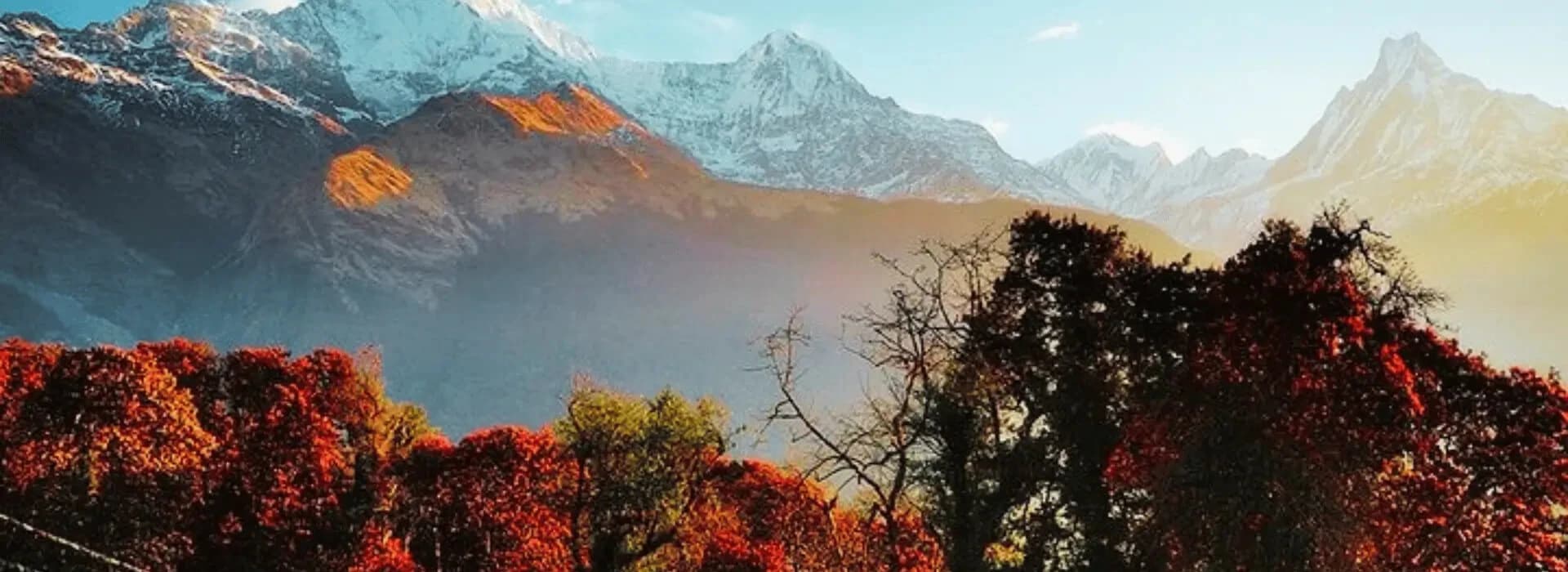
Can You Trek the Annapurna Circuit Without a Guide? New Rules & Reality

No, as of 2026, foreign trekkers absolutely cannot legally trek the Annapurna Circuit without a licensed guide; the law passed in April 2023 was implemented reliably in 2026 at the trail checkpoints (it is not solely a paper notification) and impacts all foreign trekkers. Independent, solo foreign trekkers are now banned on the Annapurna Circuit itself.
Does this only impact foreign trekkers? Yes. This is a foreign trekkers-specific issue that is directly related to foreign trekkers needing to enter the national park and conservation areas. It does not matter how experienced a trekker you are, your nationality, all foreign trekkers are impacted. No independent travel option exists on the Annapurna Circuit.
Is this enforced with consistency? Not perfectly. The number of officials staffing each checkpoint, the season, and the specific entrance point for the trailhead (Thorang La or otherwise) do influence how strictly the details of the documentation are verified; however, the actual law requiring a licensed guide remains in effect and will likely be checked reliably at any point you need to show that paperwork in 2026. So plan by booking an accredited trekking agency and acquiring your licensed guide before arriving rather than on arrival in Kathmandu.
Key Takeaways
- Official requirement: licensed guide required by law for foreign trekkers trekking the Annapurna Circuit.
- Enforcement as of 2026: Checkpoints which once randomly chose where to inspect travelers on the Annapurna Circuit now check the documents fairly consistently.
- Impacts: Any foreign traveler, not just those who are not Nepali nationals or who are not within a SAARC Agreement system.
- Greatest risk: Being denied entry to the trail or getting slowed down drastically after landing when attempting to secure your licensed guide.
- Best option: Obtain a licensed guide through a registered agency previous to flight departure.
This material has been prepared using government and conservation site regulations, current statements on Annapurna Conservation Area Project (ACAP) and other regional policies updated to include data from 2026. Information gathered from accredited and registered trekking agencies, along with direct observations from the Annapurna Circuit, was utilised. Gaps or variations in implementation from authoritative statements in the country, based on the author's observations along the Annapurna Circuit.
Why So Many Travellers Are Confused
If you’ve Googled this topic to land on this page, then you may have noticed various confusing or conflicting answers, and the reason is obvious.
Many of the older blogs still appearing high in the results were written before the regulatory shift in 2023 and have not been updated. Thus, they continue to talk about an “independent trekking” category that hasn't been legal for several years, but they maintain high rankings based on age and backlinks, not accuracy.
There can also be a disconnect between when rule announcements occur and when they’re actually implemented: the mandatory guide policy for Nepal trekking was announced in 2023, but it took time to be enforced on the ground, creating a period when some individual trekkers passed through checkpoints without being stopped. That window is closing fast in 2026.
Confusing information issued by other travel/trekking agencies adds further complexity. Trekking agencies promote the rules to varying degrees, either emphasizing their importance for their business objectives or glossing over them. Even on social media and YouTube, a YouTube video or Instagram post from a solo traveler who passed through in 2023 or 2024 may now be widely disseminated and taken as the rule for 2026, when enforcement has actually stiffened.
Differences at individual checkpoints also occur. A manned checkpoint in a highly populated area is more likely to rigorously adhere to the rules than a remote checkpoint in a sparsely traveled region. So, one trekker may experience something quite different from another, and that becomes a generalization when posted online.
Why travelers need current information: Given the meaningful changes to Nepal’s trekking regulations over the last two or three years, plus the industry adapting to those changes, you should discard any blog, online forum post, or video that is older than 2023 or is not dated. For all of Nepal’s most relevant and up-to-date rules and regulations, be sure to check out our Nepal Trekking Rules guide or consult official government and ACAP sources.
What Are the Latest Rules?
The explanation given in the official policy differs from the actual enforcement on the ground.
The Government of Nepal decided, via the Nepal Tourism Board and other relevant authorities for conservation, to require a licensed guide for foreign trekkers starting from April 2023 on its key trekking routes, that is, the Annapurna Circuit, among others. The rationale behind this move was explained in relation to ensuring greater safety for the trekkers, improving rescue co-ordination and enhancing the Nepalese licensed guiding business and techniques used for managing the visitors to the heavily visited conservation areas.
Today, the law states that foreign trekkers should be supervised by a government-licensed guide working for a registered trekking agency to get the permission for visiting the Annapurna Conservation Area.
Before vs. Current Rule
Before (Pre-2023)
- Guide requirement: A guide was optional for foreign trekkers.
- Independent trekking: Foreign trekkers could trek independently with self-arranged permits.
- Permit process: Trekkers could often manage permits themselves.
- Enforcement: Rules were enforced inconsistently and checks were less common.
Current Rule (2026)
- Guide requirement: A licensed guide is mandatory for foreign trekkers.
- Independent trekking: Independent trekking is no longer a legal option on the Annapurna Circuit.
- Permit process: Permits are processed through a registered trekking agency along with the guide arrangement.
- Enforcement: Checkpoint verification is becoming increasingly consistent.
This portion of the text indicates simply the official position of this policy - it does not explain how strict enforcement is, in reality, in various specific cases, which is addressed later in the text. To know more about the requirements of the permit and the guide, refer to our Nepal Trekking Permits guide.
Does the Guide Rule Apply to the Annapurna Circuit
Yes - the Annapurna Circuit is fully covered by the mandatory guide rule. The Circuit covers almost completely the area of the Annapurna Conservation Area, due to which the specified rule was created.
The Annapurna Conservation Area is the largest protected area in Nepal that has a special requirement for the permit that is called the Annapurna Conservation Area Permit (ACAP). Since the start and the end of the circuit and most of the way are situated within the boundaries of the mentioned conservation area, it might be said that the rules are applicable to all parts of the trekking route. It should be noted that this section of trekking is completely different from other parts where trekking is not under any restrictions.
The requirement does distinguish between traveler categories:
Traveler Category and Guide Requirement
- Foreign trekkers (non-SAARC): A licensed guide is mandatory.
- SAARC citizens: Generally subject to the same core guide requirement, although permit fees may differ.
- Nepali citizens: Not subject to the guide requirement that applies to foreign trekkers.
What is clearly indicated in the government policy is the underlying need for it and that it applies to the Annapurna Conservation Area; a definitive, complete list of exceptions, however, is often not specified in public information, so any traveller who appears to fall into a vaguely defined category of exception should check directly with ACAP or a registered tour operator before relying on an exemption. For the details on obtaining the pass, go to the Annapurna Conservation Area Permit (ACAP) entry.
Official Rule vs Reality on the Trail
- This is the most fundamental thing you need to know before you leave: What the law demands and what really happens when you are at a checkpoint. The official rule states: You must use a licensed guide arranged by an agency registered in Nepal to get your ACAP permit and trek the Annapurna Circuit as a foreigner. It’s not advised; this is the legal document required as of 2026.
- What is actually happening on the trail: ACAP permit checks have become much more predictable through 2026 compared to the rule in the first year or two of its enactment.
- Current trail experience: On the ground, this rule is largely more regularly enforced now for check-ins through 2026 than it ever was during the initial year or two it was adopted. Most trekkers say that while permits and guide paperwork could be hit or miss at small checkpoints along the trail closer to the rule's implementation, the biggest checkpoints along the route now check in documents on a consistent basis.
- Reasons for differences in enforcement: There are several reasons why enforcement varies in practice. First, one of the major reasons is the number of people employed at a system of checkpoints in various places and times. Hence, the staff at a popular place will be busier during the high season than the personnel at more remote checkpoints. On top of that, there may be differences in the practices used for enforcement by the authority across regions. Moreover, the number of people working during off-peak periods at checkpoints is assumed to be quite limited.
To clarify: none of the variability that has been described earlier should be taken as a reason to dodge this requirement. It serves to illustrate the idea of why this policy is in place and which “reality vs. theory” discrepancies the travelers should keep in mind during that journey. In case someone seeks an understanding of the intricacies of enforcement with respect to independent trekkers who opt for staying in the local teahouses, we also put together another report, entitled the Tea house trek in Nepal.
What Travelers Actually Experience
Having established that, let’s examine the real situation from the perspective of trekkers who have been through this process fairly recently.
As a trekking tourist in 2026, trekkers on the Annapurna Circuit can follow the rule of showing their permits (the ACAP permit, especially) at the major check-posts and check-points on their trek. Nowadays, it is normal for guides to be present at the various checkpoints in the region.
However, there is a significant difference in how inspections function among different locations. Many checkpoints have introduced new smart inspection systems (QR code scanning), while others still conduct manual checks. Furthermore, each trekking region of Nepal runs enforcement differently, so this means that the checkpoints may work either by using TIMS or with the help of ACAP permits.
Although the regulation remains the same as before, the number of inspection staff at the checkpoints is fixed and can create some delays in the arrival of the parties.
How the Policy Evolved
- Previous policy (before 2023): Foreign trekkers were able to independently obtain permits and trek the Annapurna Circuit without the necessity of obtaining a tour guide.
- Government announcement (2023): The Nepali government introduced as compulsory the need for foreign trekkers to hire a guide to trek major parks and conservation areas, including Annapurna.
- Implementation (2023–2024): The implementation of the regulation happened gradually, and trekkers and tour agencies noted that the policy was enforced inconsistently in its first year or two.
- Industry response: Registered trekking agencies modified their booking systems to include guide booking in their services. Many independent-style trekkers began hiring local guides directly.
- Current situation (2026): Checkpoint controls have increased significantly and technological developments have brought new verification opportunities while the possibility of independent trekking on the Circuit has become much more limited.
The wider regulatory background for this change can be read here: Nepal Trekking Rules.
Why Reality May Differ
Despite these variations, all checkpoints have one thing in common: they’re required by law to implement digital verification. But there are reasons for this diversity that extend beyond local politics. For example, staffing levels and patterns vary greatly among checkpoints – those with greater numbers of people working their shifts tend to enforce the rules consistently. Some local administrative structures differ slightly too, contributing small variances on district level.
There are still real-world logistical hurdles - terrain, weather, and just generally supporting and maintaining digital verification technology at scale in altitude - that will sometimes challenge seamless check enforcement. Even temporarily changing conditions – like filling in short-term staff shortages or undergoing system repairs – can cause temporary moments where you see less typical enforcement behavior, and frankly, where you simply haven’t had the maturity to implement the policy evenly in some locations yet.
Official Rule vs. Practical Reality
Checkpoints
- Official rule: Verification is required at all designated checkpoints.
- Practical reality: Enforcement consistency can depend on staffing and the trekking season.
Local authorities
- Official rule: Local authorities follow the same national policy.
- Practical reality: Day-to-day procedures may vary slightly between locations.
Seasonal differences
- Official rule: The legal guide requirement does not change by season.
- Practical reality: Staffing and permit processing speed may vary during different seasons.
Staffing
- Official rule: Checkpoints are expected to have adequate staffing.
- Practical reality: Staffing levels can vary by location, particularly during shoulder seasons.
Once again, it is important to clarify that all of the differences discussed relate to enforcement and how enforcement is ensured and not to a loophole in creating a plan. The essence of the rule stays unchanged no matter what number of officers are present during the particular inspection. If one wants to check out the issue from the point of view of combining trekking with the assistance of the local guide, you can have a look at the Tea House Trek in Nepal post.
Timeline of the Rule Changes
Below are the points that have happened throughout the necessary policy of the guide:
- Before the Policy Change: Annapurna Circuit Foreign trekkers used to be able to obtain their permits on their own without hiring a guide, and many traveled as cheap independent trekkers.
- Official Announcement by the Government: In 2023, the government of Nepal made an official announcement that foreign trekkers are required to hire a licensed guide whenever they enter national parks and conservation areas for safety and responsible tourism purposes.
- Implementation of the Rule: In 2023, the rule was announced but it was implemented with different enforcement levels across different regions in 2023 and even in 2024.
- Agency Changes: Registered trekking agencies adapted their services to offer structured packages that included licensed guides. Unregistered guides either began working under established agency permits or were forced to go underground as informal guides – an act technically illegal.
- What happens in 2026: By 2026, 90% of checkpoints have been updated and are able to reliably verify guide and permit details, either digitally or manually. Digital permit verification tools and official guide verification have become standard across popular routes like the Annapurna Circuit.
- 2026 Annapurna Circuit: For a foreign trekker planning to do the Circuit trek at this time, the realistic expectation should be to be fully compliant by booking a licensed guide in advance rather than planning to find loopholes in enforcement, as was possible a few years ago.
For more about the history and regulations, read our Nepal Trekking Rules page.
Why Was the Guide Rule Introduced
This list looks at the logic behind the policy from the government's perspective (not ours).
- Trekker safety: Guides should be able to spot and respond to high-altitude and trail issues that a novice trekker, or one who doesn't know the trails, may not. Search and rescue: Having a guide leads to greater efficiency in case of an emergency to communicate and ensure assistance quickly and effectively.
- Emergency: In an emergency, a guide on site can take action in the right manner immediately, rather than the emergency resting solely on the skills and knowledge of a lone trekker at height.
- Managing visitors: Enables the conservation area management authority to monitor visitor numbers effectively, as well as movement within conservation areas.
- Conserving natural environments: Helps monitor and manage trekkers and their movements so they adhere to trail limits and don't damage the environment of an area.
- Managing sustainable tourism: This rule helps ensure a managed and sustained tourism flow through the high-traffic trekking areas of Nepal. Supporting the guided profession: Increases avenues for and promotes the employment of Nepal's licensed and trained guides.
These are the government reasons, not a personal opinion. Check out our Altitude Sickness in Nepal guide for further information on one of the primary safety reasons for this policy.
What Happens If You Arrive Without a Guide
Arriving in Nepal for the Annapurna Circuit without having previously arranged for a guide in advance? Here is likely the reality you will run into: Trek Ahead of Time. The first big hurdle once you decide to go for the Annapurna Circuit trek is registering for your trekking permits in order to enter the ACAP (Annapurna Conservation Area). Typically, at the permit offices processing applications for ACAPs, they will require guide and agency information within the application, and a permit cannot be issued prior to this.
From the trek starting points of the Annapurna Circuit, agencies and permit desks are equipped around the assumption that the trekker has already arranged guide accommodations.
Enforcement officers, both within conservation posts, checking stations, and even police posts along the trekking route, will have been instructed to verify the trekker's permit against his guide permit. It is possible a trekker could be redirected to hire a guide on the spot (increasing expense and the likelihood of some added days) or, at best, be turned away until adequate documentation can be secured. It is, however, highly unlikely that there will be a specific checkpoint or police station out there where the traveler will get a break in the implementation.
Step-by-Step: What to Expect
- Make an application for your ACAP permit, which now requires the facts about the agency and the guide.
- Reach your starting area without pre-arranged documents for your guide.
- Meet checkpoint personnel who confirm your permits and guides’ credentials.
- Be asked to get a licensed guide before proceeding.
Expect possible delays and costs that may have occurred due to a lack of advanced arrangements.
To know the permit method in detail, take a look at our Nepal Trekking Permits Guide.
What Documents Are Required?
Necessary Documents
Below is a useful checklist of the documents you'll need with you on the Annapurna Circuit:
- Passport: Required for all permit applications; bring along the original to keep readily accessible on the trail at checkpoints, and copies to stash in your belongings and on the trail.
- ACAP permit: Used for entrance to the Annapurna Conservation Area. You can apply for it when booking your trekking permit from a registered agency; it will be checked at many checkpoints.
- Guide documentation: As long as your trek is booked with a registered agency, your guide should be able to produce proof of his/her license on command; this has at some point been requested along with your permit.
- Emergency Contacts: In your log book or travel journal, make sure to list all emergency contacts you may want or need (in Nepal and back home) because connectivity can often be difficult on the trail.
- Trekking and Travel Insurance: Increasingly, some form of proof that you carry travel/trekking insurance, including provisions for emergency evacuation and high-altitude trekking, is being required. It can often make one more convincing when presenting yourself as a tourist to a stranger who appears less and less welcoming each day.
Verify present expiration dates and issuance authorities with the registering agency before your trip for each of the above, as details do vary from one season to the next. For details on how this entire permit process works in Nepal, visit my guide Nepal Trekking Permits entry.
Can Solo Travellers Still Trek the Annapurna Circuit
As far as the definitions are concerned, the most confusing aspect appears to be that of 'solo' travel. The term does not imply that one has to go traveling without any companions. Independent travel implies that the traveler is alone, with no agents or guides involved in their journey.
This trek allows independent foreigners to explore its routes. Solo traveling with a licensed guide means that the tourist is on a journey alone together with the guide. There are no issues related to this form of travel in 2026. Group trekking means that there are more than one trek traveling at the same time, but the main principle of guiding applies in this case.
Annapurna Circuit: Solo vs. Guided Trekking
Solo traveler
- Can travel alone.
- A guide must be arranged if required by the applicable rules.
- Legal on the Annapurna Circuit: Yes, provided the guide requirement is met.
Independent trekker (no guide)
- Travels alone without a guide.
- Legal on the Annapurna Circuit: No.
Solo traveler with a guide
- Travels alone as a trekker.
- Has a licensed guide accompanying them.
- Legal on the Annapurna Circuit: Yes.
Organized group trek
- Travels as part of an organized group.
- Has a guide.
- Legal on the Annapurna Circuit: Yes.
In a nutshell, no - you can’t trek the Annapurna Circuit solo in 2026. You can, however, trek the Annapurna Circuit with a licensed guide rather than independently. Check out our guide to Solo Trekking in Nepal for more on this.
What Are the Risks of Trekking Without a Guide
Putting the law aside for a moment, let’s objectively consider the risks of going it alone on the Circuit:
Legal
- Legal compliance issues: Going against legal guidelines will mean you aren't in accordance with the current regulations set for foreign trekkers within the Annapurna Conservation Area.
- Checkpoint delays: If your paperwork is not in order, you could be delayed at checkpoints for an unpredictable amount of time, causing delays to your planned itinerary.
Practical
- Practical navigation: Though the core of the main Circuit route isn't difficult to follow, side routes, weather conditions obscuring terrain, landslide reroutes, etc., can actually result in navigational challenges for trekkers who have a little too much confidence in walking alone.
- Weather: Changing weather conditions in the mountains, especially close to Thorong La Pass, can quickly make a good day an unpleasant, possibly dangerous one for individuals who are not fully aware of the conditions.
- Altitude sickness: This skill, which is not widely held among less experienced mountain travelers, can be key to recognizing the symptoms of altitude sickness and ensuring that the individual seeks support promptly should the need arise.
- Rescue coordination: Should the unfortunate event occur where an individual needs to be rescued from the mountains, a local guide knows precisely whom and how to contact for assistance.
- Communication: Language barriers between local communities and a lack of connectivity in certain regions can make even the simplest tasks, from locating a lodge to reporting an accident, more difficult.
- Emergency conditions: Taken collectively, these factors compound to make emergencies far more hazardous to navigate for a solo individual than for a guided individual.
This isn’t a scare tactic! We're highlighting real dangers based on the fundamentals of mountain safety to illustrate why this regulation is in place. To read more about managing altitude-related threats, see our Altitude Sickness in Nepal guide.
Should You Plan Your Trip With or Without a Guide
So instead of forcing a specific answer, let me explain things by type of traveler. Hopefully, it helps you set realistic expectations.
|
Situation / Traveler Profile |
Recommended Approach |
Key Factors to Consider |
|
First-Time Trekker / Beginner |
Guided Trekking |
You are very likely to acclimatize incorrectly on your first high-altitude trek. Permit requirements, language barriers, and confusing trail junctions can add unnecessary stress without local support. |
|
Experienced Himalayan Trekker |
Independent Trekking (Where Permitted) |
The trek can be manageable if you understand proper acclimatization, can read topographic maps, have experience above 5,000 m, and can confidently follow the well-trodden main trail. |
|
Winter Season (Dec–Feb) |
Guided Trekking or Trek Support |
Sub-zero conditions and ice can develop around the high pass, while sudden blizzards can occur at any time around Thorong La. Local knowledge is essential for judging weather and route conditions. |
|
Monsoon Season (June–Aug) |
Guided Trekking / Advanced Planning |
Lower sections of the trail can regularly be affected by landslides and washouts. A local guide can identify safe crossings, provide route updates, and help coordinate transport when sections become inaccessible. |
|
Solo Traveler |
Guided Trekking (Highly Recommended) |
Managing AMS alone is one of the major risks of high-altitude trekking. In addition, depending on the applicable regulations and section of the route, completely solo travel may not be permitted for foreign trekkers. |
|
Small Group (2+ Trekkers) |
Independent / Split Support |
Sharing navigation and other risks provides more safety than travelling alone. Hiring a porter-guide can reduce the physical burden of carrying heavy gear while also providing local knowledge and an additional safety resource. |
|
Families with Children |
Full Guided & Porter Support |
This is the safest and most practical option for families. A guide allows the itinerary to be adjusted to the children's pace, while porter support reduces the physical demand on adults carrying additional family gear and supplies. |
Remember that currently (as of 2026), the “Independent Trekking (Where permitted)” option for trekking under the 2026 rules is not a legal loophole to avoid hiring a guide, but rather independent trekking is where the trekkers have freedom to choose their own route on the trail while still being obliged to hire a guide according to the law. For more information about the trek, please refer to our Annapurna Circuit Trek page.
Final Verdict
If travelers should do something, then that should be the following, to plan the trekking to avoid future complications. When traveling, to arrange it according to the most up-to-date information because, while not every point will be absolutely strict, planning based on past and therefore incorrect information is going to create some very complicated complications on the ground potentially; such as added expenses, delays, or being rejected from traveling the Annapurna Circuit, it would be best to re-confirm everything with someone who has all of the latest information at hand, by the time that you are ready to go trekking.
Are you planning your Annapurna Circuit trek?
If so, please do get in contact with our team, who can ensure that you are aware of all the latest and most up-to-date trekking rules and guide you to travel there.
What the official rule says: Foreign trekkers are required by law to hire and use a licensed guide through a certified agency to trek the Annapurna Circuit. This has been in effect since April 2023, and by 2026 it will have been fully introduced. What travelers experience today: By 2026, checkpoint enforcement will have largely stabilized, which means travelers on the trail today have a much better time sticking to the laws, even if discrepancies still exist based on region or the time of the year.
Reasons for visitors to base their plans on legal requirements: As travelers are acquainted with the checkpoint process today, those who plan their journeys based on older guidelines and enforcement standards risk gravely delaying their travel schedules, incurring extra expenses, or being turned away at the checkpoints.
The need to check on the current updates: Travelers must be aware that as laws and enforcement provisions are continuously changing, checking on current requirements as close to the date of travel as possible is a much better strategy than relying on this or that article forever.
Will you travel to the Annapurna Circuit? Reach out to us to be informed about the trekking regulations, the present conditions of the routes, and everything related to your journey.
FAQ
Can I legally trek the Annapurna Circuit without a guide?
No. Annapurna Circuit permits required for foreign trekkers will now necessitate hiring a licensed guide through a registered agency from 2023 on.
Is the rule strictly enforced?
Enforcement has become considerably more consistent by 2026 than in the policy's first year or two, though the exact experience can still vary somewhat by checkpoint, season, and staffing levels.
Can checkpoint officers stop me?
By 2026, enforcement is a bit more stringent than it was when the policy first came into ef1t and is usually more or less uniform from checkpoint to checkpoint (depending on staffing levels, time of year).
Does the rule apply everywhere on the route?
The checkpoint personnel along the Annapurna Circuit (essentially entirely within ACA) are required to check permits and guide hiring documentation, and we have known them to turn trekking groups around for lack of such checks.
Can I begin alone and hire a guide later?
This approach wouldn't necessarily work, as guide arrangements usually require approval and access on the first checkpoints in the area where you start trekking.
Do Nepali citizens need a guide?
No, the regulation concerning a guide applies only to foreign trekkers and doesn't involve people from Nepal.
Do SAARC travellers need a guide?
SAARC travelers are generally obliged to abide by the same rule of having a guide, with some variations in the regulations concerning permits - it is best to ask a certified organization about the requirements.
Can couples trek without a guide?
No, the regulation applies in any case regardless of the number of travelers - even a couple of people trekking together may not avoid hiring a licensed guide to comply with the law.
Can I use only permits?
No, permits cannot be used alone for the purpose of trekking. Permits for foreign trekkers are linked to the legal requirement of having a guide and cannot be treated as a separate document.
Does travel insurance change anything?
No, travel insurance doesn’t change the regulation requiring a guide, but it is recommended to purchase reliable coverage in addition to the guide.
What happens if the rules change before my trip?
As regulations are subject to change, it is good to check particular requirements with your agency or any credible source shortly before departure instead of relying on the information collected months earlier.
Where can I verify the newest regulations?
Contact the Nepal Tourism Board, the Annapurna Conservation Area Project (ACAP) or the licensed trekking agency to find out the latest requirements before going on your trip.

Related Posts
Trekking and Hiking
Best Time to Trek Annapurna Circuit: The Ultimate Weather & Season Guide
Sep 20, 2026ByKrishna
Trekking and Hiking
Everest Base Camp Altitude Sickness Guide: Symptoms, Prevention & Safety Tip
May 15, 2026ByKrishna
Trekking and Hiking
Altitude Sickness on Manaslu Trek: Symptoms, Prevention, and Effective Treatment
Jan 23, 2026ByKrishna
Need Help? Call Us.+977 9851230809