

Yes, beginners can complete the Annapurna Circuit Trek with proper preparation. This moderately challenging trek covers 160–180 km, takes 14–18 days, and reaches 5,416 metres at Thorong La Pass. Good fitness, 8–12 weeks of training, proper acclimatization, and a licensed guide can make the journey more manageable. April and October are ideal months for beginners. Walking at a steady pace, staying hydrated, and allowing enough time to adjust to the altitude are essential for a safer trekking experience.
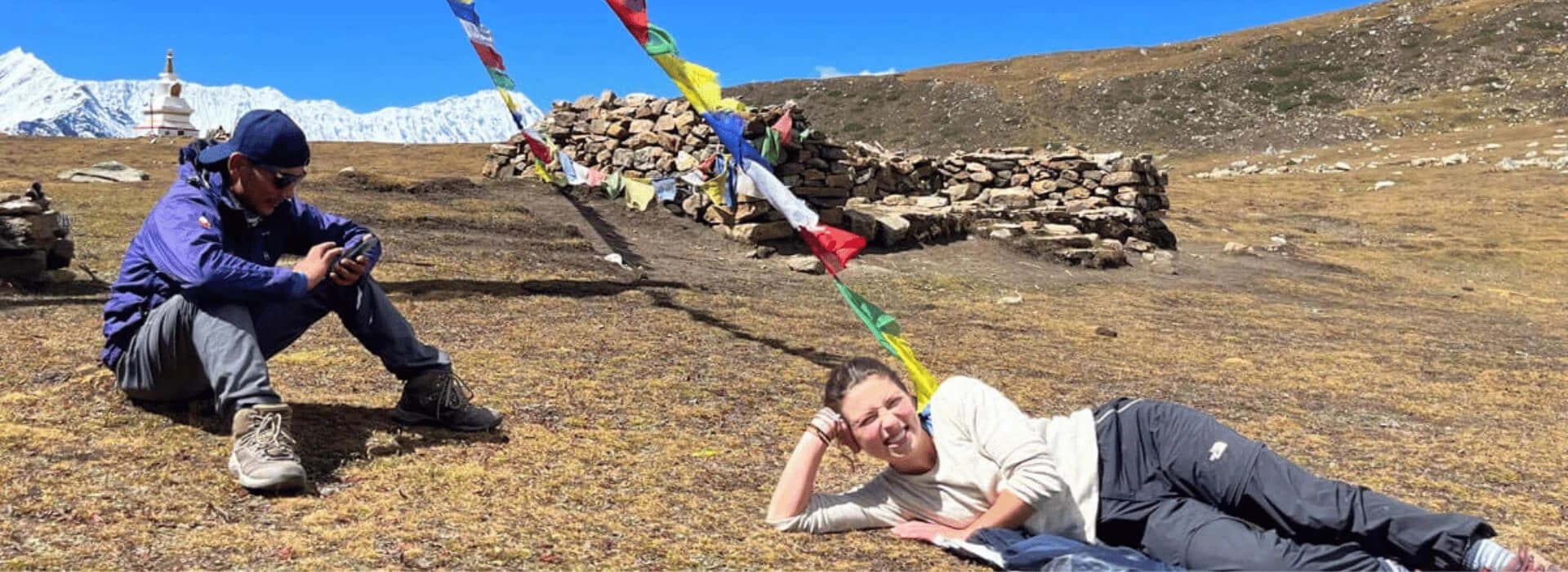
Is the Annapurna Circuit Trek Suitable for Beginners? The Ultimate Guide

The Annapurna Circuit Trek is one of Nepal’s most famous trekking routes, featuring lush forests, traditional villages, dramatic river valleys, and high-altitude landscapes before reaching Thorong La Pass at 5,416 metres. Beginners can complete this moderately challenging trek with proper fitness, preparation, and acclimatization. This guide covers everything first-time trekkers need to know, including difficulty, training, altitude, the best seasons, and guide requirements.
What Makes the Annapurna Circuit Trek Difficult
It's also of benefit knowing precisely where the difficulty comes from, rather than simply a rating number. There are actually four categories of difficulty within the Annapurna Circuit trekking that impact a beginner to varying degrees. Read the Annapurna Circuit Trek Difficulty guide to read the entire report in depth.
|
Difficulty Type |
Level |
Details |
Beginner Impact |
|
Physical difficulty |
Moderate–High |
5–8 hours walking/day for 14+ days |
High - needs cardio training |
|
Altitude difficulty |
High |
Thorong La at 5,416 m - 50% oxygen |
High - AMS risk without acclimatisation |
|
Technical difficulty |
Low |
No ropes, no climbing - walking only |
Low - no special skills needed |
|
Mental difficulty |
Moderate |
Long days, repetitive effort, cold nights |
Moderate - mental endurance matters. |
Physical Difficulty
The physical demands are the easiest to understand. You will be hiking for five to eight hours every day for twelve to sixteen consecutive days. Your daily hike can consist of a mixture of walking from valley to valley, but you may also have to ascend a steep two thousand-metre mountainous slope.
The day you go over the Thorong La Pass is the most difficult, with the hike taking between seven and nine hours and beginning at 4 am when it's still dark and cold.
The overall cumulative effect of being at such heights for so long is the real challenge. On the third day you'll feel fine, but by the ninth day you'll be feeling tired, and by day eleven, the day of the pass, you'll really be tested. Only by training your stamina, and not just your strength, will you be prepared for the Annapurna Base Camp hike.
Altitude Difficulty
This is the main challenge for most of the people embarking on the Annapurna Circuit. At Thorong La Pass (5416 m), the air pressure is only 50% of sea level, making it difficult for a person to breathe. In addition, you might have an increased heart rate. Anyone who goes through these altitudes is prone to altitude sickness even without acclimatization. However, the Annapurna Circuit gives you enough time to acclimatize.
The Manang rest day, plus the gradual increase in elevation, gives the body enough time to adjust to the new altitude. The best way to avoid altitude sickness is by avoiding sleep on the days you reach higher elevations. The second thing you should avoid is going to higher altitudes on consecutive days. This is the most common mistake that most people make while hiking the Annapurna Circuit.
Technical Difficulty
Zero. To complete the Annapurna Circuit Trek, there is no technical climbing, no ropes, no crampons required (except during the winter months on the Thorong La Pass), and no scrambling up rocky outcrops. It is a walk in the park from start to finish. Even those new to trekking can manage the technical side of the Annapurna Circuit hike as a beginner, as it is purely a question of effort and altitude.
Mental Difficulty
Long days spent walking at altitude can be as mentally challenging as they are physically exhausting. After day 8 or 9, when your legs feel like lead, it can be the internal dialogue that gets you to the summit. Getting into the right rhythm, being able to enjoy the journey, and not focusing solely on the goal can help get you through the tough times.
Our guide's most repeated line: "Walk at a pace where you can hold a full conversation. If you cannot speak in sentences, you are moving too fast for this altitude."
Do Beginners Need Previous Trekking Experience
No – you do not need previous trekking experience for the Annapurna Circuit. The trail is well signed and busy with thousands of hikers each year, going for the first time on a Himalayan adventure. However, it is important that you are fit enough and can dedicate your time to acclimatization. Your heart and lungs will need to be strong enough to handle the altitude while trekking, and your legs should be prepared for long days of walking with a backpack.
It is still a good idea to do some practice hikes before departing to Nepal, so your body is used to walking on trails with a backpack on. This is not because the skills are difficult but rather so you know what to expect. It will be much better to learn to walk tired on the 4th day in the foothills on your way to the Annapurna Circuit, instead of on the 8th day at 4,000 metres altitude.
If you are looking for a similar article about trekking in the Everest region with no previous experience, check out our post about Everest Base Camp for Beginners, where we talk about the same subject – what to do in preparation for your first Himalayan trek.
Real Example: What a Prepared Beginner Looks Like
Consider one trekker (let's name her Person A) who has no experience in multi-day hiking. She's generally fairly fit: she likes to go out and walk regularly, but she doesn't have any trekking background. She finds out about the Annapurna Circuit around nine months before she attempts the trek, and she starts preparing.
Every day, she does five kilometres of walk-ups. By the third month, she can manage four- to five-hour-long weekend hikes with a day pack, and by the fifth month, she can regularly do seven-hour weekend-long treks on more serious uphill terrain. She plans her trek in April and hires a licensed guide. She sticks to the 14-day itinerary, including the Manang acclimatization day, and she reaches Thorong La Pass at 8 am on a clear April morning, having hiked it in less than three hours.
Person A is not unusual: she represents the generally prepared beginner trekker, and the approach described above is generally learnable, repeatable and applicable to almost any reasonably motivated person.
Fitness Level Needed for Beginners
Fitness for the Annapurna Circuit is all about endurance, with an emphasis on moderate intensity sustained over long periods of time and not short bursts. You will not be doing any racing or lifting heavy weights. Instead, you should be focusing on keeping up a moderate intensity for hours at a time, for several days in a row.
The fitness benchmarks below are based on what our guides see as indicators that a trekker has a good level of preparedness for the Annapurna Circuit trail, and they reflect reality on the trail. Here are the key areas of fitness to be aware of:
- Walking distance: The ability to walk for 10 to 15 km comfortably on varied terrain without the need for a break due to fatigue. This is your base-level fitness benchmark before any uphill training.
- Stair climbing: The ability to climb 20 to 30 flights of stairs without undue shortness of breath. The 1,000 metre climb to the Thorong La pass is a much tougher workout than most people are used to, and stair climbing is a closer analogue to that challenge than walking on a flat surface.
- Consecutive day hiking: At least three weekend hikes of 4 to 6 hours each on consecutive days. The ability to carry on despite tired muscles from the previous day's hike is an important indicator of your body's resilience, and that can only be developed by doing hikes that extend into a second (and if necessary, a third) day.
- Pack weight: Walking 5 to 7 kilometres with a pack that is 6 to 8 kg without soreness in the hips or shoulders. Your core and lower body muscles need to be able to handle the pack weight as well.
- Cardiovascular base: 45 to 60 minutes of moderate cardiovascular exercise (bicycling, swimming, or fast walking) 4 times per week, for 8 to 12 weeks before departing for the trek.
- Training guide: Our How to Train for Annapurna Circuit Trek page has a detailed twelve-week training guide that includes specific exercises and distances to build your fitness, and weekly benchmarks to measure your progress.
Altitude: The Biggest Challenge for Beginners
Altitude is the only aspect of trekking fitness that cannot be trained for. Every trekker – age, fitness or trekking ability doesn't matter- is affected by the low oxygen above 3500 metres. Management is the key, and our guides monitor every trekker's SpO2 every night above 3500 metres. For full details on health issues related to altitude, see our comprehensive guide: Altitude Sickness on Annapurna Circuit.
| Severity | Symptoms |
Action Required |
|
Mild AMS |
Headache, fatigue, loss of appetite, mild nausea |
Rest at the same altitude, hydrate, and do not ascend. |
|
Moderate AMS |
Persistent headache, vomiting, dizziness |
Stop ascending - descend 300–500 m if no improvement |
|
Severe HACE |
Confusion, loss of coordination, cannot walk straight |
Descend immediately - medical emergency |
|
Severe HAPE |
Breathlessness at rest, wet cough, blue lips |
Descend immediately - can be fatal within hours |
Acclimatisation is the solution: The Manang rest day at 3,540 metres is a necessity and not a luxury. This allows your body to create additional red blood cells and adapt its breathing pattern to the lower air pressure before ascending to higher altitudes.
Hydration reduces risk: You should drink 3 to 4 litres of water per day from your first day in Besisahar. Do not wait for thirst to set in at higher altitudes since the body's reaction to dehydration is delayed.
The slow ascent rule: A sound rule of thumb is to not increase your sleeping altitude by more than 300-500 m above the altitude at which you hiked the previous day. Your 14-day itinerary already factors in this climbers' maxim, so do not attempt to shorten the trip.
Know when to descend: If your SpO2 falls below 70 percent while experiencing altitude sickness symptoms, or if you suspect you are having acute mountain sickness, descend as soon as possible. Do not attempt to continue your trek or hike to the summit or, for that matter, even cross a pass if you or a member of your trekking party are experiencing AMS, HACE, or HAPE.
If you have a headache that does not respond to hydration and a normally functioning acclimatisation process within 12 hours, or if you develop a persistent headache that does not clear up after 12 hours of rest and hydration, inform your guide immediately and prepare to descend. Do not attempt to continue your trek or hike to the summit or, for that matter, even cross a pass if you or a member of your trekking party are experiencing AMS, HACE, or HAPE.
Best Time for Beginners to Trek
The choice of season is then a direct decision regarding safety for a beginner. The correct season guarantees dry trails, acceptable temperatures and reliable pass conditions. An incorrect season provides leeches, mud, ice or extreme cold, which makes what was already a difficult trek into an obviously dangerous one.
- April (peak season): The best month for a first-timer to experience the Annapurna Circuit Trek. Temperatures are perfect throughout the trail. Trails are also dry and stable. Teahouses are busy; all the essentials are available without a problem. The lower part of the trail is characterized by blooming rhododendrons.
- October (peak season): Similar to the conditions in April, with the trails being equally easy to navigate but with far better visibility than in any other month. The mountain peaks are at their most visible, giving the illusion that the Annapurna massif is right around the corner. It is also slightly cooler than in April, which is still a good month for first-timers.
- March and November: Those are the two secondary months that are still good for the Annapurna Circuit Trek, although a trekker should prepare for colder nights in March and consider microspikes in November when approaching the Thorong La Pass.
Note: Our Annapurna Circuit Trek Weather by Month article contains much more information about the weather in each month, including a detailed overview of temperatures and snowfall, as well as the visibility category and best-suited trekker types.
Should Beginners Hire a Guide or Porter
For new trekkers who go on their Annapurna Circuit trek in 2026, hiring a licensed guide will be absolutely essential. It's necessary not only for trekking directions and to learn more about this Himalayan destination, but also due to the mandatory nature of the guide requirement for permit approval of protected routes in Nepal, introduced recently. Here's the honest comparison about what the guide would provide you, and with guide no!
| Factor |
With Licensed Guide |
Without Guide (Independent) |
| Navigation |
Guide handles all route decisions |
You navigate - risk of wrong turns on remote sections |
| Safety |
Guide monitors health, initiates rescue |
You manage health and emergencies alone |
|
Altitude monitoring |
SpO2 checked every evening |
You assess your own symptoms |
|
Local knowledge |
Route conditions, weather patterns, village customs |
Reliant on apps and guidebooks |
| Cost |
$25–$40 USD/day extra |
Lower upfront cost |
|
Permit compliance |
Guide handles all paperwork |
You manage all permits and checkpoints |
|
Best for |
Beginners, first-time Himalayan trekkers |
Experienced independent trekkers with Himalayan background |
What a guide actually does: Aside from leading you on the mountain trail, a guide will check your SpO2 each evening and make decisions about evacuating you early if you begin to feel unwell. They also have direct contacts at local rescue services and helicopter companies. Additionally, your guide carries the communication devices necessary for calling for help.
- Porter cost and value: A Porter costs you $18 to $28 USD per day and carries your main bag (up to 25 kg plus their personal baggage). The hike with a heavy pack through the mountains during a 14-day trip is draining and causes many would-be adventurers to retire early on the Annapurna Circuit. For the inexperienced hiker, a porter is therefore not a luxury good; rather, it is an essential element to complete the trek.\
- Guide and porter support: The combination of guide and porter costs approximately $43 to $68 USD per day in addition to your costs for the Annapurna Circuit trek. This boils down to a total of $600 to $950 USD for the 14-day classic circuit, or 30 to 50% of a regular trekking package – the most valuable investment to get you safely through the mountains.
- Budget planning: Our Annapurna Circuit Trek Cost guide contains all the information you need to plan your personal trekking budget. We include all the relevant categories (and subcategories) with 2026-prices, including guides, porter support, permits, lodging, and transportation.
Common Mistakes Beginners Should Avoid
Our team has guided countless first-time Annapurna trekkers over numerous seasons. Year after year, group after group, mistake after mistake crops up. From otherwise perfectly prepared trekkers: Complete checklist - and how to guard against each error:
| Mistake |
Why It Causes Problems |
How to Avoid It |
|
Walking too fast |
Burns energy for the descent, increases AMS risk |
Use the guide's pace - if you can speak in full sentences, you are going right |
|
Over-packing |
Heavy daypack exhausts your shoulders and knees within days |
Daypack maximum 8–10 kg - hire a porter for the main bag |
|
Skipping acclimatisation days |
AMS develops without warning when acclimatisation is rushed |
Never skip Manang rest day - it is a safety requirement, not a comfort break |
|
Ignoring water intake |
Dehydration amplifies every altitude symptom |
3–4 litres per day from Lukla onwards - drink before you feel thirsty |
|
Starting without fitness training |
Long walking days feel impossible without prior cardiovascular base |
8–12 weeks of cardio and hiking preparation before departure\ |
|
Checking weather too late |
Thorong La storms develop within hours - late checking leaves no plan B |
Check mountain forecast 48 hours ahead, recheck at High Camp the evening before |
Quick Mistake Checklist
- Walking too quickly on climbs, especially during the first 3 days when you feel energetic.
- Packing more than 8kg in your day pack, as extra weight will drain you during 7 hrs of walking.
- Skipping the acclimatisation day in Manang to save time, which is the most common reason for failure on the trek.
- Not drinking enough water on a cold morning, as coldness gives a false feeling of not being thirsty.
- Not preparing yourself physically for the trek and reaching Besisahar without any fitness regimen.
- Taking a headache as normal altitude sickness and pushing yourself hard on the first days of the trek when, in fact, it is a warning signal from your body to slow down.
- Not carrying a printed copy of your insurance and permit documents in your day sack.
Reference for what to pack and what to avoid: Please check our complete Annapurna Circuit Packing List that our guides suggest to their clients on their first trek.
How Beginners Can Prepare Successfully
Preparation is done in three stages. The following checklist breaks down all the preparations stage by stage, divided by time stage, from 3 months pre-departure to last week. This is the same stage that our tour guides send to each new client's first trip.
Three Months Before
- Start cardiovascular training: 45 to 60 minutes, four times per week
- Start weekend hikes: two to three hours, gradually increasing to six to seven hours over 12 weeks.
- Buy or rent a pair of trekking boots and start breaking them in.
- Book your guide through an authorized NTB agency. Guides are in high demand during peak season, so it's wise to book early.
- Get travel insurance: make sure to specify helicopter evacuation in the policy above 5,000 metres.
- Finally, consult your doctor about Diamox (for altitude sickness): you may want to get a prescription.
One Month Before
- Complete at least one two-day consecutive hike of 6+ hours each day to simulate cumulative fatigue
- Finalize all permits through your agency: ACAP permit and TIMS, if applicable
- Buy a cheap pulse oximeter (under $20 USD) and learn how to use it: record your saturation at home
- Pack your bag, and take off weight so that your day pack is not over 8 to 10 kg
- Organize your Kathmandu to Besisahar transfer via your agency.
One Week Before
- Reduce the intensity of training to include only light walking and stretching. It will help your body recover.
- Confirm the details of your Luka or Besisahar transportation and accommodation booking.
- Download offline maps (Maps.me or Gaia GPS) for the Annapurna Circuit. Mobile phone signals are unavailable above 4,000 m.
- Exchange enough Nepalese Rupees in Kathmandu. There are no ATMs between Chame and Muktinath.
- Come to your pre-trek organizational meeting with a guide and ask questions.
Is the Annapurna Circuit Safe for Beginners
Yes - but only with the correct preparation. You should realize that the Annapurna Circuit is a safe trek, in contrast to hazardous ventures like technical mountaineering. The dangers you will encounter are well-identified and well-understood, especially if you plan your adventure in the right way. You'll find a breakdown of risks below:
- Weather: The best time to trek is in spring and autumn as the weather is relatively stable. The main risk for novice trekkers is the Thorong La Pass, which may be closed due to snow from November to March. It is crucial to check the 48-hour mountain forecast before the trip, and it is always recommended to listen to the guide when going to the High Camp, rather than your own desires.
- Altitude: It is relatively easy to deal with altitude gain if you take regular breaks and do not overestimate your body. The HRA (Himalayan Rescue Association) clinic in Manang offers free consultations for altitude illness and is one of the most valuable sights in the whole circuit.
- Trail: The trail itself is quite straightforward and well-marked, although some parts of it require caution. The road near Tilicho Lake was closed several times during the monsoon season, and the sections between Tal and Dharapani are also rather tricky. Fortunately, the guide is aware of all the subtleties of the local terrain and will be able to help you through any problematic area.
- Emergency services: Helicopter rescue operates throughout the Annapurna region. The local emergency number and the rescue helicopter companies are always on call for a guide who can immediately give the correct GPS coordinates and information about the patient's condition.
- Communication: Our guide has an Ncell SIM card that provides good signal up until around 4,000-4,200 metres. Above that altitude, satellite phone communication or the tea house's landlines can be used for emergency services.
- Insurance is a must: Our guide's experience tells us that having travel insurance that covers helicopter evacuation for an altitude of more than 5,000 metres is crucial. Check our Annapurna Circuit Travel Insurance guide to see which terms and conditions are valid for helicopter evacuation.
Who Should Not Choose the Annapurna Circuit Trek
Being upfront about the limitations and risks involved is far more important than trying to sell every trekker on the Annapurna Circuit as a great adventure. The Annapurna Circuit is not suitable for some people, and it is important to understand why. A shorter alternative is the Short Annapurna Circuit Trek option.
- Trekkers who are out of shape and don't plan on training for the Annapurna Circuit (the physical demands are real and require some preparation)
- Trekkers who have less than 12 days available to trek (minimum for a beginner is 14 days; anything shorter doesn't allow for proper acclimatization)
- Trekkers with heart or lung problems should definitely check with their doctor before attempting any trekking above 4,000 meters.
- Trekkers who want a more comfortable experience (hotels are nice, but teahouses are basic. Rooms above 4,000m are cold and offer little in the way of facilities)
- Trekkers who are willing to sacrifice acclimatization days to save time on the trek (no, they aren't negotiable)
- First-time trekkers planning on going in the monsoon season (June-August). The lower circuit trail is truly unpleasant and offers little in the way of safety during this time of year.
Suppose any of the above applies to you; fear not. Nepal has plenty of other amazing trekking opportunities that, while different, offer a Himalayan adventure just as impressive.
Best Alternatives for Beginners
If the Annapurna Circuit sounds like too challenging a trek for your first trip in the Himalayas, here are some routes with a real mountain feel and an easier rating than the Annapurna Circuit. They're all gorgeous and worthwhile.
| Trek | Duration | Max Altitude | Difficulty | Why Easier Than Annapurna Circuit |
|
Ghorepani Poon Hill |
4–5 days |
3,210 m |
Easy–Moderate |
Short, lower altitude, well-serviced trail |
|
Mardi Himal Trek |
5–7 days |
4,500 m |
Moderate |
No major pass crossing, manageable altitude |
|
Langtang Valley Trek |
7–10 days | 4,984 m | Moderate |
Less crowds, manageable daily gain, no extreme pass |
|
Annapurna Circuit 14 Days |
14 days |
5,416 m |
Moderate–Challenging | This is the trek - ideal with proper preparation |
- Ghorepani Poon Hill (4-5 days): The most popular trek for short climbs in the Annapurna region. The peak of Poon Hill (3,210m) offers spectacular views of Dhaulagiri, Annapurna South, and Machhapuchhre at sunrise-a perfect introduction to Himalayan trekking with little risk of altitude sickness.
- Mardi Himal (5-7 days): A less busy alternative to Poon Hill that reaches a higher altitude. The summit crossing of Mardi Himal (4,500m) provides excellent views of the Machhapuchhre and is great preparation for a trek on the Annapurna Circuit.
- Langtang Valley (7-10 days): This trail just north of Kathmandu reaches a height of 4,984m at Tserko Ri and passes through several traditional Tamang villages. Offers a more isolated wilderness experience than the Annapurna region, but with good accommodation options.
- Compare the options: Our Best Beginner Treks in Nepal guide includes a detailed comparison of these 7 most popular beginner-friendly hiking trails in Nepal, including information about the length of the hike, maximum altitude, difficulty level, and budget.
Expert Tips for First-Time Annapurna Circuit Trekkers
These are the tips our senior guides give on day one of every trek with a beginner group. Not generic advice - specific habits that consistently separate successful first-timers from those who turn back.
- Walk slowly from the very first day. Your energy feels high at Besisahar. That energy is your advantage - save it for days 10 to 14 when the altitude is serious and the legs are tired. The pace you walk at on day 1 should feel almost embarrassingly slow.
- Drink water before you feel thirsty. Cold mountain air masks dehydration. Your body does not signal thirst reliably above 3,500 metres. Drink at every rest stop - at least 500ml per stop - regardless of whether you feel like it.
- Eat full meals at every tea house stop. Appetite decreases above 4,000 metres but your calorie requirement increases. Force yourself to eat breakfast, lunch, and dinner - even when the idea feels unappealing. Dal bhat is the best fuel at every altitude.
- Sleep as much as the altitude allows. Sleep is when your body actually acclimatises. Go to bed early at every stop above 4,000m, even if you feel fine. A well-rested body manages altitude stress far better than a social one.
- Check your SpO2 every evening from Manang onwards. A value below 80% at rest is a signal to your guide to speak with you about it. A value below 70% combined with symptoms is a reason not to hike the following day.
- Prepare your daypack the night before every stage. It will save you time in the morning and prevent you from feeling stressed about what you forgot. Mornings above 4.000m are cold, dark and confusing, and the last thing you want is to feel insecure about your preparation. Make sure you have a working headlamp, enough warm clothes, water, snacks and that you have copies of your permits with you at all times.
- Listen to your guide. They will assess the situation according to the altitude, trail and your personal condition. There is a reason for every stop, and it is not because they are tired themselves. Listen to their experience; they might save your life.
- Leave it at home! Remember that every kg in your daypack will impact you for 14 days. As a rule of thumb, leave 20% of the stuff you intended to bring at home. Here is a checklist for your final preparations before you go.
- Do a final check with this packing list we prepared for you. It will help you to make sure you have everything you need and that you didn't bring anything you don't need.
Final Verdict
Beginners can undertake the Annapurna Circuit Trek. It is not an exaggeration; it is the experience of our team every year when first-time trekkers complete the crossing of the Thorong La Pass and arrive in Muktinath, surprised that they have made it.
It requires specific preparations for the trek, including fitness training (8-12 weeks), acclimatization (Manang rest day is mandatory), the right season (April or October is the best time for a beginner), and ideally a guide who knows how to deal with altitude-related emergencies.
The Annapurna Circuit is not a trek that one should be careless when embarking on. The most successful trekkers are often those who prepared for the most. Those who underestimate the trek are almost always faced with the following: failure, frustration, and a headache. The most successful hikers are not always the athletically gifted ones, but those who invested much time and effort into their journey.
Ready to begin planning your escape to the Annapurna Circuit Trek? Begin exploring your options below with the different itineraries and expert guides we provide to assist you. Our team can help you identify whether the full circuit or a shorter version is the most appropriate option for your level of experience and desired time-frame.
Our summary: if you can walk 10 km today, have no problem training for three months, and you can pick a month in April or October, then you have all the tools needed to complete the Annapurna Circuit Trek.
Frequently Asked Questions
Can a beginner complete the Annapurna Circuit Trek?
Yes, many first-time trekkers do every year. The main things are fitness, acclimatization on the trail, a licensed guide, and the right season for the Annapurna Circuit; April and October are the best months for a first-timer.
How fit should I be?
A trekker should be able to walk 10 to 15 Kilometers on hiking trails with ease and hike 20 to 30 floors without resting. In addition, one needs to have consecutive days of hiking with 5 to 6 hours of walking. These are the fitness benchmarks our guides ask their clients to meet before heading to the trail.
Is Thorong La Pass dangerous?
Well, not exactly, but there are some precautions that one needs to take as a first-timer. Annapurna Circuit trek is 5,416 meters, and with proper acclimatization, anybody can do the trek safely. But if one attempts to trek during the winter season or in bad weather, it can be risky. So always consider the guides' advice before attempting to cross the Thorong La Pass.
Can I trek without a guide?
From 2023, Nepal made it mandatory to have a guide on all the trekking routes, so a guide is necessary for the Annapurna Circuit as well. Besides the legal requirement, a guide can assist you in case of an emergency. A professional guide can monitor your physical condition and the altitude you are climbing daily.
How many days should beginners plan?
Well, ideally, it should be 14 days or more for a first-time trekker. You need enough time to adjust to the higher altitude in Manang before attempting to cross the Thorong La Pass. So 14 days would be perfect, but 12 days is still manageable for an average trekker. Anything less than 12 days is too short, and I wouldn't suggest it for a first-timer; that would be a rushed adventure without proper acclimatization.
What is the best month for beginners?
April is a fantastic month for the Annapurna Circuit trek; the trails are dry and dusty, the temperatures are warm enough, and the rhododendron forests are in bloom. Whereas October is more popular for trekking because the trails are clear and dry, the skies are crystal clear, and the views are panoramic. But both months are excellent for a first-time trekker.
What is the minimum age?
There is no official minimum age, and our guides have hiked with teenagers and 70-year-olds. The determining factor for this trail is fitness, not age. Under 12 years of age to attempt the Thorong La altitude without medical supervision and a very experienced guide.
Is solo trekking suitable for beginners?
No. It’s just not advisable to be trekking anywhere above 4000 meters without a guide as a novice. If an emergency occurs on the mountain while you are trekking independently, there will be no one to help organize a rescue, no one to watch you and assess if your symptoms are worsening and no one to make that crucial decision to descend if things go wrong. Group or guided trekking is a safer option for first-timers.
How much should beginners budget?
Standard guided package: about $1,400 to $2,000 USD per person with $200 to $400 USD for personal expenses, snacks, tips and other extras. A realistic budget would then be about $1,600 to $2,400 USD excluding international flights. Budget packages start at around $800 to $1,200 USD but offer less guide support.
What are the most common beginner mistakes?
The five most common mistakes are: trekking at too quick a pace on the first few days, skipping the Manang acclimatization day, not drinking enough fluids, having a heavy pack on your back and not being physically prepared for the hike. All of these can be avoided.

Related Posts
Trekking and Hiking
Annapurna Circuit Trek Difficulty: The Honest, Stage-by-Stage Guide
Oct 18, 2026ByKrishna
Trekking and Hiking
Annapurna Circuit Trek Weather by Month: Best Time, Temperature & Trail Conditions
Oct 02, 2026ByKrishna
Trekking and Hiking
Altitude Sickness in Trekking
Aug 30, 2025ByKrishna
Need Help? Call Us.+977 9851230809