Why Timing Matters for Everest Three Passes Trek
The Everest Three Passes Trek is an epic journey through three incredibly high mountain passes - the Cho La (5,420m), Renjo La (5,360m) and Kongma La (5,535m). All of these passes are staggering hazards above 5,000m altitude, where atmospheric conditions do not exist the same as they do below; they can change rapidly, and if you find yourself caught in dangerous conditions, the consequences can be life-threatening.
Here is why timing this trek correctly is not optional, it is a safety decision:
- Heavy snow accumulation can occur on mountain passes that you can cross safely one day and be unable to cross the next day due to snowfall.
- High winds exist at the summit of mountain passes in winter and during spring and fall transition weather.
- Altitude stress is heightened by severe weather, cold temperatures, wind and poor visibility, all of which degrade the physical toll on your body.
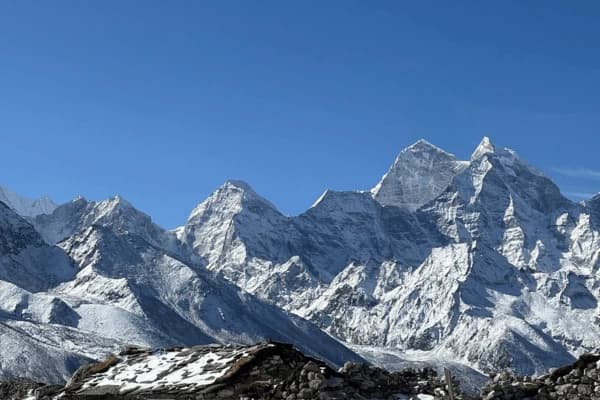
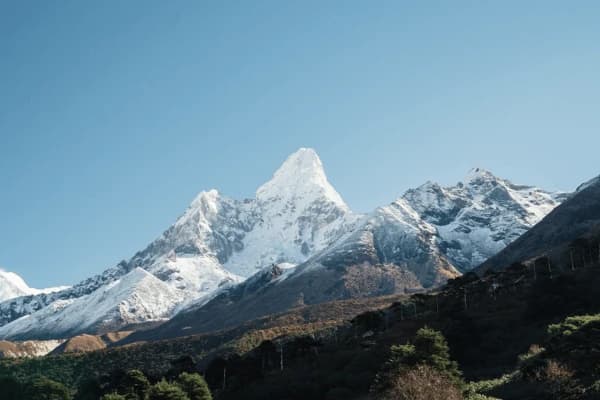
- How well you can see while hiking affects the quality of your trip; not being able to see your first sight of Mt. Everest, Mt. Lhotse, or Mt. Ama Dablam can demotivate the effort required for the hike you made.
- Your flights into and out of Lukla depend on the weather; fluctuating weather patterns in late fall and winter may mean one to two days of delay waiting at the end of your trip to return home.
Many trekkers who try to complete this circuit in poor timing do so; however, this is not a consideration for the passes when you fly back home or get home after your trekking. When planning for your trek, selecting the right season/that will give you the best chance of having an enjoyable trek is the most important decision you will make as an outdoor enthusiast.
To help you understand what the passes will require of you physically, read our Everest Three Passes Trek Difficulty Guide.
Best Time for Everest Three Passes Trek
There are three factors to consider when looking for the best season: 1) trail safety, 2) sky clarity, and 3) accessibility to the passes. As a result, only two seasons meet all three factors. The fall season meets all three factors (safe trails, clear skies, and accessible passes). The spring season does not (the trails will be muddy and wet, the sky will not be blue, and the passes will be hard to reach).
Autumn (September - November) - Best Overall
There is no question that autumn is the best season, and it's not even close. Once the monsoon clears in mid-September, the region of Khumbu transforms dramatically. The air is washed clean, the sky is deep blue, and the trails dry quickly.
There is no question that autumn is the best season, and it's not even close. Once the monsoon clears in mid-September, the region of Khumbu transforms dramatically. The air is washed clean, the sky is deep blue, and the trails dry quickly.
- Crystal clear skies: The best visibility of all the trekking seasons throughout the entire region of the Himalayas.
- Stable weather patterns: Stable weather patterns with the jet stream favorably positioned, bringing dry, calm conditions.
- Dry, firm trails: Dry, firm trails with very little mud, no monsoon runoff, and good solid footing on moraine and rock.
- Safe pass crossings: Pass crossings are very safe with manageable snow levels and low risk of ice through the month of October.
- Best photography window: The best way to have great photographs with sharp mountain horizons and clean air is with long hours of daylight.
- Most reliable for full circuit completion: The most reliable season to complete the full circuit with the highest success rate of any of the seasons.
October is the peak of the peak. If you have to choose one window, this would be it.
Spring (March - May) - Second Best
This comes in second by the narrowest of margins to autumn. Lower trails that are forested with rhododendrons are in their full glory, and mornings are generally clear and fairly predictable. Humidity does pick up towards the beginning of May, however, and afternoon haziness starts to creep in with longer sightlines.
- Clear mornings, good, but not autumn-afternoon-sharp, sightlines
- Rhododendron forest on the lower trail - part of the allure of the walk.
- Still some, but a manageable amount of, snow on upper passes, which are usually cleared easily enough.
- Still less stable than autumn, with increasing cloud cover and afternoon winds from mid-May onwards
- The trail remains good, well-supported and with all teahouses open.
- An experienced trekker could still have an extraordinary experience, but first-timers are better advised to come in autumn.
Please look at our Everest Trekking Permits guide here for a comprehensive overview of what permits you'll need each season.
Clear Skies and Visibility Guide
Most trekkers choose this trek for the stunning views of Everest, Lhotse, Makalu, Ama Dablam, Cho Oyu and the entire view of the Gokyo Lakes. Unfortunately, views of these peaks depend heavily on the sky being clear and without cloud cover. We've put together a guide below on what to expect depending on the season.
Autumn: Crystal Clear Mountain Views (BEST)
The air is crispest and cleanest post-monsoon. There is little humidity, and stable pressure and clear air contribute to crystal clear mountain views. The peak photos and distance navigation clarity on our treks during October are always the clearest.
Spring: Clear Mornings, Mild Haze Afternoons
Mornings offer crystal clear mountain views, although they often deteriorate later in the day. Humidity, coming off the approaching monsoon, rises throughout the day, and long-range views of the peaks from ridges over 4500m can become hazy.
Winter: Very Clear but Limited Access
The winter air is exceedingly clean and crisp, offering wonderful contrast and clear horizontal lines. The difficulties with the season are access-related, due to closed tea houses, impassable passes and extreme temperatures; most are unable to make the treks to utilize the clear visibility.
Monsoon: Cloud Cover, No Mountain Visibility
There is generally heavy cloud cover and rain from June to August, blocking any views of the mountain peaks. Trekking the passes at this time of year would be treacherous.
Photography and Navigation Matrix
This table shows you how all 4 seasons compare to one another for trail navigation and mountain photography.
| Season |
Air Stability
|
Humidity Levels
|
Horizon Sharpness
|
| Autumn |
High (Stable Pressure)
|
Exceptionally Low
|
Maximum (Deep Blue Skies)
|
| Winter |
Moderate (Storm Risks)
|
Absolute Zero
|
Maximum (High Contrast)
|
| Spring |
Volatile (Pre-Monsoon)
|
Moderate (Rising)
|
Moderate (Prone to Haze)
|
| Monsoon |
Low (Constant Depression)
|
Maximum (Saturated)
|
Zero (Total Cloud Cover) |
Pro Navigation Tip: Leave for the crossing by 6:00 AM in every season of the year. The mornings are almost always more predictable than the afternoons regarding both visibility and wind.
Key Insight:
- Autumn = best visibility to reach Mt Everest + 3 passes
- Spring = reasonable views, but less clear photographic quality
- Winter = clean air, but most trekkers can't access the area
If you need assistance with planning your trekking route, please refer to our Everest Three Passes Trek Map.
Spring Season (March - May): Balanced Weather with Flowers
Spring will signal the start of the trekking season, which will take on a new/ different energy. Along the lower part of the trek (particularly between Lukla & Namche Bazaar), you will see beautiful blooming Rhododendrons (red & pink) bordering the trail. As a result, there will be an abundance of energy, fresh air, & life on the trail.
As you climb elevation from lower to higher ground, you will have to exercise more caution; in particular, the passes (Cho La & Kongma La) will likely have a considerable amount of residual snow from March through early April. Although it is possible to walk across the passes, care must be taken when crossing iced-over sections and also at those times during the morning.
As we approach late April/ May in the overall region, the amount of snow on the passes decreases; conversely, as we approach late April/ May, the amount of afternoon instability increases due to afternoon winds and cloud cover. The following are the important points to remember regarding conditions in the Everest Region during spring:
- Early starts take advantage of stable/ consistent morning conditions.
- Afternoon winds and clouds develop and build up more quickly than in the fall/ autumn months.
- The lower elevations are extremely beautiful with blooming flowers.
- All teahouses along the trail will be open, staffed, and operational.
- The relative increase in humidity will have an effect on the quality of your long-range views.
Note: There may still be remnants of snow at Cho La & Kongma La in March/early April. This is important to confirm with your guide the evening before your crossing. Refer to Everest Base Camp Spring Trek Guide for an in-depth look at spring-specific conditions.
Autumn Season (Sept - Nov): SAFEST with Clearest Window
Autumn is our favorite trek recommendation, and one we offer first to all who request it. Here’s why: it’s perfect across every relevant metric for this trail.
Stable autumn weather is a direct function of post-monsoon jet stream patterns. Following the monsoon rains in mid-September, a high-pressure system descends upon the Khumbu and persists for weeks. What does this mean? Dry trails, quiet mornings, and predictable and consistent mid-day and pass conditions - about as good as it gets at 5,000+ meters.
- Best year-round weather stability, most predictable and guide-friendly
- Dry, stable and runnable trail conditions throughout (from Lukla and the trail networks all the way up to the passes)
- Lowest weather risk for all pass crossings for any given season
- Highest probability of a successful, completed Three Passes trek
- Best ever Everest panorama conditions, deep blue skies, and exceptional photographic quality.
Local Guides Comment: This is the most recommended trekking season among local trekking guides throughout the Khumbu region. The majority of all Three Passes crossings occur in autumn. Guide-recommended: a high-pressure system from the post-monsoon jet stream, and clear trails, lead to optimum conditions.
Plan your dream trip! Check out our Everest Three Passes Trek Cost Guide.
Winter Season (Dec - Feb): Clear Views but High Risk
Visually, the Khumbu is spectacular in winter, and physically, it is hell. The air is as dry and clear as any part of the year, mountain ranges are razor sharp, contrasts extreme and on windless days, the vistas from the passes are unforgettable. The issue is the rest of it:
- The temperature can reach -15 °C or less (sometimes -25 °C or lower) at the high passes, and this doesn't even take into account the wind chill.
- A lot of snow can fall at the higher passes, such as Cho La and Kongma La, making a crossing technical and risky.
- Several of the higher teahouses may close. Food and warm accommodation could be hard to come by.
- Trails may become blocked or impossible to traverse without proper route inspection.
- Daylight hours are shorter.
Key Takeaway: Although the visual conditions are exceptional in winter, the safety aspect is very low. This is something that would only be appropriate for advanced mountaineers in the company of qualified guides and equipped with adequate polar-rated gear. Not appropriate for the average trekker.
To get a feel of the equipment needed, refer to our Everest Trekking Gear List.
Monsoon Season (June - August): Note Recommended
This one is very easy to understand. The Three Passes trek should not be undertaken during the monsoon season at all.
- Landslides occur all the time on lower sections of the trail, particularly between Lukla and Namche Bazaar.
- There are no mountain views on any part of the trail at all due to heavy cloud cover.
- Lukla flights are routinely delayed and cancelled, leaving your arrival and departure times totally unknown.
- Trails are wet, muddy, low paths, wet moraine at high altitudes and leeches through the forested sections.
- Navigation at the high passes becomes extremely dangerous due to visibility.
- Humidity coupled with rain adds physical strain on the body on top of altitude issues.
Conclusion: The Three Passes involves high-altitude technical pass crossings, demanding good conditions and visibility for a safe passage. Monsoon removes these vital conditions, and our team advises against this route from June to August in all cases. See our Nepal Monsoon Trekking Safety Guide for other options.
High Pass Safety by Season
All three passes have different challenges and risks. They all have unique features, their own danger zones, and they behave differently during each season throughout the year. To help you to plan confidently for the challenges each day of crossing the pass, here is a summary of how each pass behaves for each of the four seasons of the year.
Cho La Pass (5,420 m)
Of the three passes, Cho La is the most technically challenging when the conditions are poor. The ice risk on the glacier increases as snow accumulates on the upper section of the glacier.
- Winter and Early Spring: High levels of snow accumulation on the glacier which will create an ice risk, therefore requiring crampons and a high level of technical experience to cross the ice.
- Autumn: The trail remains firm and clearly defined; the safest time to cross.
- Monsoon: The approach and descent of the pass will make it very dangerous due to wet rock and limited visibility.
Renjo La Pass (5,360 m)
Renjo La is the lowest of the three passes, but the summit ridge is exposed and extremely windy.
- Winter: Wind conditions at the summit ridge make it very dangerous to cross.
- Autumn: The wind will not be blowing; the trail will be dry, and visibility will be excellent from the top.
- Spring: There is a chance that snow will still be present on the upper approach, but the conditions should be able to be managed.
Kongma La Pass (5,535 m)
The Kongma La Pass, which has a height of 5,535 meters above sea level, represents the tallest of the three passes on the Everest Three Passes Trek and also represents the most difficult pass in terms of physical exertion due to constant high elevation.
- Snow Conditions: The passes become extremely dangerous when covered with snow, both ascending and descending the steep passes, due to the need to build a solid base to walk on.
- Autumn: The best season to trek & the only season when the paths are clear, and your body's acclimatization will occur before reaching high altitude.
- Winter: Not recommended unless you have appropriate technical gear and an expert climbing guide.
Key Rule: The Kongma La Pass, along with the Renjo La and Cho La Passes (located between Mount Everest and Mount Lhotse), are only safe to trek during the Autumn and Spring months (between April and May). Any time other than this period will expose you and your team to a high amount of risk, and risk will progressively increase as climbing experience decreases. To learn more about the details involved with each of these routes, read our Everest Three Passes Trek Difficulty Guide.
Month-by-Month Weather and Safety Overview
Knowing when to plan your hike isn't as simple as summer vs. Winter. Here's a real month-by-month description of the trail-the conditions, the visibility, and the safety of the pass crossing:
Here is the updated table with your new Monthly Everest Weather Conditions and Safety & Trail Status replacing the original text:
| Month |
Monthly Everest Weather Conditions
|
Visibility Rating
|
Safety & Trail Status
|
| January |
Sub-zero winds and frostbite; regular and deep pass snow dumps
|
High (Sharp but short daylight)
|
Dangerous: Steep, high pass ice blocked, high lodge closed
|
| February |
Mid-winter trends: immense and firm glacier crossings due to deep snow accumulation
|
High (Clear blue morning horizons)
|
Dangerous: Cho La ice sheets - tech crampons needed
|
| March |
Moderate thaws; lower valleys warming rapidly, and upper ridges still frozen
|
Moderate (Occasional spring cloud builds)
|
Caution: High lines are still snowed up from winter
|
| April |
Alpine chill but stable daytime high pressure
|
High (Excellent long-range sightlines)
|
Safe: Optimal window. No heavy ice on routes
|
| May |
Pre-monsoon warming with noticeable increases in atmospheric moisture
|
Moderate (Pre-monsoon dust haze afternoon)
|
Safe: Clear as can be - but watch for later PM thunderstorms
|
| June |
Atmospheric moisture is very high, leading to monsoon rains
|
Low (Heavy valley fog and cloud banks)
|
Not Recommended: Mud/washouts & leech issues likely
|
| July |
Peak rainfall, monsoon is saturating trekking paths and precipitation at higher elevations can turn into sleet or even rain
|
Low (Total mountain obstruction)
|
Not Recommended: Repeated landslide risk under Namche
|
| August |
Rainfall levels will drop throughout the month, but atmospheric moisture levels will remain high
|
Low (Thick mist obscuring major passes)
|
Not Recommended: Moraines are icy and slick. Flights prone to cancel
|
| September |
Post-monsoon dry with rapidly dropping temperatures and refreshing crispness in the air
|
High (Clean, washed atmosphere by mid-month)
|
Caution: Late-September often has late-month rain risks
|
| October |
Highest atmospheric stability, daytime dry paths with zero precipitation likelihood
|
Exceptional (Flawless deep blue horizons)
|
Ideal: Safest trekking of the entire year
|
| November |
Dry winter has taken hold of the Everest region, days are shortening, and nights are quickly dropping below freezing point
|
Exceptional (Unrivaled landscape sharpness)
|
Safe: High trails clear. Serious layers required at elevation
|
| December |
Sharp cold winds are blowing through, drying and freezing paths
|
High (Clear but pale daylight skylines)
|
Caution: Freezing on pass starts late in the month of icing
|
Crucial Cross-Pass Navigation Metrics
The above table gives you a monthly picture of your experience crossing this pass, but three deeper factors affect your actual experience crossing this pass in ways that monthly averages do not fully reflect.
The Velocity Factor: Winds at the summits in the area above 5,000 meters have a different velocity pattern than they do when they are at the valley level. Therefore, on an otherwise calm morning in the valley on the day of your crossing, you could still experience sustained winds at the summit of the mountain up to 40-60 km/h. As a result, before every crossing of a pass, our crew will look at summit wind forecasts the night before and not general forecasts that are for the valley. Generally, the best time of day (before 6:00 am) to cross a pass is in the morning, when you will be able to take advantage of the slow winds at the summit.
The Glacier Structural State: Cho La is quite different from other passes because the area you will be crossing has an active glacier. As with any glacier, the structure of the ice is affected by several factors, including the season and temperature. The same area may have a hard and unpredictable ice structure late in the winter or early in the spring that would not exist if you were to cross in October (where the snow would be compacted in a firm and predictable manner). Hence, a pass (such as Cho La) that you may find very easy to cross in October can require the use of crampons in March.
System Mapping Notice: Weather systems in the Khumbu region can move much more quickly than predicted by the forecasting models. What may look like a clear, perfect morning could be snowing at high elevation in just two or three hours. The guide’s team is able to use the tools available to decode locally known information and current conditions as well as early indicators of weather to assess the weather conditions at the time of the projected pass crossing with safe pass crossing weather margin included.
You can view our Everest Weather Guide Nepal to see what the latest information is on seasonal forecasts.
Expert Recommendation
For many years, we've traveled with trekkers through the Three Passes every season. We always learn the same things.
Autumn is our prime trekking season.
The monsoon jet stream has stabilized, the humidity has fallen to its lowest level of the year, the trail has become solid and dependable, and the passes are traversable (even without technical gear) by well-prepared trekkers. Thus, the views from all three summits in October are some of the finest mountain vistas in the world.
Although spring is an equally acceptable second choice to autumn, particularly for trekkers who are unable to travel in autumn, one of the best features of spring trekking in the lower altitudes is the blooming of the rhododendrons, which cannot be enjoyed in autumn. The disadvantages of poor quality photographs during the afternoon due to weather instability, large snow patches remaining on the higher passes, and/or lack of visibility make trekking in spring not as enjoyable as trekking in autumn for this particular trekking route.
The three high passes in the Khumbu region provide excellent opportunities to traverse between different areas at high elevations. Winter crossings can be made only by very experienced mountaineers (with adequate technical clothing), who have an extremely experienced local guide and create a flexible itinerary based on weather patterns. It is inappropriate for most trekkers.
The monsoon season (June to late September) should be ruled out entirely because there are a plethora of hazards associated with that time of year, including landslides, blocked flights to Lukla due to weather, unsafe trails, and no visibility.
Guide Insight: Most successful crossings of the Everest Three Passes occur in the autumn (due to stable jet stream conditions and the lowest risk of travelling due to weather) – choose October if in doubt.
- Best overall trekking time: Autumn (September - November)
- Best alternative trekking time: Spring (March - May)
- Do not travel at all: Monsoon season
- Winter: very experienced mountaineers only with professional help
Ready to trek? Book the Everest Three Passes Trek or contact our Everest Trekking Expert to tailor your adventure.
When to Go: Final Best Time Recommendation for Everest Three Passes Trek
Here is the brief overview – The simple, straight answer required to make your decision.
- Best Season: Autumn (Sept - Nov)
- Second Best Season: Spring (March - May)
- Clearest Skies: Autumn
- Safest trails: Autumn
- Avoid: Monsoon (June - August) + deep winter (Dec - Feb) if you are not a seasoned mountaineer
If you seek clear skies and safe passes, Autumn is the only option to go with. October is the best month to do the Everest Three Passes Trek. Contact Everest Trekking Expert to start planning your trip today.