Introduction to EBC via Gokyo Lakes Trek
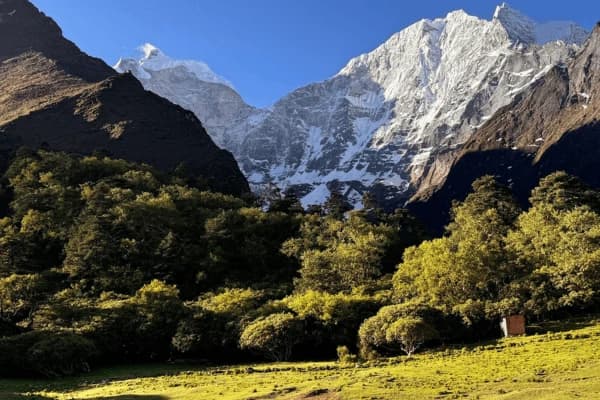
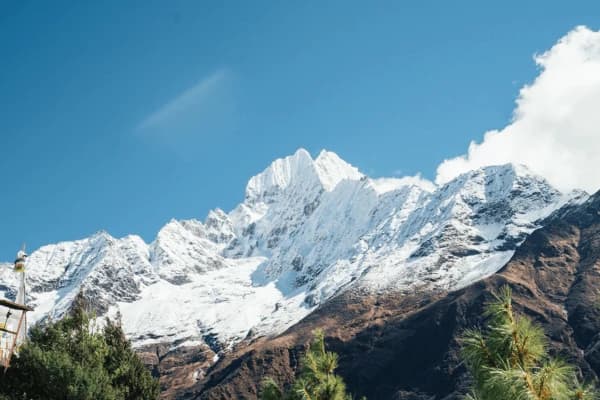
Most people imagine the Everest Base Camp trek to be a single valley trail through Lukla to the base of the Khumbu Icefall. The Everest Base Camp over the Gokyo Lakes route is a completely different affair. You have two valleys, connected by crossing the Cho La Pass (5,420m) rather than the single valley, and on the way get a chance to climb Gokyo Ri (5,357m), a viewpoint that offers views of similar scale and grandeur to Kala Patthar.
The Gokyo Lakes are located at 4,790 metres, in a glacial valley situated west of the standard EBC trail. They are a sequence of six green lakes that, at high altitude, reflect the surrounding mountains perfectly in the calm early morning. The colour of the lakes simply cannot be captured on film, and every one of our guides has reported that trekkers on the Everest Base Camp via Gokyo Lakes trek fall silent when they first see the third lake.
This offers a more scenic alternative Everest route for trekkers who are looking for something above and beyond the normal EBC trek. This route adds two or three days, and the distance covered, along with slightly higher altitude and the added complexity and remoteness of the logistics, means it adds only a small increase to the cost per day. A complete Gokyo Lakes Trek Guide is available showing all the routes and itineraries.
Total Trek Cost Overview
Before we break it down, here is your overall price summary of the EBC via Gokyo Lakes Trek for 2026. This is the price that our company charges, and also what other trekkers report as their general expenses depending on service level: The price of an EBC Gokyo trek package in Nepal varies by standard of the agency you choose, by season, and by size of your trekking group, however this is the general cost of a well-organized, well-guided trek (see our Everest Base Camp Trek Cost Guide for breakdown of costs).
|
Trek Type
|
Duration |
Budget Package
|
Standard Package
|
Luxury Package
|
|
EBC via Gokyo Lakes (Cho La Pass)
|
15–17 days
|
$1,100 – $1,500 USD
|
$1,600 – $2,500 USD
|
$3,000 – $5,500 USD
|
|
Classic EBC Trek (comparison)
|
12–14 days
|
$900 – $1,300 USD
|
$1,400 – $2,200 USD
|
$2,500 – $4,500 USD |
- Budget Packages: These packages are in line with what a local agency will charge, have standard teahouses and usually have 1 guide to every 2 trekkers (a lower guide to trekker ratio). Real trekking packages provide you with more personal management at your own pace on the trail.
- Standard Packages: These are the types of packages we offer. They give you a certified and licensed guide that has a minimum of 5 years of guiding experience, a porter who is also a licensed guide to carry your gear, and that does so at a rate of 1 porter per 2 trekkers, all permit processing and pre-booked accommodations along a route that we have been using and refining for at least 10 years.
- Luxury Packages: These packages include a private guide, the best accommodations available, exclusive Helicopter transport to and from Lukla and low porters to guide ratios.
Prices include the understanding that 2 trekkers will have 1 porter/guide. If there is only 1 trekker, then they will be charged 15 - 20% more than if they were part of a 2 person trekking team.
Cost Breakdown by Category
There is nowhere for your rupees and dollars to get lost on these expeditions, but to give you some idea of where they are being spent and how they contribute to the success and security of the trip. Here is the actual Everest trekking permit cost Nepal on the trail spending for 2026, based on our clients' figures. For updated permit fees, please refer to our Everest Trek Permit Cost Details page.
|
Cost Category
|
Cost Range (USD)
|
Notes |
|
Sagarmatha National Park Permit
|
$30 USD
|
Mandatory for all trekkers — non-SAARC rate
|
|
Khumbu Rural Municipality Permit
|
$20 USD
|
To be paid at the Monjo checkpoint.
|
|
Cho La Pass area local permit (if applicable)
|
$10 - $20 USD
|
Please confirm with your agency regarding the updated cost
|
|
Licensed guide (per day)
|
$25 - $40 USD/day
|
NTB certified guide is required in regulated areas
|
|
Porter (per day)
|
$18 - $28 USD/day
|
Usually, one porter is required for 2 trekkers.
|
|
Teahouse accommodation (per night)
|
$5 - $20 USD
|
The service cost may increase above 4,500m, in which case more may be required, the highest being Gorak Shep.
|
|
Meals (per day)
|
$20 - $40 USD/day
|
Dal bhat is relatively cheaper; prices get higher as altitude increases.
|
|
Lukla return flight (one-way)
|
$215 - $250 USD
|
Book 4-6 weeks before for the spring/autumn season.
|
|
Kathmandu internal transport
|
$10 - $30 USD
|
Taxi / Private vehicle required to/ from Tribhuvan Airport.
|
|
Miscellaneous (snacks, charging, WiFi, tips)
|
$150 - $400 total
|
Account for separately, as this is more expensive than other components, especially above Namche.
|
Our guide's price rule: Calculate 15% more on top of the package price quoted (tips, some snacks, charging equipment, our own water and additional day(s) in KTM in case of Lukla flight delays). All trekkers who save by not factoring in this additional percentage are forced to dip into their pockets in the middle of the trek.
Gokyo Lakes vs Classic EBC Cost Comparison
The most common question our team gets is this one, and really, there is only a small difference in cost; it really is quite modest, though this modest additional cost is actually present and comes from specific areas. The difference in price between the Gokyo route and Everest Base Camp is due to the increased number of days required on the trail, more remote lodges in the Gokyo Valley and the greater distance, additional altitude gain, and more challenging terrain of crossing the Cho La Pass.
|
Cost Category
|
Classic EBC Trek (12 to 14 Days)
|
Gokyo Lakes plus EBC via Cho La (15 to 17 Days)
|
|
Average Local Agency Package
|
900 to 2,200 USD
|
1,100 to 2,500 USD
|
|
Daily Trail Spending (Meals and Bed)
|
25 to 45 USD per day
|
30 to 55 USD per day
|
|
Guide and Porter Daily Fees (combined)
|
43 to 68 USD per day combined
|
43 to 68 USD per day combined
|
|
Mandatory Regional Permits
|
Approximately 50 USD total (SNP and Khumbu)
|
Approximately 50 to 70 USD total (SNP, Khumbu, and local)
|
|
Teahouse Amenities (WiFi, Charging, Water)
|
Stable, slightly cheaper pricing
|
Premium, higher-altitude pricing in Gokyo
|
Why the Everest Circuit Cost Variation Exists
The difference in cost between the standard EBC trail and the addition of the Gokyo Lakes trail is significant and for concrete reasons. Below, we've analyzed why:
Extra Days on the Trail
- The Gokyo itinerary adds 2-4 days to the classic EBC trek, depending on your trekking style and rest days.
- Each additional day of trekking will add approximately $35-55 USD in food and accommodation alone at Gokyo altitude.
- There is a charge per day to both your guide and porter for all added days on the trail; this will cost $43-68 USD per day in staffing expenses alone.
Remote Lodge Operations and High Passes
- Supply Lines: Supply for the lodges up in Gokyo Valley comes only by porter or yak, as there are no roads or direct air access. These remote and expensive supply lines are directly reflected in your food costs for every menu item that you purchase.
- Acclimatisation Factors: The Gokyo route adds an extra rest/acclimatisation day in Gokyo Village before you take on the Cho La Pass. An extra day off from trekking at an extremely high altitude will mean food costs for one extra night and two extra days at premium Gokyo prices.
Pricey High-Altitude Luxuries
- Hot Showers: Hot showers in Gokyo Village and Dragnag will cost $4-7 USD per shower. This requires considerable resources to maintain an efficient hot water system at this altitude.
- Charging electronics: It costs $3-6 USD per charge at all of the lodges above 4,500 metres. Best to purchase a 20,000 mAh power bank before arriving in Kathmandu and charge it fully in Namche so that you do not have to pay these premium prices.
- Water bottles: The price per liter for a bottle of water at Gokyo (4,790m) is $4-6 USD. To save around $80-120 USD over a 17-day trek, purchase water purification tablets or a Steripen and boil the teahouse water instead.
Find all the relevant route comparison details regarding distance, views, difficulty and logistic factors at: EBC vs Gokyo Route Comparison
Guide and Porter Cost
The most misunderstood element of trekking costs in Nepal is the amount the guide and porter are actually being paid. Quite a few budget packages include the guide and porter, but don't mention daily wages, level of experience and certification, or the insurance coverage provided for staff. This is the actual cost in 2026:
|
Staff Role
|
Daily Rate (2026)
|
Typical Duration
|
Estimated Total
|
|
Licensed trekking guide
|
$25 – $40 USD/day
|
15–17 trail days
|
$375 – $680 USD
|
|
Porter (shared 1:2 ratio)
|
$18 – $28 USD/day
|
15–17 trail days
|
$270 – $476 USD per porter
|
|
Guide tip (customary)
|
$5 – $10 USD/day
|
Full trek
|
$75 – $170 USD
|
|
Porter tip (customary)
|
$3 – $6 USD/day
|
Full trek
|
$45 – $102 USD
|
- Why Certification matters for the Price: An NTB licensed guide will expect 8-15USD a day more than a non-licensed local guide. Hence, in a 17 days trek, the extra cost for an NTB-certified guide is between 136-255 USD; the NTB guide will be legally licensed, insured, and have his/her NTB number associated with your permit (which must be the case in regulated trek areas)
- Porter ratios affect your cost: The range is dependent on the number of porters allocated; one porter for two trekkers (standard packages). A private trek with one porter for one trekker would cost 18-28USD a day more, is quicker, there is significantly more freedom with regards to speed and pace and is a more private/personal trip.
- Prices are exclusive of tips: tipping is very important, it is a standard practice and expected. For our client trips, clients tip around 75-170USD for the guide and 45-102USD for the porters on a 17-day trek.
Accommodation and Food Cost on Trek
The basic rule of prices in teahouses along the EBC route is, The higher you go, the more expensive it gets. Prices in Gokyo Valley are roughly the same as at the upper EBC route, but prices at some of the Gokyo lodges are slightly higher to account for the remote position. Prices go up significantly during the busy season (October, May) too. A complete list of lodges, quality, and booking tips for the EBC route can be found in the Everest Tea House Guide.
| Location |
Altitude |
Room (Per Night)
|
Meal (Dal Bhat)
|
WiFi/Charging
|
|
Phakding / Lukla area
|
2,610–2,860 m
|
$5 – $10 USD
|
$5 – $7 USD
|
Often free
|
|
Namche Bazaar
|
3,440 m
|
$10 – $20 USD
|
$8 – $12 USD
|
$3 – $5 USD
|
|
Gokyo Village
|
4,790 m
|
$8 – $15 USD
|
$10 – $15 USD
|
$4 – $6 USD
|
|
Dingboche / Pheriche
|
4,240–4,410 m
|
$8 – $15 USD
|
$10 – $14 USD
|
$4 – $6 USD
|
|
Gorak Shep
|
5,164 m
|
$10 – $18 USD
|
$12 – $18 USD
|
$5 USD or unavailable |
- Price increases seasonally: Between the beginning of October and the first two weeks of May, prices for the teahouses are 15% to 25% higher than in the shoulder seasons. This applies to rooms and food - prices for rooms and food both skyrocket at Gorak Shep and Gokyo Village, where there simply aren't enough places to eat and sleep for the numbers who arrive in the busiest weeks.
- Dal bhat is your anchor to budget: With unlimited refills, Dal bhat costs $10-$18 U.S.depending on the altitude and season. It is by far the most calories per price and most freshly prepared, lowest cost food item on every single teahouse menu. Your guides will eat it two times a day, and so will most experienced trekkers for their whole routes. There is no better way to keep your food costs within the food price Khumbu region trek range.
- Note regarding quality of Gokyo lodge: Lodges in Gokyo Village are primitive but livable. Cold at night, you'll definitely need a -10°C sleeping bag, but the view from the dining room windows toward the third Gokyo Lake is actually spectacular, and can go a long way toward overcoming discomfort from the rooms.
Transportation Cost (Flight / Jeep)
The transportation to the trailhead is the one expense that will vary the most in the entire trek. The normal route is to take the Kathmandu to Lukla flight; however, there are alternatives to save cash, bypass flight cancellation risk, and access the trail from another point.
- Kathmandu to Lukla flight: A one-way, return flight costs between $215 to $250USD (in 2026). At a minimum, book between 4 and 6 weeks ahead for your departures during the spring and autumn as the seats fill and the price doubles. This ticket is bookable for departure from Kathmandu and the smaller, rural Ramechhap airport. Booking for the Ramechhap airport alternative is less likely to be cancelled due to weather; however, this requires a 4-hour jeep from Kathmandu.
- Ramechhap option: The jeep from Kathmandu to Ramechhap will cost $25 to $40USD per person and will take about 4 hours on rocky mountain roads. It is generally a bit cheaper, takes slightly less time, and operates more reliably due to the lower probability of fog and weather affecting the flight path compared to Tribhuvan Airport. All our clients flying out in the spring, when Kathmandu fog is a regular problem, take this option.
- Jeep alternative (Jiri to Salleri route): A few trekkers still take a ground vehicle from Kathmandu all the way through Jiri to Salleri (approx. $20-$35 USD), then walk from Salleri to Lukla. This takes 3-4 extra days and saves the flight cost entirely. A good option for very budget travelers with time.
Many Lukla flights get delayed during the spring season, and we expect a similar situation during October. Never book a return international flight home within 48 hours of your original scheduled departure time from Lukla. Two buffer days back in Kathmandu are the bare minimum we recommend to our clients.
Flight Booking Resources: Our comprehensive Kathmandu to Lukla Flight Guide provides tips on booking flights, the Ramechhap airport alternative, airlines available, baggage limitations, and contingency plans should your flight be canceled.
Best Time for a Cost-Saving Trek
Trekking the EBC via the Gokyo Lakes trail in off season is the only sure way to make it cheaper, but this requires genuine compromises and sacrifices. Here is the true picture of the season.
| Season |
Months |
Price Level |
Trail Conditions |
Recommendation |
| Spring (peak) |
March to May |
Highest, peak demand |
Excellent, busy |
Best experience, highest cost |
| Autumn (peak) |
September to November |
High, second peak |
Excellent, moderately busy |
Best value in the peak windows |
| Pre-monsoon shoulder |
Late February and early June |
Moderate, 10 to 15 percent lower |
Good but variable |
Good savings if flexible on dates |
| Monsoon |
June to August |
Low, 25 to 35 percent cheaper |
Wet, risky above 4,000 meters |
Not recommended above Namche |
| Winter |
December to January |
Low, few trekkers |
Cold, some routes icy |
Experienced trekkers only |
- Why peak season costs more: October and May prices represent simply supply and demand. Teahouses increase meal and accommodation charges when they are full. The agency increases the charge when all their porters and guides are booked. Lukla flights command their highest price when flights are completely full with demand. So, the Everest trek in the cheap season in Nepal is a very real phenomenon-you can't miss these deals.
- Best bargain window: End of September, (after about the 20th), still has early Autumn good conditions. Prices for lodges are less than in October. There are far fewer other people on the trekking path than in October. The agency we use strongly recommends this time for good trekking with decent prices.
- Early November: the first two weeks offer clear skies with a substantial reduction in trekkers, about 10-15% cheaper than in October. Evenings are colder, but the days remain generally very fine.
- Resource to guide you on the best time: See our extended guide on "Best Season for Everest Trek" which includes monthly conditions, temperature averages, visibility conditions and our agency's suggestions for the Gokyo Lakes trail.
Money Saving Tips for the Trek
We've assisted over a hundred trekkers to get maximum value on their trek in the Himalayas without burning through their savings. Below are the practical ways that work, not general advice, but habits learned from trekking the route for years.
- Join a group departure: Group trekking packages are 20-35% cheaper than private treks. Almost all responsible agencies run fixed departure dates for the EBC via the Gokyo route in October and May. A group size of 4-8 trekkers significantly reduces the guide/porter cost per trekker. See the departures calendar for available slots.
- Book in advance: Booking 6-8 weeks ahead of the departure can get you a 5-10% discount on trekking packages from a licensed agent and guarantee you'll get assigned the guide that you've chosen. Booking last-minute costs more and can result in you being assigned a less experienced guide.
- Book through a Nepali agency: International booking sites and foreign operators mark up their service prices by 20-40% over what the local Nepali agent is charging for the same service. You get the same caliber guide, for a considerably lower price, by using a licensed Kathmandu agency with a verified NTB registration.
- Carry purification tablets and not bottled water: Bottles of water above 4000m are typically $3-6USD per liter. A packet of 50 purification tablets costs $8 USD and will purify 50 liters of water. With over 17 days of trekking at 3 liters per day, you will save $130-280 USD per trek.
- Eat Dal Bhat as your staple meal: Dal bhat's free refill system makes it 40-60% more calorie efficient per dollar spent compared to buying an individual item off a menu. If you eat Dal bhat for dinner every day during the 17 days trek, then you can save an estimated $80-150 USD by avoiding ordering spaghetti, pizza, and fried rice.
- See available packages: Check out the Affordable Everest Trek Packages available now with present price and dates:
What Is Included and Excluded in the Package?
When booking, always know exactly what's included in the price. There is a huge difference between packages included for different agencies and price levels, and this is how the cheaper packages get around spending a little extra where it really counts. This is a typical outline for our Gokyo to Everest Base Camp Trek package, and the complete inclusions details can be found on our Gokyo to Everest Base Camp Trek page as well as our Everest Trek Package Details guide.
| Included |
Not included
|
|
Local NTB licensed guide for the trek at all times
|
Nepal international flights
|
|
Porters support (generally 1 porter for 2 trekkers)
|
Trekking equipment for individual use (boots, sleeping bag, jacket)
|
|
Sagarmatha National Park fee
|
Individual travel insurance with rescue and cover
|
|
Khumbu Rural Municipality fee
|
Tips to the guide, porters, trekking staff and tea-house staff
|
|
Teahouse accommodation on twin sharing basis on trail
|
Drinks and food for individual consumption
|
|
Three meals per day while on the trail
|
Overnight in Kathmandu (often not included in the cheapest treks)
|
|
Airport pick up and drop off in Kathmandu
|
The cost of the Lukla flight (often not included; verify before booking)
|
|
Emergency backup from the agency
|
Additional stops or trekking extensions |
It is always good to confirm that the Lukla flight is at the package quote price. Often, budget agents give a full package quotation without the Lukla return flight, which adds between $430-500 to the real cost of the whole tour. Confirm this prior to signing any contract.
Who Should Choose This Trek
This EBC via Gokyo Lakes trek isn't for everyone. It's longer, higher and more physical than the classic EBC route. Beating about the bush would be dishonest, and that's just not our company's style and is exactly what we tell every enquiry before they commit. The key thing is to understand Gokyo Everest trek difficulty Nepal before making a decision:
- Experienced trekkers who have already spent time at high altitude: If you've done an EBC trek, an Annapurna Circuit, or some other 5,000m+ trek, the Gokyo extension will be manageable for you. The extra high points, Gokyo Ri (5,357m) and Cho La Pass (5,420m), put a considerable extra demand on your already acclimatised system.
- Adventure seekers wanting to experience something beyond the usual EBC corridor: The Gokyo valley only sees a small percentage of the footfall that the standard EBC trail sees. If you find the 5 days of walking from Namche to Gorak Shep overcrowded and you want a more rugged, secluded mountain experience, the Gokyo approach is for you.
- Long-distance hikers confident with 15+ days in the Himalayas: This trek requires the ability to put one foot in front of another on rugged terrain at high altitude for many consecutive weeks. The Gokyo extension averages 5-7 hours of walking for 15 to 17 days straight.
Who Should Not Choose This Trek
- First-time high-altitude trekkers will struggle with the Gokyo extension: Attempting Gokyo Ri, Cho La Pass and EBC in one route will be far too tough for an unacclimatised beginner.
- Not recommended for those with less than 14 available days: 15 days is the shortest viable itinerary for this trek. Taking even one day less means removing crucial acclimatisation days.
Read your fitness levels. Our Everest Trek Difficulty Guide includes a comprehensive list of the physical demands associated with each route, and details the specific benchmarks our guides use.
Booking Guidance
So that is the total cost broken down. The EBC via Gokyo Lakes trek can range from $1,100 to $2,500 USD for a standard, well-guided, fully permitted package - it really just depends on the level of service, time of year and the size of the group. The overall total out-of-pocket expense, including flights and daily expenses, will probably fall somewhere between $1,800 to $3,500 USD for the vast majority of trekkers.
Demand for the Gokyo Lakes route in October and the first half of May is extremely high, and it's quite difficult to find a guide and bed in a teahouse at these times with less than a few weeks' warning. We strongly recommend booking your trek and your Lukla flights at least 6 to 8 weeks in advance for autumn trekking, and 8 to 10 weeks in advance for spring.
- Step 1: Decide on the season you would like to trek in Nepal. There must be flights available from Kathmandu to Lukla to match your chosen entry and exit dates.
- Step 2: Choose the level of service you would like to have and request a detailed list of included services, including any meals on the trek, before transferring the money.
- Step 3: Verify that your trekking agency is properly registered with the Nepal Tourism Board and ask them for a copy of your guide's license number as well as his/her name.
- Step 4: Purchase adequate travel insurance with helicopter evacuation from treks above 5000 metres (16400.00 feet).
- Step 5: The booking of the flight to Lukla needs to be done quickly, as soon as your trek has been confirmed by the trekking agency, there will be no seats available for you on the flight.
Ready to plan your trip? Contact our Everest Trek Booking Team directly for a custom price, current availability and the latest information on upcoming group departure dates for the EBC via the Gokyo Lakes trek. We arrange everything, including permits, guide, flights and all logistics - so all you have to do is train, pack your bags and show up ready to walk in Kathmandu.
We'll leave you with one last word of advice: The EBC via Gokyo Lakes trek is without a doubt one of the world's greatest trekking experiences. While it may cost a little more than the classic EBC trail, this cost difference is most certainly worth it. Gokyo Lakes at sunrise, views from Gokyo Ri in the morning, and the Cho La crossing on a crisp, clear day are experiences a trekker will remember forever.