You're considering trekking to Everest Base Camp during May? You've already made a wise choice. May is the most popular trekking month in Nepal; spring is when trekkers will find their trails are alive, the mornings are dazzling, and the mountains will entertain you more than any camera can ever do.
Right now, May is the season when Everest Base Camp conditions are through the roof, and the trekking atmosphere could not be better. You will have warm daytime temperatures, stable trail conditions, and be on a path populated with trekkers chasing after a common goal (reaching Base Camp). Afternoons are cloudy, but the clean, golden light of the morning hours makes it all worthwhile.
Here is a brief overview of the May conditions you can expect:
EBC trail conditions: busy, but safe and very walkable
Temperature: cool (layerable), not extreme temperature
Visibility: crispness in the mornings, becoming hazy after noon
Overall feel of the place: buzz of energy and life
The members of our team have guided trekkers through the Khumbu region on numerous occasions throughout the years, and we can say without a doubt that May is among the best times to experience the EBC trail.
Why Trek to Everest Base Camp in May
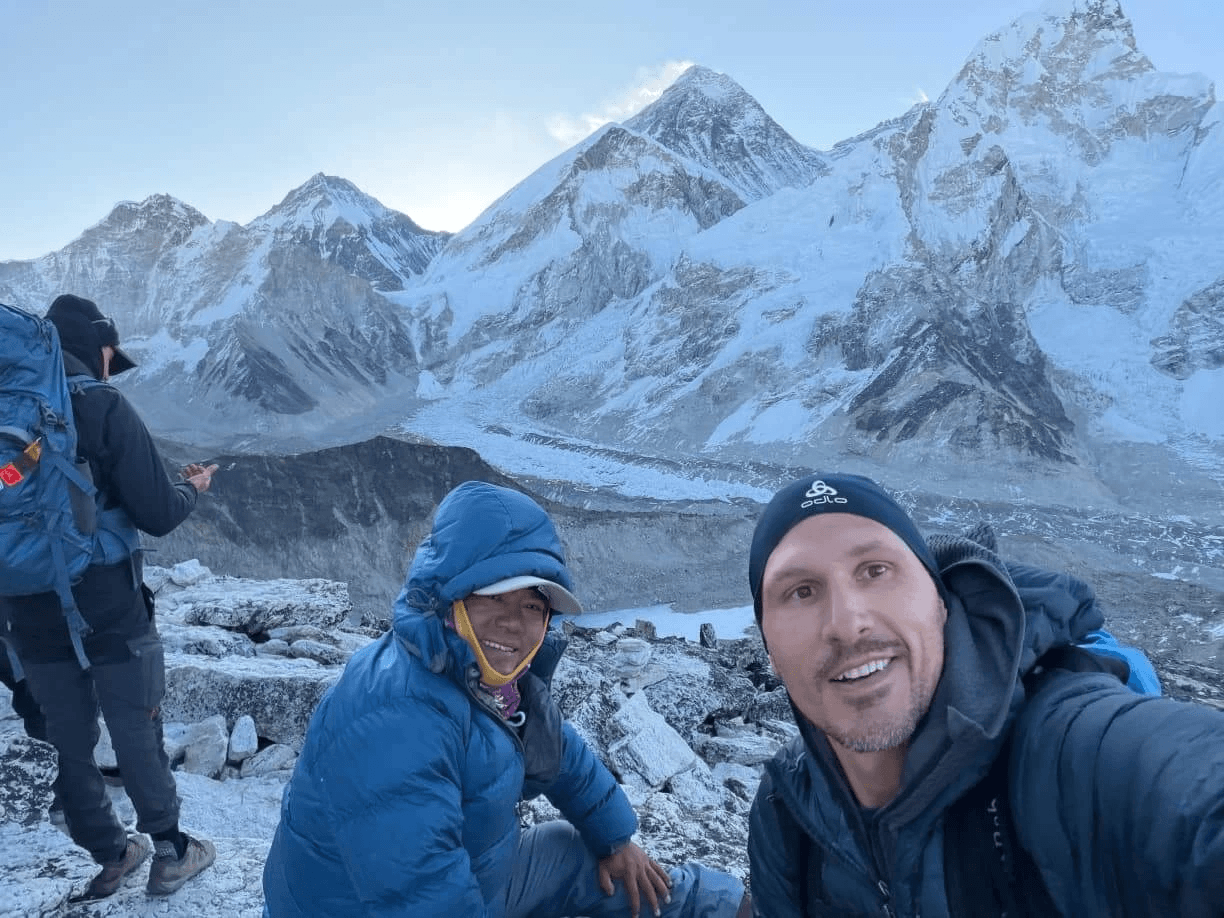
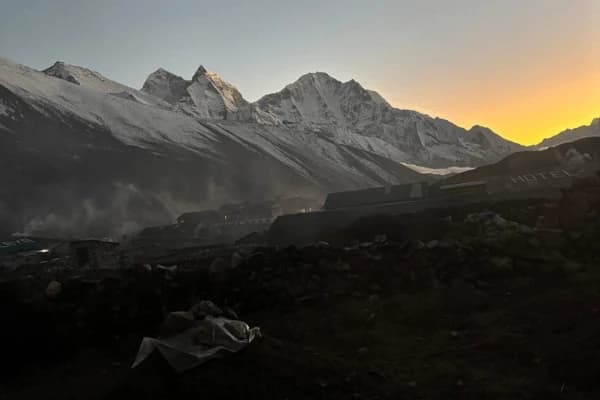
Imagine this: you wake up at Namche Bazaar and step out of your teahouse to see the entire Himalayan skyline glowing in a soft morning sun. The three icons of the Himalayas are on display: Everest, Lhotse, and Ama Dablam and all three appear just as grand as you had hoped they would. That is what makes trekking to Everest Base Camp in the Spring, particularly in May, so special.
May is one of the best months to trek to Everest Base Camp because it offers stable spring weather, comfortable daytime temperatures, clear morning mountain views, blooming rhododendron forests, and the unique opportunity to witness Everest expedition teams preparing for summit attempts. With all teahouses and trekking services fully operational, well-maintained trails, and excellent trekking conditions for both beginners and experienced hikers, May provides one of the most rewarding and accessible Everest Base Camp experiences of the year
When people are asked which is the best time for an EBC trek, May consistently ranks as one of the top answers. This is not without good reason. The rhododendron forests that line the trail from Lukla to Namche become alive in every manner of blooming colour as the spring months bring forth red, pink, and white blooms lining the sides of the trails. With the fresh air filling your lungs and the waterfalls running at full capacity, every step you take to Base Camp will be even more rewarding than the last.
In addition to all of the visual beauty contained in this hike is the fact that the climbing season for Everest is in full swing, meaning that as you hike to Base Camp, it is possible for you to see climbers outfitting themselves on the Khumbu Icefall. The experience of actually watching real climbers get ready to try and summit Everest so close to your own position will be an experience that most of your fellow trekkers will talk about for decades to come.
So who can go on a trek? Our EBC trekking guide clearly states that you don't have to be a highly trained athlete. All you need is a good physical condition, the right frame of mind, and patience to take it slow and follow the procedures. Also, May has been shown to be perfect for first-time trekkers because all of the tea houses are open, good guides are readily available, and the trails are well cared for.
Spring weather, clear visibility at the beginning of the trek, and the unique energy that spring consistently brings to Khumbu are all reasons why May is thought to be the best time for Everest Base Camp. It's also the standard choice for your trek this year. You'll feel that energy the moment you set foot on the trail.
Chasing peaks and smiles
Everest Base Camp Weather in May (Detailed Guide)
Weather conditions affecting the trek in May are completely out of your control (for example, when to hike, when to stop, what to see, etc.) You can find many great treks full of great locations we've taken advantage of, and know the conditions and weather that week.
The EBC temperature in May is constantly changing from one end to the other. What seems nice and warm in Lukla will differ greatly from Base Camp. We will share the differences from one altitude to another below.
Temperature by Altitude
Lukla - 2860 m (This is the start of Your Trek): Average Daytime Temperature: 10°C - 15°C (Feels nice like a cool spring morning). Average Nighttime Temperature is around 5°C - You can get through this with either a fleece and/or base layer; both will layer up fine without fail.
Lukla: 2,860 m— Trek start: Daytime temperatures range from 10°C to 15°C. It feels like a comfortable spring day; it doesn’t take long to adjust. Nights will drop to 5°C, and you’ll be comfortable wearing a light fleece and a base layer without a problem.
Namche Bazaar: 3,440 m Namche Bazaar temperature will be approximately 5-12°C during the day. When the sun sets behind the ridge, the temperature drops rapidly. Evening temps will range from 0-2°C. Our guide will advise all trekkers to: “Put your layers on before you become cold and not after.”
Dingboche — 4,410 m The Dingboche weather in the daylight ranges from approximately 4 to 8 degrees Celsius. In the overnight hours, expect -5 degrees or lower temperatures. Wind becomes a critical factor in Dingboche's nighttime weather. You will need at least two warm layers for sleeping.
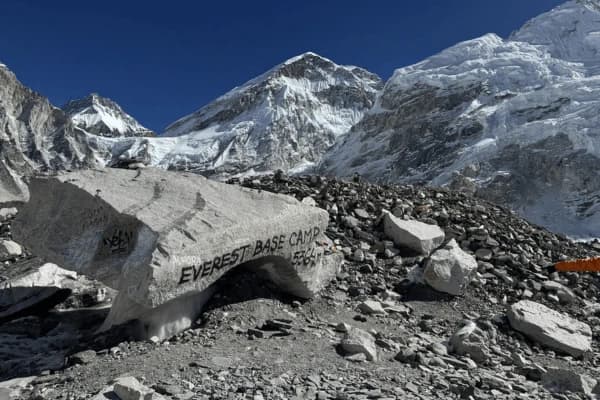
Everest Base Camp — 5,364 m Everest Base Camp weather is unique; daytime temperatures generally range from -2 to 5 degrees Celsius. Evening temperatures typically fall to below -10 degrees with strong wind chill. A down jacket is non-negotiable.
Morning
Morning is the best time of day. Mornings provide perfect visual clarity to see all of the peaks: Everest, Lhotse, Ama Dablam, etc. This explains why our team will start hiking at or between 6 and 6:30 am each day. Early mornings provide stunning, "golden" visuals before the sun rises. Do not miss out on them.
Afternoon
Around 11 am, cloud cover begins to build as a result of clouds rolling in from all the valleys of the area. By 1 to 2 pm, almost all of the tall mountains will be covered by a white sheet. This is an everyday occurrence for Lukla weather in May and throughout the Khumbu region; it is not storm-related. It is simply the way the weather acts during spring in the high country. Always schedule your major viewpoint or summit picture locations in the morning.
Night
Once the sun sets, the temperature drops quickly during the night. In the area above Namche, the temperature continues to decrease steadily. At Dingboche and anywhere above there, the inside temperature may be between -5 ° C and -10 ° C. Above Dingboche, it is a requirement to have a nighttime sleep bag rated for at least -15 ° C. Our guides also bring an extra insulation layer for their own sleeping use, a small habit that can make a great deal of difference in overall comfort.
Wind and Cloud Patterns
It's still just prior to the monsoon (which begins in June). Wind is mostly moderate everywhere along the trek route. But near Gorak Shep, at Base Camp itself, and high on the trail, winds become considerably stronger in the afternoons. These afternoon cloud buildups are a direct result of hot air from lower valleys rising throughout the day. It's part of a natural, recurring rhythm-one that our Sherpa team and our trekking team know how to "read." No danger to worry about, it simply requires being sensible and adjusting.
In May, the biggest difference we can see is that trekkers who cooperate with this weather rhythm enjoy their trekking experience significantly more than trekkers who resist it. Hike in the mornings; relax in the afternoons. Let the mountain guide your rhythm.
Every season has its pros and cons, and as always, we aim to be upfront with you all. Here is our sincere breakdown of trekking to Everest Base Camp in May;
Pros:
Crisp morning views: Mornings in May in the Khumbu are unparalleled. From Ama Dablam, Lhotse, Nuptse, and Everest all make an appearance, and at the perfect level of clarity for them all to make themselves known, these are views trekkers save up for all year.
Rhododendrons blooming: Especially in the lower regions of the Everest trail, wild flowers bloom, making your journey a truly visual one. It’s quite different to any trekking season when it comes to photography and color, as opposed to Autumn, for instance.
Busy tea-houses: All lodges on the trek will be fully open, fully staffed and fully stocked. Full meals, freshly baked bread, apple pie and Wi-Fi are available at most lodges, and a warm, comforting bed is a welcome change after a day’s trekking.
Active expedition community: Witnessing the various climbing groups in action close to Base Camp is something else entirely. Most trekkers say that observing them push the boundaries of human potential gives a truly unique perspective and is a huge motivation.
Con's:
Crowded trail: The main group of Everest trekkers in May is huge. Lodges in key places such as Namche, Tengboche, Dingboche and Gorak Shep will quickly become fully booked, and it may be that you’ll end up sharing accommodation, waiting for a meal, or even queuing to proceed on the narrow trails.
Afternoon clouds: Daily, an afternoon cloud cover means there’s a reduced chance of viewing summits in the latter part of the day. The Spring trekking challenges are manageable. Just be prepared for them in your planning and the time windows for your photography exposures accordingly.
Slightly higher costs: Peak season trekking usually results in slightly higher prices for accommodation, food and any additional fees.
Knowing the Everest Base Camp Trek Difficulty of the trek before you start ensures a properly paced, well-prepared Everest Base Camp trek, even when things are a little crowded.
Complete Packing List for Everest Base Camp in May
Trekking Gare
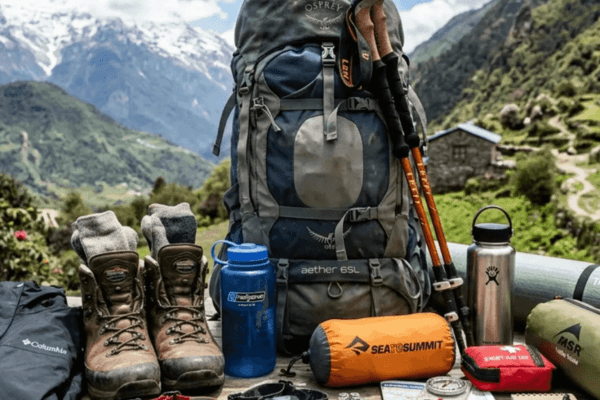
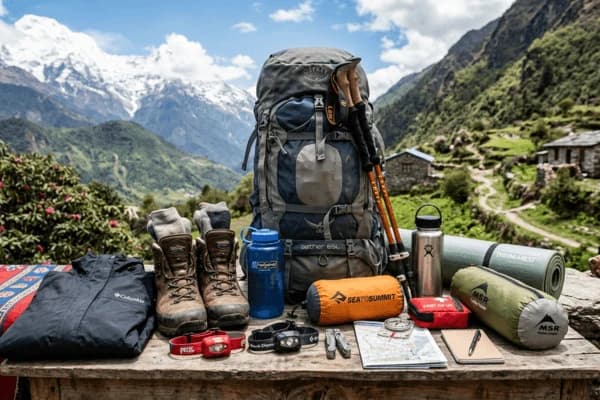
High altitude trekking clothing is not just about comfort; it's about your safety. With many years of assisting trekkers to pack for the May season, the main thing that stays with us time and again is: layer up and keep the weight down.
Clothing: The Layering System
The clothes are essentially broken down into 3 sections, with individual roles:
Base layer: 2-3 thermals (long-sleeved tops and bottoms). As a general rule of trekking, cotton is every trekker's worst nightmare as it holds water and cools your body down rapidly. Make sure you purchase Merino wool or synthetic trekking clothes.
Mid layer: 1 fleece jumper and 1 light down jacket. Combined, these two garments will serve you well in the mid-altitude section and are comfortable below Dingboche.
Outer layer: 1 windproof, waterproof hardshell jacket and trekking pants. April/May has a lot of rain, so this gear is vital, and this section will be incomplete without your appropriate rucksack cover.
Warm down jacket: Vital for the high-altitude section (and at Base Camp itself). Try to secure a jacket that goes down to -20C. A good down jacket will significantly affect how happy you are at Base Camp.
Trekking pants: 2 pairs of light trekking pants are sufficient.
Socks: 5 pairs of minimum wool hiking socks. Your feet will be subject to a fair amount of punishment on this trek; they require support and comfort.
Gloves and hat: 2 pairs- a light pair for general trekking, and a warm, waterproof pair to wear when it hits you. The woolen hat or beanie is a must-have at the start of your mornings and for when you're camping at the highest camps.
Shoes
Trekking boots: Waterproof, ankle support, worn in before you come. Brand new boots will give you blisters; blisters at altitude are awful. You must wear them with at least two long day treks prior to setting off for the Himalayas.
Camp shoes: Open-toed sandals or light trainers, you wear these around the tea houses in the evenings.
Equipment
Trekking poles: The best investment you'll make for saving your knees going downhill. They're often skipped but bitterly regretted from day three onwards.
Sleeping bag: Should be at least down to -15C. The tea houses will give you blankets, but at the higher altitudes beyond Dingboche, they are not sufficient.
Backpack: 40-50 liters looks reasonable. You might consider hiring a porter for most of your kit and only carrying a small daypack with what you require during the day.
Headtorch and spare batteries: Essential for pre-dawn starts and power outages at the higher tea houses.
Essentials
Other Necessities
Sunscreen SPF 50+: UV light intensity at altitude is seriously underestimated; reapply every 2 hours.
Lip balm with SPF: Chapped and bleeding lips are a common problem among trekkers when people haven't taken time to use such an item.
Water bottles: carry at least 2L capacity, but buy your water at tea houses at a much cheaper $0.10 - $0.20/liter than wasting a fortune on single-use plastic bottles. Better yet, get a filter bottle with SteriPENs or tablets.
Energy snacks: protein bars, almonds and dark chocolate are useful for keeping energy levels sustained at any time between meals.
First Aid Kit: Diamox, plasters, ibuprofen and rehydration tablets.
These are all from our guidesmen who are accustomed to walking the trail season after season and have the best knowledge of what works and what does not:
Always start walking early. Typically, by 9 AM, the light, air, and trails will have reached peak performance. We are typically on the trail by 6 or 6:30 AM; by the time the midday clouds descend, we're back in the next village with some soup, and our clients' bodies have already started to recover for the next day's trek. In my opinion, this is the #1 factor that separates a rewarding trek from an unhappy trek.
Book accommodation in advance. May is prime trekking season, and lodges are constantly booked. This is even truer after Lukla flights are delayed and groups of trekkers flood the trails all at once. Book approximately 4-6 weeks in advance, or if booking yourself seems too challenging, then make sure your trekking agency books these for you. We at Trekking Agency 123 book all the lodges for our clients.
Drink water consistently, not occasionally. Staying hydrated is the most significant step you can take to prevent Altitude Mountain Sickness. The cold air seems to make hydration unnecessary, but the fact is, your body needs more fluids at altitude than ever. Our guides are carrying 2L bottles with them, and they are always reminding people to drink, checking our clients' water intake at least once an hour. Be prepared to drink 3-4L of water a day once you reach above Namche.
Never skip acclimatization Days. We have 2 dedicated days of acclimatization, both on our itinerary, one in Namche Bazaar and the second in Dingboche. These days are not "days off"; they are vital acclimatization days that prepare your body for higher altitudes. We stand by the climb high, sleep low methodology and never skip these essential rest days. Here is an Everest Base Camp acclimatization guide if you are interested.
Walk slowly — slower than feels natural. In this trail guide will often say the Nepali phrase 'bistari bistari', which translates to 'slowly, slowly.' The fastest way to run out of energy at altitude and risk AMS (Acute Mountain Sickness) is to rush through the trail. Slow down. Observe your surroundings and conserve your energy for the following day.
Know the warning signs of altitude sickness. Headaches, nausea, dizziness and sleep disorders. If these symptoms persist after rest, descend. Altitude is a factor with which negotiation is impossible. The guides we use have the expertise of trekking safety in Nepal and have a pulse oximeter that they use daily on each trek to assess everyone's oxygen levels.
Cost, Permits, and Logistics in May
Cost Range
EBC trek cost May varies from traveler to traveler depending upon their travel style.
Budget: $1200 to $1800, in this, the tea house trek is enjoyed, and rooms will be shared on two people basis and food from local taste. Standard guides are provided.
Mid-range: $2000 to $3000, tea houses are available. Specialized guides will accompany. Porter for individual baggage service will be added, an individual room for stay on option, where it is available.
Luxury: $4000 +, tea houses with all the facilities, and helicopter travel services.
This is an actual cost for 2026. The trekking costs in Nepal vary each year by quite a bit, but this should give you a good starting figure.
TIMS Card: (approx. Rs. 2,000 / US$15). Your trekking registration.
Sagarmatha National Park Permit (approx. Rs. 3,000 / US$23 per International Trekker). Obtained at Monjo checkpoint beyond Namche Bazaar.
These can be procured at the Nepal Tourism Board in Kathmandu or through your trekking company. Our team arranges for all permit applications on behalf of their clients, so nothing gets lost.
Flights to Lukla
Kathmandu to Lukla flight delays in May are to be expected by any trekker and prepared for. Low morning cloud cover and winds often keep the flights grounded for one to two days. Our team always advises taking an extra buffer day in Kathmandu before and after trekking. This should be seriously considered if your connection flights home are tight.
You can bypass flight delays completely by taking a helicopter transfer from Kathmandu to Lukla, but be aware that they are costly (approximately $400-500 USD one way).
For further details of costs on a day-by-day basis, tipping, and equipment rental, see our breakdown Everest Base Camp trek cost.
Is May the Right Time for You
Here comes the brutally honest section. Not all trekkers are cut out for May – nor do we ever claim they are.
Do trek in May if: You thrive on excitement, don’t mind a busy trail, seek out the best chances for summit views, are a novice who requires full services on all trails, and can maintain some flexibility with your dates for potential Lukla delays.
Think twice if: If you can’t handle being in crowded environments, tight budgets are a top priority, return flights without buffer room,
For those looking to avoid crowds as much as possible, the first two weeks of May will be less packed than the final week, which sees the peak of the season in full swing.
The honest opinion of our team: You can’t get a more well-rounded EBC experience than in May. The flowers blooming in the trails, the feel of expedition, bluebird sky mornings, functioning teahouses-these elements seem to come together for May in a way they just don’t for any other month. You will be on trails with other people. But there is a very real human experience of 50 nationalities all traveling towards one destination.
If you want to do the Everest Base Camp trip now, you can book Everest Base Camp trek with us today. We custom-build our May itineraries based on actual conditions, we get all the permit processes out of the way, and we match you with knowledgeable guides who know every single rock on this trek. The mountain will be there. Your chance to visit in May will not.