Why This Comparison Matters
Both treks share a common starting point of Lukla, pass through Namche Bazaar, move into the heart of the Khumbu region, and look similar on a map, which is where they often cause confusion and lead to accidents. This is why it is so important to choose the correct trek to ensure your safety and enjoy the full experience of your holiday.
Our team has contact with many trekkers who booked the Three Passes circuit without understanding the differences between this route and the EBC route. The walk into each base camp is completely different; the altitude is higher, the days are longer, the terrain is more technical, and your level of commitment in order to complete each trek is much higher on the Three Passes Circuit.
Many people look at the Two Treks and decide which trek to take because they both look very similar. It has been shown that more people get lost on the Three Passes than on the EBC trek. An experienced trekker will choose the EBC on the basis of his or her abilities when they could have easily accomplished the Three Passes Circuit.
This comparison of the Two Base Camps is provided to assist in closing the information gap and allow you to select a trek that suits your fitness level, previous experience and the amount of time you have available.
To see a detailed breakdown of the old route, see our "Everest Base Camp Trek Guide."
Quick Overview Table
Now before we delve further into each trek, take a quick look at this comparison table of the major differences to get an overview in a flash – the in-depth breakdown is just below:
| Factor |
Everest Base Camp Trek
|
Everest Three Passes Trek
|
| Duration |
12–14 days
|
18–21 days
|
|
Max Altitude
|
5,545 m (Kala Patthar)
|
5,535 m (Kongma La)
|
| Difficulty |
Moderate |
Hard to Very Hard
|
| Crowds |
High — very busy trail
|
Low — quiet and remote
|
|
Estimated Cost
|
USD 1,200–1,800
|
USD 1,800–2,500
|
| Scenery |
Iconic base camp + Kala Patthar
|
Full circuit, glaciers, lakes, panoramic passes
|
|
Best For
|
Beginners + first-time Himalayan trekkers
|
Experienced trekkers with high-altitude background
|
|
Pass Crossings
|
None |
3 high passes above 5,300 m |
Do you want a complete breakdown of how to complete your Everest Base Camp Trek? Please see our Three Passes Trek Itinerary for that information.
Everest Base Camp Trek Overview
Trekking to Everest Base Camp (EBC) is one of the most well-known trekking routes in the world. The EBC Trek follows the well-trodden path from Lukla to Phakding, up to Namche Bazaar, and from there it goes on to Tengboche, Dingboche, Lobuche and finally to Base Camp (5,364 m).
Most itineraries also include an ascent of Kala Patthar (5,545 m) - the highest point on the EBC route and among the best views of Everest for those who don't climb. The EBC Trek is a well-marked trail with adequate support and is lined with teahouses throughout the trek. You will never be far from food, a place to sleep, or fellow trekkers along the way. This makes the trek much more enjoyable for those who are trekking in the Himalayas for the first time.
The trek will be challenging, requiring you to spend 2 weeks at altitudes between 3,400 m and 5,545 m, and acclimatization is essential. However, there is nothing technically challenging about the terrain itself; there are no glaciers to cross, your passage to the next part of the trail is not purely vertical, and your navigation will be easy. For any fit person who is well-prepared, with adequate acclimatization days in their itinerary, the EBC is achievable without prior experience in the Himalayas.
What's special about the EBC trek includes:
- Well-marked, well-maintained trail from Lukla to Base Camp
- Strong teahouse network, comfortable locations to rest every couple of hours
- Some of the most popular sites: Namche Bazaar, Tengboche Monastery, Gorak Shep
- The ultimate destination: Base Camp and the view from Kala Patthar at sunrise
- Altitude: Maximum is 5,545 m (Kala Patthar)
For a complete breakdown of costs, see our Everest Base Camp Cost Guide.
Everest Three Passes Trek Overview
Everest Three Passes Trek completes the entire Khumbu circuit. Trekking along the EBC trail and adding on three passes: Kongma La (5,535 m), Cho La (5,420 m), and Renjo La (5,360 m), all of which take routes through valleys that the standard EBC flatland does not. The three passes connect the areas surrounding Gokyo Lakes, through the Chola Glacier, as well as the quieter Sherpa villages that very few visitors can experience when at Everest.
It is not like you get to do an "EBC version 2.0," as it is truly a different experience than the EBC, with additional days of physical/mental endurance due to being at higher altitudes, more technical terrain than the EBC, and therefore overall completion of the Khumbu region, its valleys, glaciers, high ridges, and hidden areas throughout the region.
The Three Passes Trek isn't just a 'harder' version of EBC; it truly stands on its own. It also has added days, high altitude, difficult terrain and requires both a high level of endurance physically and mentally. You will get a true holistic view of all the valleys, glaciers, high ridges, and remote areas in the Khumbu Region.
Three Passes Trek Key Features
- The Three Passes all have elevations of 5300 m and above.
- Gokyo Lakes are a beautiful chain of glacial lakes viewed from EBC, only once you arrive in the Gokyo Valley.
- Crossing of Cho La Glacier is the only technical portion of the entire trip.
- Trail traffic is a lot lighter; very few hikers are left, only near the standard checkpoints.
- The highest point along the journey will be 5535 m at the Kongma La Pass (the third pass).
- The Three Passes Trek is a total circle without retracing any steps--you will end just where you started.
To check the difficulty level of the 3 passes and see how they stack up against each other, refer to the Three Passes Trek Difficulty Guide.
Difficulty Comparison
The following information is the most important section for you to understand in order to help you make an educated choice. We're just going to be very blunt, the difference between trekking to Base Camp versus trekking the Three Passes Circuit is so great that we feel other trekking websites are not doing enough to clarify how big this gap really is.
Everest Base Camp: Moderate
Everest Base Camp is a continuous high-altitude trek along well-defined trails. The greatest challenge involves acclimatizing to and adjusting to the effects of high altitude over 14 days. There is no technical or difficult terrain along the way (no glacier crossings, no exposed ridges to traverse, and no route-finding).
Anyone with reasonable fitness who prepares properly and follows a sensible acclimatization schedule can complete the Everest Base Camp trek without prior experience of trekking in the Himalayas. That is the honest truth.
Everest Three Passes: Hard to Very Hard
The Three Passes trek will be significantly more challenging than the Base Camp trek. The passes are much longer and steeper than the single pass at EBC, but they also have other added challenges. The three passes all include areas that could have exposed summit ridges, steep, loose ground, potential ice/snow and sections where trekking poles will not be enough to ensure safe passage (e.g. the Cho La).
The longest and hardest days of the three-pass trek are 7 to 9 hour trekking days above 5,000 metres. For most of the trek, your body will be working at nearly 100 percent of its capability. The cumulative effect of many prior long days and further accumulative effects from continuing the trekking process will make for several difficult crossing days for all trekkers.
| Factor |
EBC |
Three Passes
|
|
Altitude stress
|
High |
Very High
|
|
Technical terrain
|
None |
Glacier crossing, steep icy sections
|
|
Daily trek hours
|
5–7 hrs
|
7–9 hrs (on pass days)
|
|
Physical demand
|
Moderate — sustained effort
|
High — advanced endurance required
|
|
Risk level
|
Moderate |
High without preparation
|
|
Prior experience needed
|
Not required
|
High-altitude experience strongly recommended |
If you haven't previously trekked above an altitude of 4,000m, then you shouldn't try the Three Passes circuit without significant preparation and quality guidance. Our Altitude Sickness Guide Everest will provide an overview of the health risks associated with altitude sickness.
Scenery & Experience Comparison
Both treks offer extraordinary visual scenery, but they provide very different types of scenic experiences, and knowing this will help you decide which will meet your expectations as a person seeking adventure in the mountains.
Everest Base Camp: Iconic and Focused
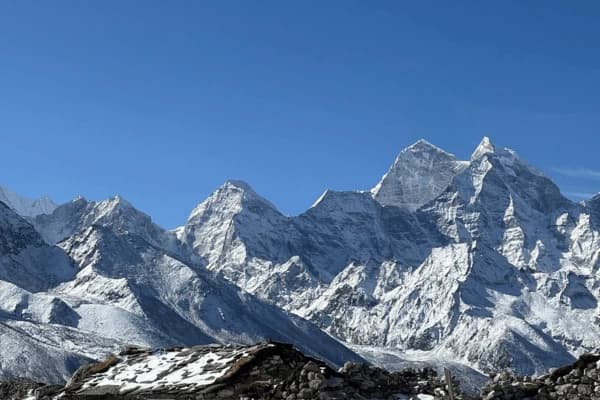
The EBC provides what it promises: the clear path to the base of the World's Tallest Mountain. The trek is alongside the Dudh Koshi River, through traditional Sherpa Villages and classic Himalayan terrain. The Tengboche Monastery, with a backdrop of Ama Dablam, is one of the most photographed monasteries in Nepal. The most compelling image on this trek is the sunrise on Kala Patthar with Everest in the distance, creating an iconic moment throughout the trek.
Unfortunately, the trade-off for an iconic trek is that it is also crowded. There is heavy traffic throughout the EBC trail, especially between Namche and Gorak Shep, particularly during the Fall and Spring months. There are lots of teahouses, heavily travelled sections of trail, and many people will be at Kala Patthar at the same time to witness the sunrise over Everest.
Three Passes Trek: Wide, Wild, and Varied
There is no shortage of variety on the Three Passes trek. Where the eastern base camp trek has a couple of distinct types of valleys (Imja and Gokyo), the three passes offer three full different valley systems (Imja, Gokyo with its 5 glacial lakes, and the quieter Thame valley). Each valley has its own identity. Then there are the breathtaking views of all three passes at once (from each of the passes), including some combination of Everest, Lhotse, Makalu, Cho Oyu, and all their glacier fields.
The trails off the standard trek to EBC are noticeably quieter than those on the main trail to EBC. There are parts that feel quite isolated, particularly the Gokyo lakes, which many people say are even more beautiful than the base camp itself.
- Best single iconic view: EBC→ kala patthar at sunrise
- Best overall range of scenery: three passes → sectors of both trails with full panoramas
- Best solitude: three passes: far fewer trekkers beyond Gokyo
- Best for photographers: three passes in autumn: multiple summit views & glaciers, and lakes
If you would like a complete listing of all viewpoints along each of the three pass routes, see our Everest viewpoints guide.
Cost Comparison
For many trekkers, the cost is an important part of their trip planning, and the difference in cost between the two treks is very substantial. Below is a fair, accurate comparison of what it will cost to make each trek.
Everest Base Camp Trek - $1,200 - $1,800
The Everest Base Camp Trek is typically completed within 12-14 days. Costs associated with this trek include round-trip flight from Kathmandu to Lukla; TIMS and SAG National Park Permits; teahouse accommodation; guides and porters; and daily food on the trail. Because the EBC is one of the more established treks, there’s a much greater number of teahouses along the trail competing for your business and keeping their rates lower than other treks of similar length.
Everest Three Passes Trek - $1,800 - $2,500
The Everest Three Passes Trek is typically completed within 18-21 days. With this extra time comes additional costs in the form of accommodations, meals, guide fees, extra permit days, and extra flights from Lukla to Kathmandu if changing dates. Another factor in the price differential is that this trek requires a more experienced guide than required for an EBC Trek; therefore will typically cost you more than a standard EBC Trek guide.
|
Cost Factor
|
EBC |
Three Passes
|
| Duration |
12 - 14 days
|
18 - 21 days
|
| Permits |
~USD 50 - 60
|
~USD 50 - 60 (same permits)
|
|
Guide fee
|
USD 25 - 35/day
|
USD 30 - 40/day (technical route)
|
|
Teahouse + food
|
USD 25 - 40/day
|
USD 25 - 40/day
|
|
Total estimate
|
USD 1,200 - 1,800
|
USD 1,800 - 2,500 |
Estimated real-world expenses related to trekking within the Khumbu region. Costs vary by season, group size, and the agency selected.
For specifics on costs by category, refer to our Everest Trek Cost Breakdown.
Crowd & Trail Experience
The crowd level difference between EBC and ABC is one of the more overlooked factors to consider when comparing the two treks. However, it truly does account for differences in the daily experience while trekking.
EBC: Busy, Popular, and Well-Supported
The EBC trek is one of the busiest trekking routes in all of Asia, with hundreds of trekkers per day from Namche to Gorak Shep (the longest distance on this route) between late October and April (the high season for trekking in this area).
Teahouses fill up very quickly (popular teahouses such as Tengboche and Dingboche), and people often stand in line to get into these teahouses. More people are generally present at Kala Patthar (especially on clear mornings). This is not a negative aspect; however, the high level of development of the infrastructure has made this route “the most iconic” trekking route on the planet.
Three Passes: Quieter, More Remote, More Personal
The first part of the Three Passes trek follows the EBC trek route (from Lukla to Namche) and then splits off into its separate route. Beyond Gokyo and crossing the passes, the number of trekkers drops off fairly quickly, and you will often feel quite isolated along the Three Passes route, particularly on the approach to the Cho La and the descent into Thame from Renjo La. Teahouses do exist along the whole route, but they are much simpler and much less crowded than those found on the EBC route.
Quieter routes allow for more contact with local Sherpas, greater flexibility of pace and a greater feeling of real mountain adventure. For trekkers who feel the EBC crowd detracts from the experience, the Three Passes Circuit is a significant improvement over this.
- EBC: At EBC, you will encounter large crowds, lots of support, and busy teahouses during the peak trekking season.
- Three Passes: In contrast, on the Three Passes Circuit, traffic levels are moderate to low, teahouses are less extensive, and portions of the trek are quite remote.
To time your trek to both routes according to crowd activity levels, please refer to our information source on best time to trek in the Everest Region.
Who Should Choose EBC vs Three Passes
This is the big question. There are four things to consider: experience, fitness, time, and the specific reward you're seeking.
Opt for EBC if:
- This is your first trek above 3,500 meters
- You have 12-14 days to dedicate to your trip
- Your fitness is strong, but you haven't undertaken a multi-week high-altitude trekking adventure before
- You desire the 'iconic Everest' experience, but are averse to technical terrain
- You are traveling as a group with diverse levels of fitness and experience
- You specifically wish to stand at Base Camp and visit Kala Patthar
Choose Three Passes if:
- You have previously trekked over 4,000 meters with no significant altitude sickness.
- You have 18-21 days available for your trek.
- You have trained rigorously and have substantial experience in cardio, multi-day treks and carrying a pack.
- You are seeking a holistic Everest circuit, not simply an out-and-back route.
- You are seeking isolated trails and a broader range of Himalayan vistas.
- You are mentally and physically prepared for challenging, technical terrain and possible glacier crossings, and are comfortable with extremely steep, often icy, passes.
One rule our team always applies: If there is even a hint of doubt about your preparedness for Three Passes, you should pick the Everest Base Camp trek for this trip. Performing very well on the EBC circuit will be an excellent preparation for a Three Passes expedition. The Khumbu will still be here.
Take a look at our Everest Trekking Itinerary Options to view various treks available within each route structure.
Safety & Weather Conditions
The weather patterns and altitude risks are essentially the same for both treks in the Khumbu region; however, the Three Passes trek poses significantly more risk from a safety perspective, so that must be taken into account.
Weather Risk
The weather is most favourable for both treks during the autumn and spring months, but unlike EBC, poor weather on the Three Pass trek has the potential to cause blocked passes, needing to wait to cross passes due to dangerous conditions, or requiring an additional acclimatization day, which will disrupt the schedule planned for the trip. The three passes are also subject to summit-level winds and rapid changes in temperature, unlike the EBC trek.
Altitude Risk
Both treks exceed the altitude of 5,300 meters, and there is a high risk of Acute Mountain Sickness on both. However, the days spent above 5,000 meters on the Three Pass trek are more numerous, more physically demanding, and the chance of developing AMS and descending quickly from a pass crossing is also much less than on the EBC trek.
Pass Safety
Cho La has a section of glacier, and there's a genuine risk of icefall. Kongma La is the highest and most challenging of the three passes physically. Renjo La has exposure along its summit ridges with wind risk. None of these sections of the trek are encountered on the EBC. That is the most significant difference between the two trek routes in terms of safety.
- Always use a licensed and knowledgeable guide on all Three Pass crossings.
- Cover your rescue helicopter costs for either trek with mandatory insurance specifically for Three Passes.
- The best safe trekking seasons for both are Autumn and Spring.
For planning for seasonal safety, check our Trekking Safety Everest Weather Guide.
Expert Recommendation
We have taken trekkers along both different trails for many seasons, and from that experience, we have a few findings that may be of assistance to you.
Many trekkers who compare EBC (Everest Base Camp) and Three Passes find that they may be much closer to being ready for EBC than they think, and conversely, that they probably also are much closer than they give themselves credit for in being Three Passes-ready, as long as they are also experienced hikers at altitude. Trekkers usually make the mistake of going either way with these two different destinations. They choose the Three Passes because of ambition without the necessary level of fitness, or they choose the EBC out of fear when they actually have the necessary experience for either destination.
We sincerely recommend that you let your previous hiking history determine your choice of hiking destination, rather than allowing your ambition or fear to dictate your answer. If you have some level of previous hiking experience at altitude and have trained reasonably and effectively to do so, believe your training. If you do not have any previous variety of hiking experience to +4000 meters, do not think of the EBC as a consolation prize; rather, consider it the starting point for a successful trek.
Based on our experience, the trekkers who have the best experiences on the Three Passes route are those who took their time making the decision, prepared appropriately, developed their requisite level of experience, and showed up to the trail prepared and ready to hike.
Local guide insight: An experienced traveler shared, "Many trekkers who have finished Three Passes said that they weren't prepared for how drastically different it was from the trek at EBC. The successful trekkers took their training seriously; they did not rely on being fit as a determining factor to complete their trek. When you decide to book, you'll want to see our Book Everest Trek Package, which contains both options for the trek.
Which Everest Trek Should You Choose?
If you are a beginner, only have a limited time to complete the trek, and want to experience the well-marked route providing the classic view of Mt. Everest, choose the EBC.
If you have experience trekking at high altitudes, have at least 18 days plus available for your trip, and want to complete the entire Khumbu Circuit (including then the three passes, the glaciers, and the lakes), you should choose Three Passes.
- Recommended for less experienced trekkers: The Everest Base Camp Trek
- Recommended for very experienced trekkers: The Everest Three Passes Trek
- Better scenery variety: Three Passes
- Lower expense: EBC
- More remote, less touristy: Three Passes
- Safer for a first trek at high altitude: EBC
If you're unsure which option you should decide to take, contact our Everest Trek Expert, and we are happy to help match you with the proper trekking route based on your skills, fitness and travel dates. We will give you our honest opinion; we are not going to put any pressure on you.